Culture

Culture

The good, the bad and the ugly in books, exhibitions, cinema, TV, dance, music, podcasts and theatre.

A blisteringly bonkers first episode: Doctor Who – Flux reviewed

Television

BBC1 continuity excitedly introduced the first in the new series of Doctor Who as ‘bigger and better than ever’ — presumably because the more accurate ‘bigger and better than it’s been for a bit’ doesn’t have quite the same punch. Still, Sunday’s programme was a definite, even exhilarating improvement on those of recent years. Since Chris Chibnall became the showrunner in 2018, thrills have taken a firm second place to solemn lectures on how the most dangerous monster of all is human prejudice. Yet at no stage here did the Doctor (Jodie Whittaker) encounter some acknowledged hero of black and/or women’s history — and so allow us a self-satisfied bask in having risen above the bigotry of less enlightened times.

A highly polished exercise in treading water: Season 3 of Succession reviewed

Television

At one point in an early Simpsons, Homer comes across an old issue of TV Guide, and finds the listing for the sitcom Gomer Pyle, U.S.M.C. ‘Gomer upsets Sergeant Carter,’ he reads — adding with a fond chuckle, ‘I’ll never forget that episode.’ Even for British viewers unfamiliar with the show, the joke is clear: that’s what happens in every episode. Sad to say, this popped into my head while watching the first in the new series of Succession. The acting, script and direction are as brilliant as ever.

Lurking beneath the gore are moments of wit and sensitivity: Squid Game reviewed

Television

Should we be worried that Squid Game is the most popular show in Netflix’s history? If it’s a case of art imitating life, then the prognosis for our civilisation is not good: most of us will die, horribly, sooner rather than later, but for the very few who survive there will be untold riches to enjoy in the company of the cruel and capricious controlling super-elite. Squid Game is a Korean update of the Japanese cult classic Battle Royale (2000) which spawned — or revived; let’s not forget Rollerball (1975) — the genre known as ‘death games’. These films take place in a dystopian future where ordinary, desperate folk compete in a series of gladiatorial to-the-death contests for the amusement of the ruling oligarchy.

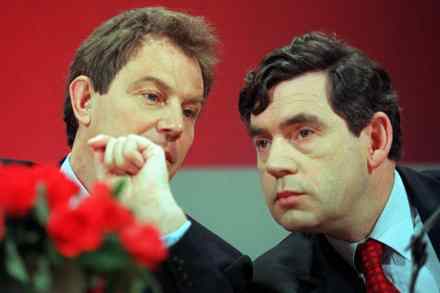
Blair & Brown: The New Labour Revolution should be called ‘The Tragedy of Gordon Brown’

Television

Murder Island features eight real-life ‘ordinary people’ seeking to solve a fictional killing on a fictional Scottish island. What follows is so confused and confusing that you can only imagine it was pitched to Channel 4 as ‘Broadchurch meets The Apprentice’ and nodded through as a result, without anybody asking such pesky questions as ‘So how might that work, then?’ Or if they did, that they were silenced by the news that Ian Rankin was signed on as the writer — whatever that might mean, seeing as most of the programme is necessarily unscripted and the investigation itself impossible to plot in advance.

Somewhere between eye-opening and jaw-dropping: Sky’s Hawking – Can You Hear Me? reviewed

Television

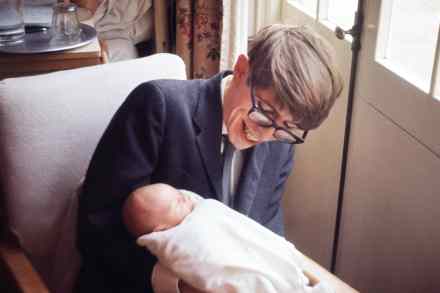
It is, of course, not unknown for a man to become famous with the support of his family — and, once he has, to prefer global adulation to being with them, before leaving his wife for a younger woman. What’s rather less common is when the man in question is almost completely paralysed. This was the story told by Hawking: Can You Hear Me? and, in advance, it might have sounded an over-familiar one. After all, not only was Stephen Hawking one of the few physicists to become a tabloid staple, but he was also played to Oscar-winning effect by Eddie Redmayne in The Theory of Everything. As it transpired, though, the programme proved somewhere between eye-opening and jaw-dropping.

Amateurish and implausible: BBC1’s Vigil reviewed

Television

Tense, claustrophobic, gripping, thrilling, realistic: just some of the adjectives no one is using to describe BBC1’s Sunday night submarine drama Vigil. Were one of Britain’s four Vanguard nuclear subs to launch retaliatory strikes on Broadcasting House and the show’s producer World Productions, I think it would be entirely reasonable and proportionate. It’s so amateurish and implausible it makes even the dreadful Sky One remake of Das Boot look classy by comparison. Which is a shame because its screenwriter, Tom Edge, has done some good stuff in the past. Besides writing for The Crown and on the likeable J.K.

Bleak, unashamedly macho and grown-up: BBC2’s The North Water reviewed

Television

‘The world is hell, and men are both the tormented souls and the devils within it.’ This was the cheery epigraph from Schopenhauer with which The North Water introduced itself — aptly, as it transpired. Certainly, BBC2’s starry new Victorian drama is not for those who prefer their television characters to be loveable. The first person we met was Irishman Henry Drax (Colin Farrell), who gruntingly concluded his business with a Hull prostitute before heading for the docks in a way familiar to viewers of Victorian TV dramas: shamble up the cobbles, straight on past the women in shawls, turn left at the urchins.

Up there with Succession and Chernobyl: The White Lotus, Sky Atlantic, reviewed

Television

Every now and then, you see a new series — Succession, say, or Chernobyl or To the Lake — which reminds you why you watch TV. The latest such joy is The White Lotus (Sky Atlantic), a darkly comic satirical drama created, written and directed by Mike White. White seems to be a curious and engaging character with lots of hinterland. His father used to be a speechwriter for ‘religious right’ preachers Jerry Falwell and Pat Robertson (and later came out as gay). He wrote the charming comedy School of Rock because, though not himself a rock fan, his friend Jack Black wanted an excuse to perform all his favourite songs. He was runner-up in the competitive reality TV show Survivor: David vs. Goliath.

Apocalypse, Seventies-style: BritBox’s Survivors reviewed

Television

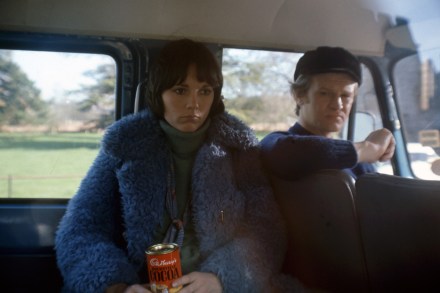
When the apocalypse comes, I want it to be scripted by a 1970s screenwriter. That’s my conclusion after watching the first few episodes of Terry Nation’s landmark 1975 ‘cosy catastrophe’ series Survivors on BritBox. Everything was so much more innocent and charming back then, including the end of the world. Survivors establishes its MacGuffin in the opening credits: a montage which begins with a masked, enigmatic oriental man in a laboratory where he accidentally smashes a vial; we then see clips of him in a suit travelling through various airports, with passport stamps (New York, London, etc) taunting us from the past with just how easy it was back then to be a jet-setting international traveller.

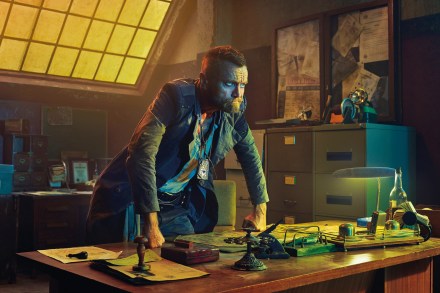
A total mess: BBC2’s The Watch reviewed

Television

Last Sunday on Channel 4, a man called Eric Nicoli proudly remembered ‘the bravest thing I’ve ever done’. In November 1975, Rowntree was poised to launch the Trek chocolate bar. The packaging was ready, along with an advertising campaign featuring, for some reason, potholers. But as the company’s new product manager, Eric couldn’t rid himself of the niggling feeling that Trek was boring. So — and this is the brave bit — he went to the boss and said that Rowntree should think again. ‘You better be bloody right, young man,’ the boss replied. And with that, Eric returned to the drawing board where he came up with the name Yorkie and an advertising campaign featuring, for some reason, lorry drivers.

Switch over to Eurosport: BBC’s Olympic coverage reviewed

Television

I’ve not been allowed anywhere near the TV remote control this week because of some kind of infernal sporting event taking place in Japan. You may gather that I have mixed feelings about the Olympics: on the one hand, I like most of the competitors, who are so much more affable and modest (those delightful Gadirova twins!) than the overpaid, overindulged prima donnas who recently took part in the Euros. Also, it’s impossible not to get sucked into the drama of individual stories such as that of Beth Schriever, the humble, underfunded former teaching assistant who took gold in the women’s BMX.

When did Sunday night TV become so grim? Baptiste reviewed

Television

There was, you may remember, a time when Sunday night television was rather a jolly affair: gently plotted and full of rosy-cheeked yokels, twinkly coppers and warm-hearted patriarchs. Well, not any more — as BBC1’s Baptiste and ITV’s Professor T confirm. Both feature main characters, and quite a few supporting ones, with backstories so abidingly grim that you can only hope they don’t send out annual Christmas circulars. So it is that Julien Baptiste — French detective turned freelance missing-persons hunter — now has a dead daughter to go with his imprisoned son. Meanwhile, Cambridge academic Jasper Tempest’s OCD is clearly linked to the fact that, at the age of seven, he found his alcoholic father hanging from a noose in the family hallway.

The techniques of totalitarianism are still fully in play today

Television

How to Become a Tyrant (Netflix) is ideal history TV for Generation No Attention Span. Presented in six bite-sized chunks by Peter Dinklage, aka the ‘Imp’ Tyrion Lannister from Game of Thrones, it tells you most of the things you need to know about Hitler, Stalin, Mao, Gaddafi, Kim Il-Sung, Idi Amin and Saddam Hussein, without obliging you to think or grapple with any tedious detail. Instead of examining the dictators individually, it explores their careers thematically, looking for the ingredients they have in common.

Looks lovely if nothing else: Craig and Bruno’s Great British Road Trips reviewed

Television

To its huge credit, ITV has managed to find perhaps the last two television celebrities who’ve never before been filmed travelling around Britain while exchanging light banter and using the word ‘iconic’ a lot. In Craig and Bruno’s Great British Road Trips, the Strictly judges are driving a Union flag-bedecked Mini through such telegenic staples of heart-warming TV dramas as the Lake District, the Yorkshire Dales and the Scottish Highlands. For the opening episode, the choice fell on the Cornish coast, which certainly helped the programme achieve its primary aim of looking lovely. But this, as it transpired, was just as well — because for a fair amount of the time, not much else happened.

The best thing on TV ever: Rick and Morty, Season 5, reviewed

Television

I’ve been trying to avoid the house TV room as much as possible recently because it tends to be occupied by family members watching Wimbledon and the Euros. My adamantine principles prevent me looking at either: I won’t watch Wimbledon because of the masks and socially distanced interviews and I refuse to watch any sport where the players all kneel before the match in homage to race-baiting Marxist separatists. So it came as a huge relief when Boy, finally home from uni, switched over to Rick and Morty. My immediate response was: ‘What is this noisy, in-your-face, in-joke young person’s crap you are inflicting on me, hateful progeny of mine.

Thoughtful and impeccable: Ken Burns’s Hemingway reviewed

Television

Ken Burns made his name in 1990 with The Civil War, the justly celebrated 11-and-a-half-hour documentary series that gave America’s proudly niche PBS channel the biggest ratings in its history. Since then, he’s tackled several other big American subjects like jazz, Prohibition and Vietnam; and all without ever changing his style. In contrast to, say, Adam Curtis (another ambitious film-maker whose methods have remained unchanged for 30 years), Burns’s documentaries take an almost defiantly considered approach, forgoing anything resembling self-regarding flashiness in favour of such old-school techniques as knowledgeable talking heads, careful chronology and straightforwardly appropriate visuals.

GB News will succeed – even if it fails

Television

Help! If I’m too kind to GB News, my bosses at LBC will be cross as the channel nicked their top producer, not to mention the entire format (talk radio, televised). And if I am too unkind, the chairman of this magazine and galactico of GB News Mr Andrew Neil won’t have me at Speccie parties ever again. I have now been watching for around a week in order to give the station time to settle, but I did tune in for the launch. I roped in Dorothy Byrne as an expert witness. Why? One, she was head of news and current affairs at Channel Four for decades and, two, she is, like Andrew Neil, from Paisley, as she never tires of telling you.

First-rate TV: Clarkson’s Farm on Amazon Prime reviewed

Television

I was at a party the other day when who should accost me but Jeremy Clarkson. There were lots more famous and interesting people in the room, including the surviving half of Wham!. But Clarkson was itching to talk to me about, of all things, a review I’d written of a BBC reality series called This Is My House. He was genuinely mystified as to why I’d given such tosh a favourable critique. Having just watched his new series, Clarkson’s Farm, I now understand his puzzlement. Since late 2019, Clarkson has been playing at being a farmer on his 1,000-acre Oxfordshire estate.

One of the best Covid dramas so far: BBC2’s Together reviewed

Television

Let me start with a spot of admin: if you’re wondering what The Speccie makes of GB News, it’ll be reviewed next week once the channel’s had a fair chance to establish itself. In the meantime BBC2’s Together took an impeccably up-to-date subject and gave it surprisingly old-fashioned treatment — by returning us to the far-off days when TV drama had its roots in theatre rather than cinema. Not only was it a 90-minute two-hander, but the characters spoke to both each other and the audience on a single set. Sharon Horgan and James McAvoy played an unnamed couple (always a bit annoying for a reviewer but I won’t let that affect my steely objectivity) who entered the first Covid lockdown convinced of the fact that they hated each other.

Why I love Israeli TV

Television

Tragically it wasn’t my turn to review when Channel 5’s groundbreaking Anne Boleyn came out so you’ll never find out what my totally unpredictable critique might have said. As you know, I have previously been mad for all things Israeli and one of my plans had been to go there with my brother Dick and make a fun documentary where we train with the IDF, practise in one of those urban-warfare shooting ranges, learn krav maga, eat lots of Ottolenghi-type food, wallow in the Dead Sea, etc. But I’m afraid I’ve rather gone off Netanyahu’s vax tyranny and just can’t root for Israel in the way I once did. Still, this doesn’t seem to have put me off its TV shows, yet.

Camp am-dram, plus stuff about the patriarchy: Channel 5’s Anne Boleyn reviewed

Television

Fifty-one years ago, in the BBC’s much-acclaimed The Six Wives of Henry VIII, Anne Boleyn was portrayed as a brave and innocent woman brought low by the men around her, notably Henry VIII and Thomas Cromwell. Even then, of course, this was by no means an unconventional view. Only the previous year, the film Anne of the Thousand Days — nominated for ten Oscars — had taken a similar line, as indeed had Foxe’s Book of Martyrs (1563), which objected to all ‘sinister judgments and opinions… against the virtuous queen’.

Latest proof that western civilisation is over: Sky Atlantic’s Domina reviewed

Television

I’ve been looking at the reviews so far of Sky’s new Romans series Domina and none seems to have noticed the most salient point: it’s crap. This is almost more depressing than the fact that the series got made in the first place, for what it suggests is this: our culture is now so debased that even our arbiters of taste can no longer tell the difference between quality and mediocrity. Domina follows the story of Julius Caesar’s great-nephew Octavian, from when he was a member of the triumvirate to his apotheosis as Caesar Augustus. You’d think you couldn’t possibly go wrong with such fascinating historical material, rich with gore, scheming, politicking, backstabbing and will to power. But Domina says: ‘Hold my cervisia!

Quietly radiates a wholly justified confidence: BBC 1’s The Pact reviewed

Television

There was certainly no lack of variety among new TV dramas this week, with a standard British thriller up against more glamorous American competition in the shape of some extravagant Victorian sci-fi and an adaption by an Oscar-winning director of a Pulitzer-winning novel. (All three, mind you, did naturally feature a one-dimensional white bloke as the embodiment of sexist and/or racist villainy.) The surprising thing at this stage is that it’s the plucky British show that looks most promising. The Pact began, like many a thriller before it, with a frightened woman running through some dark woods. So far we still don’t know why — unless it was just force of TV habit.

Honest, faithful and fantastically enjoyable: BBC1’s The Pursuit of Love reviewed

Television

I had been expecting the BBC to make a dreadful hash of The Pursuit of Love, especially when I read that they’d spiced it up with hints of lesbianism and punk rock. But actually, I think what writer/director Emily Mortimer has done here is play a very clever trick — the equivalent of releasing a cloud of aluminium chaff from your fighter aircraft to distract the enemy’s missiles. So while everyone is cooing about how refreshing it is that lesbianism has finally got a look-in (see also: every other drama and comedy series on TV from Killing Eve to Call My Agent), Mortimer can get on with the deeply subversive business of slipping under the BBC radar an honest, old-fashioned, faithful and fantastically enjoyable Nancy Mitford adaptation.

A TV doc that is truly brave: BBC1’s Ian Wright – Home Truths reviewed

Television

Ian Wright: Home Truths began with the ex-footballer saying that the home he grew up in was ‘not a happy one’. As truths go, though, this soon turned out to belong firmly in the category of ‘understated’. Not surprisingly, Wright’s favourite boyhood programme was Match of the Day — which is why his stepfather would make him stand with his face against the wall while it was on. (‘Just because he could,’ Wright explained.) He also beat Wright’s mother: often, Wright recalled, while she repeatedly cried the word ‘Sorry!

This Is My House has rekindled my love for the BBC

Television

Here’s a thought that will make you feel old. Or worried. Or both. The poke-fun-at-celebrity-houses series Through the Keyhole — originally presented by Loyd Grossman — was first broadcast as a segment on TV-am in February 1983. That means that we are now as far away in time from Through the Keyhole’s first episode as its debut was from the end of the second world war. It has endured almost till the present (I actually preferred the Keith Lemon version to the stilted and slightly turgid original) because it’s such an addictive format. Most of us fancy ourselves as amateur psychologist sleuths, picking up on those telling details missed by others less blessed with our perspicacity.

A very watchable doc cashing in on Line of Duty: BBC2’s Bent Coppers reviewed

Television

If you’re after an exciting, twisty programme about police corruption that doesn’t also feel a bit like sitting an exam in Line of Duty studies, then Bent Coppers: Crossing the Line of Duty could well hit the spot. As both the timing and subtitle not so much suggest as bellow, this three-part documentary series is an obvious attempt to cash in on its fictional counterpart. Happily, though, it’s a successful one. In Wednesday’s second episode the focus was on 1970s Soho, where the most reliable way to make a fortune was by opening what the narrator Philip Glenister called, in suitably 1970s argot, ‘dirty bookshops’. Of course, there were certain overheads involved, like rent and huge bribes to the police.

Intelligence-insulting schlock: Sky Atlantic’s Your Honor reviewed

Television

I’m really not enjoying Your Honor, the latest vehicle for Bryan Cranston to play a good man driven to the dark side by extraordinary and compelling circumstances designed to make the viewer go: ‘There but for the grace of God go I…’ The problem with the compelling circumstances in this case is that they feel so desperately contrived. Cranston plays a priggishly upright New Orleans judge who radiates implausible goodness and rectitude. We first glimpse this during the case of a trial of a black woman accused by police of concealing drugs in an intimate part of her anatomy. A white cop, sweating integrity, swears on the witness stand that he has witnessed her doing it. Open and shut case, right?

It’s impossible not to feel snooty watching ITV’s Agatha and Poirot

Television

Agatha and Poirot was one of those programmes that had the annoying effect of making you feel distinctly snooty. ITV’s decision to dedicate 85 minutes of primetime Easter Monday television to a books-related documentary was never likely to result in a steely Leavisite engagement with literature. Nor, of course, should it. Even so, it was hard to avoid a dowager-like shudder when, for example, one contributor declared that Agatha Christie ‘will never be surpassed as the world’s greatest novelist’ — especially when the contributor was that well-known literary critic Lesley Joseph.