Culture

Culture

The good, the bad and the ugly in books, exhibitions, cinema, TV, dance, music, podcasts and theatre.

Radio 4’s All In The Mind is a perfect example of why we still need the licence fee

Radio

Best line of the week came on Monday from the composer John Tavener, and was given added poignancy by the announcement the following day that Tavener had died. He told us, ‘Life is a creeping tragedy; that’s why I must be cheerful.’ It’s a sankalpa, or inner resolution, he held on to especially in his last years as he endured an illness that stopped his heart four times and once kept him in intensive care for six months. For a while the experience of near-death shut down his creativity completely. He had, he told us, ‘no sense of that other life which until then had enriched him’. Tavener was talking on Start the Week, which on Monday welcomed back Andrew Marr after his remarkable recovery from catastrophic illness.

You lost Aled Jones and Catherine Bott, Radio Three — but all is forgiven

Radio

It’s hard to stay cross with Radio 3 for long. Just when I thought the network had stretched my loyalty too far by not only allowing Aled Jones to decamp to Classic FM but also saying goodbye to the great Catherine Bott, I had a comeback conversion. I’ll explain how that happened later. First, we should bewail the loss of Bott, who made The Early Music Show her own, with her enthusiasm, her practised authority, her ability to convey insights without being ponderous. She drew us in to share her passion for music and composers we’d never even heard of, let alone felt any desire to hear.

Your life is not like a Detroit assembly line — it’s worse

Radio

This year’s Free Thinking festival at the Sage in Gateshead has been asking the question,  Who’s in Control?. Oddly, or perhaps presciently, as soon as I typed that last word ‘control’, the power went off in the midst of Monday’s storm. No word processor, no internet connection, no phone line, almost no radio (since the only battery-operated radio I now possess is in the bathroom). A weekend of debates and talks about who’s really in charge of our health, our imagination, our privacy soon becomes a lot of hot air in the face of hurricane-force winds.

Grayson Perry is an inspired choice for the Reith Lectures

Radio

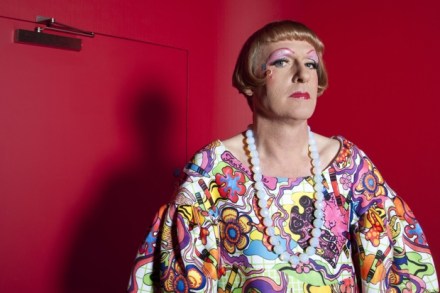
You’ve probably already read or heard somewhere that the inspiration for Grayson Perry’s current series of Reith Lectures on Radio 4 was none other than Lynda Snell. (I wonder if she knows.) What a coup for the establishment network, the home service, the epitome of right thinking and professional excellence. Here’s a cross-dressing potter from Essex, who revels in outrageous outfits and shockingly frank, message-ridden pots and tapestries about sex abuse and class warfare, daring to admit not just that he listens to The Archers but that he also takes his cue from Lynda’s determination to have someone (or something) from Ambridge installed on the Fourth Plinth in Trafalgar Square.

Last week’s all-female Today proved women make for a more uplifting show

Radio

Boy, we’ve had to wait a long time for this. But last Thursday morning something unusual happened on Radio 4; something so unexpected, so rich with potential. It happened at peak time in the morning. Eight o’clock. The Today programme. And it began with the news, read by a woman — Corrie Corfield. Of course, there’s nothing unusual about that these days. It’s been decades since the BBC was forced to admit that women can enunciate just as clearly as men and that their ‘lighter register’ is not more difficult to pick up for those who are hard of hearing. Afterwards, though, we had a female presenter, a female co-presenter, a female doctor as a guest, a female Cabinet minister and, wait for it, a woman talking about sport. It was brilliant.

Come over here, Tom Stoppard

Radio

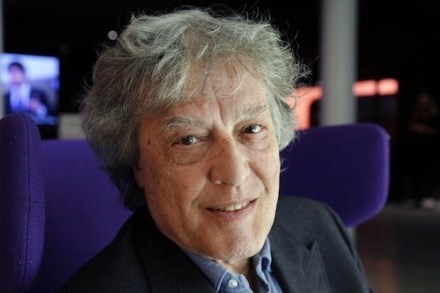
‘I was mad with jealousy,’ said Gwyneth Williams, the controller of BBC Radio 4. ‘I am mad with jealousy,’ she corrected herself, and I believed her. We were discussing Tom Stoppard’s Darkside, a radio play written to celebrate the 40th anniversary of Pink Floyd’s album Dark Side of the Moon. The play, which was perhaps the radio event of the summer, aired on Radio 2. ‘Mad with jealousy,’ she repeated, in case I had missed the point. Williams has spent the year revitalising Radio 4’s arts coverage. Stoppard’s perfidy aside, she has had marked success.

Sometimes Radio 3 tries to be too clever by half

Radio

Why are we still listening to the radio in 2013, to an outdated technology that has hardly changed in manufacture or output since it first appeared in the 1920s? How come TV did not wipe it out, as CDs wiped out the cassette and DVDs put paid to video? My guess is that it’s because sound was more important to us when we first came into the world and our eyes were still too blurry to take in much of what was going on. Our ears, though, were straightaway alert. Listening now, making connections through sound, keeps us in touch with that first consciousness, that initial awareness. It takes us back to the womb, to the prenatal state of hearing our mother’s heartbeat long before we could actually see her.

Autumn shake-up in Radios 2 and 3 scheduling

Radio

This time round in the autumn shake-up of the schedules it’s Radios 2 and 3 who are on the frontline of change. They have had to face ‘tough decisions’ and to address ‘the financial challenges due to the licence-fee freeze’. Radio 3 has lost most of its ‘live’ Saturday-night transmissions from the Metropolitan Opera in New York, on the grounds that they cost too much to set up. It’s also given the chop to one of my favourite weekend programmes, World Routes, because of the ‘high costs’ of sending its presenter Dr Lucy Duran to far-flung places round the globe in search of unusual music. But this was never travel for the sake of it.

Immigrant songs: Radio 2’s My Country, My Music

Radio

Five women, five very different stories of arriving in the UK, often unwillingly and always alone. How did they cope with the loneliness, the poverty, the loss of everything they once knew? What do they now think of the country that has become their adopted home? Jeremy Vine talks to them next week in a new lunchtime series on Radio 2. In My Country, My Music (produced by Chris Walsh-Heron) Vine and his five guests try to work out which country they now belong to, not through work, beliefs, hobbies or family but through the music they listen to. By putting music centre-stage, as the focus, the heart of the conversation, some unusual perspectives and unexpected connections emerge. Prepare for some surprises.

Farewell to a natural born broadcaster

Radio

‘He was a natural broadcaster,’ said Nick Higham, after the death last week of the rugby player and sports broadcaster Cliff Morgan. I wondered what he meant. ‘Natural’ as in born to the task? Or ‘natural’ as in his ability to communicate as if chatting directly to you, and only you, with no pretension or affectation, just a desire to tell a good story, to convey his enthusiasm? I still miss Morgan on Saturday mornings. He had such a warm voice, and something more: a real and genuine interest in the stories behind the athletes, tennis stars, rugby players, basketball champions, wrestlers, rowers, cyclists, swimmers, gymnasts, equestrians he chatted to on Sport on Four, which disappeared from the airwaves in 1998.

Tom Stoppard’s Pink Floyd play gives Radio 2 a dark side

Radio

How many listeners, I wonder, actually tuned in to Darkside as it went out on air on Radio 2, after dark, curtains closed against the pale moon waning? One listener for sure at 10 o’clock on Monday night was David Gilmour, Pink Floyd’s guitar man and co-creator of the band’s mega-successful ‘concept album’ The Dark Side of the Moon, which inspired the play. Gilmour told the playwright Tom Stoppard that he wouldn’t listen ‘until it was actually going out on radio’. He wanted to catch ‘the extra vibe’. He may be a rock superstar but he’s still in thrall to radio: ‘There it is being listened to at that moment by all those people.’ Stoppard agreed.

Against the odds

Radio

Just in time for the Paralympics the veteran broadcaster and campaigner for disability rights, Peter White, has launched a special Paralympian series of his No Triumph, No Tragedy programme (Radio 4), the title of which should probably be reversed. On Sunday he talked to Margaret Maughan, the first Briton to win a gold medal at the Paralympics. She broke her back in a road accident in Malawi, where she was teaching, but only a year later she triumphed at Rome in the first international games for the disabled to be held alongside the Olympics. Maughan had discovered that although she had always been hopeless at sport she was rather good at archery. In Rome she hit her target spot-on. How did you get there?

Only Evan Davies can keep his guests in order

Radio

It must have sounded like such a great idea. To gather a group of thinkers, agitators, experts, intellectuals and media people round a large table, mike them up, ply them with drink, choose a presenter from the radio hall of fame to act as monitor and shut the studio door. Then switch on the red light, and cross your fingers they’ll not run out of conversation before the hour’s up. Summer Nights was introduced as ‘a first’ for Radio 4 — ‘live’ late-night conversation on topics ranging from sex to politics via fracking and the fear of boredom. I was really looking forward to the two-week season. Could it be a chance for Radio 4 to break out, shed some of its aura of certainty? Would we become eavesdroppers on some really stimulating conversation?

Kate Chisholm connects to her inner tortoise

Radio

Of course there’s a future for digital radio, it’s just that we’ll probably be listening to it online, or on the phone. The wireless set, tucked on the kitchen shelf, beside the bed, among the vases in the lounge, permanently tuned in to Aggers or Humphrys, Livesey or Lamacq, will become a museum piece, an object from the past. Instead we’ll be going back to the future and walking around with a smartphone plugged to our ears as if it were an old transistor radio. But with a difference. Aggers and co. will have to compete with the constant chatter of online life. No longer a dedicated stream of wireless talk but a babble of disconnected thoughts and ideas.

A bearded, medallion-wielding, miniature puppet won’t persuade us to go digital

Radio

Will digital radio ever really take off? We were supposed to be switching over to digital-only reception in 2015 (three years after the TV switchover) but with only 36.8 per cent of listeners as yet tuning in to a digital station the future of DAB is beginning to look very uncertain (and most of those 36.8 per cent will also be listening to an old and much-loved analogue wireless set or transistor). Ed Vaizey, the government’s minister for culture, communications and the creative industries, has said he will announce a new date for the switchover ‘by the end of the year’, but this seems an unlikely target given that more than 60 per cent of the population don’t have access to digital and that take-up is only increasing by 4 per cent per year.

Lenny Henry’s tear-jerker

Radio

Every so often a programme comes along that completely alters the way you think about something you thought you understood. It’s 60 years since the end of the Korean war on 27 July 1953 and last Friday the World Service marked the occasion by rebroadcasting an interview from the Witness series. These short programmes, often just ten minutes, give us little-known stories from history told by those who experienced them. Their brevity focuses the mind, enhances the impact. David Hawkins was just 17 when he was sent out to Korea from the USA to fight against the communists of the North. Injured almost immediately, he found himself in a PoW camp called ‘Death Valley’ because it was so cold, minus 42 degrees.

The BBC bows to celebrity

Radio

The licence fee is both a blessing and a curse for the BBC. The clue is in that nickname — Aunty — both affectionate and slightly patronising. Aunty implies that the corporation is a friendly family affair, middle-of-the-road and just a teeny bit desperate to stay in favour, like grown-ups attempting the dance moves of the next generation. The Beeb may have an unfair advantage over its commercial rivals because of the fee but its reliance on taxpayers’ funding also makes it dependent on the goodwill of whichever political party is in government. That means it has to be seen to be a vote-earner, or rather not a vote-loser, if it wants to retain its fee-supporting status. It must cater for all tastes, and keep up (and in) with the popular mood.

Radio review: At last! A proper Book at Bedtime

Radio

It had begun to look as if Radio 4’s Book at Bedtime had been taken over by the zealous publicity-hungry PRs of publishing. For the past few months we’ve had nothing but the latest John le Carré, Neil Gaiman, Mohsin Hamid and Jami Attenberg. Books that would sit better in the morning Radio 4 slot as Book of the Week have been foisted upon us at 10.45 p.m., just when we want to start winding down from the hectic day, to escape from the traffic and fumes of the internet-bound life into which most of us have sunk. What we need post washing-up, dog walk, news, last texts, tweets and blogs is not bracing new writing, stuffed full of our worst imaginings and post-9/11 fear and loathing.

Radio review: Malcolm Gladwell’s masterclass on listening

Radio

Out and about in Surrey on Sunday I happened upon a scene that could have been played out 77 years ago. It was mid-afternoon on that glorious sunshiny day. Lunch just about over. The pub had a large garden with tables neatly shaded by leafy pergolas. A family group had finished their meal but were still huddled round the table, on which in pride of place, amid the empty plates and half-filled glasses, sat a green-and-cream Roberts, aerial aloft. They’d taken the chance (the village pub had no TV) that from words and sound alone they’d not miss a forehand slice or backhand volley.

Radio review: Rambling across Europe and into Asia with Tara Bariana and Clare Balding

Radio

One morning in 1995 Tara Bariana walked out of his house in Walsall and didn’t stop walking until he had reached the village in the Punjab where he was born and grew up. Ten thousand miles in 19 months is a lot of footwork. What made him do it? ‘I came here in 1960 with my mother and two sisters,’ he told Clare Balding in Ramblings (Saturday), her Radio 4 programme dedicated to those who love nothing better than to tramp for miles with no other objective in mind than the reassuring pleasure of putting one foot in front of the other. ‘But I’ve never forgotten my childhood; those early years in the village.’ He had been back to India two or three times, but always by plane.

Radio review: Damascus Diary: destruction of a city

Radio

We’ve heard it all before — the misery that war wreaks on everyday lives — but Lina Sinjab’s audio diary of her experiences in Syria took us right into the heart of what it feels like to be hounded out of your home, your memories, your sense of who you are and where you belong. Sinjab grew up in Damascus, her whole life has been lived there, but now she has left, forced out by the uprising. In Damascus Diary, produced by Nina Robinson (Radio 4, Monday), she recalled how at first the demonstrators in support of the government and against the rebels chanted ‘Long live Assad’, and ‘Assad for ever’. Then their demands changed to ‘Either Assad or nobody’ and ‘Either Assad or we will burn our country’.

Radio review: Recording voices of loved ones

Radio

At 17.05 on the afternoon of 18 September 2010, Sebastiane Hegarty made what was to be the last recording of his mother’s voice (she died in April 2011). As he says, the digital tape ‘invented our last moment’; a moment of no great significance, nothing meaningful was said, except that it now marks an ending. She talks to him while looking through her drawers for her purse that she’s mislaid. She mutters about no longer being able to get out to the bank because she can’t walk there. Hegarty had been recording their conversations since he was seven. Not for any specific purpose usually, but out of habit, inspired by his ‘lifelong fascination with sound and phonography’.

Radio review: The Archers — Soapland’s response to our post-9/11 world

Radio

He’s gone. Not that anyone apart from Lilian will miss him. But Paul’s been despatched (at long last) to the Land of Discarded Soap Actors, despised, rejected and scorned by most of those who knew him in Borsetshire — and also, I hope, by any self-respecting Archers Addict. I felt nothing, absolutely nothing, at the news of his heart attack in a hotel room in Cardiff, except perhaps relief that we will never again have to listen to his wheedling, self-satisfied tones. How could smart, zappy Lilian ever have fallen for his oleaginous charms? It was clear from his very first words that he was as badly behaved as his half-brother Matt Crawford, but without Matt’s speck of decency that keeps him true to Lilian.

Radio review: Coronation Day Across the Globe

Radio

Coronation Day 1953 could have marked the end of radio as we know it. No one wanted to listen to the commentary from Westminster Abbey. Everyone wanted to see what was going on. Hearing could not, it was thought, be as effective an act of witness as viewing the glittering diamonds, the gleaming satin, the pageantry, the pomp and the extraordinary sight of the weight of royalty, both physical and metaphysical, being bestowed on so slight a young woman. Those who had the money rushed out to buy a Regentone table TV or a Baird Townsman.

Radio review: The Truth about Mental Health, Yes, Nina Conti Really Is on the Radio

Radio

‘Grief is work,’ said one of the parents of the teenagers killed by Anders Breivik on the island of Utoya in Norway. ‘To deal with grief — that’s work from the moment you wake up till the moment you fall asleep. And even then many people struggle with their grief when they sleep.’ His frank, no-nonsense approach was striking given that he had experienced probably the worst thing that could happen: to lose a child and in such a terrible way. He was talking to Claudia Hammond for her new World Service series, The Truth about Mental Health (Fridays).

Radio review: Dinner at the Homesick Restaurant: the genius of Anne Tyler; Don’t Log Off

Radio

‘I don’t understand him and never will,’ says Pearl, the pivotal character in Anne Tyler’s 1982 novel Dinner at the Homesick Restaurant. She’s talking about her husband, but could be saying something much bigger, larger, more meaningful. That’s the charm (and effortless skill) of Tyler’s writing. She appears to be drawing very mundane portraits of family life — angry wives, feckless husbands and troublesome teenagers. The kind of lives lived behind respectable but not very interesting front doors. What can such ordinary-seeming people possibly tell us about deeper truths? Yet Tyler convinces us it’s in those unachieved and often rather dull characters that real life resides. This is so reassuring.

Desert Island Discs: is there nothing behind Damien Hirst’s dead cows, sharks and dots? Jan Morris: Travels Round My House — the scoop to outscoop all others

Radio

What was shocking about Damien Hirst’s appearance on Desert Island Discs on Sunday was not his admission on air that he lost his £20,000 Turner Prize cheque, and then discovered he had spent it all in the Groucho Club bar. Or his account of his early teens drinking cider beneath the pylons, shoplifting, burgling, always in trouble. A boy for whom ‘Crime is creative’. No, what was truly surprising was just how predictable are his thoughts about his art, his success, his place in the cultural life of GB. Hirst gave very little away, but not in an intriguing, there must be more going on underneath kind of way. The rigidly formulaic DID is not best designed for conversational revelations or deep-seated insights.

Tweet of the day, One to One

Radio

What will you miss most if your hearing begins to diminish? Those secretly overheard snippets of conversation on the bus? The throwaway comments of partner or child? A great Shakespearean in full flow on the stage of the National? High on my list would be the Dawn Chorus. Once it starts up again in full orchestral mode you know for sure that winter is on the wane and spring must come. That cacophony of trills and warbles is a convincing restatement of nature’s invincibility. We might be doing all we can to destroy the environment but the birds are still singing loud enough to wake you from the deepest sleep. To no longer hear it every morning would be a crushing blow, an absence of hope.

Radio: We are too gender blasé to want to listen to the sex-specific Men’s Hour/Woman’s Hour

Radio

Forty years ago, the idea of having an hour of BBC Radio devoted to men talking about themselves would have been so cutting-edge. Back in that dark age, you could still see City gents striding to work in pin-striped suits and bowler hats, whose buttoned-up appearance reflected (or so we have always been led to believe) their social behaviour. No self-respecting member of the male élite would have been happy to sit behind a mike chatting about their emotional problems. Now, though, after witnessing the extraordinary sight of wet cheeks on George Osborne, Andy Murray, and even Ken Livingstone, all the mystery of male difference has evaporated. We know, we’ve seen: they’re just like women, really.