Culture

Culture

The good, the bad and the ugly in books, exhibitions, cinema, TV, dance, music, podcasts and theatre.

The pleasures and perils of podcast listening

Radio

No phrase is better calculated to tense the neck muscles of a regular podcast listener than ‘We have something special for you now.’ Having your radio shows downloaded to your phone, music player or computer, rather than plucked out of the air the old-fashioned way, immediately grants the listener a great deal of extra freedom: you choose the feeds to which you subscribe, you decide which episodes to hear and in which order. But it also demands from the listener a measure of extra trust, or at least a ruthless readiness to skip, because what a producer puts on a feed can vary much more than in the scheduled-to-the-second world of broadcast radio.

Why Putin is even less of a human than Stalin was

Radio

LBC likes to tell us it’s ‘Leading Britain’s Conversation’, though in the case of weekday pre-lunch presenter James O’Brien you’ll have to sit through a series of bombastic monologues from the host before any punters get a word in edgeways. O’Brien knows everything, and he doesn’t mind telling you. Still, I understand that running a talk show is no job for timid introverts who might burst into tears if callers start giving them a hard time. The trick is pretending to listen sympathetically while being ready to drop the guillotine without compunction (after all, these people aren’t your friends, they’re just statistics for the business plan).

The amazing story of the blind photographer

Radio

Perhaps the news that Radio 5 live will be the only BBC station (under the new broadcasting rights agreements) to broadcast ‘live’ golf will ensure that its audience stays above the six million listeners now dreamt of by its controller Jonathan Wall as the magic number he needs for the network to stay buoyant. (Figures announced last week showed that 5 live has lost 10 per cent of its audience after a radical shake-up of its presenting team, losing especially Shelagh Fogarty and Victoria Derbyshire, which had the knock-on effect of turning it even more blokey.) At first the idea sounds absurd —golf on radio.

Why BBC Arabic is booming

Radio

Last weekend BBC Arabic celebrated 77 years since John Reith (as he then was) launched the first foreign-language service of the fledgling BBC Empire Service with an announcement (in English) in which he declared that the programmes would always be ‘reliable, accurate and interesting’, values that have become virtually cast in stone as the Reithian model of broadcasting. ‘You have to remember the BBC was very, very young at this time, but there was no limit to its ambition,’ says Tarik Kafala, the current head of BBC Arabic, which now broadcasts on radio and (since 2008) on TV also, 24 hours each and every day. Reith’s statement was ‘a fabulous declaration of intent’, an intention which has meant 77 years later that BBC Arabic reaches 36.

The man who discovered Ebola

Radio

By some quirk of fate, just as news reached the papers that the Scottish nurse who had contracted Ebola while working in Sierra Leone was now recovered, the guest on that Radio 4 staple Desert Island Discs was the scientist who first identified the virus. This gave a programme that can seem rather outdated and superficial a whole new resonance, providing the back story to the news, adding that frisson of inquiry, of revelation. Did Professor Peter Piot, as a young researcher working at Antwerp’s Institute of Tropical Medicine almost 40 years ago, realise he was seeing something quite new and so dangerous?

Radio 4’s War and Peace: almost as good as the book

Radio

To have listened to Radio 4’s marathon ten-hour adaptation of Tolstoy’s War and Peace as it was being broadcast on New Year’s Day must have been both wonderful and a bit weird. Like soaking in an ever-replenishing warm bath, indulgent, luxuriant, all-absorbing. Yet at the same time I imagine it was quite hard by the end to step back into your own world after being so taken over by the fictional cares of the Rostov, Bolkonsky and Bezukhov families. Needless to say, I caught barely one episode on that day (how many, I wonder, did listen all the way through?). Fortunately, there’s a chance to catch up in the old-fashioned way, week by week, on Saturday nights (or to download and listen whenever you choose). This, though, is a different kind of listening experience.

Was Beethoven influenced by yoga?

Radio

How many digital radios have you bought over the years? How many are still working? Of the four I used to have, only two are now working and those only in certain parts of the house. I wonder, if a nationwide audit were conducted, how many DAB sets would be found that are still up and running and in daily use? It’s far easier for me to take a laptop into the kitchen and listen online than to struggle to hear through the wheezes and pops emitted by the DAB radio. Why the signal never seems to improve, even in crowded urban areas, is a puzzle.

Without childhood traumas, how did Alan Bennett ever become a writer?

Radio

‘So — take heart,’ said Alan Bennett, sending us out from his play, Cocktail Sticks, on a cheery note. The treatment for cancer had been gruelling, but that was 15 years ago, so... This Radio 4 production was adapted (and produced) by Gordon House from the stage version at the National Theatre but was perfectly made for radio, a monologue interrupted by dramatic scenes that take us back into Bennett’s childhood. Why, he wonders, is there nothing from that past for him to write about — no trauma, no deprivation, no disappointment? Surely, his parents could have done more to help him become a writer?

Why Serial is the future of radio

Radio

The fuss may now be over, the last episode of Serial revealed. But if the global success of WBEZ Chicago’s latest weekly podcast is a portent, then the future of radio lies not in static daily programming but in the fleeting pursuit of the latest internet download. No scheduling necessary. Listeners can just choose what they want to hear (based on what’s trending online), sign up for the podcast, and listen to the episodes any time they want, once they have been released for download. Just imagine how much easier and cheaper this could be for production companies. Non-stop, live, on-air programming would become redundant. The listener would no longer be dependent on the whims and prejudices of those malfaisant programme controllers.

Children’s radio was once at the core of the BBC – now it’s all but disappeared

Radio

It was a bit of a surprise to hear Jarvis Cocker, the embodiment of cool and former frontman of Pulp, confessing to a love of Singing Together, a BBC programme straight out of the 1940s, with its clipped pronunciation and uptight pronouncements. But in his edition of Archive on 4, broadcast just as the Advent season began (and produced by Ruth Evans), Cocker took us on a musical journey back into his past and to his memories of singing in the classroom, ‘which certainly left its mark’ on him and millions of others. He reminded us that children were once at the heart of BBC programming and Singing Together was thought to be a great way to ‘improve young minds’.

Why you have to listen to this year’s Reith Lectures

Radio

Each year the Reith Lectures come round as Radio 4’s annual assertion of intellectual authority, fulfilling the BBC’s original aspiration to inform and educate (although not always to also entertain). Each year, though, it’s hard not to feel a certain resistance to Lord Reith’s lofty legacy. Radio might be the perfect format for delivering a talk. Perfect for the lecturer because there is just an audience of one to focus on. Perfect for the listener because there’s nothing else to distract you. No intrusive soundscape. No other voices to confuse. But not all intellectual giants have the ability to communicate, nor an understanding of radio’s particular qualities.

Was this Christian pioneer of radio evangelism a fraud?

Radio

She was the sequinned star of the airwaves back in the 1920s, the first preacher to realise the potential of the wireless, long before Billy Graham and co. But who now has heard of Aimee Semple McPherson, the radio evangelist? Born in 1890 and raised on a farm in Canada, she was converted as a teenager by a Pentecostal preacher whom she married and joined on his missionary travels. When he died she took up preaching herself, moving to Hollywood and becoming enormously popular as a great healer of the sick and saviour of souls, dressed up for the part in a long white figure-hugging gown adorned with a huge glittering cross. Naomi Grimley told her story for the World Service’s The Documentary.

Why radio is a surprisingly good medium for talking about art

Radio

You might think it a fool’s errand to attempt programmes about art on the wireless. How can you talk about pictures or sculptures or any other visual form without being able to see them? But features on artists and their work can have a surprising resonance on radio precisely because without any images the programme-makers and their listeners are forced to work harder, and to look beyond the canvas to the back story, the purpose of a self-portrait, a seascape, a domestic interior. You could say that’s why the great film Mr Turner lacks a certain meaning. The visuals are stunning but the dialogue disappoints.

The voices of Indian PoWs captured in the first world war

Radio

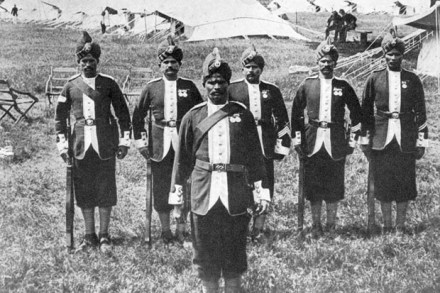
At six o’clock on 31 May 1916, an Indian soldier who had been captured on the Western Front alongside British troops and held in a German PoW camp stepped up to the microphone and began to speak. Not in Hindi or Urdu, Telugu or Marathi but in perfectly clipped English. He tells his audience, a group of German ethnologists, the biblical story of the Prodigal Son. That his voice still survives for us to listen to, clear and crisp through the creak and crackle of time, is an extraordinarily emotive link not just back to the Great War but to the days of Empire.

Many more Germans were displaced in 1945 than Indians during partition

Radio

What Radio 3 needs is a musical version of Neil MacGregor. The director of the British Museum and now a stalwart of Radio 4 is an intellectual powerhouse but his talks on radio are so clear, so crisp, so deceptively easy to follow that he draws you in and makes you feel that you too can understand the world in the way he does, with his enormously broad vision and his deep understanding of the way things connect.

Kate Chisholm on what makes the BBC World Service so special

Radio

‘Don’t take it for granted,’ she warned. ‘It’s one of the few places where you can hear diverse voices, different points of view; where you can understand that the world is infinitely complex.’ Alana Valentine, an Australian writer, was talking about the BBC World Service with such passion it was inspiring. You might think she would say this, wouldn’t she. After all, Valentine was giving her acceptance speech having just won first prize in the World Service’s International Radio Playwriting Competition for her radio drama The Ravens. Yet what she said was striking because you could tell she really meant it. These were not just platitudes.

What it’s like being a scarily talented teenager

Radio

It was when she said how she loved ‘watching the computer do exactly what you wanted it to do’ that I realised how exceptional she must be. To be so young, just 19, and so at home with technology that you can control it rather than be in awe of its complexity. By the age of 11 Brittany Wenger was teaching herself computer coding, after being inspired by a course at primary school in ‘Futuristic Thinking’. She didn’t find it easy, but she found it ‘a lot of fun’, which says a lot about her. First she persisted in spite of the difficulty, and second she found amusement in that toil and tedious repetition. Brittany is one of ten teenagers featured on this week’s Radio 1 Stories for having done something that has the potential to change the world.

Can Radio 3 escape the digital squeeze?

Radio

The new controller of Radio 3 has at last been appointed. Alan Davey (not to be confused with the former bassist from Hawkwind) comes to the BBC from the Arts Council and a career in the Civil Service. This will be his first job in broadcasting, and will be no small challenge. These are tough times for Radio 3, squeezed between the commercial charms of Classic FM and the trendy allure of BBC’s 6 Music, and, worryingly, in the last quarter its audience numbers went below 1.9 million for the first time since 2010. The BBC’s home of classical music and ‘culture’ is often criticised for being too off-putting, too elitist, not in tune with the current mood.

Mary Beard vs Jeremy Paxman

Radio

‘Did you find it a good read?’ asked Harrriett Gilbert. An incredibly long drawn-out sigh from Mr Paxman. ‘I think it’s really unsatisfactory,’ he at last replied. ‘But Jeremy,’ retorted Professor Beard, ‘I don’t think you’ve read it carefully enough.’ The eminent classicist from Cambridge is not afraid of conflict. She must eat her students for breakfast, loving an argument, which she of course will always win. Mary Beard didn’t just disagree with Paxman but insisted that her way of seeing, her interpretation, was the right one. She and Paxman were Gilbert’s guests on the first of a new series of A Good Read (Radio 4), in which the guests are expected to choose their favourite book and to persuade us to read it too.

The sofa that became a work of art

Radio

Last week on Front Row (Radio 4) the singer Joyce DiDonato recalled the advice she gave the new graduates of the Juilliard School, just about to embark on their professional careers in music. It’s a hard life. They’re asked to be perfect, which of course is unattainable. She wanted to encourage them to keep going, to persist in pursuing their art, despite the inevitable phases of discouragement and disappointment. Because, she says, art has the power to build bridges across cultures, religions, political divides. ‘It teaches empathy.’ She was referring particularly to musical art, but what she was saying applies also to radio.

Warhol’s ‘time capsules’ contain everything from toenails to previously unseen paintings worth millions

Radio

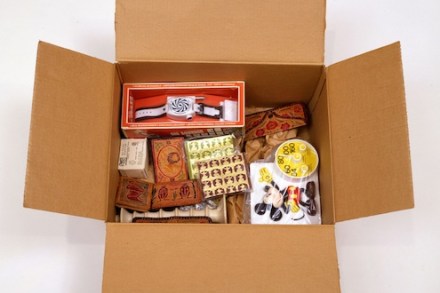
‘I don’t know what I think,’ says Lenny Henry, echoing what many of us who were listening were probably also puzzling over. ‘Part of me thinks it’s art by the sheer fact that an artist has decided that something like this should happen for the amusement and intrigue of his fans...’ Henry was at the museum in Pittsburgh dedicated to the life and work of Andy Warhol. Among the collection, now displayed on seven floors of an old warehouse converted into a glittering catacomb of Sixties and Seventies style, are 610 boxes, dated and sealed by Warhol and designated by him as ‘time capsules’.

Radio 4 deserts the British bird. Shame on them!

Radio

A strange coincidence on Saturday night to come back from the cinema, having seen a film about a woman fighting to save her job while suffering from depression and thoughts of putting an end to it all, only to switch on the radio and hear from people who have had suicidal thoughts themselves or who have suffered the peculiar, awful grief of losing someone to suicide. The film was affecting and sensitively done, but after listening to In Memoriam: Conversations on a Bench (Radio 4) I realised how different the impact of radio can be. It was not that the film had in any way glamorised depression, or turned us as viewers into voyeurs revelling in someone else’s misfortune.

Who needs drugs when you have Radio 3?

Radio

I’m willing to bet it’s only on the BBC’s Radio 3 that you’ll find yourself listening to a programme quite like Words and Music (Sunday evenings). You might want to disagree. Surely, it’s just a few bits of music stuck together with some poems and other readings on a random theme dreamt up by the production team? How easy must that be to pull off? Seventy-five minutes (or sometimes even longer) of dirt-cheap radio, quick to make, very few overheads, involving just a few hours per programme of research (nowadays so easy on Google) and a dead-simple edit job splicing everything together. But name another station anywhere that could make it work week-by-week with quite the same style, panache and sheer brio of the team at Radio 3.

Ambridge recovers its sense of humour — finally

Radio

‘Isn’t that charming!’ Carol declares at the height of the great Home Farm cocktail party, after being subjected to Jennifer’s somewhat over-enthusiastic description of her wine storage unit. Just three words but such a lot of meaning. Carol Tregorran’s resurrection in Ambridge after decades of silence is a stroke of genius by The Archers team (led by Sean O’Connor), and almost, but not quite, makes up for the absurdity of the Elizabeth/Roy storyline, still not resolved and likely to linger on for weeks yet, Elizabeth struggling to put Roy back where he belongs, Roy transformed from a cheery family man into a lovelost shadow of his former self.

Why is Radio 3 still leaderless?

Radio

It’s happened almost by stealth but the number of listeners to 6 Music has now overtaken Radio 3, creeping up to 1.89 million per week (just .05 million more than the classical-music station). Actually the margin between them is probably greater because 6 Music has no analogue signal and can only be heard digitally. Whereas 6 Music sounds cool and with its digital playlist capability and big-star DJs is just so on-trend, 3 is being left behind. Even more disturbing, there was no controller available to defend the station and remind us that the listening figures will bounce back in the next quarter because of the Proms effect — two months of nightly concerts, live on air, available online, and heard (and perhaps more importantly admired) throughout the world.

Two lessons in listening

Radio

Our hearing is the first of our senses to develop while we are in the womb. It’s the first connection we make to the life around us, and to other people. In a new series of The Listeners on Radio 4 (Tuesday) we heard from ‘professional’ listeners, whose lives depend on their highly developed use of this first and most crucial sense. We might hear, but do we always listen? ‘For me,’ says the barrister Helena Kennedy, ‘listening is the activity of hearing combined with the search for meaning, or the hidden meaning.’ When she cross-examines in court she has to work out on the spot whether someone is telling the truth. ‘To do that,’ says Kennedy, ‘you have to employ other senses.

Glasgow and the Commonwealth go back a long way; Radio 4 explores a murky past

Radio

What’s been missing from the schedules during the Commonwealth Games has been a straightforward reminder about who makes up the roster of nations and why. When, for instance, did it suddenly become OK to talk about the Commonwealth without that frisson of embarrassment about its origins in empire? How come there are now 53 independent member states (although for some strange reason the Glasgow Games are boasting athletes from 71 nations and territories)? Surely there were never that many colonies flying the British flag? It’s a bit of a missed opportunity because this could be the good news story we’ve all been looking for in these weeks of relentlessly bad and worsening news.

Does Radio 3 need a new controller?

Radio

Where next for Radio 3? Last Friday was the First Night of this year’s Proms season but it was the last night at the Proms for Roger Wright, who for 15 years has masterminded the station and for seven of those 15 the summer concert programme as well. Rather surprisingly, and you might think ominously, no successor has so far been named to steer this most elegant yet vulnerable station into the digital challenges of 2015 and beyond. Could this be anything to do with the fact that earlier in the year a new post — Head of BBC Music — was created? Will Wright’s tenure be the last time the station has a dedicated Controller, looking exclusively after the BBC’s classical music (and jazz) output?

The two men who walked barefoot to the capitals of the four nuclear powers on a peace pilgrimage

Radio

You might (if you’re over a certain age) still think it pretty amazing that TV not only allows you to watch Mario Götze put in that amazing goal, live, as it happened, in Rio de Janeiro’s Estádio Maracanã, but also that you can witness so immediately and tangibly the passion, the drama of that moment — you on your sofa in twilit Surrey, Somerset or deepest Sutherland watching those emotions fleeting across the individual faces of traumatised Argentinians as they come to terms with bitter defeat.