Culture

Culture

The good, the bad and the ugly in books, exhibitions, cinema, TV, dance, music, podcasts and theatre.

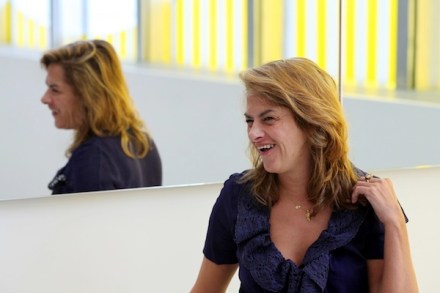
Radio 4’s Front Row is brilliant, witty and eclectic. So why let Tracey Emin spoil it?

Radio

Front Row is one of those Radio 4 programmes that it’s too easy to take for granted. It’s on every weekday, all year round, at the same peak listening time (after The Archers), with a team of presenters, John Wilson, Mark Lawson and Kirsty Lang, who have become such a reliable fixture they’re almost like chums. If you’re lucky enough to catch it regularly you’ll know its mix of interviews, reviews and conversations about buildings, books, pictures, poems, galleries, anything that’s remotely creative. Sometimes the reviewers are awfully pretentious, sometimes what’s being talked about is way too weird or winsome, sometimes it’s a reminder of just how silly, time-wasting and empty ‘creative’ art can be.

Radio: Today; The Reunion

Radio

You could say that Sue MacGregor has done as much for women on radio as Margaret Thatcher did for women at Westminster. You might, though, want to add that MacGregor survived for 18 years as the only woman presenter on Today, Radio 4’s chief news and current affairs programme, without finding it necessary to deepen her voice to make it more masculine or worrying about what she should wear. She soon established herself as being as essential to the programme’s character and stature as her colleagues, the late Brian Redhead, Peter Hobday and John Humphrys. MacGregor has always done things her way — by adding a softer, gentler, yet not more pliable, touch to her interviewing technique.

Radio review: Sunflowers Behind a Dirty Fence; The Fisherman

Radio

No one writes for radio for the money. Or for the notoriety. You’ll never make mega-bucks or see your name in lights. Yet still they write — because it’s challenging and yet also so much fun. There are no restrictions on the air, no boundaries of time or space, no limits on what a character can do or where they can go, in the space of 30, 45, 60 minutes. The only rules are to speak clearly as the writer, taking your listeners with you, and for the cast to have distinct voices, with immediately identifiable differences in tone and personality. If you have to struggle at any point with working out who’s speaking, the spell is broken, the play won’t work. The playwright Tom Stoppard began his career by writing for radio.

Noise – A Human History

Radio

You could say that Neil MacGregor revolutionised radio with his mega-series A History of the World in 100 Objects. In each of those 100 programmes he took us on an extraordinary journey of the mind, to show us what we’ve been up to since the first ‘primitive’ reindeer carvings of the Ice Age. He did this not by the usual route for such grandiose series of going on a whirlwind trip through history, but by looking at the small, often tiny details and drawing from them as much meaning as possible. He also transformed the 15-minute radio slot into a brilliant teaching tool, focusing on the minuscule while at the same time building block upon block of knowledge, so that if we listened to the programmes in sequence we came away feeling jolly clever.

Come together | 28 March 2013

Radio

‘That’s the power of ritual,’ said the Chief Rabbi, Jonathan Sacks, on Thought for the Day last week. He was thinking particularly of the Jewish festival of Passover with its ritual gathering of the family to eat unleavened bread and bitter herbs as a re-enactment of the experience of exile and slavery. ‘It’s an expression of collective memory and shared ideals...an annual reminder of what it felt like to be oppressed.’ His words were striking precisely because ritual is so often regarded with suspicion these days, signifying rigid, backward, inclusive thinking. Yet these simple acts of representation done in unison (whether Jewish, Christian, Muslim) allow us to become acquainted with loss, bereavement, betrayal.

Assault on the ears

Radio

Does anyone ever listen to Radio 4’s Moral Maze on Saturday nights? It is only the repeat edition (the live discussion happens on Wednesday nights), but even so why broadcast such a deliberately discomfiting programme at almost bedtime on the most mellow night of the week? It’s such an odd mismatch. There you are, winding down, daring to relax as you clear the last bits of washing-up before going to bed, only to find yourself blasted into thoughts you’d rather not have by the testy, tetchy tones of Melanie and Michael debating (with their presumably willing victims) the whys and wherefores of private schools, Nimbys, or gastric-band surgery on the NHS. This week the team (under Michael Buerk’s baton) were looking at ‘the morality of poverty’.

The Archers should carry a health warning

Radio

The drums roll, hollow and ominously persistent. Then come the trumpets, in a minor key, sepulchral, eerie, penetrating. ‘Just imagine,’ interrupts Donald Macleod, ‘the sense of shock mingled with a kind of disbelieving horror of those who performed that music in November 1695.’ Macleod was introducing his Composer of the Week, which as part of Radio 3’s Baroque Spring has been Purcell. It was a startling way to begin. Purcell was only 36 when he died, very suddenly, the cause unknown and variously suggested as TB, flu, or food poisoning — perhaps after eating some tainted chocolate. He had composed the music that was played at his funeral only eight months earlier, for the funeral of Queen Mary, which took place in the same venue, Westminster Abbey.

After Saddam

Radio

‘The problem is why,’ said the health project officer of a British charity working in the marshlands of southern Iraq close to Basra. ‘No one answers why?’ He was talking to the BBC journalist Hugh Sykes about the state of Iraq, ten years after the fall of Saddam Hussein. He agreed that the Americans and British had done ‘a good job’ in getting rid of the dictator but said that this had changed nothing in Basra, whose economy had been destroyed by Saddam as he drained the marshes, turning a landscape that was vivid green into burnt ochre. We also heard from the farmers who in the hours after Saddam’s fall set out with a JCB to destroy the dams and redig the ditches to bring back the water.

Nick Robinson’s Battle for the Airwaves

Radio

Deep within the BBC’s inquiry into the Newsnight and Jimmy Savile affair is a comment by Jeremy Paxman so inflammatory as to demand its own investigation (lasting months and costing squillions). The trouble, he said, with BBC News is that it has become dominated by ‘radio people’. This was not, it seems, intended as a compliment. It’s as if, in Paxman’s view, the whole dreadful, dreary, demeaning muddle was the fault of those ‘radio people’, because according to Paxman they ‘belong to a different kind of culture’. You might think it’s of little importance that Paxman thinks himself cast from a different mould to, say, John Humphrys or Eddie Mair.

Is radio succumbing to the greed of the internet?

Radio

‘Young people under 16 don’t want to listen to the radio unless there’s a picture to look at,’ said Annie Nightingale on the Today programme. It was Saturday morning and I was only half listening. But this woke me up sharpish. Nightingale was talking to Sarah Montague about the new ‘Harlem Shake’ craze on YouTube but she also enthused about the new Sunday-night Radio 1 show hosted by Dan and Phil, whose ‘visualised’ radio show I’ve already discussed. She’s right, of course; how can we expect young people brought up on the web, and glued to their iPhones and iPads, to be satisfied with listening to words or music or conversation without a screen to look at, filled with hectic moving images?

The sex test

Radio

‘We hear women’s voices differently from men’s,’ concluded Anne Karpf at the end of her search back through the radio archives to seek out the first women newsreaders on the airwaves. In Spoken Like a Woman (Radio 4, Saturday night), she decided this was the reason why it took so long for women to make it up through the plummy-voiced ranks to the heady heights of the newsroom. In 1922 when radio broadcasting began from 2LO on the Strand, there were plenty of female executives (such as Hilda Matheson, Olive Shapley and Mary Somerville) organising schedules, booking talent, coming up with ideas for programmes. Yet very few of them were allowed behind the mike for that all-important job, reading the news.

‘My country first’

Radio

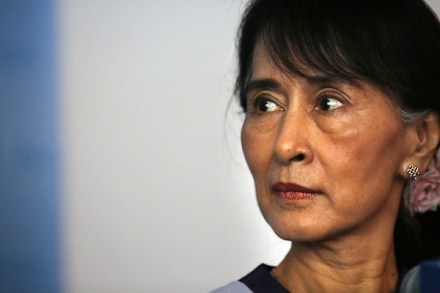
It’s not unusual for Kirsty Young’s castaways on Desert Island Discs to choose music that reminds them of people who are important to them. But Aung San Suu Kyi must surely have been the first politician-guest to ask her friends and family what she should take with her to that solitary isle, instead of carefully stage-managing her selection to present a particular view of herself. Who, for instance, would have expected to hear Tom Jones belting out ‘The Green Green Grass of Home’ on Sunday morning? But there he was, as cheesily sentimental as ever, chosen for Suu Kyi by her Burmese PA. She even confessed that she hadn’t listened to the song before the interview (which took place at her home in Naypyidaw) and said she had no idea whether she liked it or not.

Word challenge

Radio

The first competition had 30,000 entries; the second more than 74,000. How many will be attracted to this year’s 500 Words challenge, launched by Chris Evans on his Radio 2 morning show on Monday? It’s open to any young person — under the age of 13 — to come up with a winning short story. To create a fiction that works as a vivid, compelling narrative in just 500 words, and no more, is no easy task. Shorter means crisper, sharper, edgier and more focused; no dead wood. That’s hard enough for a seasoned grown-up. The young writer must quickly learn how to stick to the point, to conjure up a scene or say what they want to say, in just over a page of single-spaced A4.

Picking out the plums

Radio

‘How much did you say the TV licence cost?’ asks my American friend. ‘£145.50,’ I reply. ‘One hundred and forty-five pounds,’ she repeats, with astonishment. ‘And everyone has to pay it?’ ‘Yep. Every home with a TV.’ ‘That’s a lot of money.’ My friend is an economist, with the ability to be as precise about the US’s federal budget as I am about what I’ve just spent at the supermarket. She made me stop and think. If you multiply £145.50 by 26.4 million households, that is for sure a huge amount of money. Is it worth it? It’s the obvious question, to which the answer has to be yes, if the alternative is a commercially driven network, and especially when it comes to News.

All in the mind | 10 January 2013

Radio

Radio 4’s Book of the Week sounded so promising, pertinent, perfect for these gloomy first days of January. Maybe listening to it day-by-day could help to banish those demons of despair and disillusion which become so virulent after festive over-indulgence and the onset of the New Year? What better antidote to the dank outside than the positive thoughts and advice of an expert psychoanalyst, you might think. But although Stephen Grosz’s The Examined Life was beautifully read by Peter Marinker — a voice that’s easy on the ear yet always fluent with meaning — it felt empty, without relevance. Grosz promised us solutions to those feelings of being trapped, imprisoned, walled in by life.

Vision on

Radio

Something strange, very strange is going on. Take two sparky young, very young men, watch them launch their media careers a couple of years ago by creating zany videos and putting them up on YouTube. Witness the impish, imaginative duo going viral, followed by millions across the globe. Note that what they’re famous for are the videos, the visual gags; not for music, for sound, for aural wizardry. Who, then, might you expect to snap them up as the next best thing? The head of Sky TV? Or the controller of Radio 1? In this topsy-turvy world, it’s Radio 1 who’ll be hosting Dan and Phil from 13 January onwards, giving them their own Sunday-night request show (produced by Alistair Parrington).

Heart of the matter | 28 December 2012

Radio

Looking back can be fatal and is usually ill-advised, inducing a nostalgia that can only blight what lies ahead. Let’s risk it, though, reliving those radio moments of 2012 (avoiding the Jubilee and the Olympics) when words took shape and became visceral. Most memorable (perhaps because most recent) was John Humphrys’s grilling of his boss George Entwistle on the Today programme on Radio 4. The air crackled with pent-up feeling, as Humphrys, like one of Eddie Grundy’s ferrets, went after Entwistle. ‘You should go, shouldn’t you?’ says Humphrys, after we had heard the then DG admit that he hadn’t seen the newspaper story which exposed the flawed Newsnight investigation.

Dream team | 12 December 2012

Radio

It’s like being a fly on the wall (or maybe an earwig) at one of those fantasy dinner parties where a group of people who intrigue, infuriate or fascinate us are brought together just so we can see how they will get along. 6 Music, as a Christmas treat for listeners, has put Bradley Wiggins and Paul Weller behind the same mike and given them a record player (definitely not a CD; these two are seriously vinyl) and two hours of airtime to fill. What’s the favourite lyric you’ve ever written? Bradley asks Paul. Quick as a flash, Paul replies, ‘Two lovers kissing amongst the scream of midnight.’ Not quite Wordsworth, but that ‘scream of midnight’ does resonate. Can you name one song that means more to you than any other? Paul asks Brad.

Sounds in silence

Radio

Two really scary programmes this week, and not a vampire or psychopath to be heard. Both gave personal accounts of catastrophic hearing loss. Not something you’d expect to work on radio, the aural medium. How can you explain what it’s like to stop hearing when there’s no pictures, no other way to explain the absence of sound except through sound? But that’s what made them both such terrifying programmes. All the time I was listening, I kept on thinking: what would it be like if I suddenly couldn’t hear these voices, that piece of music they’re playing, this discussion of ideas. Hearing loss doesn’t mean, of course, that you actually stop hearing. It’s far worse than that, as both programmes illustrated, to alarming effect.

Value for money | 29 November 2012

Radio

It’s been challenged as ‘elitist’ and at times in its more than 60-year history it’s been threatened with deletion from the schedule. But CD Review, with its specialist ‘Building a Library’ slot, has been around since I was old enough to listen. Radio 3’s keynote Saturday-morning show is probably the programme I miss most when I’m away. You know exactly what the format is going to be, recognise most of the voices behind the mikes, yet you’re never quite sure what you might hear, what you could discover. Its survival, in a format virtually unchanged as far back as I can remember, always strikes me as extraordinary in this age of constant makeovers.

Short changed

Radio

Was that it? Was that the sum total of 90 years of radio? Radio Reunited, the three-minute ‘celebration’ of the first BBC wireless broadcast in November 1922, was a very odd affair. Billed as a revolutionary simulcast to a ‘potential’ 120 million listeners round the world, playing out on all the BBC’s radio stations at the same time, it was so short, so compressed, you couldn’t take in the many layers of sound at once, or decipher what the different soundbites could possibly be, now, then, or from the future. After about four or five listens, the babble of voices, Big Ben, Morse Code, birdsong and beeping did begin to clear so that keywords from the recorded messages from Listeners Anonymous cut through the background interference.

Carry on broadcasting

Radio

By some strange, freakish coincidence, just as the biggest story to hit the BBC in recent years was about to cut through the airwaves on Saturday night, Radio 4 was discussing the question, Who’s Reithian Now? It was as if, by some act of God, Lord Reith, the corporation’s creator, was speaking to us direct from the upper ether (or maybe the lower furnace?) and reminding us of why the BBC was set up as a licence-funded organisation in 1927, and what it is supposed to do in a crisis: carry on broadcasting. The Archive on 4 programme (produced by Karen Pirie for the independent company Whistledown Productions) replayed clips of Reith himself, proudly boasting that when he was director-general he used to read, and approve, every news bulletin before it went out on air.

Living document

Radio

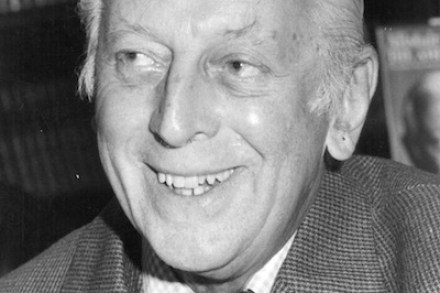
It takes Alistair Cooke three minutes, or about 450 words, before he finally gets round to declaring ‘I was there’ — on the night that Bobby Kennedy was assassinated in June 1968. Cooke was talking just a few days later on his weekly Letter from America slot on Radio 4. You might think Cooke would not have been able to contain his excitement that after 30 years on the job as a foreign correspondent he had at last actually been there as an eye-witness to this dramatic ‘accidental convulsion of history’. But, no, Cooke, as the ultimate professional, understood that for us, his listeners, the impact of his account would be enhanced 300 per cent if he gave us a preamble, a slow build.

Hearing voices | 1 November 2012

Radio

It’s business as usual for the BBC’s radio stations. While the boardroom burns, the production teams are busy creating — weekloads of entertainment, information, erudition. The doomsayers love a crisis, and this latest disaster is a devil of a mess, but we should probably remember that the Corporation depends for its survival not on the superiority of its management techniques but on the continuing excellence of its programmes. Once that goes, we should be really worried. Anyone doubting this should spend the afternoon with Simon Callow and his Tasting Notes programme on Classic FM (Sundays). Sponsored by Laithwaite’s Wine, the programme’s format obliges Callow to match each and every piece of music on his playlist with a suitably blended glass of wine.

Time switch

Radio

It seems an astonishing statistic but 99.6 per cent of radio is broadcast live, delivered straight from the studio mike to your personal loudspeaker: 99.6 per cent! Compared with TV, which must be at least 80 per cent recorded, this is an extraordinary indicator of how radio is the on-message medium right now, able to deliver immediate content, live and interactive. Yet a lot of radio listening is not done in real time these days, but later, after transmission, via the internet, the iPlayer, podcasts and downloads. We could experience a live connection but find ourselves switching on to a recorded moment. This is all about to be revolutionised with the launch earlier this month of a new version of iPlayer.

Serious listening

Radio

‘Shhhh! Listen!’ Peter White demands of us, his listeners. ‘You’re about to enter into a blind man’s world.’ White, who for years has presented the In Touch programme on Radio 4 on Tuesday nights and who is now a stalwart on You and Yours, has become such a finely attuned listener that he can tell whether a day is damp not by colour of the sky that he cannot see, or by smell, but by checking out what he can hear, the tick, tick, thump of raindrop on leaf as drizzle slowly envelops the street.

Teen spirit

Radio

A vital sign that radio is so much more vibrant these days than tired old TV is the way the networks are rebranding themselves, extending their range, developing their programme base. On Radio 1 on Monday night Keeping Mum took on the subject of young adult carers in a feature that could easily have been on Radio 4. Greg James, the Radio 1 DJ, hosted, but he was soon overshadowed by his young co-presenter, Pippa Haynes, who last year was recognised as a Radio 1 Teen Hero in a celebrity bash at Wembley Arena. Pippa, now 18, looks after her mother, who has spinal injuries, and her mentally ill sister, and has done since she was four. ‘Why is there no support?

No escape

Radio

‘They were Jews with guns! Understand that...’ declares Raymond Massey, chillingly, in the final scene of The Battle of the Warsaw Ghetto, first heard across America on Sunday, 12 December 1943. Notice that date: 1943. Not 1953, or even 1945. Just six months after the Jews who had been herded into the Polish capital by the Nazis lost their battle to escape certain death, American radio fans heard the rich and unmistakable voice of Massey (Oscar-winning star of a Hollywood biopic on the life of Abraham Lincoln), playing the role not just of a dead man, which was shocking enough, but of a Jewish dead man, a rabbi who had lost his life at Warsaw. After hearing the drama there would have been no excuse for not knowing, and fully understanding, what was happening in Europe.

Classic celebrations

Radio

It’s 20 years since Classic FM launched itself on the airwaves with a blast from Handel’s ‘Zadok the Priest’. Its mission was to play ‘the world’s greatest music’ non-stop to an audience for whom the classics was a no-go area. On paper it’s worked a treat. The station now claims five million-plus listeners, who love its blend of Vivaldi, Prokofiev and John Barry interspersed with adverts for dental implants, Age UK and classicfm.com/romance. Last Friday was devoted to its birthday celebrations.