Culture

Culture

The good, the bad and the ugly in books, exhibitions, cinema, TV, dance, music, podcasts and theatre.

Special effects | 1 October 2015

Radio

Maybe what we love about radio is the way that most of its programming allows us the luxury of staying content with ourselves, of realising that it’s OK to be no more, or less, than average. There’s no spangle, no sparkle on the wireless; nothing to make us feel we should be aspiring to live in a fake and fantastical world of gilded lives, to be uber-rich, super-tanned, ultra-happy. On the contrary, you could say most radio is a celebration of Ms or Mr Average. Think of all those short stories, plays, features and real-time, real-voice recordings which take us right inside (too far inside, some might say) the banality of most domestic situations.

Tales of the unexpected | 24 September 2015

Radio

Two significant anniversaries, each very different but both reflecting the BBC’s mission and the reasons for its continued success. From Our Own Correspondent has been on air for 60 years, reporting on events across the world not just as news but to fill in the back story to the headlines. Instead of bombs and bullets, we might find ourselves listening to a Russian-born piano teacher in Gaza who at last finds a grand piano and begins entertaining her neighbours with Chopin.

Eastern airs

Radio

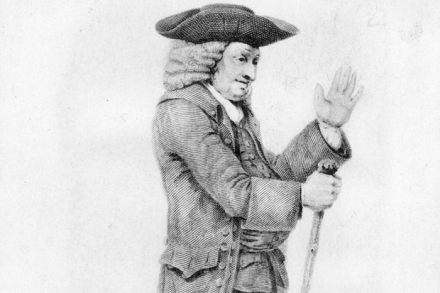
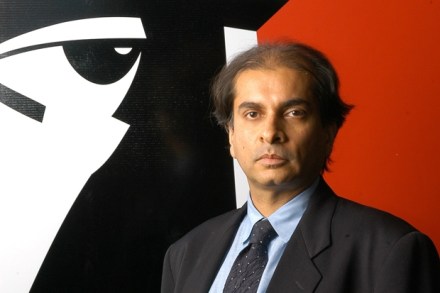
On Private Passions this week the writer Amitav Ghosh gave us a refreshingly different version of what has become a Radio 3 staple. No Mozart, Mendelssohn or Monteverdi for Ghosh, who speaks five languages including Arabic and Bengali, was born in Calcutta and has lived in Delhi, Oxford, Alexandria, Brooklyn and Goa. Instead, his musical choices were all about fusion and cultural exchange. Perhaps most surprising was an ‘Oriental Miscellany’ from the late 18th century, played on the harpsichord and sounding initially quite baroque until you realised that the fingering was much more complex, more layered, infinitely more interesting. The composer William Hamilton Bird had for the first time given Hindustani folk tunes a Western notation.

Loose women

Radio

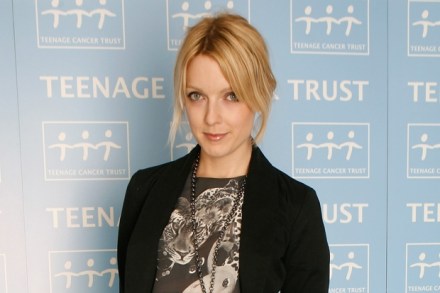
Late Night Woman’s Hour has created a Twitter storm with its twice-weekly (Thursdays and Fridays) doses of ‘mischievous and unbridled conversation’. The 11 p.m.–midnight slot is an ideal opportunity for cardigans to be unbuttoned and tongues unloosed, a chance to show that Radio 4’s venerable magazine programme for women can still shake up the station. Lauren Laverne was brought in from 6 Music to host the first few editions, signalling that there would be nothing mumsy about these hour-long chats around the table with a selection of well-chosen guests. Her style is refreshingly different, frank and a little bit cheeky, not at all Radio 4. How could it be when she spends most of her working life talking to musicians or hanging out at Glastonbury?

The BBC’s music man

Radio

To Radio 2 to meet Bob Shennan, controller of the BBC’s most popular radio station (the station attracts one third of all listening hours) and now also head of the newish monolith that is BBC Music. Why corral all of the Corporation’s music output on radio and TV into one enormous sub-division (on a par with BBC News, BBC Drama and BBC Sport)? Isn’t this just another cost-cutting compromise, a way of saving money by smoothing out the BBC’s output (its first production was that weird mish-mash of God Only Knows by a constellation of stars)? How will specialist stations like Radio 3 and BBC4 survive if swallowed up in what is essentially a bureaucratic creative exercise, victims of corporate branding?

Summer listening

Radio

Just back from a few nights in Sweden to find the perfect programme on Radio 3. It was one of those interval shorts that are always such a nightly bonus during the Proms season. That 20-minute space between concert halves is the perfect length for listening. On Sunday night it was Kate Clanchy’s turn to fill in between Sibelius symphonies and what better topic than The Summer House (produced by Julian May), or rather the stuga, mokki, sommerhus or dacha beloved of Scandinavians and Russians, where Sibelius would retreat to write those symphonies redolent of dark woods and deep waters. Here the hassle and routine of city life are abandoned and days are spent chopping wood, gathering cloudberries or just soaking up the long-awaited sunlight.

Words on war

Radio

It’s really hard to imagine now a world before 24-hour news, continually and constantly accessible in a never-ending stream of on-the-spot, up-to-the-minute reports. What, then, would it be like to have no news summaries on the quarter-hour, no ‘live’ bulletins, no way of knowing what’s going on at this very moment in Kathmandu, Kabul or Khartoum? In his new three-part series for the World Service, War and Words (Sundays), Jonathan Dimbleby looks back to the late 1920s, when the fledgling BBC was not allowed to broadcast any news item until it had first appeared in print. Newspapers reigned supreme when it came to reliable and up-to-date reportage.

Selective memory

Radio

It’s 70 years since the bombs were dropped on Hiroshima and Nagasaki and yet there has been no rush to commemorate this anniversary. It’s perhaps not surprising. Who would choose to recall the events of 6 August 1945 when the world first witnessed the effects of nuclear warfare? Yet the absence of date-setting, the annual forgetting, makes it appear that we’re much less keen to remember something that might make us feel uncomfortable or discredit us. One exception was on Radio 4 on Monday morning, when, in Under the Mushroom Cloud, Shuntaro Hida, a 98-year-old survivor of Hiroshima, told us frankly and without sentiment his memories of that day in August 1945.

Matters of life and death

Radio

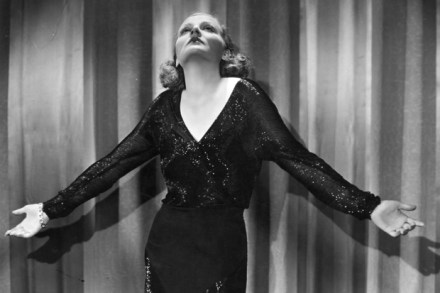
‘Bait by Cartier,’ she growls as her priceless diamond bracelet is strapped to a piece of rope and dropped overboard in the hope it might lure a fish on to the line. She’s stuck on a boat with a group of survivors after the freighter she was aboard was hit by a German U-boat during the second world war. She was Tallulah Bankhead, playing Connie, heroine of John Steinbeck’s novel-cum-film Lifeboat, for Mystery Theater, the American radio drama series, first broadcast in 1950 and now replayed on Radio 4 Extra (Sunday). They just don’t make voices like that anymore. It had star quality streaked right through it. That deep husky tone, the raucous laugh, the harsh put-down veering almost at once into a sensual come-on.

Space case

Radio

The idea that Radio 2 should be sold off by the BBC to a commercial rival is as nonsensical as BBC1 losing Strictly Come Dancing, or Heinz giving up on baked beans. The station, in its former incarnation as the Light Programme, was a core product of the corporation, the home of the Palm Court Light Orchestra, Kenneth Williams, Semprini, Billy Cotton, Sid James and Edmundo Ros. It gave us ‘light’ entertainment — music to dance, exercise or sing to, comedy shows, magazine programmes, dramas of ordinary life rather than Greek tragedy. The comedy programmes on 2 were siphoned off long ago to 4 and then 4 Extra, as were all the dramas, including The Archers, and Woman’s Hour too.

Tax return

Radio

Make no mistake: the Proms, whose 2015 season was launched last night, would not, could not, exist without the BBC, or the licence fee. Just under half the cost of putting on such an ambitious nightly series of concerts throughout the summer, drawing on orchestras from across the globe, commissioning new work, pulling together programmes that mix popular and safe with little-known and challenging, comes from the sale of tickets, the rest is subsidised by taxpayers. To social-justice campaigners this might seem like an outrage.

Caught offside

Radio

It’s not surprising that politicians have such an on-off relationship with the broadcast media. One slip. One casual comment. One lapse of memory. Even the immaculate, armour-plated Nicola Sturgeon was caught out by Jane Garvey last Wednesday as the Woman’s Hour presenter congratulated her on her latest elevation. It had just been announced that Scotland’s First Minister was top of the Woman’s Hour ‘power list’ of the top ten women for 2015 (beating Angelina Jolie and Caitlyn Jenner) and Sturgeon was doing a live telephone interview on the Radio 4 programme from her office in Edinburgh. Garvey then lobbed a question, oh so casually, but oh so deliberately, like a lioness waiting to pounce. ‘The Big Game tonight?

Anniversary fatigue

Radio

There’s a part of me that thinks OK, we’ve heard enough now, one year on from the beginning of the centenary commemorations, about the first world war. Do we really need any more programmes (on radio or television) about Ypres, Gallipoli, Akaba, Versailles, and the Western Front? Or are we wallowing in history’s horror stories rather than trying to learn from them? There’s a danger that anniversary fatigue will set in and stop us pausing to think, to really contemplate, the reality of that terrible, catastrophic war and whether there is any way it can be prevented from happening again.

Sea sound

Radio

It’s often not visual images that stimulate memory but a smell, a taste, the sound of pebbles crashing on to the beach, ice cream being scooped into a cone, seagulls circling overhead. Where was I when I first heard that sound? That’s why the National Trust (in association with the British Library sound archive) has just announced its Coastal Sounds of our Shores campaign. We are all invited to send in our own audio recordings from the beach: short, five-minute clips, impressions taken outdoors, in real time, which capture what the seaside means to us. Not photos, or postcards, but an online archive of sound memories.

Evan sent

Radio

Evan Davis’s series on business life, The Bottom Line (made in conjunction with the Open University), has become one of those Radio 4 staples, something that’s just there in the schedule and all too easily taken for granted. Productivity, contracts and contacts, the new appreneurs (creators and sellers of apps) are not subjects I feel the need to know very much about and the business pages of the newspaper usually get sent straight out for recycling.

There will be blood | 4 June 2015

Radio

If you’re in the least bit squeamish you’d better stop reading now. What follows is not for those who blanch at Casualty and come over all faint at the sight of blood. I’m told it’s a first for radio — following an operation in real time and going right inside the experience. It began at breakfast time on Tuesday on Radio Five Live as we listened to Stephen, a patient at Queen Elizabeth Hospital in Birmingham. He’d woken up at 3 a.m. to hear one of the nurses clip-clopping down the corridor towards him. She’d come to tell him that at last they’d found a heart which they hoped would be a good match, and the operation which he had been waiting for to save his life would take place in just a few hours. How did he feel about it?

Dr Johnson in Tahrir Square

Radio

Goodness knows what the Great Cham would have made of Radio 4 airing an adapted version of his philosophical fable, Rasselas, Prince of Abyssinia, on Sunday afternoon. Perhaps he would be surprised to see it done at all: the works of Dr Johnson are hardly fashionable these days and Rasselas is probably little known to most people, let alone read for pleasure. Which is a shame. We studied it for A-level (a dead giveaway as to my age) and although Johnson’s robust cynicism could have scarred a depressive teenager for life (‘Human life is everywhere a state in which much is to be endured, and little to be enjoyed’; ‘Such ...

Object lesson | 21 May 2015

Radio

The idea of using objects — salt, cod, nutmeg, silk — to turn history lessons into something popular and accessible has been around for at least a generation. It’s a great way to avoid complicated chronologies and the need to remember dates. A well-chosen object, or trading tool, can tell a narrative story that at the same time reflects the multicultural present, often showing unusual and previously unconsidered connections between places and peoples. Neil MacGregor brought the technique to Radio 4 with his brilliantly conceived and executed account of world history as told through 100 objects in the British Museum.

The lives of others | 14 May 2015

Radio

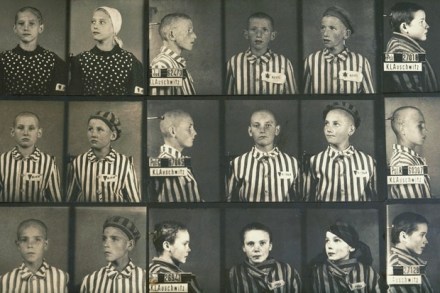
‘I call Zelma Cacik who may be living in London,’ says the announcer, in the clipped RP accent of the BBC in the 1940s. ‘I call her on behalf of her 16-year-old cousin...’ The voice betrays no emotion, no feeling, it’s so matter-of-fact, but the script spares no punches as it tells the cousin’s story in blunt statements of fact. She was born in Poland, separated from her family when she was 12 and made to work in a munitions factory while her parents, her sisters and brother were sent to Treblinka extermination camp.

Home and away | 7 May 2015

Radio

An extraordinary black-and-white photograph of a young black boy taken on the Isle of Wight by Julia Margaret Cameron in 1868 shows him in exotic clothes and a heavy silver-bead necklace, like a chain-of-office or a prisoner’s collar. He looks so sad, reminding me of the caged lions in London Zoo, his eyes heavy-laden, his listless body lacking the restless energy you would expect of a seven-year-old. He is Prince Alemayehu of Ethiopia, brought to England after his father, the emperor, committed suicide in his palace at Addis Ababa having just been defeated by the British.

Presence of mind

Radio

‘It’s hard to know how to tell this story,’ she said as she began. ‘Because it’s so loaded. It’s so heavy-duty.’ Lore Wolfson was talking about the death of her husband, Paul, or rather about the onset of the illness that led him a year later to take an overdose of heroin, aged 61. He had been diagnosed with early-onset dementia, in a peculiarly aggressive form, rapidly losing his words, his memory, his capacity to work or function independently. Lore began recording her conversations with Paul very soon after they knew for sure why he was having word-finding difficulties. ‘It was the natural thing to do,’ she said, because she’s a radio producer and, for her, keeping an audio diary was more natural than writing things down.

Three cheers

Radio

The new controller of Radio Three, Alan Davey, was on Feedback this week (Radio Four) talking to listeners about his plans for the network. Roger Bolton, who presents, wondered if Davey was worried about ratings — Radio Three hovers around two million listeners compared with the 5.5 million boasted by its commercial rival Classic FM, or perhaps more alarmingly the two million lured to BBC upstart 6 Music. ‘Ratings aren’t a pressure for me,’ said an ebullient Davey, while admitting that he does want to find more listeners, and then to ensure they stay tuned. But how? Without going down the Classic FM route of more audience participation, more gimmicks, more cheesy competitions? ‘We have to get better at explaining what Radio Three is about ...

I, Bette Davis

Radio

It was called Frankly Speaking and by golly it was. The great screen actress Bette Davis was being interviewed by not one but two men: George Coulouris, with whom she co-starred in Hollywood, and a BBC producer. ‘It’s a little sad for some of us who adore your work that a lot of your best performances have been in fairly trivial films,’ said the producer, Peter Duval-Smith, as if to tempt Davis into dishing the dirt on the directors who made her what she became. ‘I don’t know what you’re talking about,’ Davis replied, not a woman to be tricked into anything. ‘Who do you think made you a star?’ Duval-Smith persisted. ‘Me myself,’ said Davis. ‘And my sweat, blood and tears...’ ‘Nobody helped you?

Keeping the faith | 9 April 2015

Radio

There was no shortage of Easter music and talks across the BBC networks with a sunrise service on Radio 4 followed by much fuss and fanfare for the ‘live’ relay of Libby Lane’s first Easter sermon as Bishop. A significant milestone for the C of E as women are at last allowed to don mitres and wield a bishop’s crozier. Three, not to be outdone, invited the Revd Lucy Winkett (who had to outride the brouhaha caused by her appointment as the first woman priest at St Paul’s Cathedral) on to Private Passions, where she proved herself an insightful musician and theologian.

Did Radio 4 have to deal with the Germanwings disaster as it did?

Radio

‘You can hear pretty clearly the sound of one of the helicopters and you can see it in the darkness,’ yelled James Reynolds over the noise of helicopters, police sirens, vehicles on the move. It was 8.10 a.m., the Today programme on the morning after the fatal Airbus A320 crash in southern France last week. Reynolds, a fine reporter, had been sent off to the crash site for an on-the-spot report, ‘live’ action, high-octane drama, tension so taut it’s almost visible. ‘I can see a convoy of police vehicles coming up the road with blue sirens,’ he continued. ‘There goes the police helicopter...’ Huge noise of rotors whirring. ‘It’s almost passing overhead.’ No doubt about that as the noise boomed around the kitchen.

Does the future of radio really lie in podcasts?

Radio

To a debate on the future of radio at the BBC where it turns out not to be a discussion on who’s listening now but how they’re listening. The Reithian ambition to inform, educate and entertain needs to change, says Mary Hockaday, controller of BBC World Service English, and become ‘inform, educate and connect’. But how do you find and hold on to your audience in the digital age? The buzz word here is ‘podcast’ after the extraordinary success of Serial, the American-made documentary that went viral and has now reached an astonishing 75 million downloads worldwide, still rising. In many ways, though, Serial was very old-fashioned radio. True crime told as a long-form narrative in 12 episodes.

Radio is the best way to mug up on the classics

Radio

If ever I found myself at a pretentious literary party obliged to play David Lodge’s ‘Humiliation’ game and to confess to the great books I’ve never read, I’d only escape the ignominy of winning (by being the most ignorant) because of the radio and the almost weekly possibility of hearing yet another classic adapted as a drama or read at bedtime. The nuances of the novel may be lost in translation — the depth of characterisation, the complexities of the plot, its many threads and diversions — but a good adaptation will capture the essence, the true feeling of the original and take us there in our imaginations as effectively as reading from the page, if by a very different route.

What it’s really like to live in India today – stressful

Radio

After a month cooped up in a Scottish castle, no internet, no TV, and no radio, watching hectic snowflakes billowing through the wooded hillside opposite my window, I realise that what I’ve missed most about this supposed deprivation has not been the news (to which I thought I was addicted) or the chatter, the company of other voices, but the chance to be taken in my head to other places and inside quite different experiences of life. It’s not just the factual education that radio can provide (although I’m pretty sure most of what I know has come from listening on air), it’s the absorbing intimacy of hearing other people talk about themselves, as if only to you, one-to-one, in direct communication.

All radio drama should be as good as this Conrad adaptation

Radio

The aching hum of crickets. The susurrus of reeds. The lapping of waves. The unmistakable noise of a sound technician ripping a duster in two as the heroine’s dress was torn, thuggishly, by a character in the heat of passion... The sound effects for Harold Pinter’s adaptation of Joseph Conrad’s Victory (which started life as a screenplay and has now been dramatised by Radio Four, Saturday)transported us to a private island in the Java sea.