Culture

Culture

Transparent spirit: craft distilling has come to Washington DC big time

This article is in The Spectator’s December 2019 US edition. Subscribe here. A white cross once rested over the door of the windowless warehouse at 1135 Okie St NE in Washington, DC. Residents seeking a reprieve from the street gangs and drugs that plagued the Ivy City neighborhood would huddle on the second floor and listen to the holy men of Old Ship of Zion Baptist Mission Church preach deliverance. Deliverance came. Crime plummeted. The violence and poverty along H Street gave way to Zagat-rated restaurants, organic markets and boutique bars. The closest thing you’ll see to weapons now in Ivy City is at Kick Axe, a new watering hole offering flannel-clad Capitol Hill staffers the opportunity to have a drink and, well, throw axes at wooden boards.


distilling spirit

How to converse with know-it-alls

What does flushing the toilet have to do with reducing political extremism? This isn’t a weird joke. There’s a bizarre connection here, studied by behavioral researchers. It relates understanding our ignorance to moderating extreme views.By way of entry, you have probably heard of the Dunning-Kruger effect, the phenomenon of incompetence that’s too incompetent to recognize itself. When people have very little exposure to a subject, their confidence in their own opinions about it becomes dramatically inflated. If, for example, a plane crashes in controversial circumstances, many people on Twitter magically become aeronautical engineers and air-traffic control 'experts' in about five minutes.

unread library

Payton’s place

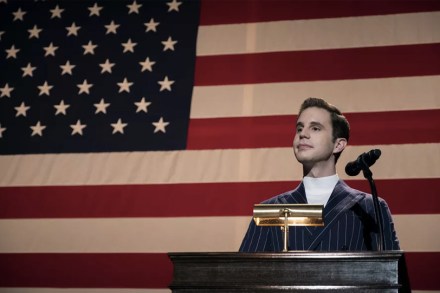
This article is in The Spectator’s December 2019 US edition. Subscribe here. Four episodes in, I finally decided I really didn’t like The Politician (Netflix). Initially, I thought I might because there was lots of advertising assuring me how good and culturally important it was going to be. Also, it’s made by the same creative team responsible for Glee, that slick but likable and quite moreish series about an American high school glee club where an impeccably diverse class of gay and disabled people keeps bursting into implausibly accomplished cover versions of classic pop songs. But no. The Politician leaves you with the same unpleasant, dirty, life-just-wasted feeling I imagine you’d get from watching Japanese hentai porn.

politician

Everyone’s climbing aboard the Beyond Meat gravy train

This article is in The Spectator’s November 2019 US edition. Subscribe here. It’s summer in Wokeville, California, and the denizens congregate in their backyards, popping open craft beers and passing around kelp-flavored rice chips as the Beyond Meat burgers sizzle on the solar-powered grill. As Brad Paisley would say, it’s just another American Saturday night. Er. Wait. Not sure I caught that right. Backyards, yes. Craft beer, yes. Rice chips, well, OK. But did you say Beyond Meat? I am sorry to report this, dear residents of Everywhere Else, but yes, that’s what’s cooking in Wokeville these days.

beyond meat

California drinking: forgive them their granola

This article is in The Spectator’s November 2019 US edition. Subscribe here. Cyril Connolly famously opined that every young man of spirit wants to do two things: start a magazine and start a chicken farm. That’s about half right, I think. It would have been more accurate if he had included a true, if often unspoken, heart’s desire: to be a wine critic. Do you know anyone — anyone you still speak to, I mean — who hasn’t wanted to be one? Every Sunday, my family and I participate in an august ceremony that extols a beneficent God through whose ministrations we accept the gift of vinum...fructum vitis et operis manuum hominum: ‘wine… fruit of the vine and the work of human hands’.

pax mahle california

Tough gospel: the twin cities of Sesame Street and Mister Rogers’ Neighborhood

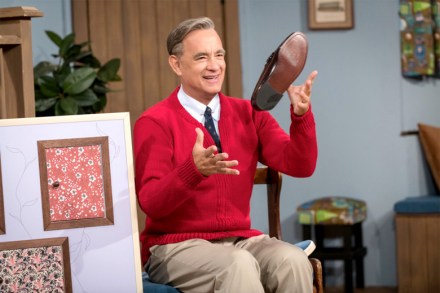
This article is in The Spectator’s November 2019 US edition. Subscribe here. For people who, like me, were born in the troubled times of the Seventies, Sesame Street and Mister Rogers’ Neighborhood were an educational crossroads. As we gazed into the cathode-ray tube for direction, each program led to a very different future. Sesame Street, now in its 50th season, remains unavoidable and familiar. Yet we’re captivated by the return of Mister Rogers’ Neighborhood, the unpolished creation of Fred Rogers that aired from 1968 to 2001. Last year, the documentary Won’t You Be My Neighbor? became a surprise hit. This week sees the opening of A Beautiful Day in the Neighborhood, a movie starring Tom Hanks as Rogers.

rogers

The ‘Russians’ of Brighton Beach

This article is in The Spectator’s November 2019 US edition. Subscribe here. At the very southern tip of Brooklyn, far from the hip avocado cafés and right before you hit the sea, there sits the neighborhood of Brighton Beach. Nicknamed ‘Little Odessa’ after the waterfront city in Ukraine, the area is home to primarily Russian-speaking immigrants from the former Soviet Union. It’s a jumble of identity. The immigrants are mostly Jews from Ukraine, hence the nickname, but also Russia, Belarus and the other Soviet republics. So what to call these people in America? In Russia, in Ukraine, in Belarus, our identity cards never described us as Russian, Ukrainian, Belarusian. We were just Evrei, Jews.

brighton beach russians
transracial

Finally, the transracial community are gaining recognition

Since 2012 I have publicly identified as Wrongskin. To those ignorant of the term, this means I was born white but I identify as black. I'd kept my race dysphoria a secret for many years but it had become increasingly difficult to hide. Being the transcendental trailblazer I am, I decided to come out and challenge the bigotry of cisrace people. Predictably enough at the time, it was regarded as nonsensical and I was strongly ridiculed. Today however, transracial individuals are finally being ‘seen'.According to the UK’s Telegraph, the Universities and Colleges Union (a British trade union in further and higher education) have stated that regardless of skin tone, people should be able to identify as black.

A motel room of one’s own

This article is in The Spectator’s November 2019 US edition. Subscribe here. To gauge a man’s character, note how he spends a month in Paris. Edward Hopper, according to the catalog of his 1933 retrospective at New York’s Museum of Modern Art, lodged with a ‘respectable French family’, studying French and ‘avoiding bohemia’. Asked if he met any painters during his visits, he responded, ‘No, I did not know anyone. Gertrude Stein was on the throne when I was there.’ Hopper knew it wasn’t his scene. Isolation was a persistent theme in Hopper’s art and life. Was he dogged by isolation or did he pursue it? ‘Did anybody really know this silent, non-communicative man?

hopper

A journalism lesson from Northwestern

Student journalists at Northwestern University apologized for doing journalism on Sunday.In response to complaints by student activists over their coverage of Jeff Sessions’s recent visit to campus, the staff of the Daily Northwestern apologized for causing ‘harm’ to their fellow students in a recent editorial. Among their supposed transgressions, the reporters posted pictures of protesters to social media, which was ‘retraumatizing and invasive’, and committed an ‘invasion of privacy’ by contacting students for interviews.Why apologize for standard journalistic procedures? The editors offered this reasoning: ‘We feel that covering traumatic events requires a different response than many other stories.

Northwestern University

Ben Shapiro and the extreme nonsense of the horseshoe theory

I wrote last week that Catholic nationalist ‘groypers’ were beating the likes of Charlie Kirk and Ben Shapiro at their own debate nerd game. Shapiro tried to return fire on Thursday. His speech at Stanford University was aimed directly at the ‘alt-right.’ I agreed with much of what he said, about the immorality of equating skin color with moral worth and of jokes about the nature of the Holocaust. Shapiro made a good point in saying that ‘irony’ can be a weaselly rhetorical maneuver inasmuch as it allows people to express contentious opinions with the escape clause of insincerity. But Shapiro's speech had serious weaknesses in style and content. Firstly, he refused to name anyone that he was referring to.

ben shapiro

Brazilian wax

This article is in The Spectator’s November 2019 US edition. Subscribe here. When Brazilian president Jair Bolsonaro spoke at the United Nations General Assembly in late September, he depicted Brazil as a victim of colonialism. ‘The United Nations has played a fundamental role in the suppression of colonialism,’ he said, ‘and we cannot allow this mentality to return to these rooms and corridors at any pretext. We cannot forget that the world needs to be fed.’ Foreign countries, Bolsonaro alleged, have ‘an interest in keeping indigenous people living like cave men’.

brazilian
craft

Craft brewing’s Midwest comeback

This article is in The Spectator’s November 2019 US edition. Subscribe here. ‘No food or drink has evolved as much as beer in the past 15 years,’ says J. Ryan Stradal when we meet for a drink at the Beer Grotto, in Ann Arbor, Michigan. The author of the New York Times bestselling debut Kitchens of the Great Midwest is in the middle of his Midwest book tour. His latest novel, The Lager Queen of Minnesota, is a multi-generational saga that starts with two sisters, a stolen inheritance and a dream of making the best beer in Minnesota. It’s a family story told through beer goggles, which charts the evolution of Midwestern brewing from the 1960s to the present day.

Audio blitzkrieg

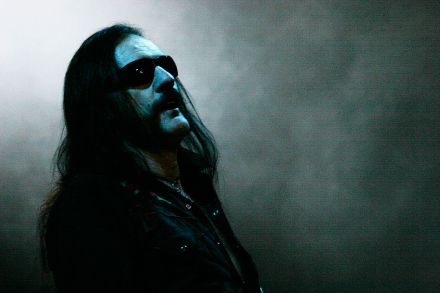
This article is in The Spectator’s November 2019 US edition. Subscribe here. Wokeness, first conceived of by the Armenian mystic George Gurdjieff (1872-1949) had barely reached the mainstream when Ian ‘Lemmy’ Kilmister died in 2015. Still, Lemmy had given considerable thought to staying woke. As a champion abuser of amphetamines, he’d spent more time awake and thinking than anyone since 1945. Perhaps his surprising death –– surprising, because he seemed indestructible –– was necessary in some Gurdjieffian way, to make room for the terrors that now occupy our psyches.

motörhead lemmy

The perfect crime

This article is in The Spectator’s November 2019 US edition. Subscribe here. Everyone loves a good murder. Tales of cold-blooded killing were bringing in audiences even before Truman Capote elevated the telling. Now, as if tales of real-life slaughter aren’t enough, podcasters color the horrors and hook the listeners with spooky music, awkward cliffhangers and a dubious sociological moral. The typical true-crime podcast has hosts who seem to be chugging wine from the box and narratives ruined by contrived social implications. A cynic or a detective would link this style to the appearance of listicles of the best true-crime podcasts in Good Housekeeping, Oprah Magazine, Town and Country and Women’s Health.

true crime
hendrick's nostalgia

Nostalgia sells — but you have to get it right

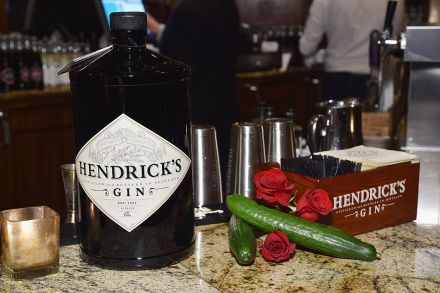
This article is in The Spectator’s November 2019 US edition. Subscribe here. People don’t believe me when I tell them we created Hendrick’s Gin 20 years ago — mostly because the bottle looks like it’s been on the market for more like a century. Over the course of those 20 years, we’ve gone from an unusual little gin to a global brand. We sell more than one million cases a year. The secret is nostalgia. Most of the products we design at Quaker City Mercantile, the creative agency I run in Philadelphia, are known as ‘nostalgia’ brands. Nostalgia can be a powerful thing, but it’s not as easy as slapping a faux-vintage label on and calling it a day. Any nostalgic design has to come from an inherent truth about the brand.

Is Lou Reed a rock ’n’ roll Dostoevsky?

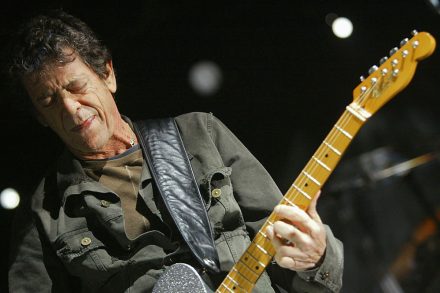
This article is in The Spectator’s November 2019 US edition. Subscribe here. A journalist friend was once ordered to interview Lou Reed in his hotel room. The meeting was not a success. Reed retreated to the closet bearing a copy of the poems of Delmore Schwartz and refused to come out until his guest had paid cash for it, saying, ‘Delmore needs the money.’ Reminded that the author of In Dreams Begin Responsibilities had died some years before, Reed observed, ‘Well, his family needs the money.’ $5.99 changed hands and the conversation continued.

lou reed

Why are young people so left-wing?

This article is in The Spectator’s November 2019 US edition. Subscribe here. The French economist Thomas Piketty, who made his name with Capital in the Twenty-First Century (2013), has another book out next year called Capital and Ideology in which he looks at changing patterns of voting behavior in Britain, France and America. One of his findings is that, until quite recently, the more educated voters were, the more likely they were to vote for right-of-center parties. Now, the opposite is true. Which might explain why Donald Trump declared at the height of the 2016 presidential election: ‘I love the poorly educated.’ Piketty has already published a paper about this and the data he’s accumulated is eye-catching.

left-wing

Top Boy wins the turf war

This article is in The Spectator’s November 2019 US edition. Subscribe here. I couldn’t stand The Wire. Everyone mumbled unintelligibly, the pace — inexcusably in a series about drugs and violence — was often glacially slow, and I found some of its characterization too transparent, like, ‘Ooh, I know. We’ll make the wise old black guy have the unlikely hobby that he repairs dolls’ houses, so that viewers will appreciate the nuance and hinterland.’ Top Boy (new on Netflix), on the other hand, is pacy, plausible and deliciously ruthless. It’s like The Wire, relocated to London with a much cooler soundtrack and with all the boring bits removed.

top boy

Pasta, like all good things, should come to an end

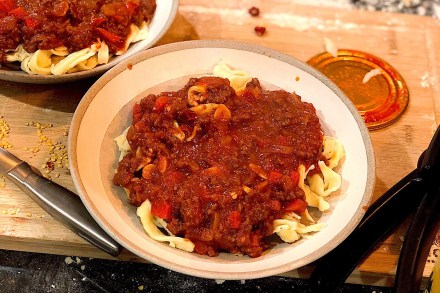
Olive Garden’s ‘Never Ending Pasta’ promotion, I’ve come to believe, is an accelerationist ploy. For about $11, you can engorge yourself with your pasta of choice, paired with your selection of a sauce, many of which catch the American eye with the adjective ‘creamy’ or ‘five cheese.’ Authenticity is an afterthought in the fever dream that is ersatz ethnic dining in endless proportions. And with $100 and a bit of luck, you could have purchased a ‘Never Ending Pasta’ pass — the 24,000 winners of this pass can indulge in the creamiest pasta with the crispiest toppings for nine weeks, unlimited. They can eat their weight in pasta without ever having to see the bottom of their ceramic dish staring back at them.

pasta

Where are world leaders educated?

This article is in The Spectator’s October 2019 US edition. Subscribe here. Leading minds Where are world leaders educated? According to an analysis by the UK-based Higher Education Policy Institute, the US has just overtaken Britain in the number of world leaders educated at the country’s universities. — 62 world leaders (monarchs, presidents or prime ministers) were educated at US universities. — 59 were educated at UK universities. — Two years ago, the respective figures were 57 and 58. — 40 current world leaders were educated in France, 10 in Russia and 9 in Australia. The burning question Is climate change making wildfires worse? Acres burned in US wildfires: 1928 43.54m 1938 33.81m 1948 16.56m 1958 3.28m 1968 4.

leaders
mikhaila peterson carnivore

The trouble with the Petersons’ ‘carnivore diet’

One of the odder statements of Canadian self-help supremo Jordan Peterson is that his health problems have made him so sensitive to food and drink that when he drank some apple cider he did not sleep for 25 days straight. This, if true, would mean that he had doubled the record for the longest time of constant sleep deprivation. Insomnia? It happens. Cider-induced insomnia? Perhaps. Cider-induced sleeplessness that would make the inmates of Guantanamo Bay look well-rested? I can believe he thinks it happened but I can’t believe it happened.Peterson adopted an all-beef diet on the advice of his daughter, Mikhaila, who had been following a similar meat-based diet in what she claims was a successful attempt to treat her chronic auto-immune problems.

Junk food is my American dream

This article is in The Spectator’s October 2019 US edition. Subscribe here. I love junk food in an insane, passionate way. Perhaps this is because I was a fat kid and though I am not a particularly fat adult, my fat kid-ness has never left me. I am firmly of the belief that if you were once a fat kid, it is an indelible state that can never be escaped, much as one might try. The state of fatness during those years made me who I am today. Or perhaps my love of junk food is just one of the things that makes me distinctly American. We Americans love our junk food. One in three eats it every single day and they do it because junk food is delicious and because junk food is largely an American way of life.

junk food

Secrets of the maestro

This article is in The Spectator’s October 2019 US edition. Subscribe here. At last, some justice for the ‘teacher of Leonardo da Vinci’. Verrocchio: Sculptor and Painter of Renaissance Florence, now at the National Gallery of Art in Washington, DC, reveals that this master was more than a mere footnote to his famous apprentice. Born around 1435 into the artistic boomtown that was Florence under the Medici, Andrea del Verrocchio may, in fact, have been the original Renaissance man. The greatest artists of the Florentine Renaissance took root in his studio and grew out of his mentorship: not just Leonardo, who stayed with him for over a decade, but also Pietro Perugino, Lorenzo di Credi and, most probably, Domenico Ghirlandaio and Sandro Botticelli too.

Grandpa, who were the Rolling Stones, and why?

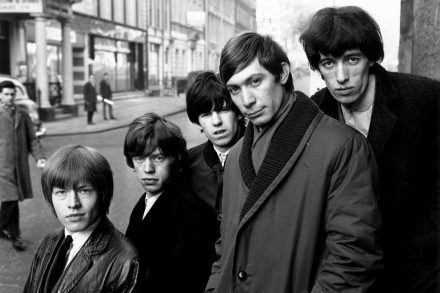
This article is in The Spectator’s October 2019 US edition. Subscribe here. The Rolling Stones’ delayed tour is back on the road. Not the tour they delayed after Keith Richards fell out of a coconut tree, but the one delayed because Mick Jagger had a heart attack. If you’re a boomer of advanced years and decayed taste, all this is no doubt a big deal, your last chance to see some of the last icons of the original and brief Rock Era, before you or they kick the bucket. Ladies and gentlemen, the greatest rock ’n’ roll band in the world, the Rolling Stones. Except they aren’t the Stones. They haven’t been the Stones for years.

rolling stones
podcasts

Pod almighty

This article is in The Spectator’s October 2019 US edition. Subscribe here. ‘Man the food-gatherer,’ wrote Marshall McLuhan, ‘reappears incongruously as information-gatherer.’ Once we foraged for information in the library. Now we graze among the podcasts. In the age of compulsive eating, podcasts are compulsive listening, an attempt to fill the silence. Nothing better to do? Click on a podcast, and let your attention drift. It takes no effort, it dissolves minutes into hours, and talking about the ‘great podcast’ you just listened to can sound just as smart as saying you’re reading War and Peace. After all, podcasts were originally made by nerds, for nerds.

Colleges should be ‘islands of excellence’

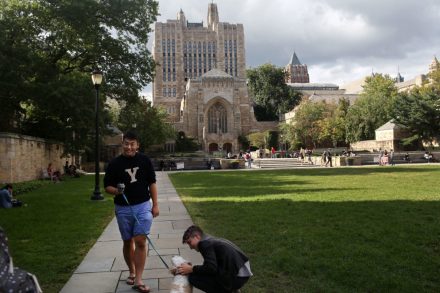
This article is in The Spectator’s October 2019 US edition. Subscribe here. America’s colleges and universities are in crisis. According to the latest data released by the National Student Clearinghouse Research Center, enrollment is down 1.7 percent compared with 2018, following a drop of 1.8 percent the previous year. If you contrast 2019 with 2017, that’s more than half a million fewer students. The brunt of this decline is being felt in New England, the center of America’s higher-education sector. In eastern Massachusetts, eight colleges have either closed or merged in the past four years, while in Vermont three colleges have gone to the wall in 2019 alone. Most experts think things will get a good deal worse.

yale colleges
smoking

Who else misses smoking in a bar?

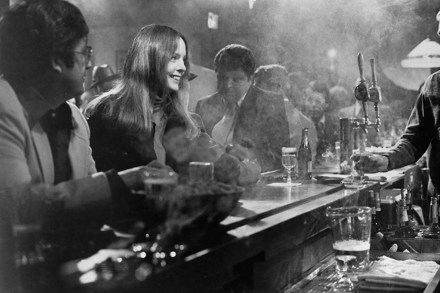
This article is in The Spectator’s October 2019 US edition. Subscribe here. The best bar in America serves water in Styrofoam cups, a half pour. It’s the house specialty. There are half a dozen Chicagoans lining the bar, half a dozen Styrofoam cups. They fall silent when the newcomer enters, eye him as he takes his water. They want to make sure he doesn’t sip it. He does not. The newcomer asks for a Budweiser. ‘Cash only,’ the bartender says. The newcomer produces a bill and then passes the third and final test: he lights a cigarette. The regulars return to chatting and smoking and dumping ash into their Styrofoam cups.

Hog wild in Indiantown

This article is in The Spectator’s inaugural US edition. Subscribe here to get yours. My old college roommate and I were sitting on a 180-pound wild male boar. Neither of us were habitual hoggers. It was our first rodeo. Florida Route 710, the Beeline Highway from Palm Beach to Indiantown, is a two-lane straight shot out of the tropics and into the scrub near Lake Okeechobee. In the Twenties, a Baltimore banker, S. Davies Warfield, built a railroad into central Florida from Palm Beach. Up went Indiantown’s gridded streets and houses, and the Mission Revival-style Seminole Inn, where Warfield’s niece Wallis Simpson stayed both before and after marrying Edward VIII. But Warfield’s plans were scuppered by two hurricanes and the Depression.

hog