Culture

Culture

Epicenes and epicures

The last time I saw Paris, it was the early spring of 2017. A pallor hung over the city, the grands boulevards had lost their charm and downcast Parisians hurried about the streets with uncharacteristic alacrity. The day I arrived, a letter bomb exploded at the IMF’s headquarters on the Avenue d’Iéna, blocks away from where I was sitting on the terrace of a café on the Avenue Kléber. That the bomb turned out to be from Greek anarchists and not the usual Islamist suspects was little comfort; it had already ruined my café express. Two days later, a French-born Muslim took a female soldier hostage at Orly airport. A standoff ensued, with him holding a pistol to her head while her comrades aimed at his. ‘Put down your weapons!

paris
banjo

Finger pickin’ good

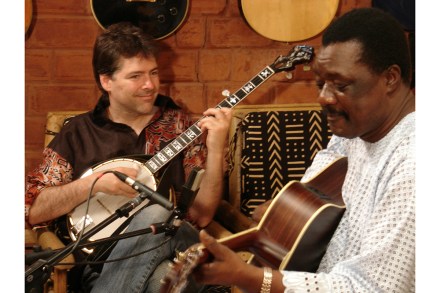
The banjo was present at the creation of jazz but, like the clarinet and the fiddle, it fell from favor, and for similar reasons. The saxophone and the electric guitar were easier to play, more expressive and much, much louder. The banjo was on the way out even as it was on the way in — in the Hot Five recordings of December 1927 that instituted the jazz solo as we know it, Johnny St Cyr played both banjo and guitar — but the banjo had somewhere else to go. The fleet-fingered took their four-and fivestringers to the hills — the Appalachians, for instance. There, the banjo thrived with those other refugees from early jazz, the fiddle and the steel-strung guitar. Metropolitan contempt caught up with it in the Seventies.

My ill-fated foray into homeschooling

I did not buy into the American Toilet Paper Hoarding Epidemic of 2020, as posterity will dub our present unfortunate episode decades hence. In an effort to help my wife avoid murder charges when the courts resume — though she could plea down to third degree manslaughter with minimal jail time — I decided to take the lead on handling the urchins’ schooling as America hunkers down. By mid-morning — around the time I heard the toddler say, ‘don’t call me a buttcheek, you dummy’ — I began weighing the odds on whether my wife had the guts to pull the trigger.Our Catholic school in Alexandria, Virginia, was one of the last to call it quits in the wake of the coronavirus outbreak, a testament to our stalwart faith.

homeschooling

The refreshing darkness of Netflix’s Locke & Key

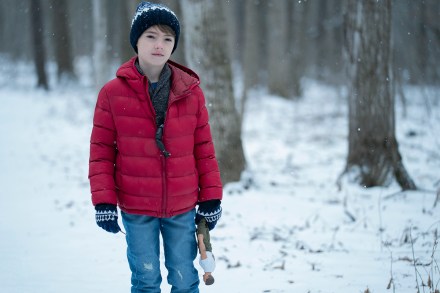
Don’t be put off by the slow first episode, which makes you fear it’s just going to be another of those so-so emo magical-fantasy adolescent dramas in which Netflix abounds: Locke & Key is superior, addictive and bingeworthy stuff in the league of, or possibly even better than, Stranger Things. It begins with an achingly clichéd scenario — family driving across America to seek new life in exotic location, kids bickering in the back, awkward high-school experiences awaiting them, etc. — and the familiarity never lets up.

locke & key

The human clay

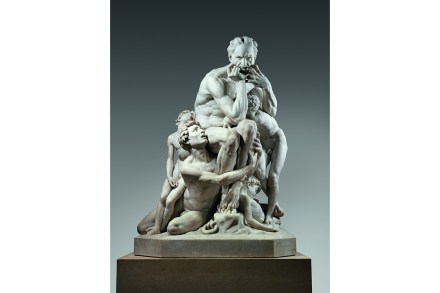
This article is in The Spectator’s March 2020 US edition. Subscribe here.The topics in The Necessity of Sculpture emerged randomly, thrown off by successive exhibition calendars and coming to range in time and place from ancient Mesopotamia to 21st-century Manhattan. As I made the selections, what began to take shape, beyond a conventional anthology, was a synoptic history of the art form. The title is a belated riposte to Ad Reinhardt’s famous dismissal, in around 1960, of sculpture as ‘something you bump into when you back up to look at a painting’.

sculpture
argentina

Do cry for her, Argentina

This article is in The Spectator’s March 2020 US edition. Subscribe here. The odds of becoming a cult figure improve with the speed of departure. Among musicians, Jimi, Jim, Janis, Kurt and Amy played their last notes at 27. By dying at 33 and later becoming the subject of an Andrew Lloyd Webber musical, Eva Perón joined an even more exclusive club. ‘Half a million people kissed the coffin,’ says the Argentine novelist Tomás Eloy Martínez in Santa Evita (1995). ‘A million-and-a-half yellow roses, stocks from the Andes, white carnations, orchids from the Amazon, sweet peas from Lake Nahuel Huapi, and chrysanthemums sent by the emperor of Japan… were thrown from balconies.

Mass appeal: Stanford in Stamford

This article is in The Spectator’s March 2020 US edition. Subscribe here. The exterior of the basilica of St John the Evangelist in Stamford, Connecticut, looms large and gray. Built in 1875 by Irish immigrants who mined and hauled rocks from a nearby quarry, its interior bursts with greens, reds and golds. The saintly lives in its stained-glass windows are said to comprise one of the largest collections of its kind on the East Coast. I was one of 12 singers to perform here at the American premiere of the Mass in G Major by the Dublin-born composer Sir Charles Villiers Stanford (1852-1924). Stanford’s Mass was first performed at London’s Brompton Oratory in 1893, but, like The Spectator, it took its time coming to America.

stanford

Addicted to Addis

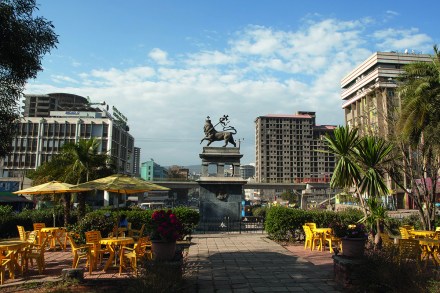
This article is in The Spectator’s March 2020 US edition. Subscribe here. In the Entoto hills high above Addis Ababa, the lights of incoming Ethiopian Airlines planes are evenly spaced in the night sky. Behind me in an abandoned restaurant, the DJ cranks it up and the dance floor goes nuts. EDM (Electronic Dance Music), a style popularized at American festivals and raves, has landed in Ethiopia. I’ve been a dance music devotee since college. But when I first visited Ethiopia in 2000, I lost my heart to a different scene: mesinko-playing troubadours who mask political satire in witty innuendo, the hypnotic melodies of Ethio-jazz bands and the traditional shoulder-shaking of iskista dancers.

addis ababa ethiopia
cheese

Say cheese

This article is in The Spectator’s March 2020 US edition. Subscribe here. ‘What do ties matter, Jeeves, at a time like this?’ Bertie Wooster was once heard to groan. Does cheese matter in a time of coronavirus, climate panic and tariff wars? These pressures can lead anyone to succumb temporarily to Sartresque nausea. Fortunately the gentleman’s gentleman was at hand with a steadying dose of sanity: ‘There is no time, sir, at which ties do not matter.’ And there is no time at which cheese does not matter.

schools

Want to save public schools? Embrace school choice

Debate over school choice has got ugly. A public school district administrator in Kentucky recently suggested he’d delay students’ graduations if the state legislature passes school choice legislation that would give tax credits to private donors who support voucher programs for kids to attend schools of their choice. The proposed program is similar to one in Florida, and the federal government has reportedly pledged up to $70 million in support to the Bluegrass State if it passes the bill.At the heart of the outraged responses to such programs is the assumption that supporting public school students who want to attend private schools will undermine public education and hurt the kids left behind by transferring funds into private hands.

Vintage Brooklyn: the wines of Red Hook

Close your eyes and think about the word ‘winery’. What image comes to mind? I’m guessing you will say, ‘A large stone pile from the 17th century or before surrounded by lovingly tended gardens and row after row of neatly staked vines.’ That is not wrong, but it is incomplete. There are plenty of wineries in France and elsewhere that feature modernist architecture. And there is one in Brooklyn, New York at 175 Van Dyke Street, towards the end of Pier 41 at the old Navy Yard. With a spectacular view of the Statue of Liberty and the New Jersey waterfront, Red Hook Winery — a retail tasting room in front, barrels and vats in the back — occupies a fetching but improbable spot. Red Hook was started in 2008 by Mark Snyder.

red hook winery

‘All rock ’n’ roll starts and ends with Lou Reed’

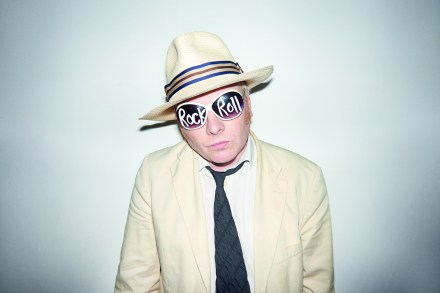
This article is in The Spectator’s March 2020 US edition. Subscribe here.March 2013 I have written a song called ‘Lou Reed, Lou Reed’. It’s a hymn to the man in the title — a petition, as Jim Morrison would have it, to the gods of rock ’n’ roll. The song runs for just two minutes and consists of a three-note, sub-moronic riff and a two-word mantra repeated 71 times. The two words are ‘Lou Reed’. The song isn’t a hit, but it does cut a bit of a dash. The song’s subject even hears it. I hear from someone who hears that he heard it that he likes what he heard. Then, in October 2013, the subject of my song dies. My song, a throwaway, begins a strange afterlife.

luke haines peter buck
kraftwerk

Uniform beats

This article is in The Spectator’s March 2020 US edition. Subscribe here. Right from the beginning, everything about Kraftwerk was odd. They had no frontman, they seemed to play no instruments and their strange, electronic music owed nothing to blues, soul or any of the other forms of music that underpinned 20th-century pop. Instead, a Kraftwerk gig consisted of four gauche-looking fellows from Düsseldorf standing in a row, each poking at a synthesizer while strange, apparently unconnected images appeared on screens behind them. A Kraftwerk album could be just as confounding. The cover of 1977’s TransEurope Express featured the band in suits and ties, looking more like the partners at an accounting firm than a pioneering electronica band.

An old master who still feels new

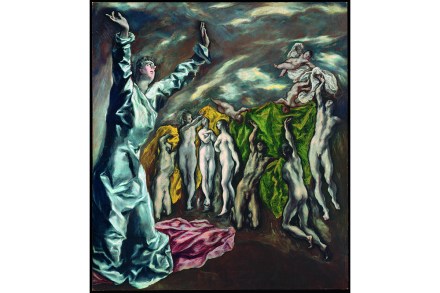
This article is in The Spectator’s March 2020 US edition. Subscribe here. Velázquez prized his work, but El Greco’s reputation fell quickly after his death in 1614. Another Spanish painter, Antonio Palomino (1655-1726), called The Greek ‘contemptible and ridiculous, as much for the disjointed drawing as for the insipid colors’. In the 1800s, ‘The Burial of the Count of Orgaz’, now regarded as one of his masterpieces, lay rolled up in the basement of a Toledo church.

el greco

In praise of the Midwestern steakhouse

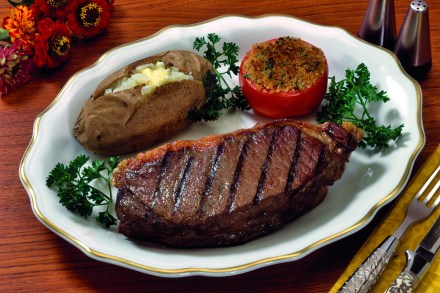
This article is in The Spectator’s February 2020 US edition. Subscribe here. In the 20th century, you joined a city or country club for status and a good meal on the regular. But who wants to eat the same food from the same chef every meal for the rest of your life? Now we go to restaurants. There’s always a new spot, a new dish, a new someone you need to impress by swiping right across the menu. It’s been my lifestyle choice for over a decade now. My life revolves around food, and most of my monthly budget goes on gastronomy. But I’m tired. Most of these hotspots just aren’t that hot. My jaded palate needs something new — or rather, something old.

steakhouse
raphael

Urbino legend

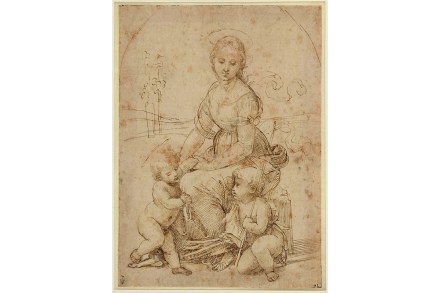
This article is in The Spectator’s February 2020 US edition. Subscribe here. At the time of his death on Good Friday, 1520, Raffaello Sanzio of Urbino was the most successful artist the world had ever seen. In terms of sheer skill, expert judges like the historian Paolo Giovio rated him third among the supreme trinity of Renaissance artists — after the stiffest imaginable competition, Michelangelo and Leonardo da Vinci. But in terms of worldly success, Raphael died as the unchallenged prince of artists. He was the favorite artist of the greatest patron in Christendom, the Medici pope Leo X. He had been commissioned to decorate the most prestigious monuments in Rome.

The fast and the furious

This article is in The Spectator’s March 2020 US edition. Subscribe here. If the Roman Catholic Lent can be exemplified by fish fries, the Byzantine Catholic Lent can be encapsulated by Patrick Bateman’s final monologue in the movie American Psycho: ‘My pain is constant and sharp, and I do not hope for a better world for anyone. In fact, I want my pain to be inflicted on others.’ I am not a misanthrope. But a mere several days into the Byzantine Great Fast preceding Easter, going to social events can be torturous. The sight of meaty or cheesy foods causes me to want to pull the pin from my corporal grenade of self-control.

fast
israeli cuisine

Let’s eat: Israeli cuisine is coming of age

This article is in The Spectator’s February 2020 US edition. Subscribe here. Being a Zionist is a complex business, not least because, like supermarket hummus, there are so many varieties. There are settlement-hungry messianists and utopian socialists, hard-right annexationists and soppy liberals who still dream of exchanging land for peace. It’s an identity that can confuse even its devotees. I’ve tended to belong in the last camp, but in recent years I’ve drifted from political Zionism altogether. It’s so draining, so deadlocked, so knotty and angst-ridden. I made a decision a few years ago to dial back my engagement with Israel, and life was a little lighter as a result. But it left an absence.

Cyrus the Great

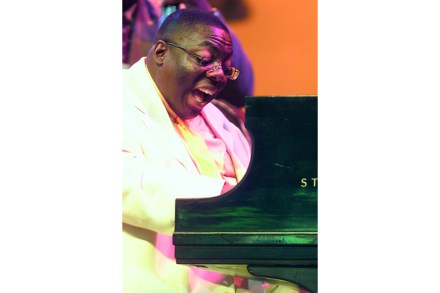
This article is in The Spectator’s February 2020 US edition. Subscribe here. Washington, DC has a proud jazz history: the birthplace of Duke Ellington where he made his first arrangements as a highs-chooler; the home of U Street, where joints like the Crystal Caverns and the Howard Theatre hosted Louis Armstrong, Billie Holiday and Count Basie. Today, jazz holds out in a few spots on U Street and in select clubs such as Blues Alley. A relative latecomer, founded in 1965 near M Street in the heart of hoity-toity Georgetown, Blues Alley touts itself as ‘the nation’s premier jazz and supper club’. Despite a menu featuring such delicacies as ‘McCoy Tyner’s Blackened Catfish’, the supper part can safely be labeled as hearty, but no more.

cyrus chestnut

Wells farrago: gaslighting the Invisible Man

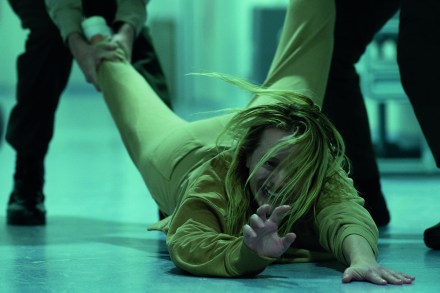
This article is in The Spectator’s February 2020 US edition. Subscribe here. ‘To many young people nowadays,’ H.G. Wells sighed in 1934, ‘I am just the author of The Invisible Man.’ He meant the movie, not the novel. George Bernard Shaw might have said something similar, only at greater length, had he lived to see the improvements by which Alan Jay Lerner turned Pygmalion into My Fair Lady. But would Wells recognize the latest variation on his 123-year-old character at all? This Invisible Man is not much interested in invisibility or men, or men who happen to become invisible. Elisabeth Moss is Cecilia Kass, a harassed woman trapped in an abusive relationship with a sociopathic tech bro.

wells
cats

Cats: The Snuff Movie

This article is in The Spectator’s March 2020 US edition. Subscribe here. In the 1970s, the English humorist Alan Coren set out to create the grabbiest literary cover package in the history of bestsellerdom. He titled his book, a collection of funny essays, Golfing for Cats and hit the trifecta by putting a massive, and otherwise totally irrelevant, swastika on the front. Needless to say, the book sold well. Golf isn’t as big now as it was then, but Coren’s other two ingredients remain staples of popular entertainment.

education

Bloomberg’s education policies deserve much more scrutiny

Mayor Mike Bloomberg didn’t fare so well in his debut appearance in Wednesday night’s Democratic debate in Las Vegas. Every other candidate was intent on exposing various sordid parts of his history, including his mistreatment of women and his former comments on banning the redlining that caused the 2008 financial crisis. But I was surprised that other parts of his record didn’t receive any attention—particularly his comments on K-12 education. After all, Bloomberg once said that if he had things his way, he’d 'cut the number of teachers in half', 'double [their] compensation' and 'weed out all the bad ones and just have good teachers'.

Palermo without borders

This article is in The Spectator’s February 2020 US edition. Subscribe here. On a wet November evening, Leoluca Orlando, the mayor of Palermo, sat in the front pew of a church on the city’s main thoroughfare. He, like the citizens proliferating behind him, was waiting for the concert to begin. The setting and the seating order had a provincial air, like something out of an Upamanyu Chatterjee novel. But Orlando, the man who squeezed the Sicilian mafia, has a cosmopolitan vision. Orlando has converted Palermo, a major gateway for the masses pouring out of Africa and the Middle East, into perhaps Europe’s least administratively hostile city to prospective settlers.

palermo

A Trumpian feast

This article is in The Spectator’s February 2020 US edition. Subscribe here. Donald Trump serves the best food in Washington. The residents of DC won’t say so, but it’s true. America’s capital has a lively food scene, with many excellent restaurants. None is better than the two that are in the soon-to-be-sold Trump International Hotel on Pennsylvania Avenue: Sushi Nakazawa and BLT Prime by David Burke. Burke’s joint is absolutely my kind of place. It’s in the hotel lobby. The building used to be a post office before the Trump family converted it. The enormous glass-roofed lobby area is a marvel: put politics to one side and admit that it is an extraordinary achievement.

trump dc

California bound

This article is in The Spectator’s February 2020 US edition. Subscribe here. I think it was from the late Roger Scruton, back when he was writing about wine for another magazine, that I learned the importance of being a terroiriste — not, nota bene, a terrorist. That, as Qasem Soleimani learned to his sorrow, is something else entirely. No, what Sir Roger had in mind was the importance of environment to the production of delicious wine. Terroir means the composition of the soil, yes, but it also means so much more. One dictionary sums it up as the ‘complete natural environment in which a particular wine is produced, including...the soil, topography, and climate’.

Award winning bottles of wine

My vegan hell

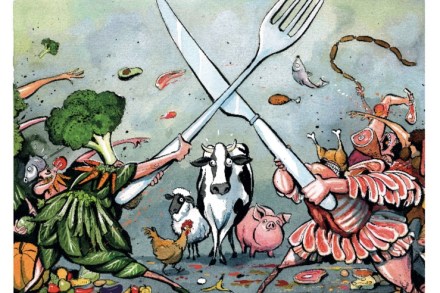
This article is in The Spectator’s February 2020 US edition. Subscribe here. The children are eating eggs and bacon by the time I make it downstairs. A pair of frozen hash browns sits lonely on the plate at the head of the table. They have been cooked in a separate pan, one greased in vegetable oil rather than butter. I scold myself for the bitter glare I cast upon the urchins crying ‘Good morning, Daddy!’ They cannot know that the crisp pork fat and fried eggs lie on their plates only because Daddy has agreed to go vegan for the amusement of Spectator readers. The English never seem to tire of starving the Irish. At least there are potatoes this time around. Vegans forsake leather in their belts, wool in their coats and any animal product in their mouths.

Vegan

The conservative case for opposing ‘ag-gag’ laws

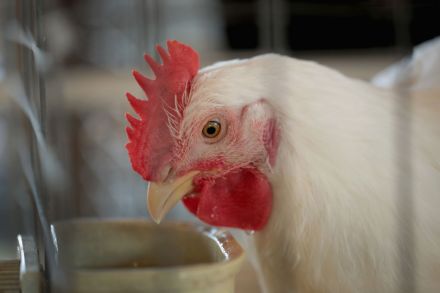
Activists from the animal welfare group Direct Action Everywhere (DxE) last week released photographs taken on an Iowa pig farm. They claimed they had walked through an open door, photographed pigs suffering from hideous rectal prolapses and open sores, as well as what appears to be overcrowding. The photographs were taken last April, and the activists have claimed that they withheld the pictures to avoid the accusation that they had contaminated the living conditions and endangered the pigs. Ironically, they have received criticism both for endangering the pigs and for withholding evidence.The owner of the farm is Republican State Sen. Ken Rozenboom.

ag-gag

Trump should build to last

Will the government finally stop giving the concrete finger to popular taste by erecting ugly, expensive and unsustainable buildings with taxpayers’ money instead of fostering a civic architecture that speaks the language of American democracy?The leaking of a draft directive that calls for a return to ‘Classical and traditional styles’ in major public buildings in Washington DC has occasioned outrage and contempt from the expected quarters: architects who know best and journalists to whom the exterior of a public building is an obstacle to be surmounted on the way into the corridors of power. But the traffic circus known as Dupont Circle is not about to become a Roman circus, with lions of the Senate fighting each other with net, trident and rolled-up order papers.

build
espinoza

Espinoza v. Montana is about families, not religion

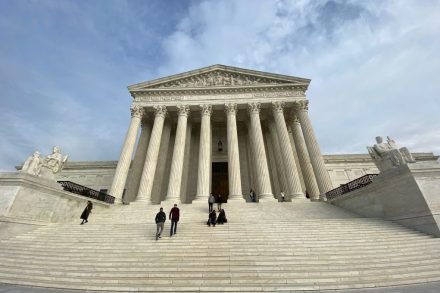
These days, 'school choice' has become such a polarizing term that many bristle at the mere mention of it. Up to this point, discussions have centered on public charters vs. traditional public schools, yet talk about religious schools has been largely left to the periphery. But that will soon change, once we hear the outcome of a potentially landmark education case that’s currently before the Supreme Court. And if tradition holds, bitter political arguments over the outcome are certain to overlook the most important stakeholders — the children and their parents.The case, Espinoza v.