Culture

Culture

The good, the bad and the ugly in books, exhibitions, cinema, TV, dance, music, podcasts and theatre.

Exploring the enchanted gardens of literature

Lead book review

‘If Eve had had a spade in paradise, we should not have had all that sad business with the apple,’ claims the narrator of the novel Elizabeth and her German Garden (1898). The author, Mary Annette Beauchamp, eventually adopted the pen name Elizabeth von Arnim, merging her identity with the fictional character she had created.

Horoscopes and horror – the reign of Septimius Severus

More from Books

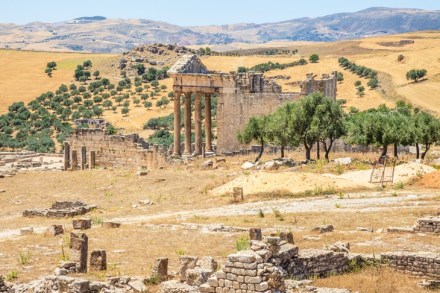
Rome’s first African emperor, Septimius Severus, was renowned during his reign (193-211 AD) for the mass killings of his rivals (ruthlessness even by ancient standards); for his genocide against the Scots (a rare recourse, despite Rome’s bad reputation as imperialists); and his budget-stretching generosity to his soldiers. He had an unusually glamorous Syrian wife, Julia

Art and radicalism in 1930s Britain

More from Books

What is art for? How can it, should it, relate to the political framework of its time? How far can it shade into ‘propaganda of the imagination’? These are some of the questions threading through Andy Friend’s compelling account of the first decade of the Artists International Association, or AIA, a vital but under-explored British

Ignorance, madness or folly – what exactly constitutes stupidity?

More from Books

Best remembered now in the English-speaking world as a lyricist, Friedrich Schiller is often quoted for his line: ‘Against stupidity the gods themselves struggle in vain.’ I was waiting for that observation in A Short History of Stupidity. It didn’t appear, but Stuart Jeffries assembles an impressive team of thinkers who have come to the

Sebastian Faulks looks back on youth and lost idealism

More from Books

I must say, calling a book Fires Which Burned Brightly promises much. At best, from the jaded reviewer’s point of view, an autobiography of delusional self-aggrandisement; at worst, a wild mismatch between the, well, incendiary language of the title and the potentially humdrum contents. It might have been dreamed up by a master satirist intending

Courage and humour in the face of unimaginable grief

More from Books

In the face of unendurable pain that must be endured and unimaginable loss that must be imagined, jokes should not be resisted or turned away. Miriam Toews, describing the day that her father ended his life, remembers him assessing the outfit – torn jeans and a green hoodie – that she had been wearing for

Alchemy – the ultimate fool’s errand

More from Books

Alchemy, astrology and medicine (before the triumph of germ theory): three worthless intellectual systems which provided a good living for many into the 18th century and even beyond. Alchemy turned into chemistry; astrology was divorced by astronomy; and medicine (which might have become Pasteurism or Listerism) somehow kept its old name while abandoning all its

The joyless rants of Andrea Long Chu

More from Books

Andrea Long Chu is the poster girl critic of the American progressive left. Writing primarily for New York magazine, she made her name with takedowns of celebrated novelists such as Hanya Yanagihara, Bret Easton Ellis and Zadie Smith. In 2023, she was awarded the Pulitzer Prize for reviews that ‘scrutinise authors as well as their

Will we resist the bacteria of the future?

More from Books

Every doctor can remember a time when bacterial infection laid waste to their patient with hair-raising speed and virulence. The most indelible for me occurred a decade ago during surgical night shifts. Again and again I was called to the bedside of a young woman with the ‘flesh-eating bug’, or necrotising fasciitis. By the time

What this new history of Brexit gets right

More from Books

Why did the United Kingdom leave the European Union? Perhaps it might be better to ask why did it ever join. Tom McTague attempts to answer both questions in this panoramic history of British – and continental – politics from 1942 to the present day. It is to the author’s great credit that he approaches

Whatever happened to the stiff upper lip?

More from Books

At some point in the past ten years, trauma became a joke in my household. Should any Ditum suffer a minor mishap, the correct reaction is to adopt a wounded expression, bob your head to the side and whimper: ‘My trauma!’ Not because trauma is funny, but because what Darren McGarvey refers to as the

The word ‘artisanal’ has lost its meaning and dignity

More from Books

‘Artisan’ is now a word attached to coffee, candles, paper, clothes, rugs etc. It is used to raise prices by giving consumers a warm feeling of being pampered with the solid, ancient virtues of the handmade. It is, of course, a lie. If you want to know about Britain and yourself, read this book. James

The ‘idiot Disneyland’ of Sin City

More from Books

In italics at the very end of the preface to Slouching Towards Bethlehem (1968), Joan Didion spills the beans: ‘Writers are always selling somebody out.’ It’s hard to improve on that, but we can at least specify that she had journalists in mind, not poets or novelists, though probably she looked on all scribblers with

Whitehall farce: Clown Town, by Mick Herron, reviewed

More from Books

It’s good to be back in the unspeakable awfulness of Slough House, the decaying London office block in which the security service’s rejects do battle not only with the nation’s enemies but also with each other. Clown Town is Mick Herron’s ninth novel in the series, though he has explored different aspects of Slough House’s

Dirty work: The Expansion Project, by Ben Pester, reviewed

More from Books

The Expansion Project, Ben Pester’s debut novel, builds on the satire of corporate culture that he previously explored in his short stories. It centres on Capmeadow, a business park that proliferates with offices, wellness gardens, chalets, convenience stores and even a temple carved with reliefs of ‘collaborative working practices’. Shrouded in creepy mists, it seems

No stone unturned: the art of communing with rocks

More from Books

At the age of 13, when some girls become passionate about ponies, Anjana Khatwa developed an infatuation with rocks. Growing up in a Hindu family in Slough, she had a moment of epiphany on holiday in south-east Kenya when she walked across an ancient lava flow and felt convinced that the rock beneath her feet

Starry starry night: the return of the sleeper train

More from Books

The railways have survived into the 21st century by constantly reinventing themselves. Written off all too frequently by parsimonious politicians as a 19th-century invention made redundant by the car and the aeroplane, trains have enjoyed a remarkable renaissance. Most happily, the sleeper has made a comeback, despite the fact that towards the end of the

Clerical skulduggery on the far borders of 1830s Germany

More from Books

Königsberg is no more. Now known as Kaliningrad, it forms part of a small Russian exclave surrounded by Lithuania and Poland. It is probably here that the third world war will start. Before it was bombed flat and ethnically cleansed, the historic Baltic city formed one of the main centres of the German province of

Christopher Marlowe, the spy who changed literature for ever

Lead book review

Stephen Greenblatt tells the story of being approached in the 1990s by a screenwriter who wanted to make a Shakespeare -biopic. Greenblatt repeatedly told him to forget Shakespeare and look instead at his predecessor Christopher Marlowe. The screenwriter knew what he was about and ignored Greenblatt’s advice – the result was Shakespeare in Love. The

Lives upended: TonyInterruptor, by Nicola Barker, reviewed

More from Books

‘Is it any good?’ a friend asked when he saw I was reading this book. ‘Yes,’ I said, ‘but it’s full of wankers.’ By that stage I was only up to page 24, but the remaining 184 pages did nothing to fundamentally alter my view. There is nothing intrinsically wrong with this. The works of,

The enigma of C.P. Cavafy

More from Books

C.P. Cavafy, who had a very high opinion of his own work, would no doubt be gratified to learn that he is now one of the most admired poets of the 20th century. This is all the more remarkable because during his lifetime (1863-1933) he did not allow a single volume of his poetry to