Culture

Culture

Throwing curveballs

"This mob is not the people,” declared Henry J. Raymond in his paper, the New York Times, about the Draft Riots in July 1863. Blue-collar workers in New York, mostly Irish, had begun by protesting a new conscription law, but anti-war sentiment quickly became a pretext for widespread destruction, looting and racial violence. Blacks were hunted, their homes and businesses trashed, and scores of them lynched. Raymond wanted no quarter for the rioters: “Give them grape[shot] and plenty of it.” The new musical Paradise Square imagines a “little bit of Eden” in the Five Points slum of downtown Manhattan, July 1863, where, we are told, blacks and Irish did not just coexist peacefully for a time but flourished.

paradise
worst

The final word on the millennial generation

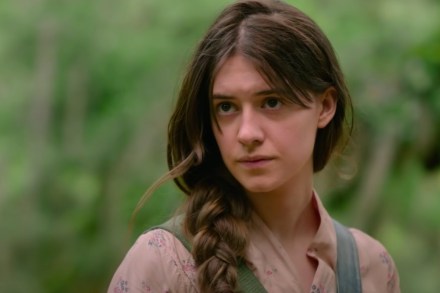
More than anything else, the phrase “I’m still figuring it out” defines the millennial generation. Floating from passion to passion, job to job, lover to lover, possible spouse to possible dead end. In Joachim Trier’s The Worst Person in the World, Renate Reinsve plays Julie, a person that most of us would recognize from life, and certainly from the last ten years of media: approaching thirty; romantic and flighty to a fault (in the prologue, she drops out of medical school to become a philosopher and then a photographer); beginning to feel a void she doesn’t know how to fill.

Ricky Gervais, Netflix and clickbait controversy

Ricky Gervais has caused a stir. This is not, perhaps, the least expected thing you could hear about the sixty-year-old British comedian, but his new Netflix show, SuperNature, has attracted an unusual amount of opprobrium for what people have perceived as anti-trans jokes. In the show, Gervais makes a distinction between “the old-fashioned women, the ones with wombs” and “the new women... with beards and cocks.” He calls upon the latter to “lose the cock,” and the audience laughs along with him hysterically.

ricky gervais

Zelensky is the star of the Cannes Festival

The Cannes Film Festival remains the most glamorous and famous gathering of the movie industry in the world. High-profile, black-tie premieres attended by some of the best-known actors jostle alongside the more disreputable commercial market. Films on sale this year include My Neighbor Adolf, about the unlikely friendship that is struck up between a Holocaust survivor and a mysterious man who may or may not be Adolf Hitler. But back in the main festival, everything is going entirely to plan. Apparently. There has not been a “normal” Cannes Film Festival since 2019. The 2020 edition was canceled, and the 2021 event took place in reduced and rather glum circumstances in July. But now Cannes is back, back, back, bébé!

Evelyn Statsinger’s otherwordly art

New York’s Upper East Side — 1018 Madison Avenue, to be exact — currently hosts another world at the Gray Gallery. It’s a universe with a near-scientific attention to detail. Plant stems are bisected and, in turn, bisect paintings like winding snakes; petals and branches are painted in such microscopic detail that they appear like the surface of some far-flung planet; and canvases are awash with such bright, clean lines they seem almost like subway maps of a particularly topsy-turvy city. The works — pastels, oil on canvas, and oil on linen — are those of Evelyn Statsinger (1927 – 2016), the deeply underappreciated artist who lived in New York, Chicago, and Michigan.

Why are government unions never the bad guys?

If there is such a thing as a formula for making a hit film, it has something to do with giving audiences a new and unusual villain. Over the years, screenwriters have thrown their protagonists up against enemies as thuggish as boss Johnny Friendly in 1954’s On the Waterfront and as smooth as Olivier’s Crassus as in 1960’s Spartacus. “The more successful the villain, the more successful the film,” as Hitchcock himself once put it. Which is why Hollywood’s constant search for new and unusual bad guys has explored almost every conceivable milieu: corporate America (The Big Short), street gangs (The Warriors), hospitals (Coma), prisons (Shawshank Redemption), law firms (The Firm), and even the movie studio itself (The Bad and the Beautiful).

Are critics useless?

When the Oscar-winning actress Viola Davis was recently asked by the BBC how she felt about the poor reviews she has received for her performance as Michelle Obama in the new Showtime series The First Lady, she was not coy in her response. "Critics absolutely serve no purpose," she replied. "And I’m not saying that to be nasty either. They always feel like they’re telling you something that you don’t know. Somehow that you’re living a life that you’re surrounded by people who lie to you and 'I’m going to be the person that leans in and tells you the truth.' So it gives them an opportunity to be cruel to you." The writer Brendan Behan once described a critic as being like "a eunuch in a harem.

Bob Dylan’s and T.S. Eliot’s search for truth

The fact that the master songwriter Bob Dylan is a fan of a literary allusion should come as no surprise. This is the man who, in his autobiography Chronicles Vol. 1, declared that reading the French symbolist poet Arthur Rimbaud made “bells [go] off.” (Incidentally, it was Suze Rotolo, his first love whom he so cruelly lambasted in “Ballad of Plain D,” who introduced him to the poet. One feels that Dylan should have paid her a little more retrospective credit than the all-but-bitter love songs on The Freewheelin’ Bob Dylan.

What is David Lynch up to now?

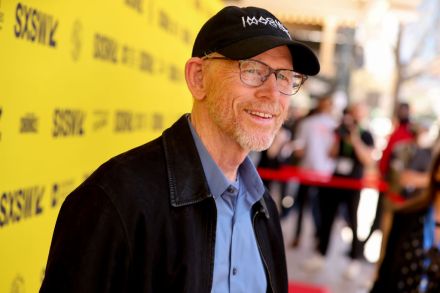
One of the most enduring images from the Oscars came two decades ago, at the 2002 ceremony, when director David Lynch revealed himself as one of the most courteous and pleasant figures in contemporary cinema. Ron Howard had just won the Best Director award for his work on the dishonest and ephemeral mental health drama A Beautiful Mind. As the beaming Howard — one of the most popular figures in Hollywood — headed onto the stage to collect his prize, two of his defeated rivals, Robert Altman and Lynch, embraced one another.

Blues for Pablo

What is there left to say about Picasso? This question, posed by a colleague apropos of Picasso: Painting the Blue Period, an exhibition on display at the Phillips Collection in Washington, DC, is inevitable. There are few cultural figures whose life and accomplishments have been as exhaustively accounted for as the man born — take a breath! — Pablo Diego José Francisco de Paula Juan Nepomuceno María de los Remedios Cipriano de la Santísima Trinidad Ruiz y Picasso. Innumerable exhibitions, books, scholarly tracts and films have been devoted to this relentlessly protean artist. Even after his death almost fifty years ago — Picasso died in 1973 at the age of ninety-one — he looms large in the public consciousness.

picasso
Mingus

Charles Mingus at 100

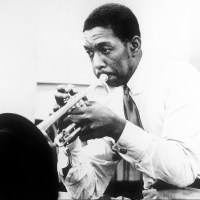
"All the Things You Are” is an essential jazz standard, but in 1960 the bassist Charles Mingus gave it an update: “All the Things You Could Be by Now If Sigmund Freud’s Wife Was Your Mother.” It doesn’t take a psychoanalyst to peek under the hood of this composition. Like many Mingus tunes, the loose adaptation is fairly bipolar, picking up and dropping off in fits and starts, alternating between vacuum-tight swinging sections and meandering, tempo-less squabbles between members of the four-piece band. Mingus isn’t for the faint of heart, but on the centenary of his birth it’s worth confronting his life’s work, which surely places him among America’s most important composers.

music

Midcult madness

On the same Broadway block as MJ: The Musical is the tale of another song-and-dance man hailing from Gary, Indiana: Harold Hill, doctor of music, huckster of band equipment and Meredith Willson’s titular Music Man (1957). Well, that’s not quite the case: Professor Hill is a lying crook, and his Hoosier backstory is a fabricated ruse. He claims to be a graduate of the Gary Conservatory of Music, class of ’05, but the town of Gary was only incorporated in 1906. Played by Hugh Jackman, this smooth criminal sails into River City, Iowa, promising the Ewarts and Eulalies of the town he’ll make disciplined bandspeople out of their darling Winthrops and Amarylisses.

masterpiece around

Around and around the world

Kudos to Masterpiece’s new eight-part series Around the World in 80 Days, if only for nudging me to read Jules Verne’s original tale of an eccentric Englishman who sets out from London in 1872 on a strict deadline to girdle the globe, as well as to revisit Michael Todd’s Oscar-winning 1956 movie version. Bad translations and Disney movies long consigned much of Verne’s prodigious output to the realm of juvenile entertainment, in the popular mind anyway. Serious critics tell us that we should think again — that in a novel like Around the World in Eighty Days (1873) there is indeed a lot going on. The character of Phileas Fogg has layers beneath his serene reserve, as his passage around the world begins to reveal.

spring breakers

Beach for America

I don’t know how I first came across Harmony Korine’s Gummo (1997), but in this cult film about the foibles and joys of small-town life, I found a director who understood the cinematic merits of American seediness. Gummo, which features amateur actors in debauched scenes, hosts a collection of freaks unsurpassed in modern cinema, including skinhead brothers, a boy dressed in a bunny suit (he goes by “Bunny Boy”), and a gay dwarf. Though mostly repulsive, Gummo has a transgressive charm that makes it impossible to turn away. Like Korine’s Mister Lonely (2007) and Trash Humpers (2009), Gummo is less about plot and theme than feeling and sensibility. It is an aesthetic experience that stylizes grime to capture the essence of characters one hopes not to encounter in real life.

Robert B. Shaw sees things as they are

What Remains to Be Said: New and Selected Poems by Robert B. Shaw, Pinyon, 2022, 312 pages Robert B. Shaw is one of those quietly accomplished poets who publishes a slim volume of exacting and beautiful poems every eight years or so. One thinks of his teacher at Harvard, Robert Fitzgerald, as a model in this regard, or the late Amy Clampitt, or Shaw’s more prolific contemporary Frederick Turner. Shaw’s observational verse progresses by accumulation of detail or plot and aims to unify meaning and music. His most recent volume, What Remains to Be Said: New and Selected Poems, collects poems from all of his seven previous books and includes 28 new poems.

‘Father Stu’ and the merits of suffering

Father Stu opened in theaters this Holy Week. It’s a movie about a real-life man who led a depraved and reckless life, found God, became a priest, suffered greatly and died from an incurable disease. And did so — more importantly — with patience and good nature that inspired multitudes of those around him. The film’s message is essentially that suffering has value, and as we sit in the richest nation in history drowning in the highest levels of depression ever recorded, such a reminder could not come at a better time. It’s a curious thing that so many people are dissatisfied with life when the standard of living has never been higher.

Ocean Vuong’s immature poetry

Time is a Mother — Ocean Vuong’s second poetry collection — should have been a scene-stealer, a much-awaited literary event of the type normally reserved for a J.K. Rowling. The collection has been talked about in the breathy, excited terms not normally associated with poetry — the least glitzy of the literary genres — and in a way not heard of since the blockbuster release of Ted Hughes’s Birthday Letters (1998). Vuong, rightly, won the T.S. Eliot prize in 2017 with Night Sky With Exit Wounds. The collection had flashes of brilliance and was a mark of a young poet making his way in the world. It also won the Forward Prize for best first collection, and, in 2019, Vuong was awarded a MacArthur “genius” grant.

Hollywood won’t say gay in China

Exactly when and where are our stunning and brave Hollywood stars prepared to take a stand for gay rights? Liberal actors and celebrities have a made a show of standing against Florida’s Parental Rights in Education Bill, signed earlier this month by Governor Ron DeSantis, a man progressives seems intent on making the next president. When activists and journalists realized they couldn’t stop the bill from becoming law, they deployed their new favorite tactic: demanding that corporations speak out against the bill (see also: how in response to Georgia’s new voting legislation, they insisted that Major League Baseball relocate the All-Star game).

Time to slay J.K. Rowling’s ‘Fantastic Beasts’

Next week marks the release of the third J.K. Rowling-scripted Fantastic Beasts film, a series that has overstayed its welcome. This latest iteration is subtitled The Secrets of Dumbledore. As if to wrong-foot those who would smirkingly speculate that one of Dumbledore’s secrets is his sexuality, the film opens with the old wizard and his former lover-turned-nemesis Grindelwald (now played by Mads Mikkelsen, replacing a disgraced Johnny Depp) mourning the end of their love affair, which at least makes the homosexual subtext hinted at in previous films explicit. But that, alas, is about it for any kind of coherence, or interest, or originality.

‘Slow Horses’ is thriller television at its best

It may come as a surprise to anyone who has read Mick Herron’s peerless Slough House novels, but Slow Horses, Apple TV’s high-profile adaptation of the first book in the series, is not funny. Instead, it takes Herron’s uproariously comic premise — that a group of misfit British spies, cast out of MI5 for misdemeanors exaggerated and accurate alike, have been reduced to grubbing about in a grim office on the periphery of the City of London — and plays it almost entirely straight. Gone are the laugh-out-loud one-liners and endearingly witty pieces of throwaway badinage. Instead, we have a big-budget spy thriller, polished and scripted to within an inch of its life. It’s a bit like seeing the Fresh Prince of Bel-Air reinvented as a gritty urban drama.

horses

Don’t cancel John Donne’s poetry

All the way across the Atlantic, the British literary world has been seized by John Donne fever. Katherine Rundell’s biography of the metaphysical priest-poet has led to excitable chattering about his life and work. The book, Super-Infinite: The Transformations of John Donne, will be released in the US in September — a significant enough delay as to make the Declaration of Independence look like a mistake. Aside from radically different publication dates (again: would you rather have lower taxes and freedom from George III, or a brilliant Donne biography?), the specter of the far-off American continent has long since loomed large in Donne studies.

Is Andy Warhol really an artist?

A lawsuit on the work of Andy Warhol is going to the Supreme Court. In 1984, Vanity Fair commissioned Warhol to alter a photograph Lynn Goldsmith took of Prince in 1981 for Newsweek. Warhol cropped the original photo, overlaid it with purple and orange, outlined parts of Prince’s face, and added shading to accompany an article by Tristan Fox titled “Purple Fame.” Goldsmith apparently only learned in 2016 that Warhol had altered her photograph when Vanity Fair republished Warhol’s work in a story on Prince’s death along with the other 15 pieces Warhol created from the photo for his private collection called “Prince Series.

The bitter irony of Bruce Willis bowing out

The news that Bruce Willis is to “step away” — rather than explicitly retire — from acting following a diagnosis of the brain disorder aphasia, is sad for both personal and artistic reasons. Even as a flood of stories emerge about Willis’s erratic and unpredictable behavior on film sets over the past few years, it is a bitter irony that, after a lengthy career as the tough guy hero — in Armageddon, he defeated no less an antagonist than a planet-threatening asteroid — the actor has finally been undone by his own brain. The news also makes the recent receipt of Willis’s Golden Razzie “award” for his performance in Cosmic Sin particularly cruel, not least because he was “honored” with a special category, “Worst Performance by Bruce Willis in a 2021 Movie.

Wallace Stevens and the magic of stuff

Writers have all sorts of hobbies. Tolstoy liked to play chess. Dostoevsky, as everyone knows, loved to gamble. Nabokov collected butterflies; Hemingway, wives. Eugene O’Neill’s favorite pastime was drinking. Flannery O’Connor, of course, loved birds. Emily Dickinson loved to bake. T.S. Eliot was an avid sailor. As a young man he regularly sailed along the shore of Cape Ann. One summer, Eliot and some friends sailed from Marblehead, Massachusetts to Mt. Desert Rock in a 19-foot knockabout in the fog and rough seas. It was a journey of well over 150 nautical miles and could have easily ended in disaster. The sea, of course, appears again and again in Eliot’s poetry.

Cancel culture gets its comeuppance

Cancel culture has struck again, but this time its would-be victims aren’t apologizing. The Daily Mail — a publication notorious for being “free” with its own speech — is leading the anti-cancel culture charge this month with a series of stories that point to an encouraging trend. A handful of prominent creatives are standing up to woke bullies and noting the dangers (and impracticalities) of their demands, which essentially amount to writers and entertainers forsaking their imaginative talents by only addressing things they’ve personally experienced. Except they aren’t supposed to be candid about those things, either, as they might offend someone if they’re too honest.

Will Smith (Getty Images)

Five other award show moments that needed a slap

Actor Will Smith delivered the slap heard 'round the world Sunday night at the 2022 Oscars ceremony, smacking comedian Chris Rock for a joke about his wife's bald head. Regardless of whether you think Smith overreacted or did the right thing, the slap was the highlight of the evening and one of the most exciting awards show moments in years. In honor of the "Smith Slap," Cockburn has compiled a list of five other award show moments featuring celebrities that deserved to be slapped. 1.

will smith

Will Smith’s slap saved a poor Oscars

The news stories regarding the 2022 Academy Awards were supposed to be about how it was the first time a film (Coda) produced by a streaming service (in this case, Apple TV) took the highest award at the Oscars. But moments earlier, Will Smith had marched on stage to slap Chris Rock — and everything changed in an instant. Without any doubt, the thirty seconds it took Smith to assault Rock, who had been making poor-taste jokes about Smith’s wife Jada Pinkett’s alopecia, and to bellow repeatedly, “Keep my wife’s name out your fucking mouth,”will prove to be game-changing, both for the Academy Awards and for Hollywood at large.