Culture

Culture

Does Rihanna have a method to her madness?

The scaffolding TMZ headline became a tower of terror for Rihanna fans: “Johnny Depp. Savage X Fenty Guess Appearance. In Rihanna’s show!!!” Variety confirmed that, yes, Johnny Depp would appear in Rihanna’s Savage X Fenty Vol.4 on Wednesday, streamed exclusively on Amazon Prime. Depp is the first male celebrity to be a featured guest at one of Rihanna’s Savage X Fenty shows (even though he isn’t mentioned in the press release, which means he was supposed to be a surprise). Past celebrity guests have included Cindy Crawford and Erykah Badu. Savage X Fenty is Rihanna’s global lingerie brand. Its brand ID is built around “diversity and inclusion in sizing, access,” wrote Forbes, “and marketing can lead to an even greater goal, equity in feeling sexy.

rihanna
romcoms ticket to paradise

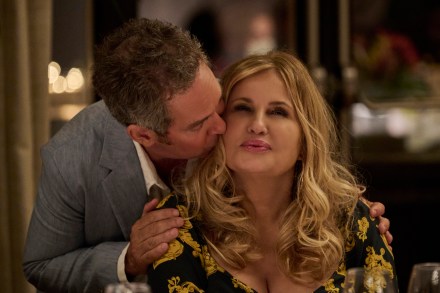
The romcom’s ‘Ticket to Paradise’? Women 

Why did Bros bomb? The paltry $4.8 million opening weekend of the “first gay romantic comedy from a major studio featuring an entirely LGBTQ principal cast” — quite the mouthful — was as predictable as its fawning critical response (88 percent on Rotten Tomatoes). The film also cost $22 million to produce, not including its marketing budget, which somehow failed to publicize the fact that this is a rom-com from Judd Apatow. When the film’s lead, Billy Eichner, announced that Bros flopped because straight people “just didn’t show up,” he was right — but it wasn’t just straight men; it was women who seemed as excited for Bros as they were the next sweaty and dim Rambo movie. Also, who titled this film? What was the logic?

Paul Newman was and wasn’t the nicest of men

My favorite Paul Newman performance is his final on-screen one, as mob boss John Rooney in Sam Mendes’s Road to Perdition. It’s a good, not great, film, which is a disappointment given its phenomenal cast and to-die-for Conrad Hall cinematography. But there’s something unique in Newman’s contained performance as a man of infinite complexity, someone as comfortable playing a piano duet with his surrogate son as breathing portentously of his profession, "This is the life we chose, the life we lead. And there is only one guarantee: none of us will see heaven.

Ryan Murphy goes cruising

American Horror Story’s eleventh season is a tableau of New York’s gay subcultures, thriving in its 1981, pre-AIDS glory. Its characters are male eye candy in jockstraps and stripy socks, daddies in leather straps and twinks out for a laugh. As Kal Penn’s cynical police commissioner summarizes, "That community? They come here for a reason. They come here to get lost, and that's exactly what they do.” The style? A mood board of Mugler costume-fashion, Chrome Hearts leather jackets, Lagerfeld’s filled shoulder pads and Calvin Klein underwear billboards. But its premise is that of an earlier and much more controversial gay masterpiece: Cruising.

american horror story
baldwin buckley

Baldwin and Buckley clash on the New York stage

It’s fair to ask what James Baldwin would have made of Baldwin and Buckley at Cambridge, the Public Theater’s recent presentation of his famous 1965 debate against William F. Buckley Jr. It’s not that the show doesn’t strain mightily to champion Baldwin in the contest — it does — but the novelist viewed what he called “problem” or “protest” art with particular scorn. This was a writer who torched fellow travelers Harriet Beecher Stowe and Richard Wright in the same breath for perpetuating, in his view, the same “monstrous legend” of racial inferiority. To call Baldwin an activist or a champion of civil rights doesn’t quite cover it: the man operated on a theological plane, aiming at spiritual transformation. His standards for art were notoriously exacting.

Apple Music cynically exploits Kanye West by deplatforming him

Apple Music has “quietly” removed two of Kanye West’s playlists from its platform. This news was leaked to the music press quietly, of course, and has (thus far) produced tons of free media impressions for the streamer. The move was presumably a shrewd public relations stunt, or maybe a rogue employee with coding skills. Who knows? But the media framed it as Apple Music taking a stand, quietly, of course, as the streamer repositions itself in the headlines after it announced last week that it was raising subscription prices. “De-platforming” Kanye West is messaging they’d like to piggyback, for obvious reasons, as it appeals to a swath of bored subscribers who could end up tweeting Apple Music for not being on the “right side of history.

Kanye West just can’t shut up 

Here are the facts: Kanye West should be in a psychiatric hospital. Instead, he’s speaking his mind, or what’s left of it. For what it’s worth, Kanye West should not be tweeting or going on podcasts. Unlike the side effects of a prescription drug, the results don’t vary. No, the outcome is usually the same, in one form or another: career suicide. Kanye West’s artistic legacy is undergoing seppuku. We've seen this movie before. Remember Roseanne? After a racist tweet in 2018, ABC immediately canceled her show (it was going to be her comeback). Hulu followed up by removing every season of Roseanne from their streaming service.

kanye west

Bram Stoker’s Dracula was a grand and glorious folly

Thirty years after it was first released in America, Francis Ford Coppola’s Bram Stoker’s Dracula is returning to theaters, appropriately enough for a Halloween re-release. (It also serves as a soft preview for Coppola’s newly announced passion project, Megalopolis, an epic drama starring Adam Driver and Aubrey Plaza.) It is hard to overstate what a difference the past three decades have made in Dracula's popular reception. Although it was a significant commercial hit upon release, thanks in part to Annie Lennox’s enormously popular theme tune "Love Song For a Vampire," it was critically derided as poorly acted, overblown, excessively bloody without being frightening and a travesty of the original novel.

Taylor Swift’s Midnights is a bright spot in a bland music industry

The recent downfall and shaming of Kanye West was likely to have been greeted with schadenfreude by at least one 32-year-old pop star. In 2009, West interrupted Taylor Swift's winning best female video at the MTV Video Music Awards to inform her that the gong should have gone to Beyoncé instead. Their relationship ever since has been a gossip-friendly roundabout of fallout, reconciliation, sniping and bitching. West’s current defenestration from public life, owing to antisemitic comments he made, has not been publicly alluded to by Swift yet. But the lyrics from the song "Karma" on her new album Midnights might make tacit reference to their ongoing feud, as Swift castigates an anonymous man for "talking shit/For the hell of it/Addicted to betrayal but you're relevant.

baskin

A chronicler of enormities

The Farnsworth Museum of Art, subject to New England winters up in Rockland, Maine, and consequently confined to a shorter calendar than most museums, made one of the bolder institutional decisions in recent memory: devoting part of its precious summer schedule to showing prints about the Holocaust. Moreover, these are the sublime and horrifying woodcuts of Leonard Baskin (1922-2000), executed in the last years of the artist’s life, which he spent contemplating the ravenous appetite that Death has for the Jews. Baskin was not to everyone’s taste, and the feeling was mutual. The critic Hilton Kramer called him a “macabre sentimentalist,” and that was only to denigrate the other artist he was reviewing at the time.

lord of the rings of power

The heart of The Rings of Power

“Ours was no chance meeting. Not fate, nor destiny,” Galadriel says. “Nor any other words Men use to speak of the forces they lack the conviction to name.” The line is a bit pompous, but then so is the hotheaded elven warrior (Morfydd Clark) who speaks it in Amazon’s Lord of the Rings: The Rings of Power. Pomposity aside, Galadriel’s words reveal why the work of J.R.R. Tolkien is unique in a crowd of fantasy competitors. Anyone can give us elves and dragons and wizards. But few can match the anguished, longing note of hidden Providence in Tolkien’s Middle-earth. The Rings of Power has not yet achieved such depths of feeling — perhaps it will not be capable of doing so — but it has shown prudence in its stewardship of the story’s heart, which is encouraging.

Leopoldstadt

Is this Tom Stoppard’s last act?

The London premiere of Leopoldstadt in 2020 made this decade the seventh in which a new Tom Stoppard play has been delivered unto the world, and since the playwright has suggested it may be his last, some words about his legacy seem to be in order. Stoppard is often regarded as the greatest English playwright of the later twentieth century. Harold Pinter is the other popular choice. Both men picked up where Pirandello, Beckett and the absurdists left off. Their respective approaches form two sides of the same post-existentialist coin. Stoppard made his name with the expanded footnote: plays in which a sidelight takes center stage, often bristling with comedy, like the metatheatrical Rosencrantz and Guildenstern Are Dead (1966) or The Real Inspector Hound (1968).

casablanca

At eighty, Casablanca embodies Hollywood high style

In considering what makes a masterpiece of film, the critical community has its shortlist of highly artistic favorites: Citizen Kane, Vertigo, Battleship Potemkin, the like. But in the hearts and minds of average moviegoers, another kind of picture has come to encapsulate “the big screen”: one with less aesthetic ambition, perhaps, but an exceptional dose of romance and style. For this set, Casablanca remains something like the main attraction. Eighty years ago this November, Warner Bros.

The myopia of the ‘Sunflowers’ protesters

As we stumble closer and closer towards nuclear war, environmental destruction and societal collapse, young people are feeling understandably a little hopeless. Some are shooting up schools; others are dumping hundreds of gallons of milk out onto grocery store floors to promote a “plant-based future.” Historically, when people are ideologically hopeless, they destroy art. The two disgruntled they/thems who recently threw two cans of Heinz tomato soup on Van Gogh’s "Sunflowers" thought that by defacing an oil painting depicting the sublime fruits of an unscorched earth they would draw attention to their cause: ending all oil consumption and thereby saving the planet. https://twitter.

sunflowers juststopoil protesters

Halloween Ends succeeds because it’s barely a horror film

Michael Myers has always occupied a curious space among horror icons. “The Shape,” ever since he first appeared in 1978, has been silent and implacable, a killer who acts from no clear motivation at all. Whereas Freddy Krueger and Jason Voorhees and Leatherface all possess intricate, tangled backstories, Myers began as an avatar of something else: the presence of an evil that cannot be psychologized away. That sort of evil, as a concept, isn't really in vogue so far as modern horror goes. Rob Zombie’s 2007 reboot tried to retool Myers's backstory by blaming his murderous tendencies on bad parenting. And plenty of other contemporary horror flicks, from The Babadook to Smile, place psychological trauma and its consequences front-and-center.

Amsterdam explores friendship in a complicated world

David O. Russell is one of a small handful of directors whose involvement with a project is enough to get me to see it immediately. From the offbeat energy of Silver Linings Playbook to the tangled period drama of American Hustle, his films are tightly edited and always thick with talented actors. Amsterdam, his latest, is no exception. While it’s thematically fluffy and periodically tends toward the indulgent, it's never anything less than entertaining. There are far worse ways to spend a few hours, especially in the midst of a cinematic drought. Picking up in 1933, Amsterdam is the tale of two injured World War I veterans, slightly disreputable doctor Burt Berendson (Christian Bale) and successful attorney Harold Woodman (John David Washington).

Angela Lansbury was so much more than Murder, She Wrote

The only time I ever saw Angela Lansbury on stage was in 2014 in London, when she played the half-baked medium Madame Arcati in a revival of Noel Coward’s supernatural comedy Blithe Spirit. Although it was rumored that the then-88-year-old Lansbury was having her lines fed to her via earpieces, it did not affect her comic timing one iota. It is no exaggeration to say that Lansbury took a character who has passed into over-familiarity via decades of revivals and made her fresh and hilarious once again. For anyone to achieve this is remarkable, but to do so at an age when most actors would have long since retired is little short of phenomenal. Lansbury’s death at the age of 96 — a few days shy of her 97th birthday — has some uncanny parallels with the recent passing of the Queen.

Loretta Lynn’s music celebrated tough wives

Country music superstar Loretta Lynn died last week at the age of 90. Many in the media are remembering her as a feminist and several of her songs as feminist anthems. Yet Lynn herself said, “I'm not a big fan of Women’s Liberation, but maybe it will help women stand up for the respect they’re due.” It’s not surprising that the left wants to claim Lynn as one of their own — she was a badass and extremely successful. But in listening to her music and digging deeper into Lynn’s life, I’ve come to view “The First Lady of Country Music” not as a typical man-hating feminist, but rather as someone who was proud of the heritage that made her a tough woman and who wanted to use her remarkable musical gifts to uplift millions of women who shared her experiences.

John Singer Sargent comes to Spain

One of the great achievements of Spanish art is in its use of black. No other national school harnessed the dark arts to such effect. In Spanish painting, the color black might convey shadow, or the mystery of the unseen, while at the same time presenting a brooding presence, a dark mass right there on the surface. Just look at “Las Meninas,” Diego Velázquez’s masterpiece of 1656. Now consider the subject. Is it the five-year-old infanta? Her ladies in waiting, the “Meninas” of the title? The painter portrayed at his easel? The infanta’s royal parents in the reflection of a mirror? Some unseen viewer interrupting this tableau?

sergent

Kimono Style is more than just East-meets-West fashion

It is not easy to achieve serenity in Manhattan, but after living in a hectic part of Midtown, I have managed to find a few peaceful places dotted around the island. Central Park’s well-groomed Conservatory Garden makes the cut, as does Gramercy Park (if you can find a key), but perhaps the most tranquil destination of all is the Asian Wing at the otherwise bustling Metropolitan Museum.

kimono

Bullet Train is an unabashedly manly palette cleanser

David Leitch’s new action movie Bullet Train is noisy, bloody, jokey, highly derivative and, in its plot machinations, positively Delphic. It has the character of a cinematic testosterone injection. Yet, in the Year of Our Lord 2022, when American mass media has been overtaken by a spirit of androgynous wokeness, this unabashedly manly flick works more like a palette cleanser. Based on the novel Maria Beetle by Japanese author Kotaro Isaka, Bullet Train stars Brad Pitt as an American assassin living in Japan. As the picture opens, the executioner has a run of bad luck and wants to get out of the whole shady business.

train
armstrong

A visit to Louis Armstrong’s old home

The New York Times recently started a new series about introducing a friend to jazz in five minutes with a tribute to Duke Ellington. In many ways, Ellington is a sound choice. He was the bandleader par excellence, a brilliantly inventive composer who formed much of the modern jazz vocabulary. But matters can’t rest there. In any assessment of jazz’s founding fathers, Louis Armstrong has to stand as the most influential figure. Both his trumpet and voice are simply inimitable. A recent visit to his modest home, which is now a museum, during a trip to New York with my family offered a reminder of the magnetic attraction Armstrong continues to exert.

Hamilton

Weighing in on the unauthorized Hamilton

It was probably inevitable that the culture wars would come for Hamilton. The show had something for everyone — parents and kids, pop-culture enthusiasts and history buffs, right and left. It was the unifying, twenty-first-century Great American Musical, if we could keep it. We couldn’t, of course, and the dustup over a rogue Hamilton production in early August at The Door Christian Fellowship Church of McAllen, Texas, gives one indication why. The non-denominational church, situated not ten miles from the Mexican border at the very southern tip of Texas, presented a modified version, censoring risqué sections and making secular bits Jesus-centric. One scene has our hero Alex repenting his sins (his capitalism?

walking dead

The deeply human Walking Dead

It was the middle of July 2007. The dead-summer streets of Phoenix, Arizona, were fairly smoldering, so I went into a comic-book shop to beat the heat. I was shipping out to Iraq with the Marine Corps in two days and needed something to distract me. Indulging in a bit of casual melodrama, I asked the half-stoned employee behind the desk what he would read if he had two days to live. Without a second’s pause, he gave a knowing smile and said: “The Walking Dead, man.” Robert Kirkman never expected his comic to turn into the dominant media phenomenon it has become over the past two decades. But nerd culture has a funny way of jumping the bridge into mass media.

Is it ever acceptable to drink wine at a football tailgate?

One of the things Cockburn likes best about working for The Spectator is its unswerving devotion to the policy debates that matter. In that intellectual spirit, and bearing in mind the recent photo of Pennsylvania Republican candidate Dr. Oz holding a glass of Cab at a Penn State tailgate, he's proud to announce our first ever Spectator World symposium, featuring the views of his colleagues. Today's subject: is it ever acceptable to drink wine at a football tailgate? Amber Athey, Washington editor If you’re under the age of forty at a college football tailgate, ideally the only wine you’re drinking is from a box. Acceptable consumption methods are out of an oddly dusty and sticky red solo cup or directly from the spout during a game of "slap the bag.

football

The real reason straight people aren’t going to see Bros

Something happened in American society between the release of Bros last weekend and 2018, when Bohemian Rhapsody, the biopic of gay, HIV-positive Queen front man Freddie Mercury, grossed $900 million at the box office. Comedian Billy Eichner’s gay romcom barely eked out a pathetic $4.8 million on opening night, around the same amount that Ellen "Elliot" Page spent on flannel shirts and Groucho Marx glasses last year. Why the disparity in box office takings? Well, American moviegoers became deeply homophobic. That’s according to Eichner himself, who wrote on Twitter following the paltry opening weekend numbers, “That’s just the world we live in, unfortunately.

bros billy eichner

Don’t Worry Darling was almost interesting

Olivia Wilde’s Don’t Worry Darling is a film more likely to be remembered for its offscreen drama than its substance. If only the final product that made it onscreen was as spicy: here, a promising premise and intriguing themes are let down by languid pacing, scattershot performances, and a willingness to lapse into preachiness that borders on misandry. Don’t Worry Darling is set in the planned community of “Victory” somewhere in the American West, a town led by self-help guru Frank (Chris Pine, playing a mixture of Joe Rogan, Jordan Peterson, and a televangelist — really, he wouldn’t be out of place on The Righteous Gemstones).