Zelensky

Is Starmer doing enough for Ukraine?

From our UK edition

13 min listen

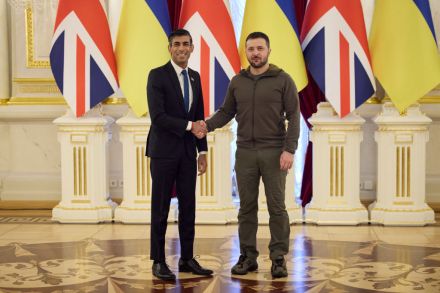
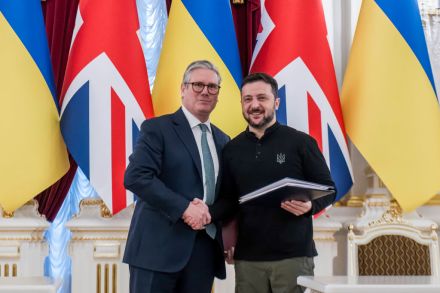
Keir Starmer is in Ukraine today, on his first visit to Kyiv since becoming Prime Minister. And he came bearing gifts: a 100-year partnership agreement between the UK and Ukraine, covering nine ‘pillars’ from culture to science. It is hoped that the new pact will define the relationship between the two countries well beyond the current conflict with Russia. This is all in the context of Donald Trump’s return to the White House, with his administration agitating for a peace deal. Is peace on the horizon? Also on the podcast, Kemi Badenoch's big speech – in which she criticised the decisions made by successive Tory prime ministers – was overshadowed by the announcement that there will be  government-backed inquiries into grooming gangs. Is this the right call?
The heterodox cabinet

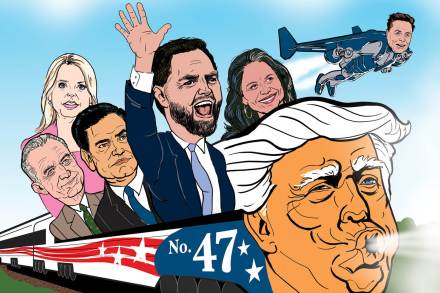
As Inauguration Day approaches, the second Trump administration is staffing up. The president-elect’s picks are more or less what everyone expected, outside of a few curveballs. To be honest, the lack of outrage from Trump critics is the big surprise: apparently Trump Derangement Syndrome is a passing fever; even many who’ve argued against him seem to see some logic in the administration of outsiders he’s been signaling he’ll pick for years. In Washington, where almost nothing changes from administration to administration, these cabinet picks might actually be able to effect some meaningful disruption. In almost every role that matters, Trump has opted for a nominee who has been an extreme critic of the very body he or she is set to oversee.

cabinet

The deepening unpopularity of Zelensky

From our UK edition

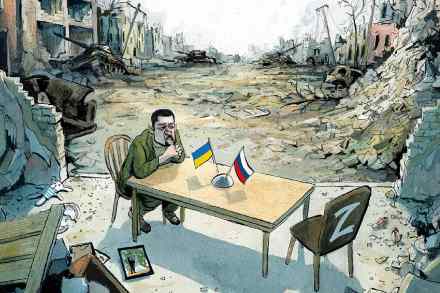
Perhaps all political careers must end, inevitably, in failure. But few politicians have had careers as meteoric, as surprising, as consequential or as heroic as that of Ukraine’s President Volodymyr Zelensky. In just five years he has gone from TV comedian to victor of the biggest presidential landslide in his country’s history to inspiring wartime leader who impressed the world with his resolve and personal bravery. But now with the war entering its third (and probably last) winter, Zelensky’s extraordinary story as Ukraine’s leader has reached its final chapter.

The endgame: Biden’s quest for a foreign policy legacy

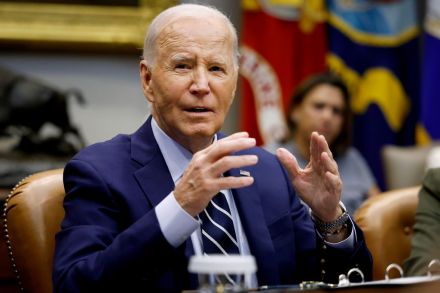
President Joe Biden only has a few more months before he steps out of the White House, hands over the keys to his successor and spends his remaining days soaking in the Delaware sun. But before he enjoys retirement, the lifelong public servant has a big piece of unfinished business: scoring a major foreign policy win that will secure his place in the history books. Unfortunately, dreaming about being a statesman is one thing; being one is quite another. The two conflicts that would give the president that coveted status — the wars in Gaza and Ukraine — aren’t presently amenable to diplomatic resolution. And while Biden and his advisors may be committed to doing the impossible, all the commitment in the world won’t do much if the combatants are intent on slugging it out.

Biden

Power play: Zelensky’s plan for his Russian conquests

From our UK edition

40 min listen

This week: Power play. The Spectator’s Svitlana Morenets writes the cover article in this week’s magazine exploring Zelensky’s plan for his Russian conquests. What’s his aim? And how could Putin respond? Svitlana joins the podcast alongside historian and author Mark Galeotti (02:10).Next: Will and Gus discuss their favourite pieces from the magazine, including Richard Madeley’s diary and Lara Prendergast’s argument that bankers are hot again.Then: how concerned should we be about falling fertility rates? In the magazine this week Jesus Fernandez-Villaverde argues that the problem is already far more grave, and far more global, than we realise. Why should we worry about this, and what can be done to stem this?

Seized Russian assets should be used against Putin

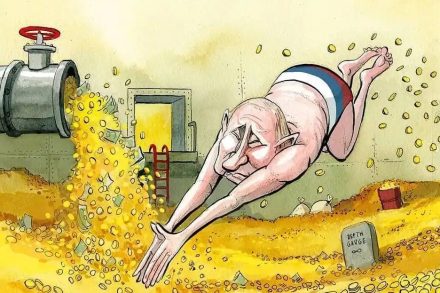
The seizure of enemy treasure, formerly known as plunder and pillage, is an ancient tool of war. Though still practiced in the world’s nastiest conflict zones, it’s a tricky business within a rules-based international order. The G7’s agreement to lend $50 billion to Ukraine — using income from $300 billion of frozen Russian assets to cover interest and repayments on the loan — is a vivid case in point. And some would say, a lily-livered half-measure. The key feature of the deal is that it does not actually claim ownership of Russian loot — which however ill-gotten is mostly held in EU banks in the form of western government bonds. It merely diverts interest payments due on the bonds from the issuing governments.

Russian

Will Biden support Ukraine’s attacks on Russia?

From our UK edition

46 min listen

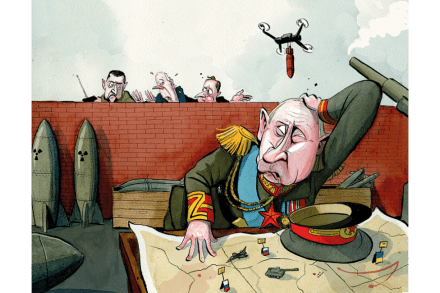
This week: will Biden support Ukraine’s attacks on Russia? Owen Matthews writes the cover piece in light of the Zelensky drone offensive. Ukraine’s most successful strategy to date has been its ingenious use of homemade, long-range drones, which it has used to strike military targets as well as oil refineries and petrol storage facilities in Russia. The strikes are working but have alienated the US, who draw a red line when it comes to attacks on Russian soil. Owen joins the podcast alongside Svitlana Morenets, author of The Spectator’s Ukraine in Focus newsletter to debate what comes next.

How to win the war that everyone is losing

Russia is losing the war in Ukraine. So is Ukraine. And so are we. Imagine the good guys win tomorrow. What exactly will we have won? Ukraine was the poorest country in Europe even before the war. Afterward it will remain as dependent on American dollars as it is now — and on American arms. Russia will not have disappeared, after all. The last war-torn and impoverished country that required open-ended American support was Afghanistan. Yet all the weapons and funds we lavished on Hamid Karzai and Ashraf Ghani failed to keep the Taliban at bay after we left. The money also didn’t help with Afghanistan’s corruption problem. Will it help with Ukraine’s? In 2021, Transparency International ranked Ukraine second only to Russia as the most corrupt country in Europe.

war

Bono’s ‘poem’ was an insult to the craft of verse

From our UK edition

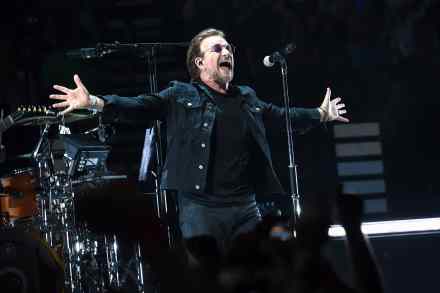
Poet', said Robert Frost, 'is a praise-word'. So it is. That explains in part the unabashed delight with which Colm Tóibín, speaking in our current Book Club podcast, talks about publishing his fine first poetry collection Vinegar Hill – decades of international acclaim as a novelist notwithstanding. Poetry is a high-status artform, perhaps the highest. Yet unlike most other artforms, very many people seem to think of it as something that anyone can do. You wouldn’t expect to be able to write a symphony, or build a suspension bridge, or win Wimbledon, without many years of apprenticeship and intimate attention to the work of those who have excelled in those things.

Are Brits losing sympathy for Ukraine?

From our UK edition

Britons were keen to punish Russia for invading Ukraine. A month into the war, more than half thought we hadn’t gone far enough. That was after the government had frozen the assets of Russia’s banks, banned the Russian airline Aeroflot from landing in Britain, and sanctioned Putin and his cabinet. Voters wanted more sanctions, even if it hurt the economy. Now, though, it seems the public isn’t so sure. Only a quarter of Britons think we should give Ukraine more support, according to a YouGov poll this month. We’ve given it tanks. Should we now send jets? Democratic governments often find it hard to keep up support for war, especially when it entails sacrifices. But history shows that they can slow or stop the decline.

Will Nato accept Ukraine?

From our UK edition

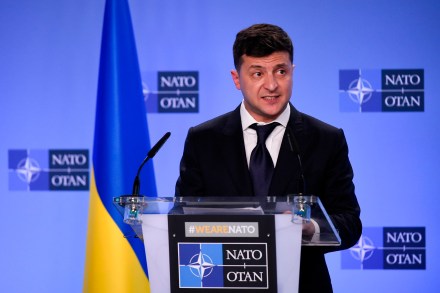
Shortly after the invasion of Ukraine, Volodymyr Zelensky made an offer to Vladimir Putin. Ukraine would drop its ambition to join Nato and would instead stay neutral, he said. It would not align with the West, in exchange for an end to hostilities. It was a sincere offer, and unpopular with Ukrainians. Yet it was significant: Putin had cited Ukraine’s Nato ambitions as the main reason for the invasion, saying it showed the West was somehow threatening Russia. But today, that offer ended and Zelensky is seeking the ‘accelerated’ Nato accession granted to Finland and Sweden this year. Will Nato accept? Jens Stoltenberg, Nato Secretary-General, dodged the question when asked today.

Ukraine stuns Russia with a counter-offensive in Kherson region

From our UK edition

The southern city of Kherson, which fell to Russian forces in the first few days of the war, is one of the places Ukraine would need to liberate if Putin’s army is to be repelled. But what realistic chance is there? Many argued that the Russian occupation is a one-way process: that having taken Crimea, Putin would extend his reach northwards and westwards – with the only question being how long Ukraine could hold off an offensive from its far-bigger enemy.  But that conversation is changing, and fast. This morning, the Ukrainian army broke through the first line of the Russian defence in Kherson region – a move that was only recently seen to be beyond the capability of Ukrainian troops.

Why Crimea could be key to Ukraine winning the war

From our UK edition

Over the six months since Russia invaded Ukraine, the ambitions of President Zelensky and his compatriots have only grown. From an early readiness to engage in talks – first in Belarus and then in Istanbul – Kyiv has progressed to an insistence that Ukraine can win, and from there to a definition of victory that includes not just a return to the status quo before the war, but the restoration of Ukraine’s post-independence borders, and now also the recovery of Crimea. Zelensky himself has often seemed slower than some in his entourage to expand the mission. But he has been adding his voice to those calling for the recovery of Crimea for a few weeks now, with Independence Day prompting these ringing words: ‘Crimea is Ukraine. And we will return it.

Can Zelensky afford to freeze Ukraine’s gas prices?

From our UK edition

This morning, Volodymyr Zelensky signed a moratorium on energy prices – so while gas bills are rising all over Europe, Ukraine will remain unaffected. This honours a pledge he made on his election. Freezing energy bills is a standard populist policy in Ukrainian politics (in a country where temperatures can reach -25ºC and the elderly can’t afford to buy medicine, it’s hard to win without making such promises). But there are now serious worries about whether it could bankrupt a government that needs all the money it can get to fight a war. Energy prices will be frozen until six months after martial law ends in Ukraine: the pledge is good for as long as the war lasts.

Zelensky’s peculiar Glastonbury appearance

From our UK edition

Volodymyr Zelensky didn’t quite make it onto the Glastonbury line-up posters. Perhaps Michael Eavis, the owner of ever-so Worthy Farm, had last-minute difficulties with the Ukrainian President’s booking agent. No matter. An eight-foot-high image of President Zelensky’s face graced the Pyramid Stage on Friday, right before ageing indie rockers The Libertines belted out their two-decades-old bangers. ‘Time for Heroes’, but not before festival-goers had enjoyed a brief set by Europe’s very own hero. You’d be forgiven for thinking the shtick’s getting a bit tired – but at least Pete Doherty can just about hold a tune. ‘Glastonbury is the greatest concentration of freedom these days,’ Zelensky told the festival.

The West is watching the war in Ukraine like it’s sport

From our UK edition

Every time I hear a politician speak of Munich, I suspect that something is amiss. Last week, President Zelensky accused former US Secretary of State Henry Kissinger of living in the ‘deep past’, and demanding that ‘a part of Ukraine be given to Russia’. ‘It seems that Mr. Kissinger has 1938 on the calendar instead of 2022’, Zelensky said. He wasn’t alone: figures from the Dutch Prime Minister Mark Rutte to the former chess champion Garry Kasparov put themselves on the record timidly or violently disagreeing with Kissinger. I wasn’t at Davos, but I learned of Kissinger’s revelations through Twitter.

Zelensky has saved Boris

From our UK edition

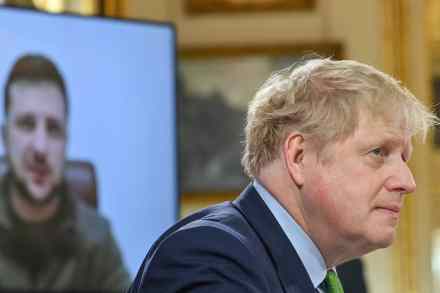
Labour will try all it can to bring up the subject at every opportunity; as will a few backbench MPs. But partygate just doesn’t feel likely to prove fatal to Boris Johnson anymore. War in Ukraine has changed the dynamic: fussing over lockdown parties seems trivial and out of date. Keir Starmer’s continued plugging away on the matter makes him look even duller than normal. Rishi Sunak’s stock has plummeted after what many saw as a bungled spring statement. But if Boris Johnson does stage a revival, the figure he will have most to thank is Volodymyr Zelensky. The Ukrainian President has made it quite clear on more than one occasion that he regards the British PM as a more helpful, more reliable ally than other European leaders.

Zelensky’s address was strange, but sensational

From our UK edition

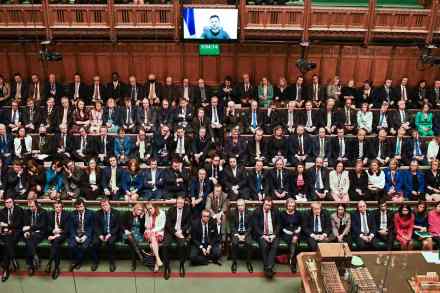
This afternoon, the Ukrainian President Volodymyr Zelensky addressed the House of Commons. A single flat-screen TV broadcast his speech to a packed chamber. Zelensky appeared in plain green fatigues next to Ukraine’s blue-and-yellow flag. He looked pale, tired, fearless and determined. Squads of foreign killers are roaming his homeland trying to find him. His words were spoken in English by a translator who probably had no advance sight of the text. The halting, ungrammatical phrases made the address strangely powerful. ‘I would like to tell you about the 13 days of war. The war that we did not start.’ Zelensky’s goal is simple. ‘We do not want to lose what is ours.

When actors become politicians

The similarities between acting and politics are obvious. Someone stands on a stage, wearing makeup and an appropriate costume. With suitable gravitas, they read out a speech that someone else has written. If it goes well, there is applause. (If not, there can be booing, or a riot.) If they are good at their job, they can continue at a high-profile level for a considerable time, and arouse great public affection. If they are not, they are either swiftly forgotten or, at worst, become a figure of public loathing, a status that they might never live down for their rest of their lives.