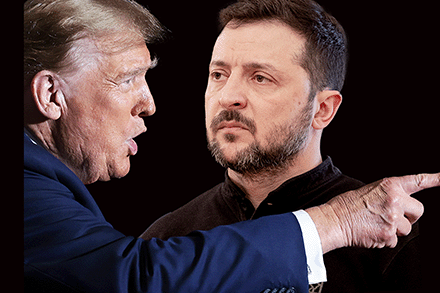
Zelensky

The tide has turned in Ukraine

The long war in Ukraine has morphed into a new and decisive phase, one that could lead to Ukraine’s upset victory over its much larger, more aggressive neighbor. The global consequences of Russia’s loss – and Vladimir Putin’s humiliation – would be enormous. What is this new phase? Is there really evidence the tide has turned in Ukraine’s favor? To sort out the answers and understand what’s new about the war’s current phase, we need to do a brief tour of the three phases that preceded it. The first phase began well over a decade ago, in February 2014, when Barack Obama was president. Ukraine fatefully signaled it wanted much stronger ties with Europe and the United States, not Russia, at the very moment US deterrence was weak.

Zelensky

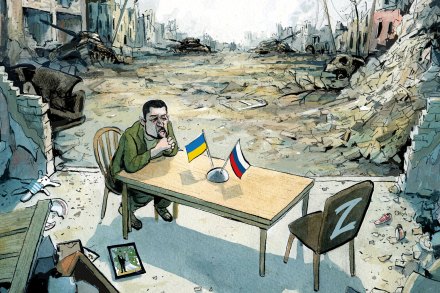
Can Zelensky surrender?

Kyiv The urge to run from danger is only human. It was palpable when air raid sirens sounded as I left the Ukrainian city of Dnipro, which is close to the front line and under relentless attack nightly from Russian drones. Five MiG-31 aircraft were in the air, Telegram channels with access to reliable intelligence reported. The warplanes can be armed with either the Iskander ballistic missile – which travels at up to 5,400mph – or the Kinzhal hypersonic missile, top speed 7,700mph. So fast there wasn’t enough time to find a shelter. We sat in traffic with bated breath, waiting. A deep boom resonated through the mini-bus and two colleagues of mine began praying. Was it an intercept or an impact – or a Patriot defense battery firing? We still don’t know.

zelensky ukraine

Witkoff’s Ukraine peace proposal is unworkable

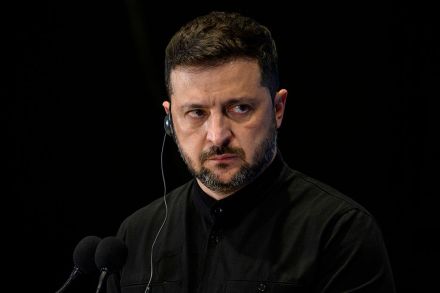
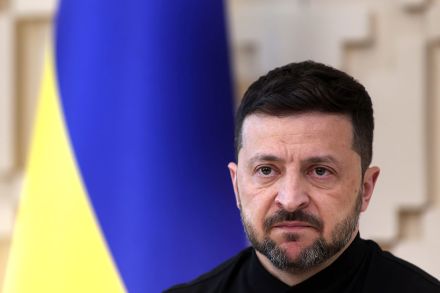
With Ukrainian president Volodymyr Zelensky’s political authority already under grave assault in the wake of a major corruption scandal, he now faces a new challenge – this time from his erstwhile ally, the United States. A high-level US delegation led by army secretary Daniel Driscoll is meeting Zelensky in Kyiv today to present the latest version of a peace plan aimed at ending the war. The contents of the plan have not been officially revealed and so far it has not been publicly endorsed by Donald Trump. But two things are already clear. One is that there’s nothing new in it. And two, there’s nothing good in it for Zelensky.

ukraine

How the Ukrainian far right is preventing peace

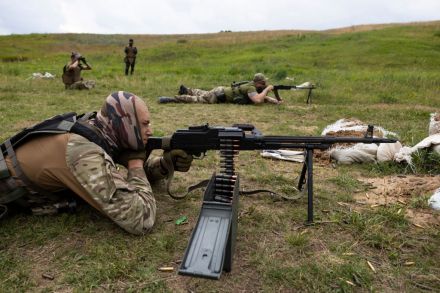
Since the start of the Russian invasion of Ukraine in February 2022, discussion of the Ukrainian far right has been verboten in western media, largely because one of Vladimir Putin’s stated war aims is the “denazification” of Ukraine. Putin’s claim that Ukraine is a Nazi state has been recycled by Russian propagandists and the western party line has consistently been that while the Ukrainian military does have far-right strains, they are marginal and inconsequential. This may have been true in 2022, but things have changed significantly after almost four years of war. Today, far-right figures control some of Ukraine’s strongest military units, and neo-Nazi ideology is displayed openly in the Ukrainian ranks.

azov enemy ukrainian

Tucker Carlson, ‘belle of the ball’

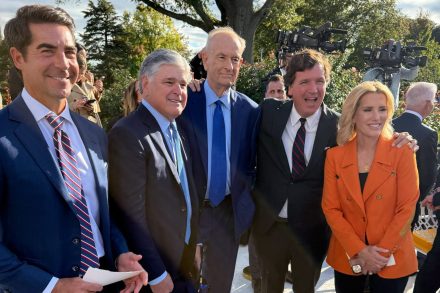
Tucker time In the month since his death, Charlie Kirk has been credited for his role as a unifying figure on the American right. Nowhere was that more evident than at the Tuesday afternoon service posthumously awarding him the Presidential Medal of Honor, where four hosts of Fox News’s prestigious 8 p.m. slot posed for a photo together: Jesse Watters, Glenn Beck, Bill O‘Reilly and Tucker Carlson. Tucker also got a picture with Sean Hannity and Laura Ingraham – incredible considering how acrimoniously things ended between him, his former network and a number of his other high-profile colleagues. (Carlson branded Hannity a “warmonger” as recently as June.

Tucker

No, Trump has not changed course on Ukraine

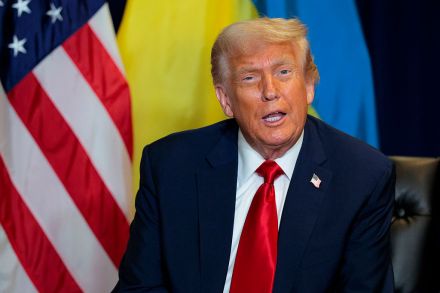
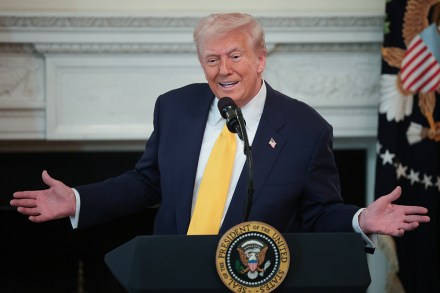
President Trump has once again played the global foreign-policy commentariat for fools. They have taken a startling statement from Trump’s Truth social-media account on Tuesday as a sign of a new policy – or at least a new attitude – toward the Russia-Ukraine war. Yet what Trump actually wrote says nothing of the sort.  If Trump really were newly committing himself to Ukraine, why would say, as he’s so often said before, “I wish both countries well”? One country has invaded the other; wishing one of them well means wishing defeat on the other. Wishing them both well indicates indifference.

Trump Ukraine

Europe is a paper tiger

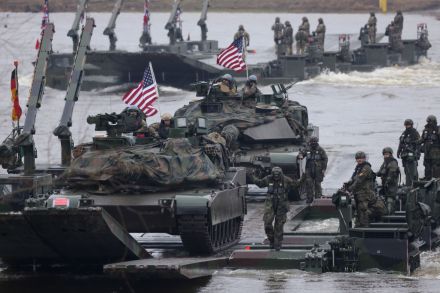
“The purpose of NATO,” Lord Hastings Ismay, the alliance’s first secretary general, once quipped, was “to keep the Americans in, the Russians out, and the Germans down.” That formula defined Europe’s security for decades, and it worked because US power anchored the alliance. But as President Donald Trump’s administration demands its European allies carry their share of the burden, shows little appetite for sending troops to Europe and worries more about the Southeast Asian theater, Europeans are being forced to confront their lack of political will for their own security, underinvestment in defense and dwindling public appetite to fight for their country.

europe

The Alaska summit went much as expected

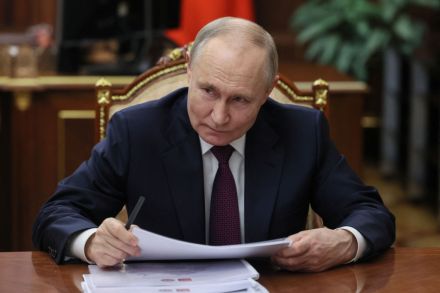
The summit between Presidents Donald Trump and Vladimir Putin ended predictably, without a ceasefire deal or, it seems, assent on much else. Trump said “Many points were agreed to, and there are just a very few that are left,” but failed to offer any details. Even if true, the leftovers are critical, and the gulf between the two governments on the war remains huge. Critically, Putin cares more about security than image or economics, and understandably believes that he would lose leverage by agreeing to halt military operations before winning the concessions he demands from Ukraine. Nevertheless, the summit improved, however slightly, the prospects for negotiating an end to the war.

Trump Putin

Can Ukraine secure its military survival?

The Trump-Putin honeymoon is over. After three months of lengthy one-on-one phone calls, a handful of false starts on negotiations and flashes of Trumpian boosterism over the prospect of great commercial deals with the Kremlin, a fourth summer of war in Ukraine looks inevitable. Vladimir Putin will pretend to negotiate, while at the same time continuing to pound Ukraine’s cities with missiles and pressing forward on the ground. The Ukrainians will continue to scramble for men and resources with which to defend themselves. And the White House will continue to blame both sides for not reaching a deal. Over these three months of false hope, Putin has made two things very clear.

Ukraine

The heterodox cabinet

As Inauguration Day approaches, the second Trump administration is staffing up. The president-elect’s picks are more or less what everyone expected, outside of a few curveballs. To be honest, the lack of outrage from Trump critics is the big surprise: apparently Trump Derangement Syndrome is a passing fever; even many who’ve argued against him seem to see some logic in the administration of outsiders he’s been signaling he’ll pick for years. In Washington, where almost nothing changes from administration to administration, these cabinet picks might actually be able to effect some meaningful disruption. In almost every role that matters, Trump has opted for a nominee who has been an extreme critic of the very body he or she is set to oversee.

cabinet

The endgame: Biden’s quest for a foreign policy legacy

President Joe Biden only has a few more months before he steps out of the White House, hands over the keys to his successor and spends his remaining days soaking in the Delaware sun. But before he enjoys retirement, the lifelong public servant has a big piece of unfinished business: scoring a major foreign policy win that will secure his place in the history books. Unfortunately, dreaming about being a statesman is one thing; being one is quite another. The two conflicts that would give the president that coveted status — the wars in Gaza and Ukraine — aren’t presently amenable to diplomatic resolution. And while Biden and his advisors may be committed to doing the impossible, all the commitment in the world won’t do much if the combatants are intent on slugging it out.

Biden

Seized Russian assets should be used against Putin

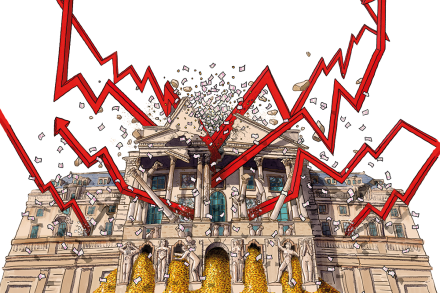
The seizure of enemy treasure, formerly known as plunder and pillage, is an ancient tool of war. Though still practiced in the world’s nastiest conflict zones, it’s a tricky business within a rules-based international order. The G7’s agreement to lend $50 billion to Ukraine — using income from $300 billion of frozen Russian assets to cover interest and repayments on the loan — is a vivid case in point. And some would say, a lily-livered half-measure. The key feature of the deal is that it does not actually claim ownership of Russian loot — which however ill-gotten is mostly held in EU banks in the form of western government bonds. It merely diverts interest payments due on the bonds from the issuing governments.

Russian

How to win the war that everyone is losing

Russia is losing the war in Ukraine. So is Ukraine. And so are we. Imagine the good guys win tomorrow. What exactly will we have won? Ukraine was the poorest country in Europe even before the war. Afterward it will remain as dependent on American dollars as it is now — and on American arms. Russia will not have disappeared, after all. The last war-torn and impoverished country that required open-ended American support was Afghanistan. Yet all the weapons and funds we lavished on Hamid Karzai and Ashraf Ghani failed to keep the Taliban at bay after we left. The money also didn’t help with Afghanistan’s corruption problem. Will it help with Ukraine’s? In 2021, Transparency International ranked Ukraine second only to Russia as the most corrupt country in Europe.

war

When actors become politicians

The similarities between acting and politics are obvious. Someone stands on a stage, wearing makeup and an appropriate costume. With suitable gravitas, they read out a speech that someone else has written. If it goes well, there is applause. (If not, there can be booing, or a riot.) If they are good at their job, they can continue at a high-profile level for a considerable time, and arouse great public affection. If they are not, they are either swiftly forgotten or, at worst, become a figure of public loathing, a status that they might never live down for their rest of their lives.