Zack polanski

I’ll do anything to keep Zack Polanski out of Kentish Town

From our UK edition

On the morning of the 2005 general election, the young man who sat opposite me at work asked, ‘How did you vote?’ ‘That’s none of your business,’ I replied, in a silly, prim voice. A cruel look passed across his face. ‘You voted Tory, didn’t you?’ he crowed. ‘That’s why you won’t say!’ He started to point at me. ‘Tory voter! TORY SCUM!’ I was appalled. It was my first experience of tribal politics and I didn’t like it. I can’t remember what I said in reply, but I certainly didn’t reveal how I’d voted. If I had voted for Michael Howard’s Conservative party, I would have been too ashamed to admit it and if I had voted Labour, I wouldn’t have wanted to admit that, either – not if it meant I was now a kindred spirit to this maniac.
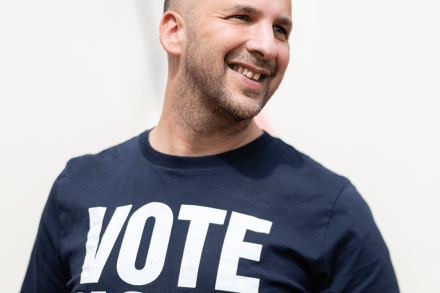
Could I bear to vote for Zack Polanski?

From our UK edition

Will Labour’s ‘visitor levy’ generate £52 million of revenue for public spending in York and North Yorkshire, as a House of Commons briefing suggests? Or will it deter holidaymakers from exploring the region I love – and every other English destination where the levy is applied – while piling adversity on a hospitality trade already caned by employment cost hikes and tight consumer wallets? Modelling by the Tax Policy Associates thinktank offers a central estimate that the proposed tax on overnight stays (at up to 5 per cent, as set by local authorities) could raise £603 million a year for the loss of 5.8 million room-nights and £689 million in overall visitor spending, roughly half from overseas.

The Greens are coming for north London

From our UK edition

When Sir Keir Starmer announced that he was standing down as an MP on Tuesday, jubilation erupted among Green activists. Zack Polanski’s party has already proved it can take on Labour’s campaign machine in ethnically diverse parts of Manchester; Starmer’s resignation now presents the perfect opportunity to do the same in London. At the time of the 2021 census, the constituency of Holborn and St Pancras was 21 per cent Muslim and 45 per cent non-white. At the 2024 general election, Starmer received almost 50 per cent of the vote, while the Green party and the independent pro-Gaza candidate Andrew Feinstein secured a combined 29 per cent.

The death of two-party politics has been greatly exaggerated

Every twist in the winding road of our politics brings a latest thing to say. These wisdoms usually survive a season or two before succumbing to the new thing to say, which often asserts the opposite. This summer we have ‘Britain is moving into an era of multi-party politics’. Allow me, therefore, to leap ahead with my candidate for its successor: ‘Reports of the death of two-party politics are greatly exaggerated.’ I don’t say our current governing party and principal opposition must always be the two parties in question. Labour may be dying. The Tories may be showing signs of life. In both cases I fervently hope so. But whether or not these remain our two options in elections to come, the tendency will always be for the choice to boil down to two.

Revealed: the Green plot against Zack Polanski

From our UK edition

As Keir Starmer struggles to keep his crown, another leadership battle is raging. Away from the media spotlight, there is a fight for the future of the Green party between its various official ‘Special Interest Groups’ and its leader, Zack Polanski. What are they fighting about? Why, Palestine and racial politics of course.  On one side, Polanski and his officials are at least trying to appear to be dealing with allegations of anti-Semitism and extremism within the party. On the other, a powerful affiliate group, the Global Majority Greens (GMG), is accusing its leader of creating a ‘hierarchy of racism’, with allegations of anti-Semitism taken more seriously than other complaints.

The obvious truth about anti-Semitism

From our UK edition

There are many ways to do nothing. One is to sit on your hands; another is to call for ‘a conversation’. I have noticed quite a lot of calls for ‘a conversation’ since the stabbing of two Jewish men in Golders Green last week. Some politicians and pundits have even been bold enough to call for a ‘national conversation’. This is when you can tell people are pulling out the big guns. One reason I say it is also a variant on doing nothing is because this has happened so many times before. I remember Theresa May standing near the site of the London Bridge attacks in 2017, surrounded by various leaders, insisting that we need to tackle ‘extremism’. The results were a real stunner – even for connoisseurs of inertia.

Voters get the politicians they deserve – so Britain should get ready for PM Polanski

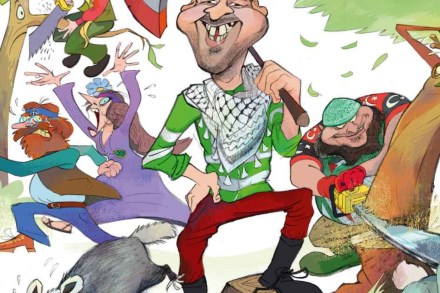
It is a truism that in a democracy the voters get the government they deserve – and so we should probably not complain too much if our next prime minister is a snaggle-toothed halfwit who presents to voters an infantile diorama drawn from fairy tales in which dancing is more important than manufacturing, people can be whatever they want to be, the military should be abolished and everyone will be happy except for the Jews, who are to be hounded and vilified and attacked. Zack Polanski’s Greens are the embodiment of what the American writer Rob K. Henderson called “luxury beliefs,” which are beliefs in the main based upon fictions – and they are soaring in the polls.

polanski

March of the Greenshirts: Polanski’s party are the real racists

‘Back us to stop the far right,’ say the Greens. But what if parts of the Greens are the far right? Saiqa Ali, a Green candidate in next week’s elections for Streatham St Leonard’s, Lambeth, posts on her Instagram account a picture of the Earth suffocated by a giant serpent with the Star of David on its skin. She thinks that the British government includes too many ‘Zionists Jews’, and that Donald Trump is ‘owned by Jews’. Not even the Z-word, that last one. Not even Israel. Just… Jews. Ali also posts a picture of an armed man in what looks like a Hamas headband, captioning it: ‘Long live the Resistance.’ If it is a Hamas headband, this may actually be a criminal offence.

Zack Polanski must dream of Athens’s radical democracy 

From our UK edition

A Greek essayist c. 420 BC argued that Athens’s radical democracy, giving the vote to every adult male citizen, resulted in the poor having total power to impose their will on the rich. Zack Polanski, leader of the Green party, must dream of such a world. The essayist agrees that, since the poor row the ships which control the Athenian empire, they have a right to enjoy political power which allows them to serve their own interests in the weekly Assemblies. But he thinks that, while the educated rich are most concerned about what is just and good, the common poor are ignorant, disorderly good-for-nothings. Their power simply ensures that they can satisfy their own lawless needs.

Can the chaps in chaps smash fascism?

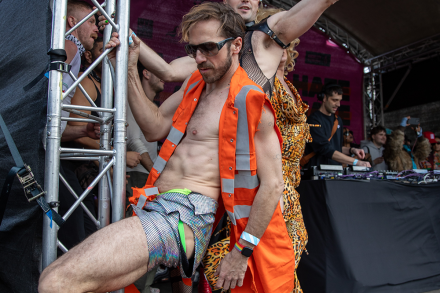
I have spent a small portion of my time lately wondering what I would do if I thought communists were about to take over Britain. At the more civil end of things, I could see myself going on an anti-communist protest, though I would shrink away if I noticed that my fellow marchers were flying swastikas. I don’t exactly know what I would do next. Perhaps I would hope for another election soon, and do what I could to unite other anti-communists. One thing I am fairly sure I would not do would be to dance. In fact, were this country facing the prospect of Stalinism coming at us full force, the last thing I would do would be to get a DJ, book a stage in Trafalgar Square, hire some go-go dancers and rave it up.

fascism

Does British politics have a problem with the ‘omnicause’?

From our UK edition

51 min listen

It is undoubtable that – under the leadership of Zack Polanski – the Green Party have soared to new heights. Having won their first parliamentary by-election in February, polls consistently show them as a force to be reckoned with on the left of British politics. Much of their success has come at the detriment of Labour, with disgruntled further-left progressive voices opting to vote Green. This, though, is a brand of eco-populism that comes at the expense of the Green Party's roots, or so argues Angus Colwell in the Spectator's cover article this week. Have the Greens ceded the issue of the environment?

Does British politics have a problem with the 'omnicause'?

The Tories are the real green party

From our UK edition

You might describe it as the Polanski paradox. The party which calls itself Green, which has concern for the environment as its raison d’être, has never been more popular. Four Green MPs returned at the last general election. Victory in the recent Gorton and Denton by-election. Local election gains in May predicted to be sweeping. Running second in many national opinion polls, and in the projected seat tally for the Scottish parliament. And yet while the Green party surges ahead, green issues fall by the wayside. As Angus Colwell explores in this week’s cover piece, Zack Polanski has focused the Green party away from the environment and turned it into a movement of the populist left.

How the Green party abandoned its environmental roots

In the summer of 1972, Lesley Whittaker walked into a pub in rural Warwickshire. She had something for her husband Tony. It was a copy of Playboy magazine. In that issue, there was an interview with the biologist Paul R. Ehrlich, who died this month aged 93. In it, he repeated the thesis of his 1968 book The Population Bomb, where he wrote that ‘in the 1970s hundreds of millions of people will starve to death’. There were simply too many of us. Worldwide famine was imminent. Lesley and Tony were terrified. Along with a local businessman, Michael Benfield, and his future wife, Freda Sanders, they talked about it over pints at the Bridge Inn, becoming known as a ‘Gang of Four’. Over several months, they roped in 39 others, and set up the People party in 1973.

Badenoch can show Polanski what a real green party looks like

From our UK edition

Freed from the burden of choosing a prospective government, by-elections are an opportunity for voters to tell the political class how they really feel. It is therefore no great surprise that the people of Gorton and Denton, until now a solid Labour heartland, have called on the uber-left Greens to give the status quo a kicking, with Reform coming in second. For the Conservatives, the more interesting story is not the Greens’ success in outer Manchester, but what the Green surge at the national level says about the voters who have been drifting into Zack Polanski’s orbit. The Greens have previously benefited from the agreeable vagueness of their brand. Green is a comforting word, smelling of cut grass and virtue.

Green surge: could Labour lose London?

From our UK edition

15 min listen

Deputy political editor James Heale and deputy editor of The House magazine Sienna Rodgers join Patrick Gibbons to discuss the challenge the Greens pose to Labour in London. James's political column this week explains how the shockwaves of the Gorton and Denton by-election have reached the capital. Could Labour's 'strongest heartland' fall to the Greens through their coalition of 'urban professionals, young Muslims and the economically disaffected'? Plus: as Sienna reveals Zack Polanski's podcast tastes – in an exclusive interview for The House's cover (out Monday) – we extend an interview to the Green Party leader to join us on Coffee House Shots. Produced by Patrick Gibbons.

Green surge: could Labour lose London?

The young women hypnotised by Polanski

From our UK edition

A friend mentioned to me last week that a third of young women in the UK are planning to vote for the Green party under its wonderful new leader, Zack Polanski. Bad as I tend to expect things to be, even I thought that surely things can’t be that bad. However I dutifully entered the terms ‘Polanski’ and ‘young women’ into Google, and promptly fell down a different rabbit hole. Defining my search terms a little more clearly, it turned out that my informant was correct. So badly deranged are the youngest cohort of female voters in this country that a third of them really do believe that they have found their saviour in a man who until recently promised that he had a technique to inflate women’s breasts through hypnotism but who also thinks that J.K. Rowling is a crank.

‘We must not be the Tory party 2.0’: Nigel Farage on his plans for power

From our UK edition

Nigel Farage is signing football shirts when I arrive at Reform’s campaign headquarters in Millbank Tower, the building where New Labour prepared for power before 1997. The black shirts are emblazoned with ‘Farage 10’ in gold. ‘Someone called them Nazi colours,’ the leader complains. ‘This always happens when we do well.’ As favourite to be the next prime minister, Farage is sanguine. ‘They’re a special edition, £350 each.’ How many is he signing? ‘—king hundreds,’ he says, pulling his punches on the profanity. Seven hundred to be precise, a cool £245,000 for party coffers. This is the same week the party registers a £9 million donation from the crypto millionaire Christopher Harborne, the largest single donation in British political history.

Trump’s gilded age, the ‘hell’ of polyamory & is Polanski Britain’s Mamdani?

From our UK edition

31 min listen

A year on from his presidential election victory, what lessons can Britain learn from Trump II? Tim Shipman writes this week’s cover piece from Washington D.C., considering where Keir Starmer can ‘go big’ like President Trump. Both leaders face crunch elections next year, but who has momentum behind them? There is also the question of who will replace Peter Mandelson as ambassador to the United States. Can Starmer find a candidate who can get the Americans on side? Host Lara Prendergast is joined by The Spectator’s political editor Tim Shipman, features editor Will Moore and commissioning editor Mary Wakefield.

Is Zack Polanski our Zohran Mamdani?

From our UK edition

Like Zohran Mamdani in New York, Zack Polanski offers the thrill of cost-free rebellion. Mamdani leapt to prominence at the end of June by unexpectedly winning the Democratic party nomination in the New York mayoral race, and doing so as an avowed socialist who claims that by taxing the rich he will relieve ‘the despair in working-class Americans’ lives’. Polanski has made waves since the start of September as the new leader of the Green party of England and Wales, using a rhetoric calculated to appeal to left-wing activists, while proclaiming himself the champion of plumbers and hairdressers. He has conjured up an alliance between utopian socialists like himself and sturdy, hard-working people who provide services on which we all depend, and who are struggling to get by.

The Ultras: meet Britain’s new Islamo-socialist alliance

From our UK edition

Ayoub Khan seemed delighted. Last Thursday, it was announced that fans of the Israeli football club Maccabi Tel Aviv would be banned from attending their match against Aston Villa next month, an outcome that Khan, the MP for Birmingham Perry Barr, had been lobbying for since September. That night, Khan took himself on a broadcast round to celebrate. Keir Starmer had said the ban was the ‘wrong decision’, but on Newsnight Khan told him to back off. ‘The Prime Minister should stay out of operational matters,’ he said. ‘That’s not a matter for him, sitting in No. 10.’ It has been a satisfying 15 months for Khan since his election.