Yalta

Only Hitler could have brought the disparate Allies together

‘Allies,’ declared Stalin on 8 February 1945, the fifth day of the Yalta Conference, ‘should not deceive one another.’ In order to defeat Hitler, Mussolini and the Japanese, the British, Americans, Soviets, French and Chinese had indeed all worked closely together. But in his meticulous, scholarly and highly enjoyable history of the second world war, Tim Bouverie makes plain just what this entailed: a collaboration that was both deep and rivalrous, riven by secret deals, prejudice, changing loyalties and betrayals, conducted by people who at different times admired, feared and despised one another, while in public most often remaining models of civility.

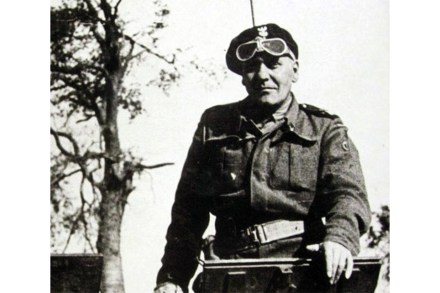
The good soldier Maczek – a war hero betrayed

Who could forget the Polish squadrons in RAF Fighter Command when, in the 1969 film The Battle of Britain, a British squadron leader, frustrated by the excited radio chatter on being allowed into action at last, orders ‘Silence! In Polish!’ Or the Polish Parachute Brigade at Arnhem, whose commander, Stanislaw Sosabowski, played by Gene Hackman in A Bridge Too Far (1977), thinking the venture disastrous, growls ‘God Bless Field Marshal Montgomery’ as he jumps from his Dakota? Commander Eugeniusz Plawski, the captain of the Polish destroyer Piorun which first spotted the Bismarck and charged at her to draw fire, might be better known if he had featured in the 1960 film Sink the Bismarck! – but that wasn’t expedient, with the honours going instead to a Royal Navy officer.

When Stalin was the lesser of two evils

‘We are resolved to destroy Hitler and every vestige of the Nazi regime... Any man or state who fights against Nazism will have our aid.’ These words were spoken by Winston Churchill in a BBC radio broadcast to the nation from Chequers on the evening of 22 June 1941. Churchill detested Stalin – but he needed him to destroy Hitler That morning, Operation Barbarossa had begun, with Hitler’s armed forces launching the biggest invasion in modern history into the heart of a country whose very existence Churchill detested: the Soviet Union. This cataclysmic invasion by the Nazi regime, however, created an ally the British leader had never envisioned. For the previous 22 months, Great Britain’s war with Nazi Germany had not gone well.

Time to retire the ‘Munich’ analogy?

From our US edition

The Ukraine crisis signaled to Western officials and pundits to once again begin recycling the historical analogy of the 1938 Munich Agreement, which handed Nazi Germany parts of Czechoslovakia in a failed bid to head off major conflict in Europe. This was expected. Such comparisons are usually followed by the predictable warnings about the danger of Western “appeasement.” Hence British defense secretary Ben Wallace has recently compared Western diplomatic efforts to head off a Russian invasion of Ukraine to the appeasement of Nazi Germany ahead of World War Two, suggesting that unnamed Western countries were not being tough enough with Moscow.