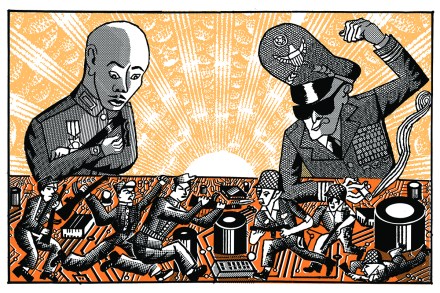
Xi jinping

What has Pelosi’s Taiwan trip wrought?

In becoming the highest-ranking American politician to visit Taiwan in a quarter-century, House Speaker Nancy Pelosi has become the dominant foreign affairs news story of the month, eclipsing, if briefly, Russia’s war in Ukraine. Yet beyond all the sound and fury, Pelosi’s trip changed nothing in the cross-Strait balance of power. What it did was to legitimize the “mission creep” bringing Taiwan and America closer together. Both supporters and critics of the trip were quick to invest Pelosi’s visit with major symbolic significance.

Pelosi is right to put China on notice

House speaker Nancy Pelosi has always had a flair for the dramatic. During the Trump presidency, for example, she ostentatiously tore up his State of the Union speech. But for sheer spectacle, it will be hard for Pelosi to top her “will she, won’t she” visit to Taiwan this week. In spite of the suspense, there was never really any doubt about it. For weeks China has issued dire warnings about the perils of her visit. So, as it happens, have several commentators, including The Spectator’s Freddy Gray, whom I debated on the Americano podcast, and who seems to have a bad case of the collywobbles about the Pelosi trip.

China delayed its 2008 financial crisis until 2022

The year 2008 was consequential by many measures. The collapse of the US investment bank Lehman Brothers sparked a worldwide financial crisis. Yet China appeared to emerge out of it relatively unscratched after Beijing introduced a massive stimulus package in the world, about three times the size of the United States government's rescue program. Thanks to this expansionary fiscal policy and the easy credit that came with it, the Chinese economy quickly returned to its robust growth by growing 8.7 percent in 2009 and 10.4 percent in 2010. After 2008, the Chinese Communist Party leaders concluded that China "escaped" the financial crisis because of its outstanding leadership and the superiority of the Chinese political system over deeply flawed western democracies.

Pelosi’s visit to Taiwan is about politics not diplomacy

The Biden administration is increasingly concerned about a trip to Taiwan next month by House Speaker Nancy Pelosi. And they should be. The visit is pointlessly provocative for little gain. Pelosi would do well to remember the Chinese proverb: "Always know if the juice is worth the squeeze." The domestic political juice is charm points for Pelosi from her large, pro-Taiwan constituency back home as she runs for reelection. A third of Pelosi’s congressional district is Asian-American and taking on Big China has long been a major part of her political identity. She, for example, made a public show out of meeting with pro-democracy protesters from Hong Kong and urging a boycott of the 2022 Winter Olympics in Beijing.

Did Hunter Biden influence Obama-era China policy?

“Fighting corruption is not just good governance,” Joe Biden once said. “It is self-defense. It is patriotism, and it’s essential to the preservation of our democracy and our future.” Going into the first term of his presidency, President Obama gave then-Vice President Biden one of the most important foreign policy portfolios: managing the US relationship with China. However, there is precious little to show for this prodigious assignment.

hunter biden

What Ukraine means for Asia

If Asia has entered the debate over the war in Ukraine, it is primarily through questions over the role China is purported to be playing in supporting Russia. Given the now-infamous declaration of a “partnership without limits” by Vladimir Putin and Xi Jinping during the Beijing Olympics just weeks before the invasion, many observers have searched for signs of Chinese aid, military or economic, to Russia in the conflict. The scope of devastation in Ukraine and the probable war crimes being committed by Russian troops understandably mean less attention has been paid to how the conflict might affect geopolitical stability in the Indo-Pacific region. The exception is Taiwan — there has been considerable speculation over the influence of Ukraine on Beijing’s calculations there.

asia

Make China pay for its quiet support of Putin’s war

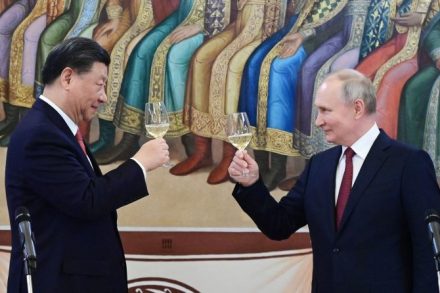
China is tacitly backing Putin’s aggression against Ukraine. The Biden administration should combat this by imposing economic costs on China through the corporate Environmental, Social and Governance disclosure requirements that are already in place. Xi Jinping and Vladimir Putin met in February at the Beijing Olympics, their thirty-eighth visit in the nine years since Xi took power. In a 5,000-word statement on February 4, Xi and Putin proclaimed their friendship with “no limits” and “no forbidden areas of cooperation.” Just weeks before the invasion, China signed agreements to buy from Russia energy and agricultural products worth over $200 billion.

support

What does Ukraine really mean for Taiwan?

No one should think that Vladimir Putin’s invasion of Ukraine means that Xi Jinping will decide to use force against Taiwan anytime soon, if ever. China is not Russia, nor Taiwan Ukraine. Yet neither should policymakers presume that Beijing will not be influenced by what happens on the other end of Eurasia. Washington must consider whether and how Putin’s aggression has raised the stakes in defending Taiwan from the People’s Republic of China. At the least, US strategists will seriously have to assess whether a global environment in which norms of international behavior are regressing may serve to spur Beijing to military action that once seemed unlikely.

taiwan

The US and India in a new world

The world’s center of gravity is shifting to the Indo-Pacific. The new global order will be shaped by developments in a sprawling region where interstate rivalries and tensions are sharpening geopolitical risks. Building a stable balance of power in the Indo-Pacific has become more important than ever, but China’s territorial and maritime revisionism, and its heavy-handed use of economic and military power, are causing instability and undercutting international norms. Against this background, the expanding strategic partnership between the world’s most powerful and most populous democracies — the United States and India — has become pivotal to equilibrium in the Indo-Pacific.

india

‘Xi Jinping Thought’ is taking over China’s classrooms

From last fall, in an extension of a personality cult not seen since Mao Zedong, “Xi Jinping Thought” is being incorporated into China’s national curriculum. School textbooks are emblazoned with Xi’s smiling face, together with heartwarming slogans telling readers as young as six that their leader is watching over them. “Grandpa Xi Jinping is very busy with work, but no matter how busy he is, he still joins in our activities and cares about our growth,” reads one. “Xi Jinping Thought” must be taught at all levels of education, from elementary school to graduate programs, and there is special emphasis on capturing the minds of the youngest children.

china climate xi jinping thought

China is the new evil empire

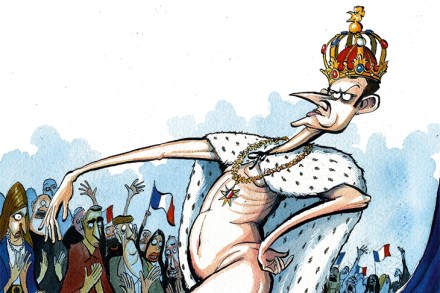
History does not repeat itself, but it does rhyme. In the 1980s, the gravest threat to America’s freedoms came from the Soviet Union, which President Ronald Reagan called the Evil Empire. That rhymes with today’s equally serious threat from Communist China, the New Evil Empire. Xi Jinping rules China with absolute power, like an emperor. He has complete control over China’s sole political party, the CCP, the government, the economy, the military, the police, the judiciary, and the media. Even over religion: Christian churches must display Xi quotes instead of the Ten Commandments.

The China reckoning

Fifteen years ago, I remarked to an acquaintance over lunch that it looked like China might eat America’s lunch in naval power. My interlocutor, a person well-known in leadership positions in the China studies community, scoffed at my comment. Over the next few years, he never missed an opportunity to ridicule my wild-eyed prediction. I often wonder what he thought in February 2021 when, less than a month after becoming president, Joe Biden warned US senators that if America didn’t “get moving, [China is] going to eat our lunch.” I claim no credit for prescience, just a historian’s sensitivity to trends over time. The fiftieth anniversary of President Richard Nixon’s visit to China falls in February 2022.

china

America needs more than ‘guardrails’ with China

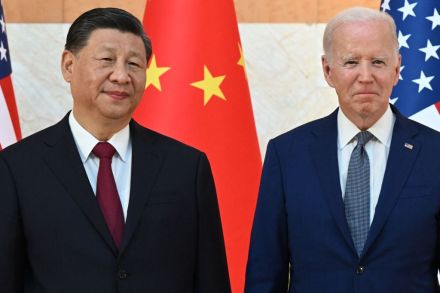
As recently as a week ago, there was talk that Monday night’s virtual summit between President Joe Biden and Chinese Communist Party general secretary Xi Jinping was an opportunity to “reset” the US-China relationship. By the time the two leaders sat down in front of their video screens, the summit had been downgraded to a “meeting” and the White House made clear that little concrete agreement, and no breakthrough, was to be expected. The meeting lived down to expectations, uneasily combining a more sober and realistic US assessment of the parlous state of bilateral ties with what seems a return to a pre-2017 model of surface bonhomie and references to the “the long-term work that we need to do together,” according to a senior US official.

xi

Communist China abandons Confucius

China in late September celebrated the 2,572nd birthday of Confucius, a mark of pride for the Chinese Communist Party. A week later, it celebrated its 72nd “National Day,” commemorating the founding of the People’s Republic of China. Chinese President Xi Jinping regularly gushes over Confucius in speeches and even in his 2015 book. Since 2004, the Chinese government has sponsored more than 500 “Confucius Institutes” — public educational and cultural promotion programs — to the price tag of billions of dollars. But how Confucian is China? And is Confucian statecraft a good thing?

Is critical race theory in the US military ‘dangerous’?

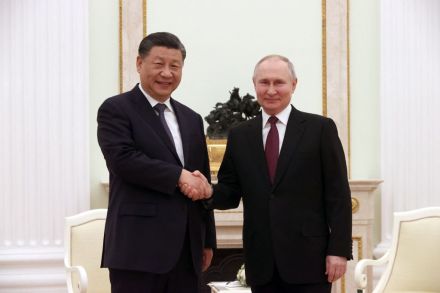
After renewing their Cold War-era alliance earlier this week, Beijing and Moscow challenged the US military hegemony by claiming American global dominance was 'over' and threatening to strike back if any 'boundaries are crossed.' GOP lawmakers on the House Armed Services Committee told The Spectator that the Defense Department's focus on critical race theory under the Biden administration is ‘stupid and wacko’ while the Sino-Russian powers are on the march. Xi Jinping and Vladimir Putin met Monday during a virtual summit to extend their cooperation treaty between their respective countries, both of which have strained their ties with the US ever since the treaty was initially signed 20 years ago.

armed services critical race theory

Has Xi Jinping overplayed his hand?

The Chinese Communist party’s origin story, like so many of its official lines, appears to be an apocryphal tale. But a month-long patriotic extravaganza leading up to its centennial celebration has featured military parades, skyscrapers emblazoned with hammer-and-sickle decor and propaganda blitzes on TV. None of the agitprop raised eyebrows as much as the main speech delivered by the Chinese president and general secretary of the party, Xi Jinping, in which he marked the milestone and praised China’s ‘tremendous transformation’ and the historical inevitability of its ‘national rejuvenation’.

xi jinping

The high cost of Beijing’s demands for uniformity

Last month, the Vatican and the Chinese Communist party announced the renewal of a two-year agreement on the appointment of bishops in China. Under the deal in 2018, the Catholic Church lifted the excommunication of bishops hand-picked by the atheist CCP and formally recognized them. Besides interfering in such appointments, Beijing subjects Chinese Catholic congregations to state regulation and the reeducation of what it considers insubordinate priests. These methods are evidence of the party’s efforts to cull Catholicism of the traditions, doctrines, and practices that have defined the faith for millennia.  Anyone who prizes religious freedom worldwide should be disturbed. Why is Beijing so hostile toward those looking to practice their faith according to their conscience?

ccp

Why Trumpism won’t outlive Trump

Trumpism is, according to its adherents, meant to replace Reaganism, the political doctrine that has dominated the Republican party and the conservative movement since Ronald Reagan left office. Reaganism is identified by a commitment to free market economics, internationalist foreign policy, strong national defense and an open door to immigration.But then Reaganism and its British version, Thatcherism, have also been associated with an intellectual revolution that swept the West in the 1970s and that was headed by Nobel Prize-winning economists like Friedrich Hayek and Milton Friedman, and driven by think tanks like the Heritage Foundation, the American Enterprise Institute, the Cato Institute and the Center for Policy Studies that transformed the political discourse worldwide.

trumpism

How liberal globalism went bankrupt

When future historians chronicle the period after the Cold War, the rise of China will dominate their accounts. Beginning in the 2000s, China unleashed a flood of state-sponsored manufactures, many of them produced by western multinational corporations using Chinese labor on Chinese soil. This impoverished much of the already pressured industrial working class in the US and Europe, triggering populist revolts in rustbelts like the American Midwest, the north of England and eastern Germany. The recycling of profits from China’s chronic trade surpluses through the global financial system enriched western financial interests and helped to inflate bubbles in the real estate and stock markets. These burst in 2008, causing the Great Recession.

china

The ill-timed revelations of John Bolton

It’s starting to look as though the question isn’t who Donald Trump asked to assist him in his 2020 bid but who he didn’t. Former national security adviser John Bolton reports in his forthcoming 592-page memoir, The Room Where It Happened, that Trump seems to have asked Chinese President Xi Xinping to lend him a hand during a summit dinner last year. Add that to the 'favor' he asked for from Ukraine and you have a portrait of a President who was desperate for help wherever and whenever he could find it. Maybe Trump had it right: if his current prospects are anything to go by he could definitely use a lift from abroad. Was this his personal version of what international law calls 'anticipatory self-defense?

john bolton