War

The unthinkable horror of a Russia-Ukraine war

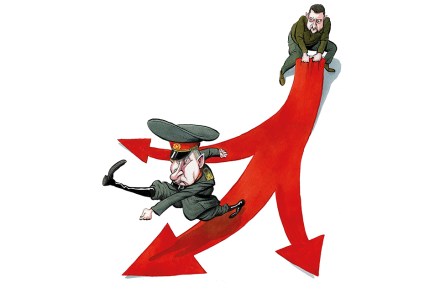
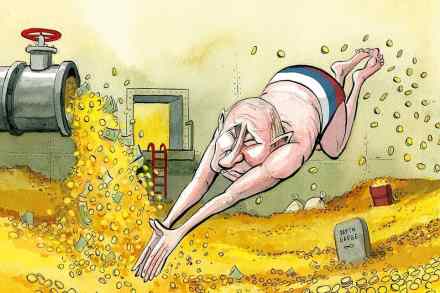
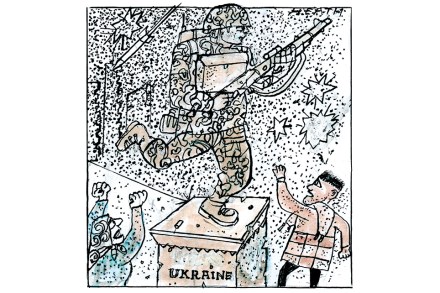
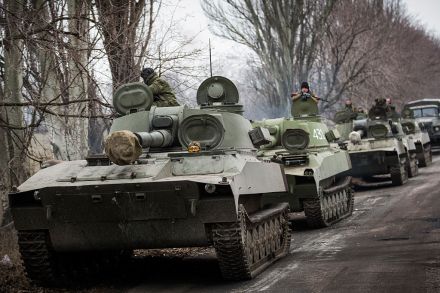
In the coming days, if intelligence assessments are accurate, the world will watch the unfolding of a bloody war between Russia and Ukraine. It will make history for all the wrong reasons, as the largest armed conflict since World War Two. And while Moscow would almost certainly defeat Kyiv on the battlefield, the real story will be the horror unleashed by the first modern war fought between nations of real consequence in decades. Such a war would showcase military modernizations that, while well-known, will still shock most Americans and change our perception that war in the twenty-first century is anything but cost-free. Worst of all, there's chance that a Russia-Ukraine war might not be contained to just those two countries, sucking in America in the process.

Will Armen Sarkissian save Armenia?

Yerevan, Armenia Armen Sarkissian, the president of Armenia, is incandescent with rage. “Five thousand brave and selfless Armenian soldiers were killed in this war,” he tells me at his office, referring to last year’s conflict with Azerbaijan and Turkey. “There must be accountability for their deaths.” Sarkissian strikes me as the only Armenian politician whose anger comes with a constructive program of national revival. The man once described by Zbigniew Brzezinski as the “Vaclav Havel of the Caucasus” radiates no grievances against foreign powers.

The war on Christmas comes home

America's longest war has just come home. Last week, Fox News’s All-American Christmas Tree, standing merrily outside the channel's headquarters in New York, was set on fire and destroyed. The arsonist was quickly arrested upon which he was subjected to the fearsome rigor of our justice system: released without bail as he cussed out reporters. We should pause here to note just how banal and predictable much of the late-night jesting about the blaze has been. It isn't that the likes of Trevor Noah and Stephen Colbert shouldn't joke about the fire — crack all you like, and the Daily Show's "Pine Eleven" was pretty funny.

christmas

Don’t fear North Korea’s recent missile launch

Let’s be honest. If North Korea didn’t have nuclear weapons and missiles to carry them to targets as far away as the US homeland, you would not be reading this article. In fact, the national security establishment would most likely consider North Korea, a nation that can no longer feed itself with a GDP smaller than Rhode Island's, to be a joke. And yet the so-called Democratic People’s Republic of Korea (DPRK) keeps cranking out ever-more advanced weapons platforms that drive headlines and clicks the world over. North Korea’s most recent test, a submarine-launched ballistic missile, seems at least on the surface to be pretty threatening. Yet a more sober analysis suggests that such a weapon, at least by itself, is no major threat to anyone, and for the foreseeable future.

north korea

Taiwan could spark a war between America and China

Some time between now and the next 10 years war between the United States and Communist China is certain. The only questions are when and how it will start — and how many millions of people will die. Why would I dare make such a bold prediction? Simple. History has conspired to create the perfect mix: trillions of dollars in trade up for grabs, a geopolitical rivalry, military tensions, bad blood, competing national egos and a quest for tech dominance. Washington and Beijing seem on the way to a world war the likes of which mankind has never before seen. And the most likely spark for this war is Taiwan.

taiwan china

The myth of the good Afghan war

There’s a disgusting scene I can’t stop thinking about. It comes about midway through This Is What Winning Looks Like, a 2013 VICE documentary about America’s efforts in Afghanistan you can watch for free on YouTube. The film switches between the documentary footage itself and a sort of metafilm in which the filmmaker, Ben Anderson, discusses aspects of his work with Eddy Moretti of VICE, with Anderson’s footage from his time overseas frozen on a computer monitor behind them. The scene in question starts at 51:00 in the YouTube cut, was filmed around 2012, and involves a series of horrific murders. These were perpetrated not by the Taliban, but by America’s supposed allies: the country’s nascent police force.

afghanistan

After Afghanistan

The 20th anniversary of 9/11 will come in a matter of days. It will be marked by the victory of the Taliban in Kabul and the humiliation of America. The war in Afghanistan was one of the largest-ever undertakings of any major country, in any era. Adjusted for inflation, the Apollo Moon landing program cost the United States close to $300 billion. The Manhattan Project cost $30 billion. The Interstate Highway System, about $500 billion. Those three mammoth projects are dwarfed by the cost of 20 years fighting in Afghanistan, which will well exceed a trillion dollars when all is said and done. The amount spent on Afghan nation-building surpassed the cost of the Marshall Plan in 2014 and kept rising inexorably for seven years more.

9/11

How America squandered its moral authority in Iraq

Day by day, you could almost see America’s moral authority draining away in Iraq. The weapons of mass destruction that the US had invaded the country to find didn’t exist. And it sometimes seemed as if a monstrous trick had been played on American troops: they were promised a welcome with ‘flowers and sweets’; they got roadside bombs and suicide attacks. In 2004, a year after the invasion, a 19-year-old Marine — outside the US for the first time in his life — looked up at a minaret sounding the call to prayer and asked me: ‘What are they saying? “Kill Americans?

iraq

Joe Biden’s short walk in the Hindu Kush

'There is no light in the bazaar. The Americans brought the light when they came to build the great dam . . . but when they left the took the machine with them and now there is no more light.’ — Eric Newby, A Short Walk in the Hindu Kush There really isn’t much that is amusing about Afghanistan. There never has been. But Eric Newby wrote a most amusing book about his trek through the Hindu Kush in the late 1950s. These days, when the Americans decamp from Afghanistan they leave behind tons — literally tons — of lights, not to mention munitions of various sizes and lethality, roads, buildings, communication devices of all sorts — you name it. A few days ago, we were told that the Afghan government might fall within 90 days to the newly resurgent Taliban.

Biden

How the US military got rich from Afghanistan

The departure of American troops from Afghanistan is being lamented (or hailed — see the Chinese press, passim) as a defeat. But this is a shortsighted attitude, at least from the point of view of the US military and the multitude of interested parties who feed at its trough. For them, the whole adventure has been a thumping success, as measured in the trillions of taxpayer dollars that have flowed through their budgets and profits over the two decades in which they successfully maintained the operation. The truth of this was forcefully brought home to me once by a friend of mine who, as a mid-level staffer, attended a conclave of senior generals discussing Donald Trump’s Afghan mini-surge back in 2018.

afghanistan military

Give peace a chance

The American war in Afghanistan is over. In the predawn hours of July 2, US troops slunk away from Bagram Air Base, without even informing the local Afghan commander. It was a sorry end to a sad and futile war. For 20 years Bagram was the Gibraltar of American power in Afghanistan, the single largest Nato base in the country, housing 10,000 troops, thousands more support personnel and a Pizza Hut. Now Bagram, and the adjacent prison holding 5,000 Taliban fighters, are in the hands of the Afghan military, which soon showed its mettle by letting an army of looters plunder the base.

Making the most of Memorial Day

The American tradition to mark important events, or recognize important people, in our history is...well just that, an American tradition. We celebrate our independence with fireworks and concerts during the peak of summer. We celebrate our veterans on the 11th day of the 11th month of each year. We celebrate the laborers who built this country and continue its prosperity with calloused hands, tired eyes and full hearts every September. Just as Labor Day ends the summer season for most families; the long anticipated Memorial Day weekend brings with it the promise of sunshine and beaches. The cultural ‘beginning’ of summer.

Johnny ‘Joey’ Jones memorial day

What if a virus were ever used as a WMD?

Faced with the coronavirus pandemic, Donald Trump declares ‘I’m a wartime president’, echoing George W. Bush after 9/11. For both men, the jaw-jutting self-flattery was absurd as both had been draft dodgers during the Vietnam war. W. used the family name and connections to secure a place in the Texas Air National Guard, Trump getting a draft deferment because of bad feet (a condition that was never so debilitating as to slow down his golf game). 9/11 did produce two real wars, in Afghanistan and Iraq, so W. had some claim to the title. But should we really be talking about a war against a virus? It’s a strange kind of war that drafts you to stay at home playing Xbox and watching the shopping channel from your couch.

wmd virus

How government should respond

Misdiagnosis can be fatal in a pandemic. Treating the economic effects of the global COVID-19 epidemic as a conventional recession means prescribing the wrong medicine and harming the patient. This is a supply-side recession, not a demand-side recession. The shortfall includes intensive care beds, ventilators, protective gear for healthcare workers, and other medical supplies. Thanks to these shortages, as well as insufficient trained medical personnel, hospitals may soon be overwhelmed everywhere by the demands for treatment of coronavirus victims. To slow the spread of the virus while augmenting existing medical supplies and personnel, governments are promoting social distancing and sheltering in place, both euphemisms for quarantine.

health finance

The coronavirus is springing the Thucydides trap

The first casualty of informational war is truth. The first American casualty of COVID-19 was the myth that the United States can ‘manage’ the rise of China as a world power through mutual interest. That mutual interest was only ever economic. Naturally, most of our politicians, business leaders and commentators explained it as strategic too: as technocracy calls GDP the index of human happiness, so it identifies strategic interests with economic ones. The coronavirus crisis has, however, exposed an essential strategic antagonism between the United States and China.'‘What made war inevitable was the growth of Athenian power and the fear which this caused in Sparta,’ Thucydides wrote in History of the Peloponnesian War.

thucydides

Amazon Prime should be protected by the War Powers Act

I suit up most days (thank you, casual Fridays) and with the stress of New York’s walking speeds and tremendous cleanliness of its streets, the closet life of suits falls somewhere between the lifespan of a monarch butterfly and a succulent fathered by a man in his twenties, another way of saying: cherish life.So, we will call it a Tuesday of last week. I found myself either a) running from hired guns of a Memphis law firm after I had uncovered their Cayman Islands-based money laundering scheme or b) catching my pocket on the armrest of a conference room chair, when I split my dress pants down the leg.

amazon

Donald Trump, president of peace

This article is in The Spectator’s February 2020 US edition. Subscribe here. Groupthink is the last thing a country needs when debating questions of war and peace. But groupthink is what America’s pundits have succumbed to once again. In 2003, voices of opposition to the Iraq War struggled to be heard, with even the progressive cable news channel MSNBC silencing its most outspoken critic (Phil Donahue) and telling a right-wing dissenter from President Bush’s war (Pat Buchanan) that he was expected to represent Republican opinion — which is to say, pro-war opinion. So much for press freedom. Today, groupthink is on the side of peace, or rather on the side of caricaturing President Trump as a warmonger.

peace

Automation and the future of modern warfare

There is an epic moment in the latest Gerard Butler movie Angel Has Fallen where he gets to save the life of the US president (again). The bad guys launch a swarm of dozens of micro drones able to detect and kill dozens of Secret Service agents, destroying anything and anyone that might get in the way of their mission to kill the president.It’s a chilling moment in the movie that clearly demonstrates just how powerless mere mortals will be in the face of superior technology that can operate independently of any direct human control.As with so much in Hollywood these days, movie truth is remarkably close to a reality that has been prefaced since 1984 when the first Terminator movie appeared and suggested the idea of autonomous robots as terrifying killing machines.

drones automation

What will war with China look like?

Like so many wars, this one began with an accident: a US naval vessel patrolling the South China Seas and shadowing the Chinese navy made a small navigation error in rough weather. The ships collided, five Chinese sailors died and their vessel was severely damaged. Beijing saw this as an act of war, the latest in a series of perceived insults by the US administration, and the response was swift. Cyber attacks against Washington DC and the headquarters of the US Pacific Fleet at Pearl Harbor shut down power. Ironically, most of the 175 deaths in the first three hours came not from hospitals where emergency generators kicked in successfully, but from failed traffic lights and massive car pile-ups in both cities.

war china

Does Trump have a better idea than endless wars?

This article is in The Spectator’s November 2019 US edition. Subscribe here. ‘WE WILL FIGHT WHERE IT IS TO OUR BENEFIT, AND ONLY FIGHT TO WIN.’ Thus did America’s Commander-in-Chief at long last enunciate a Trump doctrine, his use of all caps suggesting that this time he really means it. Trump had run out of patience. ‘I held off this fight for almost 3 years,’ he tweeted on October 7, ‘but it is time for us to get out of these ridiculous Endless Wars… and bring our soldiers home.’ Withdrawing US troops from Syria, a decision he first announced last December but then allowed to lapse, marked a first substantive step toward fulfilling one of the central promises of his 2016 presidential campaign.

endless wars