Wales

Letters: the little-known role of liquorice in parliamentary history

Pennies pinching Sir: I agree with much of this week’s editorial, except for two points (‘Nunc dimittis’, 25 April). As a formerly Positively Vetted civil servant, I cannot see what point there is in vetting an applicant for a job if the outcome of the vetting (as opposed of course to the private details) is not made known to the appointer. Who was responsible for this not happening in the current case still remains obscure. The second point I take issue with is your pressing for the end of the triple lock for pensions. I wish you would suggest how pensioners who have the ‘full’ state pension, and just enough

‘Even Corbyn at his worst never lost here’: how bad will it be for Labour in Wales?

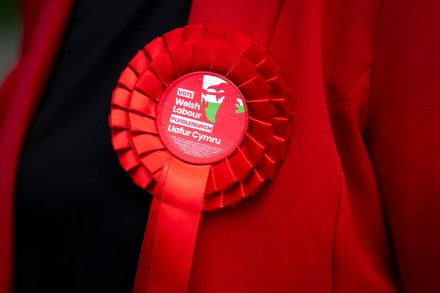
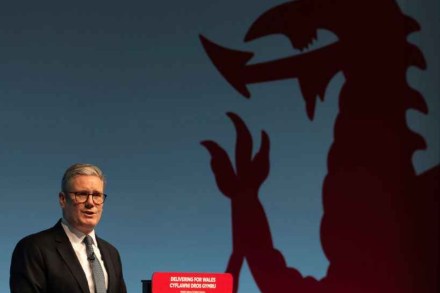
Of all Labour’s heartlands, none has more mythos or magic than Wales. Its history of pits and pulpits produced Nye Bevan and Neil Kinnock; a quarter of the party’s leaders have held seats here. More than a century ago, Keir Hardie forged Labour’s rise from the Valleys in Merthyr Tydfil. In a fortnight’s time, those same valleys could finish his namesake off. A focus group there one recent Friday night reveals just how bad things are for Keir Starmer’s party. In a community centre, surrounded by gym equipment and sports trophies, voters asked where it all went wrong. ‘I had complete faith when Labour got in this time and nothing

Will Labour lose Wales?

14 min listen

With one month to go until the local and regional elections, Megan McElroy and James Heale have hit the road with Luke Tryl and Louis O’Geran of More in Common. They report back from the focus groups they’ve been running in Wales, where voters view Labour through the prism of a double incumbency, as they hold both the Senedd and Westminster. Starmer faces an uphill battle to avoid an historic loss – so is he about to lose Wales? Produced by Megan McElroy and Patrick Gibbons.

Will Labour lose Wales?

Why I fell in love with Welsh nationalism

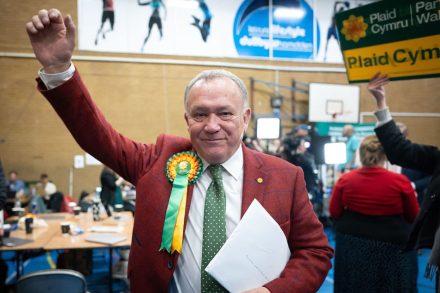
Being a mildly Celtophobic Tory from Metro-Land, I’m an unlikely Welsh nationalist. Aside from once sharing a Christmas dinner with Cerys Matthews, I’ve few ties to the Principality. Nonetheless, last week I found myself at the conference of Plaid Cymru – the Party of Wales. If Wales did become independent, it would be a tragic loss, born from neglect My interest was piqued by last October’s Caerphilly Senedd by-election. Despite the confident assertions of Reform outriders that Nigel’s boy would walk it, Plaid won handily. Naturally, the London press rushed to interview the losing candidate, ignore the victor and forget the whole affair. Which is perhaps why they were surprised

Does The Spectator hate the Welsh?

This St David’s Day weekend, I devote this column to a celebration of the world’s most under-appreciated ethnic group. Under-appreciated, certainly, in the pages of The Spectator, whose editorial policy suffers from a Pictish delusion that its readers are eager to hear of the appointment of a new procurator fiscal in Ayrshire, or political divides on Pitlochry council, while having zero interest in the finer country to the west. Sometimes mere exposure to Wales may be enough to inspire greatness, as in the work of Alfred Russel Wallace or Led Zeppelin Now in celebrating Wales, we need some ground rules. Since the Welsh are much more agreeable than other Celtic

‘He never drew a peaceful breath’: the tormented life of Henry VII

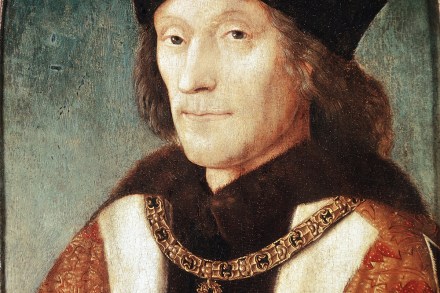
Have we ever had a more successful yet somehow forgettable king than Henry VII? A century ago, the Dictionary of National Biography could still hail him as the ‘Solomon of England’. But if he is remembered now it is almost solely for the dynasty he founded, with the domestic and international achievements of his own long and prudent reign largely ignored in the country’s bizarre obsession with the later Tudors.    There must have been an unusual mix of calculation and audacity to Henry’s character, because calculation alone could never have brought him to the throne. Over the first 30 years of his life, regime change had become the violent norm

Portrait of the week: Hurricane hits Jamaica, Plaid reigns in Caerphilly and sex offender gets £500 to leave Britain

Home An Iranian man who arrived on a small boat and was deported to France on 19 September under the one in, one out scheme returned to England on another small boat. Hadush Kebatu, the migrant whose arrest for sexual assault sparked weeks of protests outside the Bell hotel in Epping where he was living, was freed by mistake from Chelmsford prison; he was arrested two days later and given £500 to be deported to Ethiopia. The Home Office ‘squandered’ billions on a ‘failed, chaotic and expensive’ system of asylum accommodation, a Commons home affairs committee report found. Some 900 of the 32,000 asylum-seekers in hotels might be rehoused in

Caerphilly by-election: ‘a tale of two faces’

16 min listen

On the face of it, the Caerphilly by-election result is a disaster, a drubbing and a humiliation for Keir Starmer’s Labour party. A once secure bastion of the Welsh Labour heartlands fell without a squeak from the governing party. Their vote collapsed to a miserable 11 per cent, while Plaid Cymru won with 47 per cent and Reform surged to second place with 36 per cent. The result suggests Labour is on course to surrender a boatload of seats at the 2029 general election, both to Reform and to whatever protest party is best suited to beat the government around the head – be it Plaid, the Greens, the Corbynites,

Sir Tony’s doomed crusade in the Holy Land

It amuses me that the two main parties most averse to the idea of honours, monarchy, chivalry etc are led by knights – Labour by Sir Keir Starmer and the Liberal Democrats by Sir Ed Davey. This is entirely fitting, since they accurately reflect the dominant Blob establishment world-view and so were rewarded by being made Sir rather than staying plain Mr Blobby. But I wonder if the title has electoral disadvantages. Some voters must be subliminally more annoyed by Sir Somebody telling them to be radical, make sacrifices, save the planet and not to be racist than they would be by an untitled politician. On the other hand, it

Inside the Welsh village where English speakers aren’t welcome

On a Saturday morning, no life stirs. The village café is closed and the ancient church of St Beuno’s is locked and deserted. Beside the stone porch stands a dusty glass case that advertises church services and parish gatherings. Not a single event is scheduled. This is the peaceful village of Botwnnog (pronounced Bot-oon-awg) in the Llyn peninsula, north Wales, whose council recently rejected a plan to build 18 houses for rent. Few Welsh words have found their way into English, even though we inhabit the same island The language chosen by the council made headline news. ‘The Welsh village where English speakers aren’t welcome,’ said the Daily Telegraph, referring

R.S. Thomas – terrific poet, terrible husband

Love’s Moment is one of those quiet radio programmes you’re unlikely to have read about. It aired without fanfare at 4 p.m. on Tuesday, an understated yet engrossing one-off, half-hour documentary. It can now be found in the recesses of BBC iPlayer. It opened with a compelling question: ‘What happens when two artists fall in love and marry, and as one’s reputation soars, the other’s is slowly forgotten?’ Narrator Gwyneth Lewis, former National Poet of Wales, might have been alluding to any artistic couple in history, but her subjects were R.S. Thomas and Mildred Eldridge. Thomas was one of the most popular poets in Wales in the last century. He was an

The nostalgic joy of Frinton-on-Sea

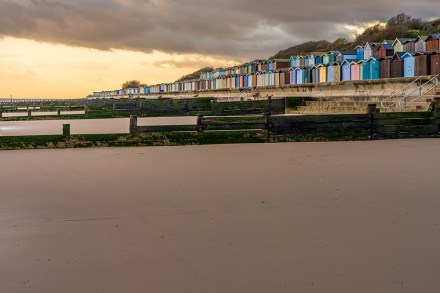
For the recent heatwave, it was my mission to escape our little Wiltshire cottage, where it hit 35°C. It has one of those very poor structural designs unique to Britain that, like plastic conservatories or the Tube, is useless in hot weather. First, we went to stay with friends in Frinton-on-Sea with our English bulldog, who was born in nearby Clacton and is shamelessly happy to be back among his people. Some years ago I lived in Colonial Williamsburg, Virginia, a living museum of America’s pre-revolutionary settler history. Frinton doesn’t go quite that far – there are no ersatz yeomen milking doleful cows – but to visit is to enter

Will the Irish ever forgive the English?

Leaving home is the best way to find out who you are. In my case, it’s a muddle. Welsh dad. Irish mum. English upbringing. And I feel pleasantly detached wherever I go. In England, I’m considered Welsh. In Ireland, I’m considered English. In Wales, I’m considered inadequate because I don’t speak the language, apart from the odd term like ‘popty ping’ (microwave). From childhood I’ve been a scholar of English preconceptions about my Celtic brethren. ‘Welsh? Cave-dwellers who love sheep.’ ‘Irish? Bog-trotters who love horses.’ The Irish are preferred, especially by the English upper classes, who are infatuated with Ireland as an abstract concept. But they’re less keen on the

The punishing life of a chief whip

For many Spectator readers, their only exposure to the workings of the Whips’ Office will be through the machinations of Francis Urquhart, Michael Dobbs’s fictional chief whip made famous in House of Cards. In the first diaries published by a former chief whip, Simon Hart aims to shine a light on the vital and often unrecognised role that the Whips’ Office plays in the functioning of parliament and government. Having been overlooked by David Cameron and Theresa May, Hart arrives at the top table under Boris Johnson in 2019, nine years after his entry to parliament. He serves as secretary of state for Wales until he joinsa slew of others

Good riddance to 2024

January. When the assisted dying bill comes in, I’ll be first in the queue. Non-stop nosebleeds, Covid-esque symptoms, leg cramps, a cough resistant to antibiotics, and unremunerated press interviews for my Burton/Taylor book. In the old days I’d be in New York, running amok with publicity handmaidens, going on television and racking up bills in the Gramercy Park Hotel. Now everything is done from the back-bedroom here in Hastings, where I dwell in the slum district, my window overlooking immigrants doing their laundry. Paul Bailey went to the trouble of getting his name removed from my acknowledgements. That’s real hatred February. First anniversary of my myocardial infarction, when I collapsed

Why Reform has Wales in its sights

A spectre is haunting Wales. Fresh from Reform’s election victories in Westminster, Nigel Farage is turning his attention westwards, to Cardiff Bay. He wants Reform to replace the Tories there as the main challenge to Labour in May 2026, creating a major platform for his party ahead of the 2029 general election. The man plotting the Tories’ downfall in Wales is someone who knows their leader well. Oliver Lewis, Reform’s chief spokesman, worked with Kemi Badenoch at Coutts. ‘She was very aware of the importance of fulfilling duties she felt were important to her,’ he says, carefully, when we speak. To beat his ‘reasonably competent’ old colleague, Lewis stresses an

Letters: AI isn’t the only threat to middle-class jobs

Poetic licence Sir: As a Welshman well-used to the prejudice and insults to which our ancient language and its speakers are often subjected, I read Lloyd Evans’s article (‘Language barrier’, 5 October) with some trepidation. Mercifully, my fears were allayed by a generally even-handed summary of some of the thorny issues that inspire debate in much of north-west Wales. I confess that I have never understood why so many Englishmen seem to treat as a personal insult the existence of a language of such noble and ancient pedigree on the shores of the British Isles, or why its continued usage in everyday life should inspire such consternation. I have always

The Senedd, like Holyrood, has failed its people

There are disturbing parallels between the meltdown of the Labour administration in Wales and the recent chaos of the SNP government in Scotland. Dodgy fundraising issues, votes of no confidence, forced resignations, woke policies, ever-lengthening NHS waiting lists and even scandals over deleted WhatsApps during Covid. What’s going on? Is there something systemically awry with devolution? The Scottish and Welsh parliaments, established after referendums 25 years ago, were supposed to bring power closer to the people and improve the quality of government. In the recent past, at least, they have succeeded in doing neither. Reckless incompetence in both administrations has further diminished respect for politics and delivered demonstrably inferior government. Welsh First Minister Vaughan Gething

Wales is facing a US-style opioid crisis

In Europe at the end of the Noughties, the problem drug was krokodil. The semi-synthetic, necrosis-causing alternative to heroin was cheap. My father favoured it so much before his death that he started importing it from eastern Europe into Wales. Across the pond right now, the problem drug is fentanyl, which has made its way into much of the US drug supply. Indeed, it’s become so synonymous with death that many casual users have given up the bag all together (‘I love a line, but I’m not going to die for it,’ one Manhattanite told me recently). More than 75,000 Americans died from synthetic opioids in 2022. And now the

Who decides which politicians are liars? 

This week the Welsh parliament has been debating a law that would ban politicians from lying. Assuming it ends up on the statute books, any member of the Senedd, or candidate standing to be a member, found guilty of the new criminal offence of ‘deception’ will have to give up being a politician for at least four years. What could possibly be wrong with that, you ask? The vital question, as with all efforts to ban bad speech, is who decides? After all, part of the art of being a politician, dating back at least as far as the Roman Senate, is to massage the truth to promote whatever side