W.b. yeats

A foolproof way of predicting the future

A peek at the horoscope, puzzling the meaning of dreams, wearing lucky socks, having a method for choosing lottery numbers – many otherwise rational people retain a vestigial interest in prediction to ensure favourable outcomes. I’ll happily admit to a fascination with Tarot cards – and I do seem to be an archetypal bossy Aries. Christopher Dell’s Prophecies demonstrates just how widespread a belief in divination has always been across cultures, however peculiar or unsavoury the methods. In ordering his vast material, Dell sets out some ‘categories of convenience which allow us to impose some structure on a naturally amorphous topic’.


Childhood illnesses and instability left Patti Smith yearning for ‘sacred mysteries’

The punk icon Patti Smith’s latest memoir stretches from 1940s Michigan to present-day Nice, weaving around and complementing her other works of autobiography in its rendering of formative scenes. These include descriptions of periods of childhood illness, displays of sibling loyalty, powerful encounters with art and poetry, attachment to beloved clothes, marriage to Fred and the deaths of people close. Smith looks ahead to a time when she and her dwindling companions are gone: ‘Write for that future, says the pen.’ Our attention is periodically drawn to the pen’s motion as it ‘scratches across the page’, conjuring a lifetime of fluctuation.

Richard Ellmann: the man and his masks

Richard Ellmann’s acclaimed life of James Joyce was published in 1959, with a revised and expanded edition appearing in 1982. The first edition, the work of an ambitious young American academic, received what Ellmann’s editor at Oxford University Press described as ‘the most ecstatic reaction I have seen to any book I have known anything about’. Ellmann’s work would ‘fix Joyce’s image for a generation’ wrote Frank Kermode in The Spectator, a prediction described by Zachary Leader as ‘if anything, too cautious’. By the time of the second edition, Ellmann had become a lionised Oxford don and the image of Joyce he had fixed was starting to chafe.

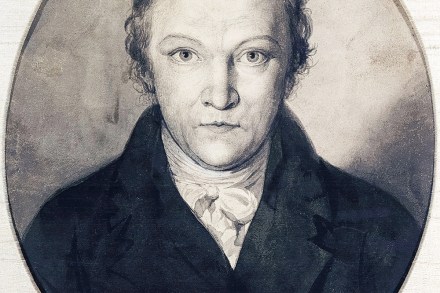
William Blake still weaves his mystic spell

Everyone has their own William Blake and each age finds something new in the ocean of his work: revolutionary Blake, Christian Blake, humanist Blake, Jungian Blake, Freudian Blake, free-love Blake, hippy Blake, occult Blake, eco-Blake. The only time that missed out was his own – then he was mad, delusional and ignored Blake. Philip Hoare brings the fizz of his own sensibility to bear on the work of a man whose progeny of artistic spin-offs multiply with each passing generation. The result is a book that is neither Blake biography nor critical analysis nor legacy-tracing nor personal odyssey but a capacious mixing of them all. As the author of Leviathan or, The Whale, and Albert and the Whale and the film Hunting for Moby-Dick, Hoare begins by giving us whale Blake.

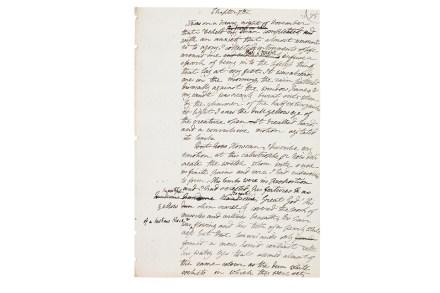
It feels somehow improper to witness an author groping for the right words

The early stages of a literary work are often of immense interest. It is perhaps a rather tawdry kind of interest, like paparazzi shots of a Hollywood starlet taking the bins out before she’s put her make-up on. Of course it’s extraordinary to think that some of the most famous characters, events and lines in literature weren’t as we now know them but had to be struggled towards. Sometimes these efforts have the anachronistic but unavoidable sense of somebody getting it wrong. Textual bibliographers have carefully classified the different steps a work takes from manuscript to first edition and subsequent versions. Perhaps we could go further in search of a writer’s progress.

From Middlemarch to Mickey Mouse: a short history of The Spectator’s books and arts pages

The old masters: how well they understood. John Betjeman’s architecture column ran for just over three years in the mid-1950s. Yet during that short run he experienced the moment that comes, sooner or later, to every regular writer in The Spectator’s arts pages. ‘It is maddening the way people corner one and make one discuss politics at the moment,’ he wrote on 23 November 1956, clearly as bored of the Suez crisis as the rest of us were, until recently, by Brexit: Because I write in this paper, people assume that I share its Editor’s views about Suez… But I don’t know what the views of this paper about Suez are, because I never read the political stuff in front.