Voting

The secret shame of being ‘Reform-curious’

As a sucker for any melody which relies heavily upon fourth and eighth notes hammered out on a piano, I was always going to fall for Billy Joel’s 1978 hit single ‘My Life’. The lyrics were, as ever with Joel, awful, mixing his cringeworthy ordinary guy New York vernacular schtick with what I dare say he thought were original and profound psychological insights. He is such a hack singer-songwriter. He makes Neil Diamond resemble Wittgenstein. But the tune made me swoon, even its two predictable cod-Beatles middle eights. What to do? Obviously, I couldn’t buy it. There were four record shops in Middlesbrough back then and I was known in all of them.

Let’s ditch the idea of the ‘black vote’

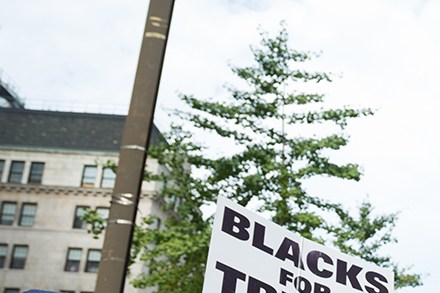
I long took for granted that US opinion polls break down respondents into white people, black people and Hispanics. But I’ve come to look askance at this convention. Reporting on political views by race now seems perverse. It implies that a citizen’s primary identity is grounded in skin colour, and it reifies a way of thinking about the American people that is regressive, divisive, inaccurate and downright un-American. I was reminded of this recent point of annoyance last week when the Supreme Court struck down a Louisiana congressional map that none too subtly contrived to create an additional majority-black district. (The district in question drizzled and blobbed diagonally from one northern corner of the state to the far southern one like a trail of ink on blotting paper.

How many people undergo security vetting?

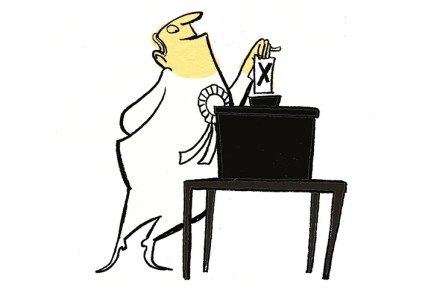
Balls to that Why are elections called ‘ballots’?  — The word ballot comes from the Italian, pallotta, meaning a small ball. In Venice in the 16th century voters deposited a pallotta in a pot. The same system was used in an election in Barnstaple, Devon, in 1689, where voters were given a ball and asked to deposit it in one of two pots. The system allowed people to vote secretly by concealing the ball in one of their fists. They would hold each fist over a pot and discreetly drop it. No one watching could tell which fist had contained the ball. Heavy vetting How many people undergo security vetting?

I will miss my vote

I feel as if I first took part in a general election even before I was born. My father was the Liberal candidate in Tavistock in 1955 and 1959, and although I was alive only for the latter, featured reading Peter Rabbit in his election address, the two weaved into my infant consciousness. At that time, modernity had not reached rural Devon. Noticing that two neighbouring villages had extremely small Liberal clubs, my father proposed they join forces. ‘Oh no,’ he was told, ‘We were on different sides in the war.’ ‘The war?’ he replied. ‘Surely we were all against the Germans?’ ‘No, the Civil War.

Joe Biden’s Civil War re-enactment

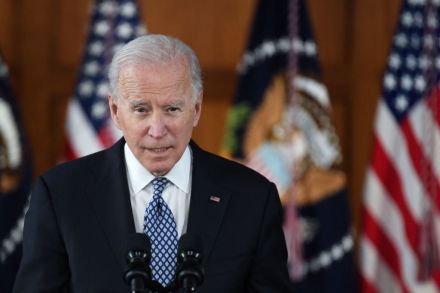
We can’t blame American progressives for yearning to relive the civil rights movement. Those were heady days. Opposition to segregation — real ‘structural racism’ — placed you conspicuously on the proverbial right side of history. Joining the cause was like shooting up moral heroin. So maybe it’s predictable that when talking up his two voting rights bills in Atlanta last week, Joe Biden evoked the 1963 bombing of a black church in Alabama and MLK’s storied march in Selma two years later. Yet it’s one thing to wax nostalgic, quite another to insist that it’s still 1965 — much less 1865.

Champagne, sex or the Tories: what could you live without?

In idle chatter the other evening, somebody pooh-poohed champagne. He was a brave soul because in certain circles — and this was among them — one is presumed to think the presence of champagne a mark of opulence, extravagance, a special occasion, a treat. In even more exalted circles, of course, a display is made of not thinking it a treat but a staple, and babbling in a familiar manner about ‘Bolly’ as though one had proceeded straight from the breast to the bubbly without passing through lemonade on the way. ‘To be honest,’ said my friend, ‘if Fate were to touch my shoulder and whisper that I would never drink champagne again, would I be bothered? It’s perfectly -pleasant of course, but not something I’d miss much.

It’s no surprise younger voters are losing faith in democracy

There is an idea of the state that argues that the role of government is to act as a benevolent social planner, redistributing resources for the benefit of the population as a whole. British governance has more in common with Mancur Olson’s concept of the stationary bandit, a tyrant with a captive population and a desire to maximise the wealth he can extract. The only twist is that rather than a group of warriors seizing wealth by force, Britain works to the benefit of a large number of elderly pensioners thanks to their tendency to reliably turn out at the polls. To very briefly recap, years of austerity cuts combined with triple locking pensions ensured that while working-age families — particularly those with children — lost out, pensioners were protected.

Why voters should have to show photo ID

This week’s publication of the Elections Bill has given pressure groups and others a fresh opportunity to complain about what they see as the latest manifestation of this government’s illiberalism: a requirement for people to produce photo ID when they go to vote. Forgive me, but I fail to see what is so terrible, so undemocratic, about that. The arguments go like this. First of all, opponents say, any change is unnecessary, as the UK simply doesn’t have a problem with voter fraud – with impersonation, say, or multiple voting. Trust in the UK electoral process is high and the instances of fraud are infinitesimal compared with the numbers of votes cast.

Our confusing voting system has cost me £25

Some 114,201 ballots were rejected in the first round of the London mayoral election, approximately 5 per cent of the total votes cast. This wasn’t because people were deliberately spoiling their ballots to protest about the fact that no one standing represented their views. After all, there were 20 candidates in the election encompassing a broad spectrum of opinion. No, it was because they didn’t understand the supplementary vote system, whereby you’re supposed to put a cross next to the candidate of your first choice and a cross next to your second. According to official figures, 87,214 of the spoilt ballots were discounted because people had voted for more than one candidate in the first preference column.

Scottish Tories are wrong to oppose voting for prisoners

The Scottish Tories don’t mean to be the way they are. Sometimes they just can’t help it. They are being that way again over plans to let some prisoners vote in the forthcoming Scottish parliament elections. I am not convinced those elections should be going ahead at all in the middle of a pandemic but, if they are to, there are good reasons for prisoners to be enfranchised. The Tories intend to force a vote at Holyrood on Wednesday against allowing those serving custodial sentences of less than 12 months to participate in the May 6 election. MSPs voted last February to extend the franchise in order to comply with a series of judgments from the European Court of Human Rights, beginning with 2005’s Hirst v United Kingdom (No 2).