Volodymyr zelensky

WATCH: the world’s first robotic assault on an enemy position

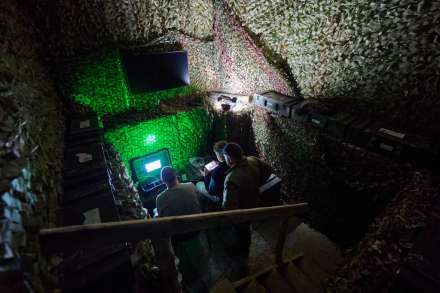
The world’s first fully robotic assault on an enemy position was, of course, captured on video by a drone hovering above.President Volodymyr Zelensky recently revealed that the pioneering mission by the Ukrainian army had taken place last year in Kharkiv Oblast. He added that in the last three months Ukraine has conducted 22,000 missions using robotic vehicles. Robots, he stressed, are replacing soldiers on the frontline with Russia. Video of the assault has been passed to The Spectator by the 3rd Assault Brigade, the unit behind the mission. It shows that a Russian fortified dugout was first attacked by a suicide drone that exploded inside and then a Targan – “cockroach” in Ukrainian – remote control vehicle parked outside and detonated its mine. https://twitter.

ukraine robotic assault

No, Zelensky: World War Three hasn’t started

Ukrainian President Volodymyr Zelensky says that World War Three has already started. Speaking to the BBC on the eve of the fourth anniversary of the Russian invasion, it’s understandable why he would want to take this line, but he's wrong. What is striking about Putin is the lack of a messianic ideology On an emotional level, Zelensky has seen millions of his citizens flee within and out of his country, its cities and infrastructure shattered and Vladimir Putin's propagandists denounce him variously as a Nazi apologist, drug addict and western puppet. Of course he will frame this in the most apocalyptic of terms. More to the point, Ukraine is now dependent on European aid. It is European money that keeps the government solvent, and arms the troops.

ukraine zelensky

Is the war in Ukraine any closer to ending?

Is the latest round of Russia-Ukraine peace talks, sponsored by the United States and currently under way in Geneva, likely to hasten the war’s end? Donald Trump seems to believe so. On Friday, President Trump claimed that "Russia wants to make a deal, and Zelensky will have to hurry. Otherwise, he will miss a great opportunity. He needs to act." Europe, for its part, remains deeply skeptical and is urging Ukraine to fight on. As the EU's Foreign Affairs chief Kaja Kallas told the Munich Security Conference last week, "the greatest threat Russia presents right now is that it gains more at the negotiation table than it has achieved on the battlefield.

Europe has left Ukraine living on borrowed time

Russia started the war on Ukraine, so Russia should pay for the damage it has wrought. Such was Volodymyr Zelensky’s forceful message to European leaders last night as he pleaded for a "reparations loan" backed by the €190 billion ($222 billion) of Russian Central Bank capital frozen in a Belgian clearing bank since Putin’s full-scale invasion. "Just as authorities confiscate money from drug traffickers and seize weapons from terrorists, Russian assets must be used to defend against Russian aggression and rebuild what was destroyed by Russian attacks," Zelensky told his European allies. "It’s moral. It’s fair. It’s legal." But after negotiations that went late into the night, Europe ultimately shied away from grabbing Russia’s money.

zelensky loan ukraine

European leaders have changed their tune on war

Ten days after Thanksgiving, news watchers were exposed to one of the more culturally incongruous images in recent history: Ukrainian President Volodymyr Zelensky and French President Emmanuel Macron beaming in front of the British Prime Minister’s house at 10 Downing Street, giving each other the locked-thumbs handshake familiar to African-American jazz musicians and professional athletes of the 1970s. Right on, brother! At that moment, according to Ukrainian media, thousands of Zelensky’s soldiers had been encircled by Russian troops near the city of Pokrovsk (or Krasnoarmiisk, as it may well soon be renamed). Large gaps were appearing in the Ukrainian front, desertions were rising and Russians appeared to be opening a new front east of Kharkiv.

european leaders

The war in Ukraine is reaching its endgame

Painfully and chaotically, the outline of the peace deal that will eventually end Russia’s invasion of Ukraine is emerging as the US leans on Kyiv to abandon key red lines. It may still be months before the guns finally fall silent. But one by one various roadblocks to an eventual agreement are falling away. Crucially, this week Volodymyr Zelensky conceded that his country needed new presidential and parliamentary elections. Moreover, for the first time, he floated the possibility that a Ukrainian military withdrawal from Donbas could be put to a national referendum.  "The Ukrainian people must answer the territorial question," Zelensky told reporters on Thursday. "I say clearly: yes, I support elections.

What Ukraine really needs from Europe

If bear hugs were army divisions and brave words cash euros, Volodymyr Zelensky would have ended his tour of European capitals this week the best-armed and best-funded leader in the world. "We stand with Ukraine," vowed British Prime Minister Sir Keir Starmer after hosting a summit for Zelensky and top European allies at Downing Street on Monday. "We support you in the conflict and support you in the negotiations to make sure that this is a just and lasting settlement." Germany’s Chancellor Friedrich Merz declared that "nobody should doubt our support for Ukraine" and added that "the destiny of this country is the destiny of Europe." France’s President Emmanuel Macron promised that Europe has "a lot of cards in our hands.

Why Putin thinks he’s winning

The Kremlin pulled out all the stops for the visit of Donald Trump’s son-in-law Jared Kushner and special envoy Steve Witkoff to Moscow yesterday. Accompanied by Putin’s envoy Kirill Dmitriev, Witkoff and Kushner strolled through crowds on Red Square with minimal security after lunching at a fancy restaurant on Petrovka street. Not coincidentally, Chinese foreign minister Wang Yi was also in town for a meeting with Russian Security Council head Sergei Shoigu, where Russia affirmed its support for Beijing’s One China policy.  It was a sophisticated piece of great power signaling intended to send a multi-part message to Donald Trump.

How damaging could the Ukraine corruption scandal be for Zelensky?

Andriy Yermak, the cryptic aide who shadowed Volodymyr Zelensky through every phase of the war, resigned Friday after anti-corruption investigators searched his office and house. Yermak was the center of Zelensky’s wartime team – and the consequences of his resignation could be far reaching.  In an evening address, Zelensky thanked Yermak for representing Ukraine’s negotiating position in recent tense talks with the United States, “as it should be” and stressed that it had “always been patriotic,” while urging Ukrainians to ignore rumors around the resignation. He said he would begin consultations on a new chief of staff immediately. With more talks looming, he underlined that, in wartime, every institution must stay focused on defending the state.

yermak corruption

Why would Putin sign Trump’s peace deal?

It was summer 2022. Ukraine had just taken back Kyiv, people were returning to the city, and the mood was one of euphoria, triumph and success. I was having dinner with a Ukrainian official in a neon-lit seafood restaurant in the center of the city, the curfew nearing. "If this ends like the West Germany or Korea scenario, that would be the best outcome," I said to him. He snapped at me: "You want me to tell my relatives in Kherson that they will never live in Ukraine?" Three years later, and even that unwelcome outcome is now far from what Kyiv is being offered by the Trump administration.

trump putin

Zelensky risks coup or civil war

Kyiv When is the price of peace ever fair? War does not determine who is right, only who is left, Bertrand Russell wisely observed. Very often conflicts come down to a numbers game – and on the numbers Ukraine is losing. Despite losing more soldiers, Russia is winning on the battlefield and unlike Ukraine hasn’t even begun mass mobilization.  Donald Trump’s proposed peace deal won’t turn the clock back on Ukraine's borders, or compensate Ukraine for Russian aggression and war crimes, or even punish Putin personally for starting a horrific and needless war that has claimed as many as 500,000 lives. If anything, the deal rewards him.  But Trump hopes his proposal will draw a line in the sand to stop the relentless bloodshed.

volodymyr zelensky

Will the Russia peace deal backfire on Trump?

Kyiv The rumor reverberating around Kyiv is that the FBI has been leaning on Ukrainian anti-corruption police to investigate Zelensky’s inner circle in order to force him to swallow the bitter US peace deal. Trump, as they say, has put the screws, or the feds, on Zelensky. The National Anti-Corruption Bureau – which is unravelling a $100 million war-profiteering scandal that has implicated many of Zelensky’s closest political allies – has denied the accusation point blank, and there’s not a single shred of evidence that it is true.

Witkoff’s Ukraine peace proposal is unworkable

With Ukrainian president Volodymyr Zelensky’s political authority already under grave assault in the wake of a major corruption scandal, he now faces a new challenge – this time from his erstwhile ally, the United States. A high-level US delegation led by army secretary Daniel Driscoll is meeting Zelensky in Kyiv today to present the latest version of a peace plan aimed at ending the war. The contents of the plan have not been officially revealed and so far it has not been publicly endorsed by Donald Trump. But two things are already clear. One is that there’s nothing new in it. And two, there’s nothing good in it for Zelensky.

ukraine

Why Europe can’t go it alone on Ukraine

Who will pay for Ukraine’s war effort now the Trump administration has turned off the financial taps? European leaders have expressed themselves ready and willing to take up the burden, with European Commission President Ursula von der Leyen affirming that “if we continue to believe that Ukraine is our first line of defense, we need to step up our assistance.” Individual countries have come up with generous funding packages – most open-handed of all being Germany, which has recently pledged more than €3 billion in direct funding. But that’s just a drop in the ocean compared to what Ukraine says it needs.

zelensky ukraine

Putin thinks time is on his side

Very well then – war. That is the bottom line of Vladimir Putin’s response to Donald Trump’s latest attempts at mediating an end to Russia’s invasion of Ukraine. In August, Putin rejected the peace deal that Trump lined up in Alaska. Now, the Kremlin has scuttled the White House’s plan for a summit in Budapest by insisting that Russia’s demands for Ukrainian demilitarization and “de-nazification” remain in force. Clearly, the Russian President still believes that he can win the war on the battlefield – and terrorize Ukraine’s civilians. What is Putin’s plan?

putin

The Trump-Zelensky meetings offered a show of Western unity

Did President Trump make any progress toward ending the war in Ukraine after successive meetings with Vladimir Putin, Volodymyr Zelensky and key NATO partners?  The short answer is “yes – but it’s very slight, and there are still formidable obstacles, which could block a final deal.” The biggest obstacles are Ukraine agreeing to cede sovereign territory and Russia agreeing to the presence of a combined European-American military force within Ukraine, meant to prevent another Russian attack.  The joint military force is the most important proposal to emerge from Monday’s meeting. We already knew Ukraine would have to cede territory – or “swap it” as Trump delicately puts it.

western alliance nato ukraine

What will happen in Alaska?

"Alaska," said the mountaineer Jon Krakauer, "is a place that constantly reminds you of just how small you are in the grand scheme of things." I doubt somehow that Vladimir Putin and Donald Trump will echo that sentiment when they meet tomorrow in the Last Frontier to carve up the future between themselves – Plumb-Pudding-in-Danger-style. The two leaders will have each traveled some eight hours over their own mighty lands to see each other. It will be a case of today, Ukraine; tomorrow, ze world.  Yesterday, the Trump administration went to great lengths to assure nervous European leaders and Ukrainian President Volodymyr Zelensky that Trump would not, in their absence, simply roll over for Putin.

Tariffs and the psychodrama of Trump diplomacy

A bleached white conference room, somewhere near Jeddah in Saudi Arabia. On one side sits Volodymyr Zelensky, the Ukrainian leader, in his soldier-boy outfit. On the other, Russian President Vladimir Putin in dark suit and tie. And in the middle, a beaming President Donald J. Trump. "People said this could never happen," he says, as Zelensky and Putin stare awkwardly at the floor. "But it’s a beautiful thing." A White House memo lands in inboxes across the world: "THE PEACEMAKER-IN-CHIEF..." Pure fantasy, perhaps, but Trump does have an almost cosmic ability to get what he wants – and he really wants to end the war in Ukraine. Last night, having spent weeks telling the world how "disappointed" he was with Putin, Trump abruptly announced "great progress" in US-Russia dialogue.

trump Steve Witkoff and Vladimir Putin shake hands (Getty)

Donald Trump – the Orange Mandela?

Diplomatic heads are still spinning following Donald Trump’s extraordinary Oval Office press conference with South African President Cyril Ramaphosa yesterday. The media has taken to using the word “ambush” to describe the way Trump sprung his evidence on Ramaphosa to make the point that white South Africans are being violently persecuted. The scene turned into gemors, as they say in Afrikaans, or chaos, and reminded many observers of the wild meeting between Trump and Volodymyr Zelensky in the same room back in February. Ramaphosa had wanted to perform the usual niceties, flanked by a delegation including three white South African golfers, Elon Musk, some of his officials, his minister for agriculture John Henry Steenhuisen and the luxury goods billionaire Johann Rupert.

Biden has learned nothing from his foreign-policy experience

Historically, ex-presidents spend their golden years on the speaking circuit, writing their memoirs or planning for the inauguration of their presidential libraries. What they don’t do is lash out at their successors when they disagree with a policy or decision. Joe Biden, however, has no intention of keeping quiet. A little more than three months after vacating the White House, Biden is unencumbered from conventional decorum and feels free to speak his mind. Last month, he gave his first post-presidency speech in Chicago, where he blasted the Trump administration for taking a sharp hatchet to the federal workforce, including the Social Security Administration.

biden russia