Virginia woolf

Stay within the lines to realise your full creative energy

From our UK edition

The title of this book takes the adage about ‘thinking outside the box’ and inverts it. Instead of thinking outside the box, we should think inside the box, David Epstein argues. Which box? How big is this box? Whose box? He discusses these questions as well. The phrase ‘thinking outside the box’ emerges from the nine dots puzzle devised by psychologists before the first world war. There are nine dots on a page, evenly spaced, three on each line. You must connect all nine using four lines without removing your pen from the paper. A common response is to imagine that the dots form a box and to confine your work accordingly. This makes the puzzle impossible to solve; you have to think outside the box. Or not think of a box in the first place.

In praise of uncertainty over hollow conviction

From our UK edition

When I met Brian Dillon in February 2023, he seemed to have a lot on his mind. We had arranged to speak about Affinities, the newly published final instalment of Essayism, his sprawling three-part survey of literature, art and aesthetics. That morning, as he sipped decaf coffee in a quiet corner of the Barbican Kitchen café in London, he still didn’t know what his book was about. ‘At this point you don’t,’ he confessed. But even though he hadn’t made up his mind about Affinities, Dillon had already begun to think about his next project. It was to be a memoir of his education, called Ambivalence. This has now come to fruition.

‘A lost generation’: My Year in Paris with Gertrude Stein, by Deborah Levy, reviewed

From our UK edition

In a 2013 interview, Deborah Levy said: ‘Modernism is the soft typewriter of the womb that made me.’ But what made Modernism? My Year in Paris with Gertrude Stein is Levy’s attempt to answer the question. In this novel, an unnamed narrator from London moves to Paris to write an ‘essay’ on Stein, the American patron of the avant-garde. There she meets Eva, an enigmatic illustrator whose blue eyes make everyone go ‘Awww’, and Fanny, a fashionable finance consultant with a thriving sex life. As the three search for Eva’s missing cat (originally called It and renamed Bob by Fanny), the narrator chases after Stein’s many trails but struggles to bring her into focus.

Frederic Prokosch – the man who seemed to know everyone

From our UK edition

One day Frederic Prokosch wrote a novel. He was 27 years old, living with his parents in New Haven, Connecticut, and desperate to be published. Leafing through an old atlas, he had visions of Lebanon and Syria, of the apricot trees of Damascus, the pilgrims travelling from Transcaucasia, and the Orontes River flowing among the rocks. His visions grew more vivid and the voices clearer: ‘I leaned forward in my chair and started to write as though mesmerised.’ The resultant book, The Asiatics, was an immediate success, praised by the likes of Thomas Mann, Albert Camus and André Gide. Others, however, were less sure. How could one write about Asia without ever having been there? Prokosch, it seemed, had quite the imagination.

Even as literate adults, we need to learn how to read

From our UK edition

Few readers can claim to be what Samuel Taylor Coleridge called ‘Mogul diamonds’ – those who not only ‘profit by what they read’, but ‘enable others to profit by it also’. If such people were rare in Coleridge’s time, then today, when reading is in dramatic decline, they are scarce enough that even the white rhino might feel a little smug. Anyone seeking a glimpse of this endangered reader could be forgiven for thinking that a university English department was its most likely habitat, but they would be wrong. Behind the brown office doors where academics labour, one is more likely to find the common squirrel, hoarding information and burying it under dense soil.

The lonely passions of Katherine Mansfield

From our UK edition

Katherine Mansfield refused to be pinned down. Aged 17, she told a friend she planned to lead ‘all sorts of lives’, already chafing at the limitations of her parents’ bourgeois world. She warned her first lover that she liked ‘always to have a great grip of life, so that I intensify the so-called small things – so that truly everything is significant’. Living, to Mansfield, was a challenge to be confronted head-on, a restless and active process of ‘shedding and renewing’. Her passion for life fortified her through a horrifying succession of troubles. It fed her art; it also exhausted her.  ‘Life’, in its most capacious sense, is the subject of Mansfield’s fiction.

The Life of Violet catches a side of Virginia Woolf that has been obscured

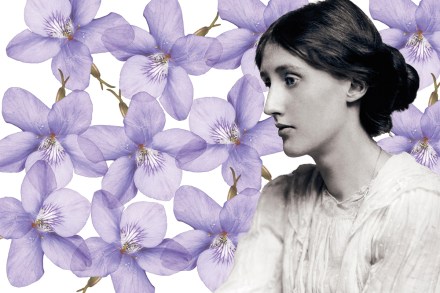
She was Adeline Virginia Stephen, then. Signing her letter “AVS”, in August 1907 the 25-year-old who became Virginia Woolf complained to her friend Lady Robert Cecil: “The effort it is to write… I feel like one rolled at the bottom of a green flood, smoothed, obliterated, how should my pockets still be full of words?” Long before the masterpieces that would make her name, she was working on a series of literary exercises. These attempted to remold the biographical form into one that could encompass and celebrate the lives, not of famous men, but of unfamous women and combine what she called the granite and rainbow of “life-writing”: stony fact and iridescent fantasy. Her letter continues: If you keep The Life, or Myth, don’t quote it – see my vanity!

Woolf

Who’s afraid of Virginia Woolf? The BBC, it seems

From our UK edition

‘What a lark!’ I thought to myself as I rose on a hot June morning to listen to a documentary on Mrs Dalloway. A century has passed since Clarissa bought flowers for her midsummer party, and Radio 4 has commissioned a three-parter, with actress Fiona Shaw presenting. ‘What a plunge!’ The first programme had been playing for all of two minutes before my hopes began to wilt like a delphinium. ‘Her face adorns tote bags and internet memes,’ says Shaw of Woolf in the preamble, which sounds as though it has been lifted directly from the series pitch to the BBC. ‘I’ll be asking what… Virginia Woolf has to say to us today.

A novel in disguise: Theory & Practice, by Michelle de Kretser, reviewed

From our UK edition

Michelle de Kretser, of a Sri Lankan family living in Australia, is an exceptional novelist – perhaps among the ten best at work in English today. She has been recognised with literary prizes, but it’s surprising that she hasn’t made quite the impact on the public she deserves. She is one of those writers who one presses upon intelligent acquaintances and whose books reward rereading. One of her regular subjects – she is a novelist of bookish, intelligent lives – is the inability of the Australian intelligentsia ever to read an Australian novel. As the author of The Life to Come, perhaps the best Australian novel since Tim Winton’s Cloudstreet, she does well to present this worrying disengagement with amusement.

There’s nothing rude about the word ‘titbit’

From our UK edition

Virginia Woolf submitted an article to Tit-Bits at the age of eight. It was rejected. The experience might have hurt her. With her sister Vanessa and brother Thoby she had built an imaginary world in their family newspaper, the Hyde Park Gate News, modelled upon Tit-Bits. Writing as an adult about George Eliot she said: ‘She is as easy to read as Tit-Bits.’ In Flush, her imaginative biography of Elizabeth Barrett Browning’s dog, she used the common noun: ‘They tempted him with caresses; they offered him titbits; but it was useless.’ There was nothing rude about Tit-Bits (beginning in 1881 as Tit-Bits from all the interesting Books and Newspapers of the World, and becoming the unhyphenated Titbits only in 1973 and closing in 1984), or about the common word titbits.

Work, walk, meditate: Practice, by Rosalind Brown, reviewed

From our UK edition

Practice is a short novel set in a ‘narrow room’: one day in the life of an Oxford undergraduate writing an essay on Shakespeare’s sonnets. Annabel is trying to ‘perfect her routine, to get more out of each day’. She goes to bed early and rises at 6 a.m. She makes coffee like it’s a ritual and drinks it from the same small, brown mug. She has a plan. She will work, walk, do yoga, meditate, each at their allotted time. The restriction of the novel – a single day, a single character, discrete passages strung together like a sonnet sequence – lends itself to a delicate portrait of Annabel’s struggles with discipline, focus and attention.

What Shakespeare meant to the Bloomsbury Group

From our UK edition

In November 1935, Virginia Woolf saw a production of Romeo and Juliet. She was not overly impressed. ‘Acting it,’ she wrote, ‘they spoil the poetry.’ Harsh words, you might think, for a cast that included John Gielgud, Laurence Olivier, Peggy Ashcroft, Edith Evans and Alec Guinness. But Shakespeare on the stage was something of a bête noire for the Bloomsbury group. ‘We, of course, only read Shakespeare,’ Clive Bell later said. The Shakespeare that mattered was the one on the page. Shakespeare on stage was a bête noire for the Bloomsberries. ‘We, of course, only read Shakespeare,’ said Clive Bell Who was that ‘we’, though?

The extraordinary life of 17th-century polymath Margaret Cavendish

From our UK edition

Margaret Cavendish, the 17th-century Duchess of Newcastle, has been described as a heroine whose every doing ‘is romantic’ (Samuel Pepys); as being ‘so distracted... that there are many soberer people in Bedlam’ (Lady Dorothy Temple); as looking like ‘a devil in a phantom masquerade’ (King Charles II); as ‘the great atheistical philosophraster’ (anonymous 17th-century gossip writer); as ‘a picture of foolish nobility’ (Horace Walpole); as ‘a giant cucumber’ (Virginia Woolf); as a ‘crack-brained, bird-witted... fantastical... crazy duchess’ (Woolf again) and as ‘the empress and authoress of a whole world’ (herself). She has been seen as that most tiresome of types, a ‘character’.

A feminist finds fulfilment in derided ‘women’s work’

From our UK edition

Marina Benjamin writes with a frankness, depth and wisdom that recalls the self-exploratory but world-revealing essays of Michel de Montaigne. In A Little Give, she turns her exacting philosopher’s mind, and opens her capacious heart to, her own life. Her essays, Tardis-like in their complexity, depth and range, scrutinise what has made and unmade her feminism, and then enabled her to make anew the feminism that has given her life both its personal and political trajectory: While I’ve never stopped identifying as a feminist, I am less and less certain what it means to live as one. I don’t mean how to organise and mobilise collectively. I mean simply how to be.

The shock of the new in feminist art

From our UK edition

Lauren Elkin begins her book about bodily art with a charming ode to the punctuation mark that she in American English calls a ‘slash’ and we in British English call a ‘stroke’. She likes the way it expresses ‘division yet relation’. Brings disparate things together. Makes space for ambiguity. Blends and blurs. And/or. She writes: The slash is the first person tipped over: the first person joining me to the person beside me, or me to you. Across the slash we can find each other. Across the slash I think we can do some work. That work begins in Art Monsters with a lively and vibrant account of feminist art that articulates the everyday experience of having a body.

Can we know an artist by their house?

From our UK edition

Show me your downstairs loo and I will tell you who you are. Better yet, show me your kitchen, bedroom, billiard room and man cave. Can we know a man – or woman – by their house? The ‘footsteps’ approach to biography argues that to really understand a subject, a biographer must visit his childhood home, his prep-school boarding house, his student digs, his down-and-out bedsit and so on through barracks, shacks, flats, garrets, terraces, townhouses and final Georgian-rectory resting-place. Walk a mile in their shoes – then put on their carpet slippers. So, to know Horace Walpole, we board the 33 bus to Strawberry Hill. For Henry Moore, it’s Hoglands and its cactus house. For Barbara Hepworth, St Ives and sculptor’s dust.

Where will the vogue for censoring our best-loved authors lead?

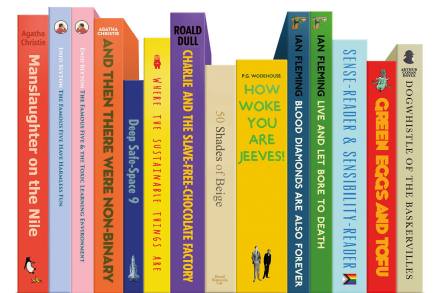
It was recently announced in the Daily Telegraph that the novels of P.G. Wodehouse — much beloved by millions, including me, for their combination of wit and soufflé-light evocation of an England that never really existed but which almost might have done — are the latest to fall foul of that new scourge of writers the world over, the “sensitivity reader.” New editions of Wodehouse’s masterly works Right Ho, Jeeves and Thank You, Jeeves have been reissued with the craven disclaimer “Please be aware that this book was published in the 1930s, and contains language, themes and characterizations which you may find outdated. In the present edition, we have sought to edit, minimally, words that we regard as unacceptable to present-day readers.

authors

The Norfolk manor house that inspired Virginia Woolf

From our UK edition

Many English country houses lay claim to literary legacies. Blo Norton Hall, however, has more right than most. In the summer of 1906, while in her early twenties, Virginia Woolf rented the Elizabethan Norfolk manor house with her older sister, artist Vanessa. The seven-mile journey there from Diss station, through isolated countryside, and their arrival at the secluded, moated site made a deep impression on Woolf. She wrote in her diary: ‘Every mile seemed to draw a thicker curtain than the last between you and the world. So that finally, when you are set down at the Hall, no sound whatever reaches your ear; the very light seems to filter through deep layers; and the air circulates slowly, as though it had but to make the circuit of the hall, and its duties were complete.

A vroom of one’s own: how I loved my old Mini

From our UK edition

Almost 100 years ago the writer Virginia Woolf advised women to find themselves a room of their own: a refuge away from the busy, crowding demands of life, where they could focus instead on themselves and write, think, be. At a time of austerity, when space is at an expensive premium and when post-pandemic empty nests have been re-occupied by returning offspring and spare rooms newly identified as shared office space, I have found an alternative sanctuary. For the past 20 years or so my refuge was my car, acquired with the first real money I ever earned as a writer. My Mini offered me an unconditional escape during the milestones, the turbulence, the highs and lows of two decades.

Virginia Woolf’s very own Bloomsday

“Mrs. Dalloway said she would buy the flowers herself.” Nine words into her 1925 classic, Virginia Woolf has taken us to another world. London — Westminster to be precise — in mid-June 1913, a world in which it is unusual for a woman to buy the flowers for her own party. Clarissa Dalloway only steps out into the early morning air (“fresh as if issued to children on a beach”) because her maid, Lucy, “had her work cut out for her.” The Wednesday in the “middle of June” on which the action of Mrs. Dalloway takes place is debated. The year is 1923, which would make the 13th of June the most likely candidate. But as academics are wont to do, there has been some disagreement.

mrs. dalloway