Vesuvius

Why should it be shameful to study the Classics?

Mary Beard opens this book with a recollection of her first meaningful encounter with the ancient world. It was 1960, and she was five years old, visiting the British Museum with her mother. Peering into one of the glass cases, she spotted an unassuming, oddly triangular loaf of bread from ancient Egypt. Seeing her struggle to obtain a better view, a curator lifted the object out. ‘Never under-estimate how powerful the simple act of unlocking a museum case can be,’ Beard reflects 66 years on. She describes Talking Classics as ‘more a memoir than a thesis’, but it is also a thought-provoking meditation on wonder. It was thauma, she reflects, that Aristotle held responsible for sparking philosophical thought to begin with.

The endless fascination of volcanoes

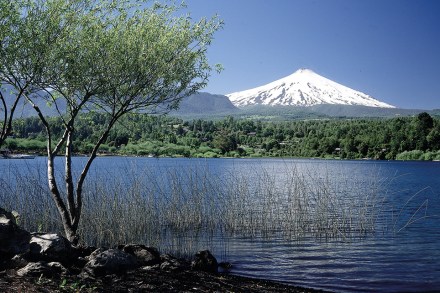
Volcanoes, volcanoes, volcanoes. You wait years for a good book or a film about volcanoes to come along and then they blow up all at once. In 2022, Sara Dosa’s incredible, unmissable – incroyable! incontournable! – documentary about the eccentric French filmmakers and volcanologists Katia and Maurice Krafft, Fire of Love, was nominated for an Oscar. It should have won. Then, last year, volcanology’s own Brian Cox, Clive Oppenheimer – professor of volcanology at the University of Cambridge and Werner Herzog’s companion and guide in his documentary film about volcanoes, Into the Inferno (2016) – published Mountains of Fire: The Secret Lives of Volcanoes. Now erupting on to the scene is Tamsin Mather with Adventures in Volcanoland.

Naples will never escape the shadow of Vesuvius

Naples, the tatterdemalion capital of the Italian south, is said to be awash with heroin. Chinese-run morphine refineries on its outskirts masquerade as ‘legitimate’ couture operations that transform bolts of Chinese silk into contraband Dolce & Gabbana or Versace. The textile sweatshops are controlled by the Neapolitan mafia, or Camorra. All this was exposed by the Italian journalist Roberto Saviano in his scorching reportage, Gomorrah. Published in Italy in 2006, Saviano’s was nevertheless a partial account, in which the carnival city of mandolins and ‘O Sole Mio’ was overrun by Armani-coutured killer-capitalists. Marius Kociejowski, poet, essayist and travel writer, is alert to the city’s reputation for Camorra and pickpocketing crime.

How did the ancients cope in a crisis?

When a major crisis strikes in the modern world, the state and international bodies such as the IMF and World Health Organisation come to the rescue. The ancients in such situations had recourse only to a culture of personal or public benefaction, self-help and (where relevant) legal action: when in ad 27 a ramshackle stadium built for a gladiatorial show at Fidenae collapsed with 50,000 maimed or killed, the impresario was exiled and new building regulations passed. It was the first emperor Augustus (d. ad 14) who created a template for imperial intervention, establishing a rudimentary fire service, putting in extreme measures to deal with famine in Rome and initiating flood-prevention schemes for the Tiber.