Venice

‘Is it France? I don’t know’: Hôtel de Crillon, Paris, reviewed

From our UK edition

Hôtel de Crillon sits on the Place de la Concorde, a vast square renamed for bloodshed, then the lack of it – it was the Place de la Révolution, with knitting and bouncing heads. Now it is placid, and the Crillon is the most placid thing in it. No one does grand hotels like the French, except perhaps the Swiss, who have nothing better to do. Hôtel de Crillon was one of twin palaces commissioned by Louis XV before the French butchered his grandson and his wife outside them: it looks like Buckingham Palace but prettier and with possible PTSD. It has been a hotel for 115 years and next to it our Ritz and Savoy look grubby, needy even, but they were built for the bourgeoisie. They have a different kind of grandeur, a kind I prefer.

‘I pity MPs more than ever’: the Cinnamon Club, reviewed

From our UK edition

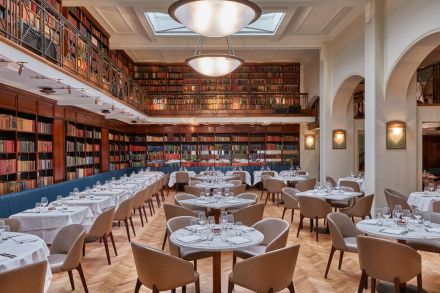
The Cinnamon Club appears on lists of MPs favourite restaurants: if they can still eat this late into a parliament. It lives in the old Westminster Library on Great Smith Street, a curiously bloodless part of London, and an irresistible metaphor wherever you are. When once you ate knowledge, you now eat flesh, but only if you can afford it. Now there is the Charing Cross Library, which lives next to the Garrick Theatre, and looks curiously oppressed. Perhaps soon it will be a falafel shack and knows it. There is also the Central Reference Library, which could be a KFC, and soon will be. Public spaces are shrinking. They will all be online soon, and we will see how that goes. (It will be bad.) The Cinnamon Club, which identifies as ‘fine dining’, seeks finesse. What for?

The summer I dwelt in marble halls

From our UK edition

The discovery of a cache of long-lost love letters might be an over-familiar inspiration for a memoir, risking a bit of a dusty lane indulgence – a charming, nostalgic featherbed flop into a past romance. But although the events described by this delightful nonagenarian first-time author took place three-quarters of a century ago, there is nothing sepia-flattened about Gill Johnson’s writing. This is a book which shimmers with remarkable recall as the author returns us to the post-war vibrancy of Venice and the dazzling inhabitants who transformed her young life. The youngest of four children, Gill reached adulthood in Blitz-scarred, rationed 1950s London.

‘The lasagne is perfect’: Hotel La Calcina, Venice, reviewed

From our UK edition

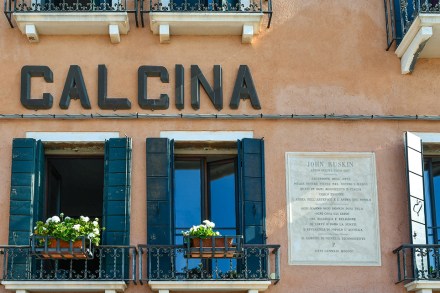
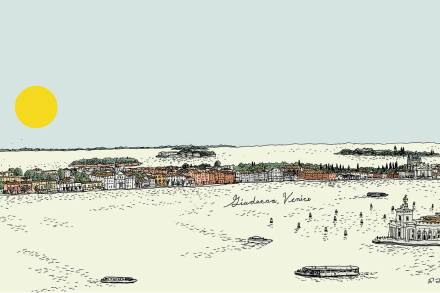
Pensione La Calcina is one of John Ruskin’s houses in Venice. He stayed here in 1877, after completing The Stones of Venice and going mad, and there is a plaque for him on the wall: a stone of his own. It is next to the Swiss consulate on the Zattere, but never mind them. I think the Zattere is for people who have tired of Venice. It has a view to the Giudeccacanal, and the waterbus to the airport: to the exit. You can breathe here. I am staying in San Marco, where I can’t. My son falls from a water gate into a canal, and Italian grandmothers tut at us, and we get sick, which my friend says is ‘very chic in Venice’. Before we get sick, we eat at La Calcina.

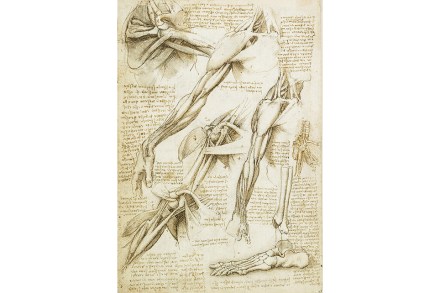
Always carry a little book with you, and preserve it with great care, said Leonardo da Vinci

From our UK edition

In 1299, Amatino Manucci, a Florentine helping to run a merchant’s business in Provence, kept at least seven ledgers and notebooks, each serving a specific purpose. One covered the firm’s trade in wool and cloth, another in wheat, barley and other victuals, and so on. It wasn’t just figures Manucci worked with. It was also financial concepts, quite advanced by the standards of that time: accounting entities and periods, profit and depreciation – notions that heralded the invention of accounting as we know it. ‘If you’ve ever tapped numbers into an Excel grid,’ Roland Allen writes in his engaging popular history, ‘you have Manucci and his contemporaries to thank – or blame.

Travels in Italy with the teenage Mozart

From our UK edition

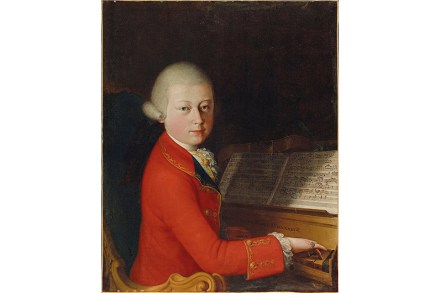
Between the ages of 13 and 17, Mozart made three trips to Italy, spending some two-and- a-half years in ‘the country at the heart of the opera world’. He would never return as an adult. His mature Italian operas – The Marriage of Figaro, Don Giovanni, Così fan tutte, La Clemenza di Tito – can be traced directly back to these formative teenage encounters and experiences in Bologna, Venice, Rome, Florence and Naples. So argues Jane Glover in Mozart in Italy. A follow-up to 2005’s Mozart’s Women, the book is a lively account of journeys which the composer shared (mostly) with his father Leopold.

Italian cooking lessons in the home of a Venetian chef

My mother advised that I get a plain wedding ring. Diamonds, she said, interfere with a woman’s ability to knead dough. “But I don’t knead dough,” I protested. “You will when you’re married.” I guffawed. And yet there I was, four days into my marriage, in an Albanian chef’s Venetian home, being told in no uncertain terms that while my husband Nick could keep his ring on, mine would need to come off. We had arrived in Giudecca, an island in the Venetian lagoon, by water bus, having spent the day in Padova. There, we’d visited the Basilica di Sant’Antonio, home to first-class relics of the great saint — bones, lower jaw, incorrupt tongue and cartilage from his larynx.

Venetian

Avoiding the brash side of Amsterdam

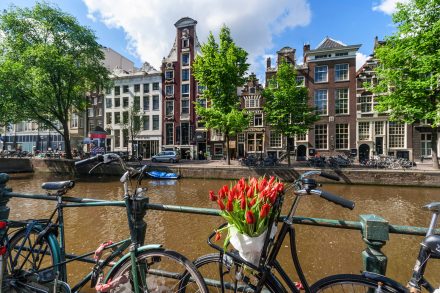
More than forty cities have taken it upon themselves to claim the nickname “Venice of the North,” but only one can use it without any hint of irony. When leaving Amsterdam Centraal station — either fresh off the Eurostar or via a quick train connection from Schiphol airport — it is hard not to be momentarily dazzled by the spectacle of glassy-surfaced grey canals, all reflecting narrow, higgledy-piggledy gabled houses. I was in Amsterdam for the Rijksmuseum Vermeer exhibition, but took the opportunity to see more of the city than a quick day trip would have afforded.

Is the Don’t Worry Darling drama part of an elaborate publicity campaign?

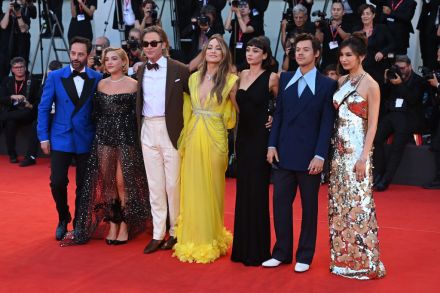
Cockburn loves a little drama, but it’s proving difficult to work out who the real villain is amid the continued theatrics of the Don’t Worry Darling cast. The film concerns a 1950s housewife living with her husband in a utopian experimental community. Don’t Worry Darling (Cockburn feels compelled to ask why there is no comma) was directed by Olivia Wilde, and started filming what seems like decades ago One thing is certain: the crew saved their best performances for the movie's premiere at the Venice Film Festival instead of the actual thing. The film has been branded a disappointment by critics, who claim that Harry Styles, Wilde's boyfriend who plays a lead role, is "charisma-free.

don’t worry darling

Bittersweet memories: Ti Amo, by Hanne Ørstavik, reviewed

From our UK edition

This is a deceptively slim novel. Its 96 pages contain multitudes: two lives, past and present, seamlessly interwoven. The narrator, a Norwegian novelist, and her Italian husband live in Milan. ‘Ti amo,’ they frequently tell each other. Easier to say ‘I love you’, than for him to say he’s dying, and her to say she doesn’t know what she’ll do without him. When did it all start, she wonders. ‘When did you actually become ill?

The jewel-bright, mesmerisingly detailed pictures by Raqib Shaw are a revelation

From our UK edition

Describing the Venice Biennale, like pinning down the city itself, is a practical impossibility. There is just too much of it, tucked away, scattered throughout the maze of alleyways and canals. And the art is no longer confined to the Biennale’s national pavilions in the gardens. It has spread, via dozens of tagalong shows cashing in on the presence of the global art world, to a motley array of disused palaces, warehouses, churches, at least one shop and a hidden garden loggia. A good way to sample it is just to follow your fancy: step through an ancient doorway and find out what is on the other side. That’s how I came across a little show by the Swiss artist Ugo Rondinone in the venerable Scuola Grande di San Giovanni Evangelista.

Stewart Brand: man of ideas and infuriating contrarian

From our UK edition

In his 2005 book What The Dormouse Said John Markoff traced the roots of the personal computer industry to the counterculture of the 1960s – a tale that owed as much to Jefferson Airplane as Jeffersonian ingenuity. Constantly popping up in that narrative is the adopted Californian Stewart Brand. Markoff wrote of his ‘Zelig-like penchant’ for being present at turning points in the story. Whole Earth, viewed one way, is an extended apology for that epithet. ‘The Zelig reference,’ Markoff says now, ‘is the wrong way to describe him, for there has been a consistent through line that has connected his various campaigns, crusades and inquiries over more than six decades.

The real food of Venice

A few years ago, I moved to Newlyn, a fishing village in west Cornwall. I didn’t understand why I moved to Newlyn until I returned to Venice. I take almost all my holidays in Venice, and it is a cliché that Venice only slowly reveals her mysteries. You must fight your way past a mass of Renaissance portraiture and mirrored palaces but the mystery it showed me this time is this: like Newlyn, Venice is a fishing village. Venice got rich in the thirteenth century, monopolized the trade routes to the east for two centuries and covered itself in Istrian stone, which Newlyn didn’t. But it’s still a fishing village, founded by people running away from barbarians, into the mud flats of a lagoon to fish for crabs. It is easy to forget that — unless you look for Venetian cuisine.

venice

Character is king in the latest crime fiction

From our UK edition

Thriller writers are hard pressed to stand out in what’s become a very crowded field. As a result, from Cardiff to Kansas we meet every conceivable kind of detective: if one walks with a telltale limp, another has no legs at all. Even the requirements of diversity can’t disguise the desperation of the search for distinctive heroes, or how variety itself has become a convention. Simon Mason’s A Killing in November (Quercus, £14.99) begins with more than a nod to thriller traditions. It’s set in the fictional Oxford college of St Barnabas, with a grumpy provost wooing a corrupt Middle Eastern potentate, a college servant with a hidden agenda and, naturally, an unknown woman found strangled in the provost’s office.

Renaissance radical: Carlo Crivelli – Shadows on the Sky at Ikon Gallery reviewed

From our UK edition

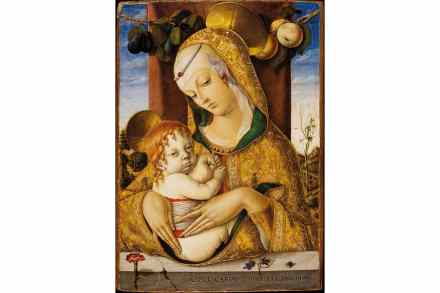
‘Camp,’ wrote Susan Sontag, ‘is the paintings of Carlo Crivelli, with their real jewels and trompe-l’oeil insects and cracks in the masonry.’ She didn’t even mention the renaissance painter’s curious cucumber fetish. Nor the unwittingly comedic homoeroticism of his portrait of Saint Roch, one stocking rolled down coquettishly to reveal a decorous inner-thigh wound. Nor the extraordinarily ugly baby Jesus clutching an apple as big as his head while his mother, understandably, averts her eyes. ‘Camp is playful, anti-serious,’ argued Sontag. Sontag wasn’t alone in not taking Crivelli (c.1430–95) seriously.

Jan Morris’s last book is a vade mecum to treasure

From our UK edition

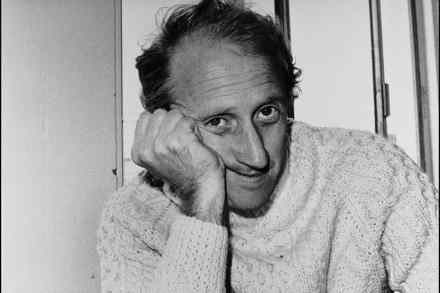
Jan Morris, in all her incarnations, was always able to evoke a place and a moment like no other. As James Morris, the only journalist to cover the first successful ascent of Everest in 1953, he described Edmund Hillary returning from the summit as huge and cheerful, his movement not so much graceful as unshakably assured, his energy almost demonic… It was a moment so thrilling, so vibrant, that hot tears sprang to the eyes of most of us. Morris, who died last year, was married to Elizabeth Tuckniss for 71 years and had five children, one of whom died in infancy. She transitioned to live as a woman in 1964, one of the first high-profile people to do so. Her subsequent memoir, Conundrum, was a bestseller.

Albrecht Dürer was a 16th-century Andy Warhol

From our UK edition

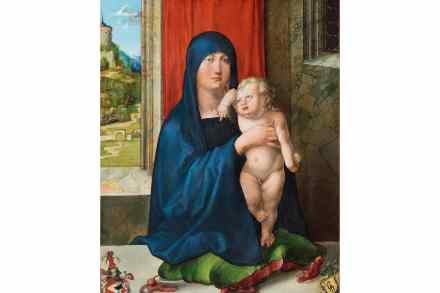
On 6 January 1506, Albrecht Dürer wrote from Venice to his friend Willibald Pirckheimer, who was at home in Nuremberg. The artist had already been in the city for a little while, and like many people who visit Venice he had spent a good deal of time shopping. Pirckheimer had asked him to buy some jewellery for him, ‘a few pearls and precious stones’, and the artist had been looking out for something suitable. There were, however, difficulties. For one thing, he says: ‘I can find nothing good enough or worth the money; everything is snapped up by the Germans.’ For another, Dürer complained, there were a lot of swindlers around. These ‘always expect four times the value for anything, for they are the falsest knaves’.

Why there’s never been a better time to see Venice

From our UK edition

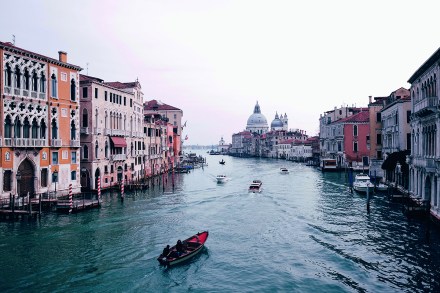
You’re never going to see Venice quite like this again. Usually swarming with tourists – not to mention the enormous cruise ships that dock in its waters ­– the city has been given a serious breather by the coronavirus pandemic. Those lengthy queues to get into its most famous hotspots have disappeared; the picturesque back streets lie empty and a dramatic fall in water traffic has seen the sediment in its 150 canals settle, allowing their vibrant colour to return. La Serenissima – much to many of the locals’ relief – has become serene once more.

Why I will miss our mighty cooling towers – and I suspect I am not alone

From our UK edition

One afternoon earlier this summer we drove through Rugeley in Staffordshire. There, looming above the A51, were the cooling towers of the power station: a pinkish red, resembling terracotta, with curving convex sides, like modernist vases on a pharaonic scale. At 385 feet high, they were a little taller than the dome of St Paul’s Cathedral. We remarked on how surprisingly good they looked as we passed them on 4 June, en route to a spot in the Staffordshire countryside where we were going to stay. On 6 June there was a distant rumble like thunder but we thought little of it. However, that evening when we glanced at the horizon there was a gap where the towers had been.

Wine by the jug in Venetian Venice

From our UK edition

We were discussing travel, that forbidden delight now tantalisingly close. Where would be our first destination? Forswearing originality, I chose Venice. Among the world’s greatest paintings, one in particular does not merely come to mind. It fills the mind. I have never been in the Serenissima for the Feast of the Assumption of the Virgin, probably just as well. In mid-August, there are bound to be pedestrian traffic jams all the way from the Piazza to the Rialto. But it is possible to imagine the event. Go to Santa Maria Gloriosa dei Frari. Use your inner eye to fill the church with the entire nobility of Venice, festooned with gold and jewels. The choir and the censers are both in full cry.