Vaccine

India’s vaccine diplomacy

From our UK edition

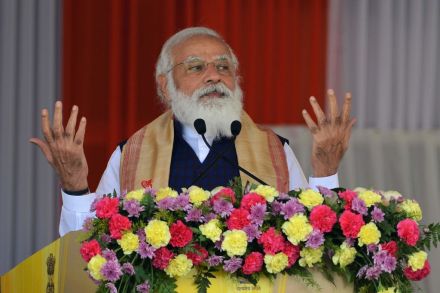
‘Vaccine diplomacy’ is playing an increasingly important role in the geopolitics of the Covid-19 pandemic. Countries like China and India are attempting to bolster their credentials and earn some goodwill, by donating or selling their surplus vaccine supplies to low-income countries, or nations with longer term partnership potential. China has already donated half a million doses of the Sinopharm vaccine to its regional ally Pakistan. This followed President Xi’s announcement earlier this year that the development and deployment of a Chinese vaccine will be ‘a global public good.
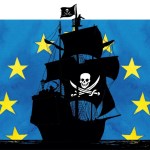
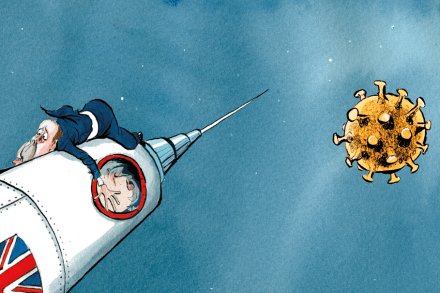
Watch: EU’s jab at Britain’s vaccine arms-race

From our UK edition

The EU Commission President, Ursula von der Leyen, has been in the firing line in recent weeks, over the EU’s failure to procure enough vaccine doses. The Commission’s haphazard programme has left officials scrambling for excuses to explain why the bloc has come up short, with various EU leaders hitting out at AstraZeneca, Britain’s one-dose strategy, and our medicine approvals process. Could those excuses be wearing thin? That might explain why the EU President appeared to come up with a new strategy this weekend for deflecting blame: by accusing Britain of a Cold War mindset.

Why Germany is eyeing up the Sputnik V vaccine

From our UK edition

After the EU’s vaccine distribution disaster, German lawmakers are now taking a closer look at Russia’s Sputnik V jab. If approved by EU regulators, Sputnik V could be the fourth vaccine available in the bloc after the BioNTech-Pfizer, Moderna and AstraZeneca vaccines. It’s easy to see why Germany could be tempted by the Sputnik V vaccine. The rollout of the BioNTech-Pfizer and Moderna jabs has been hampered by delivery delays and political blunders. And European regulators have remained wary of AstraZeneca’s vaccine – a scepticism that was solidified by a recent trial showing that the shot may not significantly reduce the risk of mild or moderate disease caused by the 501Y.V2 variant, also known as the South African strain.

Sunday shows roundup: Zahawi ‘confident’ over-50s will get jab by May

From our UK edition

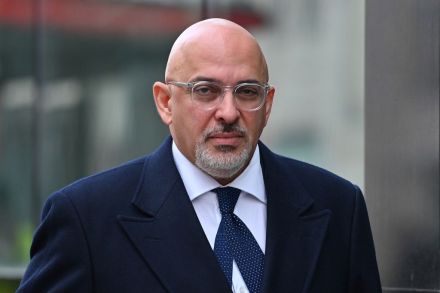
Nadhim Zahawi – ‘I’m confident’ all over 50s will get jab by May Vaccines minister Nadhim Zahawi was sent out to bat for the government this morning, at a time when over 11 million people have received a first dose of an approved Covid vaccine. Zahawi told Sophy Ridge that he was certain that, despite any possible disruption caused by the European Commission’s aborted jab grab, the government was still on course to meet its targets. The first four priority groups are forecast to be vaccinated by mid-February; and groups five-nine are estimated to be offered a jab at some point in the spring:  https://twitter.com/RidgeOnSunday/status/1358346263822012418?

France is furious at the EU’s vaccine bungle

From our UK edition

Ursula von der Leyen has clung to an increasingly implausible narrative this week: that the EU made the ‘right decision’ with its vaccine strategy. It’s the clearest sign yet that Brussels is going into panic mode. The Commission president is reported to have turned down requests to hold a public debate in the European parliament on the vaccine roll-out. Von der Leyen decided to only answer questions behind from a select group of MEPs behind closed doors. Finally, left without much choice the Commission president seems to have grudgingly accepted to appear before the European Parliament on Wednesday. The Commission feels increasingly cornered, and rightly so, for the EU’s vaccine struggle may well turn into an existential crisis.

Do May elections hint at faster lockdown easing?

From our UK edition

The news that the local elections will go ahead as planned on 6 May has increased optimism in the Conservative parliamentary party about the roadmap out of lockdown. Despite rumours that the vote could be postponed on the grounds that Covid restrictions would prevent them from effectively campaigning, UK Constitution Minister Chloe Smith has said it will go ahead on the grounds that 'democracy should not be cancelled because of Covid'.  But MPs aren't just pleased because the vote is on. Several are taking it as a sign that the lockdown will be eased sooner rather than later.

Von der Leyen gets that sinking feeling

From our UK edition

HMS Britain seems to be a nippier beast after her Brexit refit. That is, at least, according to EU Commission President Ursula von der Leyen.  Earlier today the embattled Eurocrat admitted that when it comes to Covid vaccine procurement, the European bloc is a 'tanker' by comparison to the UK's 'speedboat'. When asked about her ability to get hold of life-saving jabs, she told reporters:  I'm aware that a country might be a speedboat and the EU more a tanker. If we conclude a contract, we need another five days for the member states to say, 'yes' — and these are five days, five working days.So, obviously, of course a decision taken by 27 lasts longer than if you just go by yourself, but I am deeply convinced that the European approach is the right one.

The French lesson that shames Britain

From our UK edition

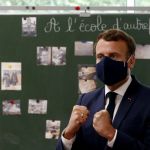
Emmanuel Macron has become the pantomime villain for much of the British press after his hissy fit last week in which he questioned the efficacy of the AstraZeneca jab. It was the latest in a series of snipes at the British that has made the French president the scourge of Fleet Street. 'Bargain-basement Bonaparte,' was how the Daily Mail described Macron, while the Sun plumped for 'pint-sized egomaniac'. He's none too popular among his own people, either, the figurehead of the French failure to be the only member of the UN Security Council incapable of producing their own vaccine. No wonder a recent opinion poll suggested Marine Le Pen is a stronger threat than ever ahead of next year's presidential election. But the president of France should be lauded for one triumph.

Minority groups should ignore the anti-vax charlatans

From our UK edition

My great-great-grandmother, born on a Barbadian plantation and transported to what was British Guiana in the 19th century, gave rise to a tribe that has spread across the globe. Weirdly, Covid has brought us together (via Zoom) in a way that used to be reserved for weddings and funerals. My New Yorker nephew found a time of day that could accommodate the Californians, the Canadians and the English rump in London, Cambridge and Nottingham. Harlem’s lights glimmered from another nephew’s screen, while the Florida gang kept their windows shut just in case the neighbours not so far away in Mar-a-Lago decided to drop by. Sadly, someone forgot to let the Trinis, the Bajans and the Welsh know about the meet-up, and it was way too early for Jakarta.

Secrets of the Vaccine Taskforce’s success

From our UK edition

Until a few weeks ago, the government’s track record on Covid was one of repeated failure. The death toll, the depth of the recession, the public disapproval of the government: Britain’s figures were among the worst in the world. But with vaccines, things have changed. The UK is now on track to be the first major country in the world to vaccinate its way out of lockdown. The foreign press coverage has turned from mockery to awe, with Britain having vaccinated more people than France, Germany, Italy and Spain put together. Many of those behind this success are virtually unknown to the public. Their story matters, because the Vaccine Taskforce is already being looked to by ministers as a model for how government should work once the pandemic is over.

Vaccine success is a boost for Boris – and the Union

From our UK edition

Imagine for a minute what British politics would be like without a Covid vaccine. The cabinet would be deeply, and possibly irrevocably, split between those who favoured another year of lockdown on public health grounds and those who thought that the country had no alternative in the circumstances but to ease restrictions and learn to live with the virus. The 100,000 death toll would have been reached with no hope in sight and a public sense that, almost inevitably, things were going to get worse. The vaccine has changed so much. It has given people hope. There is a belief in the general public that this will be the last lockdown, which is bolstering morale and compliance.

Could lockdown lift sooner?

From our UK edition

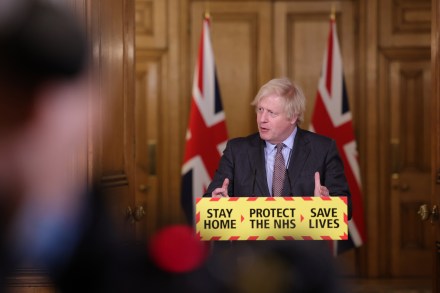
Wednesday's very upbeat Downing Street coronavirus briefing underlined the optimism that Boris Johnson feels about the way the Covid crisis could work out for him. The Prime Minister was celebrating the UK passing the ten million mark for the number of people who have received their first dose of the vaccine, and thanked the NHS for the programme, which he described as 'the most colossal in the history of our National Health Service'. He also very pointedly thanked the Vaccine Taskforce, which the Prime Minister sees as another vindication of his approach to the pandemic. For Johnson, the first part of the coronavirus crisis was bruising and the government made a series of mistakes which were obvious at the time and even more so with hindsight.

The vaccine disaster has fatally undermined the EU

From our UK edition

It might be a bit late, but the supply will come on tap eventually. France’s Sanofi has partnered with Pfizer to start manufacturing its vaccine. BioNTech has just bought a factory in Marburg, Germany from Switzerland’s drugs giant Novartis to retrofit into a vaccine plant. With plenty of money being splashed around, production will arrive soon. Making vaccines is tricky, but not that tricky. By the summer, Europe should have enough Covid-19 shots to jab everyone who wants one. Crisis over, right? Ursula von der Leyen can get back to setting diversity targets, or making climate pledges, or whatever it was she was up to before people started asking why the Israelis and the British were inoculating people so much faster than she was.

New Oxford data supports UK vaccine strategy

From our UK edition

Ever since the Oxford-AstraZeneca team announced the results of its Phase 3 trials last November, there has been a suspicion among some that their vaccine is the poor relation of the messenger RNA vaccines developed by Pfizer and Moderna. It might be cheap compared with the others, it might be easy to store and transport, but the results published last November indicated that it had an efficacy of 70 per cent compared with over 90 per cent for Pfizer and Moderna. Even that was questioned when it was pointed out that the 70 per cent figure was arrived at by mixing different trials, involving different quantities of vaccine.

Central Europe’s vaccine scepticism problem

From our UK edition

Countries around the world are in a race against time to vaccinate their populations against Covid-19. But there is one particular region which appears to have a growing problem with vaccine scepticism: Central and Eastern Europe. As a British expat living in the Czech Republic, I have noticed the lack of eagerness with which many Czechs discuss the vaccine rollout. This may in part be due to the country’s floundering and much-criticised vaccination programme. But it is noticeable that anti-vaccine sentiment is more common – and gets much more attention – here than in the UK. Ex-President Václav Klaus recently told a large anti-lockdown rally in Prague that vaccines are not the solution to the virus.

Ursula von der Leyen has broken the first rule of leadership

From our UK edition

Valdis Dombrovskis could probably do without his moment in the limelight. His spell as prime minister of Latvia, a country with a population of 1.9 million, was largely successful, at least until the collapse of a supermarket roof in 2014 brought his coalition to an early end.  Shunted off to Brussels, he worked quietly as commission vice-president for the euro and social dialogue– nope, I don’t know what the heck that means either – before being promoted to the slightly more important trade portfolio last year. Now it turns out he is responsible for what is rapidly turning into the biggest policy catastrophe in Europe since the Second World War, at least according to his boss.

Why vaccine nationalism won’t end in 2021

From our UK edition

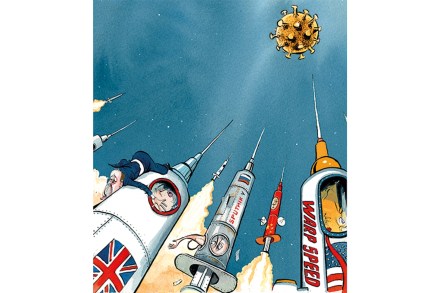
After the EU’s behaviour last week, no one can be under any illusion about how nationalistic the pandemic has now become. Even before the EU attempted to halt vaccine supplies destined for Britain, the scrabble to secure enough doses had become reminiscent of the cold war. It wasn’t for nothing that the Russians named their vaccine ‘Sputnik’ – a reference to the satellite they launched in 1957 during the space race. Nor was it by chance that the Scottish government appeared to find it so difficult to say the word ‘Oxford’ when talking about the Oxford AstraZeneca vaccine. But these sorts of political tiffs are just the beginning. Now that vaccinations are underway across the West, focus is beginning to shift onto future supply.

NYT’s rare praise for Brexit Britain

From our UK edition

Hold on to your hats. In recent years, the New York Times has rarely if ever missed an opportunity to bash Brexit Britain. Whether it's spreading false claims over 'mix and match vaccines', identifying Britons as mutton-munchers or simply linking the UK's decision to leave the EU with bad Covid etiquette.  So Mr S must admit he nearly choked on his cornflakes on seeing the latest front page of America's self-styled paper of record. Not only was the subject the UK, but the report was a positive one – with the headline: 'In vaccines, UK has a pandemic win at last'.

Martin Selmayr’s EU vaccine boast backfires

From our UK edition

In the aftermath of the EU's vaccine bungle, Brussels remains in damage limitation mode, determined to ensure that someone else gets the blame for its own crisis. But Mr S wonders whether top EU diplomat Martin Selmayr's bid to put a positive spin on what has unfolded over the last few days was really so wise. Selmayr, who revelled in his nickname 'the Rasputin of Brussels' during his time serving as Jean-Claude Juncker's aide, attempted to make a comparison between Europe's vaccine rollout rate and that of Africa, the poorest continent on Earth. Selmayr, who now serves as the EU Commission representative in Austria, wrote: 'The EU, thanks to the joint work of 27 governments, EU Commission, researchers and companies vaccinated 12 million people in 3 weeks.

It’s time for Ireland to stand up to the EU

From our UK edition

Ireland’s political class is facing a moment of truth. Following yesterday’s extraordinary events — with the EU temporarily triggering Article 16 of the Northern Ireland Protocol as part of its desperate effort to manage its self-made vaccines crisis — the Dublin elites have some serious soul-searching to do. They must now ask themselves if they are willing to be members of this institution that has just treated them with such contempt; which has just signalled in front of the entire world that it does not take Irish sovereignty or Irish democracy very seriously at all. Contempt is not too strong a word for what the EU has just done to Ireland.