Vaccine

Can Spain’s faith in the EU survive Covid?

From our UK edition

According to ancient Moorish legend, when the world was created each land was given five wishes. Spain’s first four wishes – for clear skies, seas full of fish, good fruit, and beautiful women – were all granted, but the fifth, for good government, was denied on the grounds that to grant that too would create a paradise on earth. Certainly over the last couple of centuries, good government in Spain has tended to be conspicuous by its absence. Philosopher Ortega y Gasset summed up Spain’s tragic history and its desire to become more like the liberal democratic European countries in his famous phrase: 'Spain is the problem and Europe the solution.' It seems that many Spaniards agree: the European Union is widely regarded as an unquestionably good thing for Spain.

The EU is playing a dangerous game with vaccine exports

From our UK edition

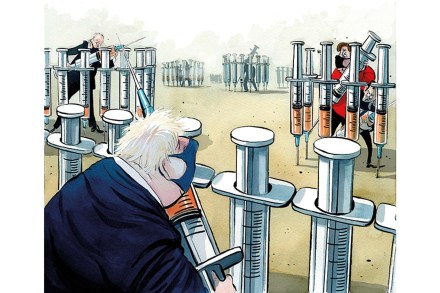
The EU is arguably playing a self-harming game in potentially restricting vaccine exports to the UK as a tit for tat for the inability of AstraZeneca to supply the 80 million doses it ordered by the end of March. First of all, this looks like unedifying EU sour grapes that the UK, out of the EU, moved earlier to place vaccine contracts and will soon be self-sufficient in vaccines. Second, it risks damaging the reputation of the EU as a place where multinationals can securely invest, because it is blowing up the supply chains of two big American companies with EU operations, Pfizer and Moderna. The UK, desperate for inward investment, will look relatively more attractive as a haven for foreign capital.

Can the EU win a case against AstraZeneca? I’m not convinced

From our UK edition

The contract between AstraZeneca and the EU has now been published. It confirms my view, expressed on Coffee House, that the EU does not – despite its claims – have any form of ‘strong case’ or way to jump a queue to speed up its vaccine rollout. Both contracts (the one, published previously, which I used as an example in my last post, and today's) are what the EU calls advance purchase agreements, or APAs. The latest contract has slightly different wording in some places. But the differences are not substantial. This, then, appears to be bad news for the EU if it is serious about taking action against AstraZeneca. The words ‘Reasonable best efforts’ remains in the contract and is the cornerstone of the obligation AstraZeneca is under. Clause 5.

Britain gets a boost to its vaccine programme

From our UK edition

As the blame game gets underway in Brussels over the EU's sluggish vaccination programme, the UK government has fresh reason for cheer: a new coronavirus jab. The Novavax vaccine has successfully completed its phase three trials — finding it to be 89 per cent effective in large-scale UK trials. This data will now be passed to the MHRA to assess whether the vaccine can be approved for UK use. While the vaccine is thought to be highly effective against the Kent strain of Covid, it is less effective against the South African variant. While it still offers some protection, Novavax is following Moderna's lead in developing a booster shot to tackle this.

The EU vaccine debacle poses a dilemma for Remainers like me

From our UK edition

There is no question about it, at least if you want to evaluate things objectively: the UK has handled Covid vaccine rollout well (at least so far) and the EU has dealt with it badly. For a Remainer like me, this raises a difficult question: does this prove that Brexit was a good idea after all? Compared to the EU27, the UK has been able to act nimbly in vaccine negotiations. While Brussels has been held up by various delays and supply issues, these have not affected the UK. This is thanks in large part to the fact that its contract with AstraZeneca was signed three months before the EU vaccine deal. The UK also took a gamble, betting on a vaccine that had not yet passed clinical trials.

This is just the start of the Brussels-Britain bust-ups

From our UK edition

This is a crucial year for the UK’s two most important relationships, I say in the magazine this week. If the Johnson/Biden diplomatic relationship has got off to a better start than expected, the same cannot be said of the post-Brexit UK/EU one. The alignment between Johnson and Biden on climate change, Russia and China is helping the alliance. This relationship should become closer still given the two side’s agreement on China, the most important geo-political issue of the decade. The EU will attempt, often in not particularly edifying ways, to assert itself as the bigger partner.

Germany has just undermined the EU’s vaccine argument

From our UK edition

Germany’s vaccine committee has advised the Oxford-AstraZeneca vaccine only be given to under-65s. The announcement marks a major twist in a week of muddled vaccine reports. On Tuesday, the German newspaper Handelsblatt suggested that German officials believed the Oxford vaccine was only 8 per cent effective for the over-65 groups (no evidence has been produced to support the 8 per cent claim). It has been heavily and extensively rebuffed by both AstraZeneca and the German government. Yet the German reporter who broke the story doubled down on the claims, raising the stakes as to whether he was making precarious reporting worse, or whether the European Medicines Agency may indeed conclude that the vaccine's efficacy is too low.

BBC shows its pro-EU bias

From our UK edition

It’s pretty clear that the EU has not exactly behaved well in recent weeks, during its row with AstraZeneca over the Oxford vaccine. First the German press pushed out an unsubstantiated claim that the vaccine had extremely low efficacy rates among the elderly. Then the EU threatened to introduce an export ban to prevent other countries receiving their doses. And now the EU is pushing AstraZeneca to divert supplies intended for the UK to Europe – to make up for the fact that the bloc dithered for three months before striking its own deal with the company. Meanwhile the UK, so far at least, has pretty much kept out of the row. So Mr S was surprised to see the UK’s own broadcaster, the BBC, take a ‘both sides are wrong’ approach to the dispute this morning.

The vaccine row shows the EU doesn’t understand contract law

From our UK edition

The EU rejects 'the logic of first-come first-serve,' said the EU's health commissioner Stella Kyriakides. 'That may work at the neighbourhood butcher's but not in contracts, and not in our advanced purchase agreements'. Contract law is an area of law I know well. And it is not a political comment to say the commissioner is wrong. We don't know precisely what the contract between AstraZeneca and EU member states says. But the EU did publish another vaccine supply contract here. All this makes it very difficult to see what case the EU has In any would-be-case involving this contract, the EU has two massive hurdles to jump. Firstly, contractors undertake to use their 'reasonable best efforts' to manufacture enough supply.

Portrait of the week: Vaccine battles, illegal haircuts and Biden’s chat with Boris

From our UK edition

Home Supplies of the Pfizer vaccine (made in Belgium) were feared to be at risk from a declaration by the European Union health commissioner, Stella Kyriakides, that EU companies would have to ‘provide early notification whenever they want to export vaccines to third countries’. This came after AstraZeneca was said to be able to deliver by the end of March only 31 million of 80 million doses ordered by the EU. The company, with a factory in England, had undertaken to deliver two million doses a week to the UK. Nadhim Zahawi, the minister for vaccination, said that supplies were ‘tight’ but the mid-February target of 15 million vaccinations would be met. ‘We need to work together rather than use policies of vaccine nationalism,’ he said.

Are we returning to ‘normalcy’ or ‘normality’?

From our UK edition

New normal Why have so many people started saying ‘normalcy’ rather than ‘normality’? — Normalcy has been traced back to 1857 when it was used in geometry to denote a state where lines were perpendicular to each other. It was rarely used outside mathematics until 1920, when the then US presidential candidate Warren Harding made a speech in Boston referring to a ‘return to normalcy’ following the Great War. He said: ‘America’s present need is not heroics, but healing; not nostrums, but normalcy.’ He was ridiculed for what was regarded by many as a malapropism. Although ‘normalcy’ is now in common use in the US, it was still the lesser-used word at the last count.

Vaccine wars: the global battle for a precious resource

From our UK edition

Armed guards are patrolling the perimeter fence of a sleek factory. Software experts are fending off hackers. Border officials are checking trucks and ferries, not for weapons or illegal immigrants, but for a mysterious biochemical soup, while spies and spin doctors are feeding social media with scare stories flaming one national champion or another. Welcome to the first great geopolitical battle of the 21st century. It may sound like something ripped from the pages of a dystopian sci-fi novel, but in truth we’re seeing the opening salvos in the vaccine wars. Rather than co-operating with one another to roll out a global vaccination campaign to rid the world of Covid-19, the major powers of the world are instead descending into a fierce, increasingly nationalistic competition.

How the EU vaccine row could escalate

From our UK edition

The EU is now insisting that AstraZeneca use vaccine produced at its UK site to make up for a shortfall in its supplies to the EU. This is likely to kick off a major row as the UK went to great trouble to ensure that it had first refusal on all the Oxford vaccine produced in the UK. Indeed, AstraZeneca’s willingness to accept that condition is a major reason why Oxford ended up partnering with them. It is not hard to see how this situation could escalate. The EU is already saying that companies should notify them before exporting vaccine out of the bloc, and the German government is going further, calling for full on export controls on vaccines.

The EU is blaming everyone but itself for its vaccine debacle

From our UK edition

Something has gone badly wrong with the EU's rollout of the Covid vaccine. Yet in its response to this debacle, Brussels seems determined to double down, engaging in behaviour of the pettiest kind as it blames everyone but itself for what has happened. 'The companies must deliver', Ursula von der Leyen, the EU commission's president said this week, as she announced the launch of a 'vaccine export transparency mechanism'. In reality, this plan to oblige companies to notify the commission when vaccines leave the EU (into Britain, for example) is an attempt to pile pressure on the pharmaceutical firms who have given us the only way out of the situation we find ourselves in.

Merkel is making a mess of Germany’s Covid vaccine rollout

From our UK edition

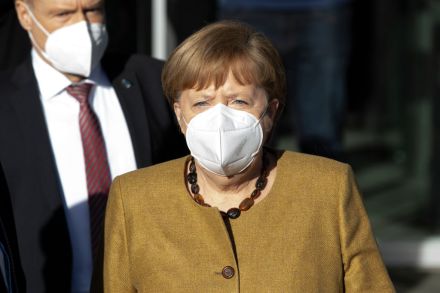
Angela Merkel is known for her competency, yet even Mutti's defenders would struggle to use that word to describe Germany's rollout of the Covid-19 vaccine. German firm BioNTech won the race to develop a vaccine, but this has not prevented crippling supply shortages, which has forced states including North Rhine-Westphalia, in the west of the country, to suspend jabs.  German health minister Jens Spahn has come under fire and his insistence that 'the vaccine is a scarce product worldwide' rings hollow when Germans look at the speed of the vaccine rollout in Britain. Now, to make matters worse, German's health ministry has found itself caught in a fresh row: over the effectiveness of the AstraZeneca Covid-19 vaccine.

Is the EU to blame for AstraZeneca’s vaccine shortage?

From our UK edition

The important difference between AstraZeneca's relationship with the UK and its relationship with the EU – and the reason it has fallen behind schedule on around 50m vaccine doses promised to the bloc – is that the UK agreed its deal with AstraZeneca a full three months before the EU did. This gave AstraZeneca an extra three months to sort out manufacturing and supply problems relating to the UK contract (there were plenty of problems). Here is the important timeline. In May AstraZeneca reached an agreement with Oxford and the UK government to make and supply the vaccine. In fact, Oxford had already started work on the supply chain.

German paper’s excruciating Oxford vaccine muddle

From our UK edition

The Düsseldorf offices of German daily newspaper Handelsblatt will not be a happy place this morning. Last night, the respected financial paper published a 1,200 word piece claiming that the Oxford-AstraZeneca vaccine is only 8 per cent effective among the over-65s. The claim, based on anonymous sources within the German government, caused outrage.  AstraZeneca responded quickly, saying the allegations were 'completely incorrect' while a spokesperson for Oxford University said there was 'no basis for the claims of very low efficacy', pointing to five peer-reviewed papers into the vaccine's efficacy.

Matt Hancock’s tests for lifting lockdown

From our UK edition

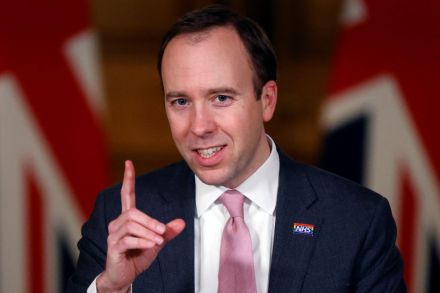
As the government comes under pressure from Tory MPs to provide a timeline for pupils returning to school, the Health Secretary remained tight-lipped in the Monday government press conference on when lockdown will be eased. Asked whether any guidance could be offered on the issue, Matt Hancock cited the number of people admitted to hospital – twice as many as in the first peak – and on ventilators to show there is a long road ahead. The Health Secretary said that the majority of people understand why it is difficult to put a timeline on ending lockdown. He did though point to the factors that would decide when it could be lifted: the death rate, the number of hospitalisations, the effect of new variants and the success of the vaccine rollout.