Us politic s

Rex Tillerson’s sacking isn’t about Russia

Sometimes it’s almost as if Donald Trump wants the world to think he’s a Russian patsy. Yesterday, Rex Tillerson, as Secretary of State, warned Putin that Russia’s alleged assassination attempt on British soil would trigger ‘a response’. Today he’s been sacked. Mike Pompeo, Director of the CIA, will become our new Secretary of State. He will do a fantastic job! Thank you to Rex Tillerson for his service! Gina Haspel will become the new Director of the CIA, and the first woman so chosen. Congratulations to all! — Donald J. Trump (@realDonaldTrump) March 13, 2018 But the firing almost certainly isn’t about Russia. It seems Trump asked Tillerson to go on Friday, a day after Trump agreed to meet Kim Jong-un.
Robert Mueller keeps everyone guessing

Robert Mueller, the former Director of the FBI and special counsel in the soap opera that is the Russia collusion investigation, has been on the case for ten months now. His team of attorneys and Washington prosecutors has interviewed dozens of witnesses, scanned hundreds of thousands of pages of documents, sent an unknown number of subpoenas to members of Donald Trump’s campaign for information or testimony, and is in the process of scheduling an interview with President Trump himself. Through it all, Mueller’s camp has shown impressive self-discipline; unlike Kenneth Starr’s inquest against President Bill Clinton two decades ago, the special counsel’s office is keeping its work in-house.

Is Donald Trump an ‘isolationist’? Or a ‘radical imperialist’? He can’t be both

For two years we’ve been hearing that Donald Trump is an 'isolationist', whatever that word is supposed to mean. Only now two op-ed writers in the New York Times have discovered that he isn’t — instead, Thomas Meaney and Stephen Wertheim write, 'Let’s call Mr. Trump’s vision what it is: radical American imperialism.' Let’s not, because it isn’t true. On the contrary, Donald Trump is the most anti-imperialist president in a generation, even if he is also far from being a mythical 'isolationist'. North Korea is isolationist, and perhaps Meiji Japan was, too. But Great Britain had a world empire when 'splendid isolation' was a maxim of Conservative leaders’ foreign policy in the 19th century.

What if Donald Trump is the Steve Jobs of politics?

I can understand some people not liking the current president of the United States. As Conrad Black put it recently, ‘Donald Trump is a strange cat and an acquired taste.’ What I don’t understand is people who should know better being afraid of Donald Trump. For example, how can it be that among all the experienced, eccentric and supposedly visionary denizens of Silicon Valley, only Peter Thiel recognised that Donald Trump is cut from the same cloth as the most celebrated tech titans: a disruptor, an innovator, a maverick, and an up-and-coming ‘crazy one,’ in the mould of the myth-makers to whom the famous 1980s Apple ads paid homage?

John Bolton’s campaign to be National Security Adviser

In my reporting on John Bolton, the hardline former US Ambassador to the UN, I have noticed a trend. Bolton very clearly wants in. And he has a very specific way of going about it. Some context: despite being a George W. Bush alum, Bolton has largely vociferously backed President Donald Trump. Bolton has been considered, alternatively, for Secretary of State, Deputy Secretary of State and National Security Adviser. The world around former White House Chief Strategist Stephen K. Bannon favored him for Secretary of State at one point shortly after the 2016 election. But Bolton, these days beloved by much of the anti-Bush, Breitbart-type crowd, is now focused on one of those positions: National Security Adviser.

Trumpism is taking the GOP back to its industrialist roots

The weeping and wailing that is greeting Trump’s imposition of tariffs on steel and aluminum products entering the US is evidence that no one in America knows anything about the history of the Grand Old Party. Paul Ryan and the libertarian right are acting as if the President is betraying some long and distinguished tradition. This is nonsense. The Republican party was founded as an alliance of Big Business and government, with its platform devoted to huge land grants to the railroads, heavy taxes on “sinful” products like alcohol and tobacco, and protective tariffs. The American steel industry has been leading the charge for tariffs since 1820: yes, some things never change.

Last week wasn’t President Trump’s worst so far – it was his best

If accounts in the press are to be believed, President Trump has reached a fresh nadir. “These are the darkest days in at least half a year,” reports The Washington Post. “Sources close to President Trump say he is in a bad place,” chimes in the impressively-sourced Axios. Buried in the Post story is a contradictory take from close friend Chris Ruddy, the Newsmax chief: “I’m bewildered when I see these reports that he’s in turmoil. Every time I speak to him he seems more relaxed and in control than ever. He seems pretty optimistic about how things are shaping up.” At the end of the day, only the top man himself knows how he’s feeling. But read between the lines, and a compelling antithesis emerges.

Why Trump’s ‘trade war’ makes strategic sense

Has Donald Trump sparked off a trade war? His plans for a 25 percent tariff on steel imports and 10 percent tariff on aluminum have shocked friend and foe alike. China is outraged; so are Canada, Japan, and South Korea—allies that in fact export more steel to the U.S. than China does. They stand to be hurt worst if they aren’t granted exemptions or cut special deals by the president. Trump accuses the Chinese of 'dumping' steel into the American market, while the legal grounds for his new tariffs rest in the idea that strategically critical manufacturing is endangered by a diminished U.S. metals industry.

Who is blocking John Bolton?

U.S. Defence Secretary Jim Mattis is blocking former Ambassador John Bolton from taking over as National Security Advisor, Cockburn has learned. John Bolton was first reported as heir apparent to McMaster by The National Interest in January. McMaster was nearly ousted from the White House summer of last year, ostensibly by a faction lead by former White House Chief Strategist Stephen K. Bannon. Though the White House officially denied his political demise on Thursday, this time McMaster’s position is far more precarious. NBC News reported earlier in the day Thursday that McMaster was to be imminently replaced—with Ford executive and Bush 43 alum Stephen Biegun, as Bolton was vetoed by Mattis—sending the American capitol aflutter.

1,2,3,4 — Trump declares a trade war

‘Whatever complicates the world more — I do,’ Donald Trump once said. As President, that still seems to be his mantra. Everybody knows that he feels America has been ripped off for decades when it comes to global trade — and that he intends address imbalances that hurt his country wherever he can. But his abrupt decision to announce huge tariffs on steel and aluminium has sent shockwaves across the world. It has thrown global markets into a panic. It has caused division in his White House and put him at odds with his party establishment, which is ideologically committed to free trade and terrified of protectionism. It is vintage Trump, in other words. The great disruptor strikes again. So what is he doing?

Trump is serious about gun control

A friend who works for a prominent, hardline conservative think tank writes: 'So, can we all admit that Trump is basically a Democrat now on guns?' On Wednesday, I wrote that American gun reform is close to happening. In the intervening hours, that view has been buttressed by a series of comments from the president of the United States. It seems a perverse fate that Donald Trump, the bogeyman of progressive America, should turn out to be the means a delivering a measure of gun reform. Trump in Washington Wednesday promised 'beautiful' and 'comprehensive' (read: if the immigration debate phrasing is any indication—liberal) reform. On Wednesday, I mentioned Pennsylvania as a flashpoint political state for Republicans considering reform.

America’s involvement in the Yemen war is unconstitutional — and stupid

Only very rarely in today’s Washington, D.C. is a cause so strong that it brings together America’s most famous progressive with one of the country’s most ideological conservatives. But the nasty, bloody, and intractable proxy war in Yemen - and the U.S. military’s involvement in it - is one of those causes. Yesterday afternoon, Vermont Senator Bernie Sanders and Utah Senator Mike Lee held a press conference on Capitol Hill to unveil the introduction of a resolution that, if passed by both houses of Congress, would compel a withdrawal of all U.S. military assets from the Saudi-led campaign against the Houthi rebels.

American gun reform is close to happening

It seems a perverse fate that Donald Trump, the bogeyman of progressive America, should turn out to be the president who ends up delivering a measure of gun reform. In the wake of the Valentine’s Day massacre at Stoneman Douglas High School in South Florida, President Trump has delivered a series of remarks promising a ‘beautiful’ comprehensive gun bill that will expand background checks on gun purchases, remove guns from the hands of the mentally ill, bolster security on school campuses and restrict young people from purchasing certain weapons. Trump, clearly, sees an opportunity to triangulate between the National Rifle Association, firmly supported by much of his base, and the at least equally powerful gun reform lobby. He’s also recognising a political reality.

Trump loses fourth spin doctor as Hope Hicks quits

Every week is extraordinary in the Trump administration — but this week seems stranger than most. Matters are rumbling in the belly of the beast. On Tuesday, we learned that Jared Kushner had his security clearance downgraded. Today, we learn that Hope Hicks, famously Trump’s most trusted aide, has resigned, a day after she testified to the House Intelligence Committee as part of the Russia investigation. Hicks stonewalled questions from the committee for several hours, though she did reportedly open up a little on certain aspects of Trump’s transition. She is the fourth Trump White House communications director to quit in just over a year. It can't be easy leading the war against fake news.

Bruce on Broadway – and out of touch

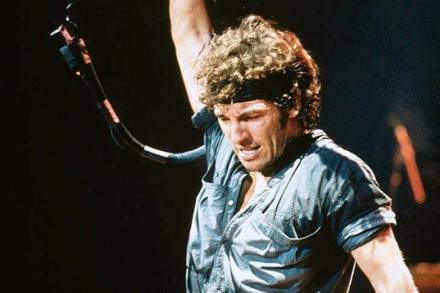
Bruce Springsteen promised that he was 'Born To Run', and now, like Judy Garland and Ethel Merman before him, he is running on Broadway—and running, and running. From last October to early February, the workingman’s tribune performed five nights a week at the Walter Kerr Theatre, his tools a piano, an acoustic guitar, and a harmonica in a daft neck brace. Today, he unpacks his faux-garagiste stage wear for another sixteen-week run. 'I’ve had a long writing life,' Springsteen ruminated in the New York Times, 'and over those years I’ve set out a certain set of values. And the best you could do at the particular moment was just to find a show that expressed those things as best I could.

Is Jared Kushner’s power really waning?

It was always ridiculous that Jared Kushner, an amiable 37-year-old who had no diplomatic, political or military experience, should have had top-level ‘SCI’ security access as a senior member of the White House — just because he happened to be the President’s son-in-law. Well now, he’s been downgraded, as Politico reports. He continues to have 'secret level’ access, which is still pretty silly when you think about it. But the downgrading signals that Kushner, who just a few weeks ago was still thought to be the supreme power in the White House, is losing influence. It also suggests that General John Kelly, Trump’s chief of staff, is taking further charge of international affairs.

The unstoppable gun reform lobby

He did not address how he might respond to the inevitable debate that will now consume America over the legality of assault weapons. Again, here he differs from Obama, who for instance used his speech in the wake of the Umpqua Community College shooting in Oregon to make an appeal for what he called ‘common-sense gun legislation’. The irony, however, is that whereas Obama consistently fell short in his attempts to ban what he called ‘weapons of war’ and establish tighter legal controls of who can buy guns, Donald Trump might now succeed. The 45th president has so far flip-flopped on the banning of assault weapons – as he has on other culture-war issues such as abortion and gay marriage. In 2000, he said, ‘I support the ban on assault weapons.

Trump’s polls slump is yuge

With the drop in his poll ratings to around 35 percent, Donald Trump faces a fresh peril. A further erosion in his numbers would threaten his ability to maintain his hold on a Republican Congress that he desperately needs to ward off the threat of impeachment. His old fighters from the primary campaign such as Corey Lewandowski have been urging him to cut loose as he did this past weekend at the annual meeting of CPAC. Their credo is ‘let Trump be Trump.’ But that would likely be a recipe for disaster. Trump’s popularity is sagging because he has been visibly floundering in recent weeks, from his mismanagement of his side Rob Porter, who was accused of beating several wives, to serial national security clearances for a variety of other aides.

Citizenship is dead

Once in a while some Socialist Worker people set up a stall outside my local Tesco to shout slogans at the progressive middle-class folk who make up much of the local demographic. One of the phrases I’ve heard them use is ‘Refugees welcome! Tories out!’ which is great and everything, except – what if the refugees are Tories? But then there are Sacred Groups and Out Groups, and each has their role to play in the modern morality play that is leftist politics. Ideological tribalism is the subject of a new book by Yale’s Amy Chua, who argues that politics has replaced national or religious identity as a source of division.