Ukraine

The great folly of US-Russia misunderstandings

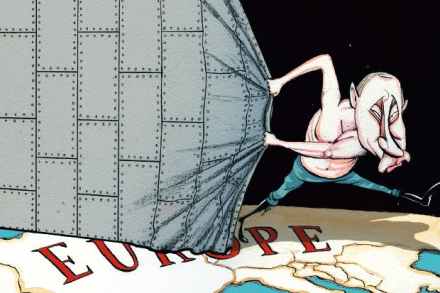
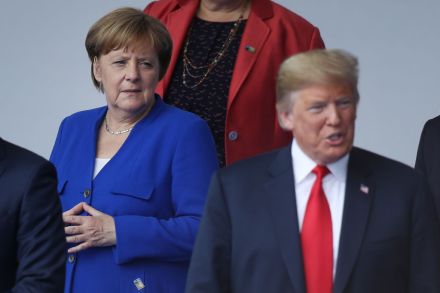
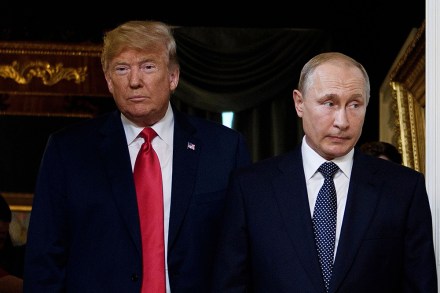
Vladimir Putin is not nearly as clever as American liberals like to believe. His meddling in the 2016 election backfired, after all — spectacularly. The Kremlin did not expect Donald Trump to win, just as no one in Washington did. If Trump had lost, the Kremlin’s gambit would have paid off: stolen emails would have damaged America’s newly elected president as she faced a hostile, Republican-controlled House and Senate. She could hardly expect cooperation from them on Russian sanctions or anything else, and the GOP could be counted on to react to another Democratic administration by adopting an oppositional foreign policy.
us-russia

Ukraine’s President prepares to go out in style

From our UK edition

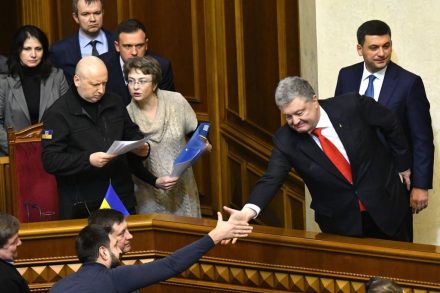
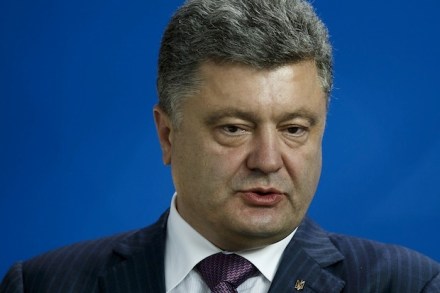
If, as looks likely, Petro Poroshenko loses his bid for re-election as President of Ukraine, he will have gone out in style. On Saturday night, the eve of the vote, his home town staged a huge public concert at the venue he created and sponsored: a state-of-the-art sound-and-light fountain complex just a short walk along the bank of the River Bug from one of the two big confectionary factories his company operates here. There were bands and spectacular waterworks, and, like much that Poroshenko’s company, Roshen, sponsors, it all had a distinctly wholesome, rather American, family air. Through the morning, cleaners wielding brooms were sweeping every inch of every step in preparation for the extravaganza.

The fall of Paul John Manafort Jr.

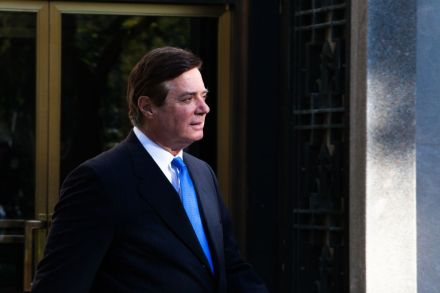
Today was supposed to be the big, final day in court for Paul John Manafort Jr., the once-flamboyant political maven and ostrich jacket-wearer turned convicted felon. For decades a controversial character in our nation’s capital, Manafort capped his career in politics as campaign manager for Donald J. Trump from March to August of 2016, the pivotal period when MAGA exploded and Trump seized the GOP’s nomination against the hopes and expectations of Republican elites. The rest, we know. That capstone would prove to be Manafort’s downfall. It’s not like there weren’t portents of a grim ending ahead. Nobody had recently considered Manafort to be any sort of Republican A-lister. His last major campaign before Trump’s was Sen.

paul manafort

Apocalypse Dau

From our UK edition

Dau is not so much a film as a document of a mass human experiment. The result is dark, brilliant and profoundly disturbing. For three years up to 400 people, only one a professional actor, lived for months at a time on a city-sized set specially built for the shoot near Kharkov, Ukraine. Modelled on the real Kharkov Institute of Experimental Physics between 1938 and 1968, every detail on the set was scrupulously in period, from the light fittings to the lavatory paper. The participants — who included a real-life Nobel Prize winner and famous orchestra conductor as well as real former KGB and prison officers — were required to live in role 24 hours a day, eating Soviet food, wearing Soviet underwear and undergoing Soviet-style total surveillance.

Bullets across the strait

From our UK edition

On Europe’s eastern borderlands, trouble is brewing. Two headstrong leaders — Vladimir Putin and his Ukrainian counterpart Petro Poroshenko — both with authoritarian tendencies and both facing sagging popularity at home, have swapped trading insults for exchanging bullets across the Strait of Kerch. The frightening truth is that war would suit both presidents’ short-term interests. Poroshenko faces re-election in March, and with his ratings running at 15 per cent he stands little chance of victory without a nation-uniting conflict to boost his standing.

Putin turns up the heat on Ukraine – again

Although seldom noticed by anyone west of Warsaw, there has been a war going on in Europe for almost five years now. It began in early 2014 with a Russian secret operation in mid-February that annexed Crimea and soon spread to overt Kremlin military intervention in eastern Ukraine as well. Serious fighting followed, and that conflict remains unfrozen and deadly. While there has been no sustained combat in eastern Ukraine in years, neither is that front quiet. Kiev has never accepted the Russian theft of Crimea and the ‘people’s republics’ in Donetsk and Luhansk, Kremlin-run pseudo-states that serve as bases for Russian military units on Ukrainian soil. Those units regularly shell Ukrainian positions, because they can.

petro poroshenko ukraine

Why Russia – and Putin’s – weakness should terrify us

From our UK edition

A Russian ship has just rammed a Ukrainian vessel, opened fire on it and captured its sailors. Ukraine has called it an act of war, and legally it may be right. But more than this the act reveals the nature of the true Russia. At this year’s Helsinki summit, some were aghast at how subservient Donald Trump appeared to be toward Vladimir Putin. His behaviour was seen as treasonous and supposedly pointed to the power Russia now wields. For the alt-right, Putin is seen as a model – a “strongman” who is making his country great again. Meanwhile, the Democrats see an all-powerful Russia behind everything. And there is a similar narrative about Russian meddling in the 2016 Brexit referendum. All of this could not be further from the truth.

Britten’s Blackadder moment

From our UK edition

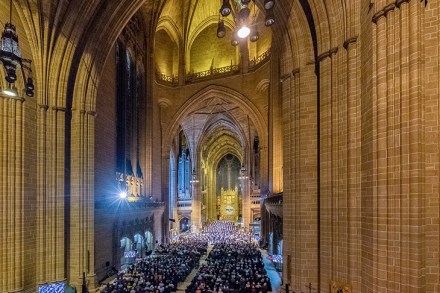
‘What passing-bells for these who die as cattle?’ We’ve heard a lot, lately, of the knell that tolls through the opening bars of Benjamin Britten’s War Requiem, and at Liverpool’s Anglican cathedral it was played on actual church bells. The Royal Liverpool Philharmonic Orchestra’s percussionist Graham Johns has had a set specially cast, and as he struck them video screens relayed the moment all the way down the cathedral’s length. The orchestra was a one-off, assembled half-and-half from the RLPO and the NDR Radiophilharmonie Hannover (the conductor Andrew Manze holds positions in both cities), and this was a major civic occasion, attended by gold chains of all sizes and preceded by speeches from city worthies.

Donald Trump is wrong about Germany being a ‘captive’ of Russia

From our UK edition

"What good is Nato if Germany is paying Russia billions of dollars for gas and energy?" tweeted Donald Trump on 11 July. Trump was surely referring to Nord Stream 2, the controversial deal between Russia and Germany, whereby Russia will pump natural gas direct to Germany through a new pipeline across the Baltic Sea. Trump reckons such arrangements make Germany a 'captive' of Russia. Is he right? America isn't the only country that's getting hot and bothered about Nord Stream 2. Denmark and the Baltic States have also voiced concerns. The most vociferous opponent of the scheme is Ukraine.

When voters lose faith

From our UK edition

If social media manipulation has influenced elections, and dark money has influenced our elected representatives, then we are already on the road to unfreedom, as Timothy Snyder, the well-known historian of Russia, argues in his new book. He sees threats to democracy in Europe and America as following the Russian model of oligarchic takeover: ‘The stabilisation of massive inequality, the displacement of policy by propaganda, the shift from the politics of inevitability to the politics of eternity.’ Snyder focuses on the Ukrainian crisis, noting how this conflict became a theatre of cultural memory: during the Russian invasion it was once again 1941, the enemies were Nazis, and tanks were even painted with slogans such as ‘For Stalin’.

The democracy delusion

From our UK edition

Andrés Sepúlveda sleeps behind bombproof doors in a maximum-security prison in central Bogota, Colombia. When travelling to judicial hearings or to meet prosecutors, he is accompanied by a caravan of armed guards with serious firepower. As they move at high speed through the capital, the motorcade uses sophisticated equipment to jam mobile phones to lower the risk of a coordinated assassination attempt. Sepúlveda is one of the world’s most notorious election-rigging specialists. Now that he has been caught and put in jail, he is helping atone for his crimes by explaining how he fixed elections — and the people he used to work with want him dead. But Sepúlveda isn’t the only specialist in this field.

Massacre of the innocents

From our UK edition

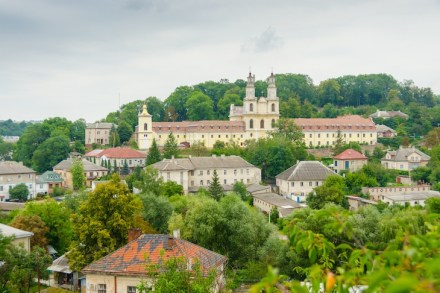
I thought I knew the history of the years 1914 to 1945: the first world war and the terrible casualties in the trenches; the second world war and the German conquest of Europe; day and night bombing; Stalingrad and the Holocaust. But I’m embarrassed to say that I knew nothing about the tragedy in Galicia in Eastern Europe. Unlike the Nazi genocide, much of the killing took place between neighbour and neighbour: Jews, Poles and Ukrainians destroyed each other with increasing ferocity and brutality between 1914 and the 1940s. The beautiful city of Buczacz in Eastern Galicia, with its Roman Catholic, Greek Orthodox and Jewish shrines, ended as a gigantic ruin.

Dancing queen

From our UK edition

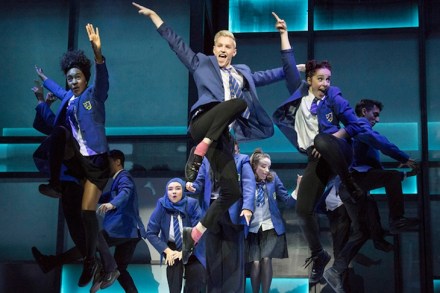
Everybody’s Talking About Jamie opened at the Sheffield Crucible in February for a standard three-week run. The show is based on a BBC documentary, Jamie: Drag Queen at 16, about a working-class lad who attended his school prom in a scarlet frock. Director Jonathan Butterell saw the potential to create a replica Billy Elliot and he brought in two co-writers to turn the material into a comic musical. Word of mouth was excellent and the show received immediate offers for a West End transfer. The action starts in a Sheffield comp where a class of 16-year-olds are being given career advice by a computer. Blond misfit Jamie is encouraged to train as a forklift-truck driver. But he has other ideas. With his mum’s help he sets off in search of his inner self as a gender-fluid diva.

The revolution devours its children

From our UK edition

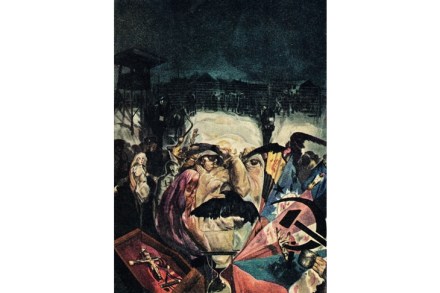
He stood five feet seven in his boots — the same height as Napoleon and an inch shorter than Hitler. He had webbed toes, a grey face pitted by smallpox, a stunted arm, soft voice, yellowish eyes and an awkward rolling walk. He swore like a trooper, smoked a pipe, drank the sweet wines of his native Georgia, and was an avid reader of history, novels and Marxist-Leninist theory, marking the pages of the 20,000 books in his library with expletives scrawled with the same coloured crayons with which he signed mass death warrants and international treaties: ‘Rubbish!’, ‘Piss off!’, ‘Fool!’, ‘Scumbag!’, ‘Ha-Ha!

Navigating a new world

From our UK edition

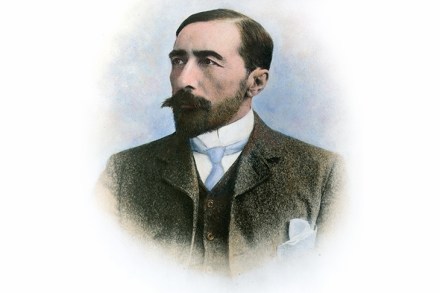
In the 1890s, when British-owned ships carried 70 per cent of all seaborne trade, legislators worried about the proportion of foreigners who served in their crews; which could top 40 per cent. Their worry is not surprising, given the verdicts gathered from British consulates in port cities on the native seaman: ‘drunk, illiterate, weak, syphilitic, drunk, dishonest, drunk…’ In 1894, a parliamentary committee interrogated officers about manning and skills in the merchant marine. One informant was a British-naturalised master ‘with 16 years’ experience’. The MPs, who didn’t presume to ask this expert witness specifically about foreign crews, recorded his name as ‘Mr J. Conrad Korzeniowski’.

The Spectator Podcast: Brexit Wars

From our UK edition

On this week's Spectator Podcast we look at the final Brexit war amongst the Conservatives. We also discuss the maverick politician taking Ukraine by storm, and get on the blower with Blowers. First up, with a 4,000 word intervention by Boris Johnson doing the rounds this week, ahead of Theresa May's pivotal Brexit speech in Florence, the Conservatives look more divided than ever on the European question. Will it be EEA minus or CETA plus? Or are we headed for an even more mongrel departure? These are the questions James Forsyth asks in this week's cover piece, and he joins the podcast along with Henry Newman, director of Open Europe. As James writes: "The time for choosing is fast approaching for Theresa May.

Books Podcast: Stalin’s war on Ukraine

From our UK edition

In this week’s Books Podcast I talk to the Pulitzer Prize winning historian (and former Spectator deputy editor) Anne Applebaum about her devastating new book Red Famine. The early 1930s in Ukraine saw a famine that killed around five million people. But fierce arguments continue to this day whether the “Holodomor” was a natural disaster, or a genocide perpetrated by Stalin against the people and culture of Ukraine. I ask Anne about what we now know of what actually happened — and what it means for our understanding of the present day situation in the former Soviet Union. You can listen to our conversation here: And if you enjoyed that, please subscribe on iTunes for a new Spectator Books podcast every Thursday.

Ukraine’s last best hope

From our UK edition

You have to hand it to Mikheil Saakashvili: the man doesn’t give up. After a tumultuous nine years as president of Georgia, which began with a furious anti-corruption purge, culminated in a short but disastrous war with Russia in 2008 and ended with accusations of embezzlement and authoritarian practices, he is determined to return to power — not in his own country, but in Ukraine. Saakashvili is brilliant and divisive. His many fans, principally drawn from the educated and the young of Georgia and Ukraine, see him as exactly the kind of clear-thinking, fearless leader who can sweep away the tangle of cronyism that has turned most former Soviet states into kleptocratic autocracies.

The hunger

From our UK edition

In 1933 my aunt Lenina Bibikova was eight years old. She lived in Kharkov, Ukraine. Every morning a polished black Packard automobile would draw up to the door of the handsome pre-revolutionary mansion her family shared with other senior Party cadres to take her father to his job as Party boss at the Kharkov Tractor Factory. When he returned in the evening her father would be carrying bulging packets of sausages and meat from the factory canteen. Lenina did not remember wanting for anything. Yet in reality Kharkov, like all Ukraine’s cities in that terrible year, was an island of plenty in a sea of starvation. All over Ukraine millions of peasants were dying of hunger in a massive, man-made famine deliberately unleashed by the Soviet state.

Ukraine’s slow war of attrition still rumbles on

From our UK edition

Towns on Ukraine's ceasefire line are marking three years since some were retaken by government forces from pro-Russian separatists. But there is little cause for celebration: houses in Marinka, Krasnogorovka and Avdiivka bear the scars of war. Some of these scars are recent, including a large house with nine apartments that was destroyed in shelling in late July. The war in eastern Ukraine is a forgotten conflict in many ways. It is talked about as “frozen” or “hidden” yet there is little recognition that the fight is still rumbling on. Unlike Bosnia or the border between Georgia and the breakaway statelets of South Ossetia and Abkhazia, eastern Ukraine witnesses dozens of exchanges of fire a day.