Ukraine

J.D. Vance makes nice with Munich

It was an emollient J.D. Vance who showed up at the Munich Leaders Meeting in Washington, DC. Gone was the Vance who dissed the Europeans in Munich on February 15 by complaining that they were practicing censorship of political views and who met with a representative of the far-right Alternative für Deutschland party. Gone was the Cerberus who barked at Ukrainian President Volodymyr Zelensky on the Oval Office on February 24 that he had exhibited a dismaying lack of gratitude toward America for its assistance to his beleaguered nation. Gone was the Ohio senator who declared in July 2024 that he didn’t give a fig about Ukraine’s fate and was more interested in pursuing an Asia First policy.

jd vance
biden russia

Biden has learned nothing from his foreign-policy experience

Historically, ex-presidents spend their golden years on the speaking circuit, writing their memoirs or planning for the inauguration of their presidential libraries. What they don’t do is lash out at their successors when they disagree with a policy or decision. Joe Biden, however, has no intention of keeping quiet. A little more than three months after vacating the White House, Biden is unencumbered from conventional decorum and feels free to speak his mind. Last month, he gave his first post-presidency speech in Chicago, where he blasted the Trump administration for taking a sharp hatchet to the federal workforce, including the Social Security Administration.

Security-consumed Prince Harry chooses war-torn Ukraine as latest backdrop

Prince Harry’s clandestine dash to Ukraine this week, trailing last year’s faux royal tours to Colombia and Nigeria, lays bare a brazen hypocrisy. He bangs on about the UK being too perilous for his family, waging legal crusades over security provisions, yet here he is, swanning into war zones and countries with travel warnings, trading on his fading royal luster to clutch at relevance – all while dodging the duties he willingly jettisoned. Bereft of official standing in America or Britain, his quest to play maverick royal smacks of pantomime, one that jeers at his claims of craving a secluded, secure existence. Take his Ukraine jaunt to Lviv’s Superhumans Center, where he mingled with wounded soldiers and civilians.

My DC bunker

Washington, DC My office this week has been the Starbucks on Capitol Hill. Any random subscriber to my Substack can get a half-hour with me if they book a slot. I do this a lot when I travel and oddly, given the rot of this rotting world, I rarely come away with the feeling that here were 30 precious minutes I’ll never see again. I often want to spend an hour or two. And no one yet has killed or even attacked me. A leftist policy wonk did show up without an appointment, but he just wanted to talk about Ezra Klein. One of this week’s characters was a Russia expert at a foreign policy thinktank, who seems to really know his stuff. He filled in important nuances ofthe Prigozhin coup. Yevgeny Prigozhin never meant to overthrow Vladimir Putin, he said.

curtis yarvin dc
nightmaring

Play Putin at his own game by ‘nightmaring’ his world order

There’s a delicious Russian verb that derives from the criminal underworld: “koshmarit,” literally “to nightmare someone.” It usually denotes how authorities give criminals, or anyone they dislike, so much relentless hassle from so many different angles they bend them to their will. Vladimir Putin, always keen to bring mafia language into politics, was the first Russian statesman to make use of it in public – he once instructed his authorities to stop “nightmaring” the business community. I keep returning to that word when I think of how Putin’s own foreign policy could be restrained to make real the Reaganite slogan that helped Donald Trump win the election: “peace through strength.

Donald Trump, Putin and the Concert of Arabia

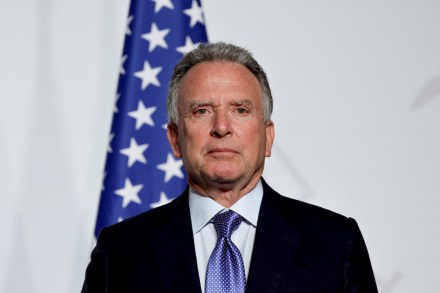
For Donald Trump and Vladimir Putin, it’s a case of “Today Ukraine, tomorrow the world.” In their much-hyped phone call this week, the Russian leader didn’t seem to give much away: a step toward a sort-of ceasefire, a prisoner swap, and a few other odds and ends. But Putin knows that Trump wants much more than just an agreement on the Donbas. Settling the most significant conflict in Europe since World War Two is merely a prelude to a much bigger deal in the Holy Land — a truly historic arrangement that could fulfill Trump’s desire to be seen as a legendary peacemaker. That’s why Trump sent Steve Witkoff, his special envoy to the Middle East, to Moscow last week to pre-negotiate with Putin.

putin

Trump’s foreign policy isn’t unprincipled

"He [Donald Trump] sees American leadership as merely a series of real estate transactions." That was the verdict of the Democratic senator Elissa Slotkin following the President’s address to Congress. Trump 2.0 does, admittedly, have the appearance of a political version of The Art of the Deal, in which the Donald is prepared to leverage a bilateral compact with every country in the world — so long as the price is right. There are no friends in The Art of the Deal, no permanent friends anyway, only prospective business associates. Ukraine wants the flow of armaments to resume? Sign over the rights to half your natural resources.

Trump

The problem with putting US nukes in Poland

Nuclear weapons are becoming a major issue for Poland. One way or another, both the Polish president and prime minister want their country to host tactical nuclear weapons as a deterrent against President Putin’s Russia. In the latest — but by no means the first — statement on this issue, President Andrzej Duda revealed that he recently discussed stationing American tactical nuclear weapons in Poland with Keith Kellogg, the US special envoy for Ukraine. In an interview with the Financial Times, Duda said: “I think it’s not only that the time has come, but that it would be safer if those weapons were already here.

Will Putin give peace a chance?

At a summit meeting in Moscow, Ronald Reagan was asked about his basic approach. He famously answered, “Here’s my strategy on the Cold War: we win, they lose.” Vladimir Putin has the same strategy for Ukraine. That is certainly his first response to President Trump’s offer to mediate an end to the war and bring a reluctant Ukraine to the negotiating table. If “we win, they lose” is Putin’s final response, then the war cannot end without Ukraine’s surrender or Russia’s collapse. Putin’s initial reply, filled with his maximalist demands, indicates he is still committed to the conquest of his neighbor, whose independence and sovereignty he has long rejected.

putin

‘I had two jobs: to run the country and to survive’: an interview with President Trump

From the moment you enter Donald J. Trump’s Oval Office, you are surrounded, not by staff or Secret Service, but by presidents. In his second term, he has chosen to envelop himself in Americana to an unprecedented degree. He faces Franklin D. Roosevelt whenever he sits at his desk. Looking back are Teddy Roosevelt, Lincoln, McKinley, Polk, Jackson, Jefferson, and alone among them as a non-president, Franklin. Ronald Reagan looks over his shoulder for every decision he makes. “We took them out of the vaults. We have incredible vaults of things,” he tells me. “They have 3,900 paintings.” It’s a roster of the greatest American leaders assembled in an oval around him in their most sterling depictions. They serve as motivation.

Why Putin could reject a ceasefire

With all the good news coming out of the Jeddah talks about a 30-day ceasefire in Ukraine, there’s only one question that needs to be answered: Will President Putin be interested in any kind of deal right now? President Trump is convinced that Putin wants peace. But if the Russian leader truly wants to end his war, will he do so on America’s terms, or will he wait until he achieves one of his main objectives — the total subjugation of the four provinces in eastern Ukraine that he claimed to have annexed in the first seven months of the invasion? At a ceremony in St. George’s Hall at the Kremlin in September 2022, Putin declared that Russia now had four new regions: Donetsk, Luhansk, Kherson, and Zaporizhzhia.

Putin

Freedom of speech in the UK is very, very under threat

With all the transatlantic back-and-forth over Ukraine, and J.D. Vance’s contentious remarks on Fox News about some “random country that hasn’t fought a war in thirty or forty years,” it’s easy to forget that just three weeks ago, the vice president gave a landmark address about free speech in Europe and Britain, in particular. Last week, when Keir Starmer visited Washington, DC, Vance raised his concerns more directly with the prime minister about “infringements on free speech … that affect American technology companies and by extension American citizens.

Why Europe needs to take the Putin threat more seriously

Russia’s war on Ukraine presages a dire future for all of Europe unless Vladimir Putin’s military is decisively defeated. That is the powerful and persuasive argument advanced in Keir Giles’s new book. To appreciate fully the importance of his contentions, you must acknowledge not only Giles’s own status as a supremely well-connected senior fellow at the famed Chatham House think tank in London but even more so the all-star cast of international military luminaries who have publicly endorsed his analysis: the now-retired US generals John Allen and Ben Hodges, UK general David Richards, Australian general Mick Ryan, plus former Estonian president Toomas Hendrik Ilves. Giles’s assertions thus should be taken with the utmost seriousness.

Giles

Will Trump’s pause of Ukrainian military aid force Zelensky to the negotiating table?

The decision couldn’t have come as a surprise to Ukrainian president Volodymyr Zelensky. And if it did, then his capacity to read the room is even worse than imagined. Last night, the Trump administration paused all US military aid to Ukraine. The move came after an extremely tumultuous few weeks, which started on February 19 when Zelensky claimed that Trump was living in a Kremlin-orchestrated disinformation bubble. Trump wasted no time howling back by calling Zelensky a dictator because he canceled elections during a time of war. The spat accelerated on Friday, when the two men, egged on by Vice President J.D.

ukraine military aid pause

Against suit shaming

Most of the people in my feed spent their weekend talking about how ashamed they are of their country. That’s a sentiment I don’t share. But a very specific shame was still very much on my mind because of the Trump-Zelensky press conference: suit shaming.   The suit shaming of President Zelensky started as soon as he arrived at the White House looking like one of the henchmen from Anora. As Zelensky stepped from an SUV, Trump commented on his outfit: “He’s all dressed up today,” a power-player rhetorical cue to make Zelensky appear poor and small.   At the press conference, the media itself got in on the suit-shaming.

suit shaming

All along Trump’s aim has been to dispose of Zelensky

So much for the flurry of visits by European leaders such as French president Emmanuel Macron and British prime minister Keir Starmer this past week to placate, prod and persuade President Donald Trump to back Ukraine in its struggle against Russia. Kyiv’s lonely battle to retain its sovereignty just got a little bit lonelier as Trump, Vice President J.D. Vance and Ukrainian president Volodymyr Zelensky quarreled during a televised meeting in the Oval Office.   The president and his deputy disrespected Zelensky by telling him that he was being “disrespectful.” It ended with Zelensky being dismissed from the White House, a canceled press conference and the mineral deal with Ukraine in a state of inanition.  https://www.youtube.com/watch?

zelensky
ukraine zelensky white house

Zelensky’s White House visit goes off the rails

An astonishing flare-up in the White House between President Donald Trump, Vice President J.D. Vance and Ukrainian president Volodymyr Zelensky appears to have thrown any Russia-Ukraine peace deal — or US-Ukraine mineral deal — into jeopardy. Trump met Zelensky at the door of the White House where he gave reporters a thumbs up ahead of his arrival. However, the mood quickly turned sour when they sat down for initial remarks ahead of talks and a press conference where the pair were expected to sign the US-proposed minerals deal with Ukraine. Sat in the Oval Office, Trump was accompanied by key members of his team including J.D. Vance and Marco Rubio.

trump interview

The Spectator’s interview with President Trump: full transcript

The following is an edited transcript of Ben Domenech's exclusive sit-down with Donald Trump — the president's first magazine interview since his return to the Oval Office. The full article will be published in The Spectator’s April edition. You can also listen to it here: https://audioboom.com/posts/8662219-the-donald-trump-interview BEN DOMENECH: The change that you've done this time in terms of your approach... the speed is the only thing people in this town can talk about. They can't believe that you have put the fear of God into bureaucrats and Eurocrats so quickly. And I just wonder, what is it that you learned from the last time around that maybe factored into how rapidly you started moving when you got back in? PRESIDENT DONALD J. TRUMP: So the last time...

Trump holds first Cabinet meeting

The Cabinet Room was packed. President Trump sat in the middle of the full oblong table. On his right was his secretary of state, Marco Rubio, who was voted in unanimously by the Senate; on his left a newcomer to politics, secretary of defense Pete Hegseth, whose appointment only passed the Senate thanks to the deciding vote of Vice President J.D. Vance. Vance was directly opposite the president — and crowded between the VP and the back wall were several journalists equipped with microphones and cameras, leering over Trump’s appointees.In his introductory remarks, Trump said he was reelected to cut taxes, handle the border and balance the budget. He reaffirmed that his mandate to accomplish these tasks came from the US electorate.

DoGE’s Office Space efforts delayed by some

The federal government is not becoming Office Space — yet.The Elon Musk-led effort to require all federal government employees to report back with what exactly they do here was met with pushback from throughout the administration, including from several of President Trump’s new appointees.The Office of Personnel Management’s email, with the subject line, “What did you do last week?” mirrors how Musk has operated companies he owns, like Twitter/X, where he asked similar questions.OPM’s moves came after Trump issued an ultimatum on Truth Social for Musk to double-down on his aggressiveness with the efforts of the Department of Government Efficiency (DoGE), which many thought might not be possible. For some, the measures are a bridge too far.

pencil free trade