Ukraine

Will Biden’s Ukraine visit matter?

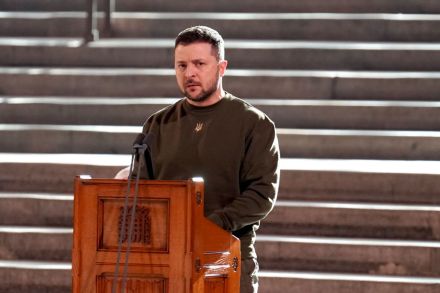
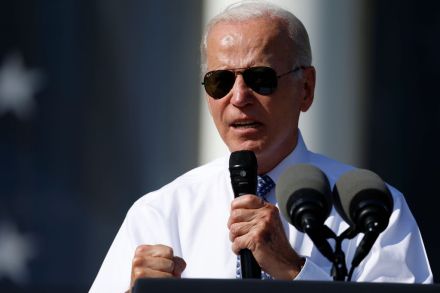
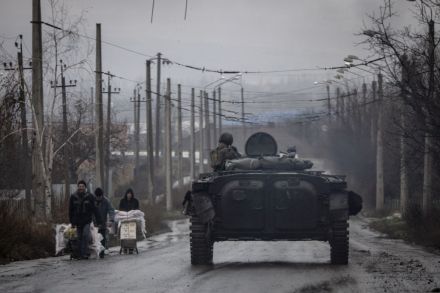
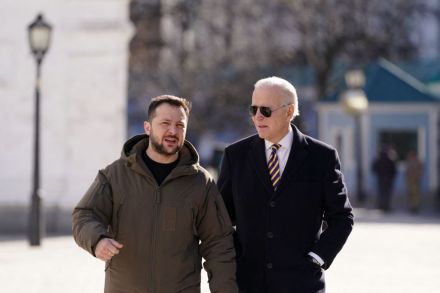
Kharkiv, Ukraine President Joe Biden on Monday showed the world that, as Volodymyr Zelensky said in his London speech two weeks ago, we do not need to be afraid of Moscow. Or maybe we don't need to be afraid so long as Biden is on Ukrainian soil. As I write this, Biden's train has likely crossed into Polish territory, and, on cue, the air-raid alarms are wailing across all of eastern Ukraine. No one I know in Ukraine, where I’ve been since the pandemic and throughout every minute of this war, thinks that Biden's visit accomplished something magical. But it did serve a crucial purpose: boosting the spirits here, amid a week full of warnings that Moscow will do something awful.
China is playing the long game over peace in Ukraine

From our UK edition

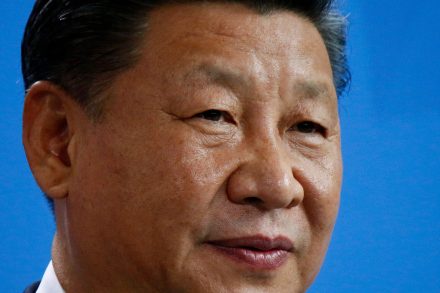
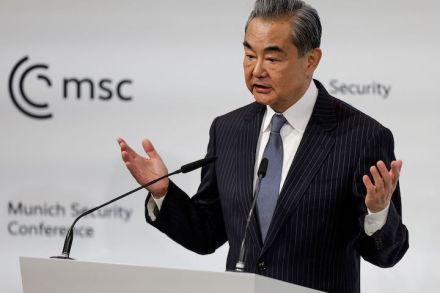
At the Munich Security Conference over the weekend, China’s foreign minister Wang Yi announced that his country was currently in consultations with ‘our friends in Europe’ over the framework of a peace proposal for Ukraine. It is to be laid out in full by President Xi Jinping on the first anniversary of Vladimir Putin’s invasion – 24 February. Beijing’s peace initiative would, said Wang, underscore the ‘need to uphold the principles of sovereignty, territorial integrity and the UN Charter’ but at the same time ‘respect [the] legitimate security interests of Russia’. On the face of it, it appears that Beijing is not saying anything new.

The West shouldn’t underestimate Russia in Ukraine

From our UK edition

Russia’s winter offensive appears to have begun with a decidedly underwhelming series of operations in the Donbas. So far results have ranged from grinding and very costly victories in the towns of Krasna Hora and Soledar, to an outright disaster at Vuhledar where most of Russia’s 155th Naval Infantry Brigade was destroyed, and its commanding officer killed, after becoming stuck and then fixed by artillery fire in the middle of recently re-laid Ukrainian minefields.   Meanwhile, a long-running operation by Wagner mercenary troops to take the partially encircled town of Bakhmut continues, and Russian forces are making probing attacks as far north as the Russian border near Kharkiv oblast and as far south as Zaporizhzhia oblast.

Will Biden finally go to Ukraine?

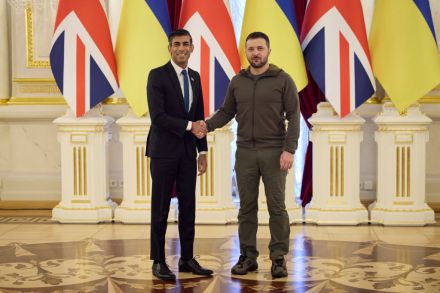
President Joe Biden’s administration has announced that he will be crossing the pond to Poland on February 20 through 22, just days before the one-year anniversary of Russia’s Ukraine invasion. Cockburn finds the dates curious — and wonders if the president will make a surprise visit to the epicenter of the conflict on the anniversary itself. The scheduled trip looks like it will already be a busy one, meeting with American allies in the region and reasserting Washington’s “unwavering support for the security of the Alliance.” The real kicker will be if Biden makes his way to Kyiv and meets Zelensky, ending the unfortunate distinction of him being one of the few Western leaders yet to travel to Ukraine.

biden blinken blob war syria iran ukraine hamas

The real reason Zelensky wants the West’s jets

As the battlefront news for Ukraine turns grim, with even the New York Times conceding that “Ukrainians in [the] East” are “outnumbered and worn out,” the hope, as usual, is that a magic weapon will save the day. We have seen many such invocations in the last twelve months: Javelin anti-tank missiles, Stinger anti-aircraft missiles, M777 Howitzers, HIMARS long-range precision missile launchers, assorted Western tanks. All have been hailed in their time as potentially tipping the balance against Putin’s hordes. None have succeeded, or, in the case of as yet undelivered tanks, are likely to succeed, in altering the fundamental military balance in the war, though they contribute much to the balance sheets of the relevant Western arms corporations.

joe biden optimism jets

How Pink Floyd drama erupted over global politics

The author and lyricist Polly Samson did not mince her words earlier this month when she attacked the musician Roger Waters on Twitter. She described him as “anti-Semitic to your rotten core. Also a Putin apologist and a lying, thieving, hypocritical, tax-avoiding, lip-synching, misogynistic, sick-with-envy, megalomaniac.” She ended with “Enough of your nonsense.” Not only did her husband, Pink Floyd singer and guitarist David Gilmour, retweet her attack on his former bandmate, he added, “Every word demonstrably true.” Waters’s response was to tweet, with appropriate pomposity, “Roger Waters is aware of the incendiary and wildly inaccurate comments made about him on Twitter by Polly Samson which he rejects utterly.

Zelensky touches off a revolution in London

Kharkiv, Ukraine Wednesday, the morning after Russia sent six long-range missiles into the center of Ukraine’s second city, I went for a run in snow-covered Gorky Park listening to the music of the German band Scorpions: “Down to Gorky Park, listening to the wind of change.” Scorpions were singing about a park of the same name in Moscow but I wanted to hear that song here in Kharkiv. When that song was released in 1990, the Soviet Union was breaking up. There was so much hope. Ukraine and other nations that had lived under the Iron Curtain began the process of finding freedom, happiness, possibility. But Russia? Ah, I thought as I ran past the fresh crater of a Russian missile in Kharkiv’s Gorky Park, what happened to Russia? What happened to that “wind of change"?

Biden’s strategy-free SOTU

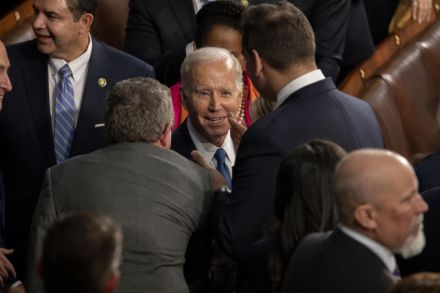
Biden delivered a strategy-free State of the Union The loudest line of Tuesday’s State of the Union was ad-libbed. “Name me a world leader who’s change places with Xi Jinping,” he shouted in a departure from his prepared text. “Name me one, name me one.” There may not have been a Chinese spy balloon drifting above the United States as Biden was speaking, but foreign policy hung awkwardly over the president’s address. In the wake of a major spat with America’s most powerful adversary and in the longest speech of his presidency, Biden spent about as much time talking about hotel resort fees as he did discussing the US’s relationship with China.

Trump is wrong that the US should negotiate peace in Ukraine

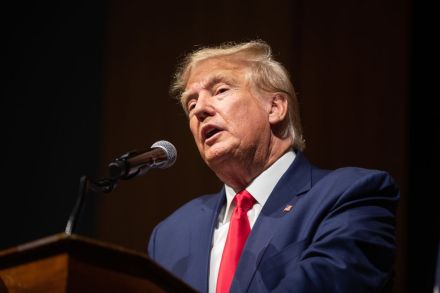
The GOP’s foreign policy doves and soft isolationists have grown stronger, with 40 percent of “Republican and Republican-leaning independents” saying the US is giving too much aid to Ukraine. Former president Donald Trump has now taken up the mantle of this movement, firmly anchoring himself to the anti-Ukraine aid faction of the party. Trump recently gave an interview to radio host Hugh Hewitt in which he made one thing clear: he’s no fan of aiding Ukraine. Asked about sending F-16s, Trump said, “I think the United States should negotiate peace between these two countries, and I don’t think they should be sending very much.” When Hewitt asked if the former president would cut aid to Kyiv, Trump responded, “we’ve got to make peace.

The balloon is a Chinese middle finger to the US

Military fighter jets have just shot down the Chinese Communist Party's gigantic spy balloon that had been hovering about 60,000 feet over the United States. The balloon was "taken care of," to quote President Biden, over the Atlantic Ocean, off the coast of South Carolina. Prior to the maneuver, the balloon drifted, unharmed, over our sensitive military sites and fellow citizens. It lingered there, doing what Chinese President Xi Jinping pleased, while rightfully indignant members of Congress representing those violated states took to press releases and cable TV to demand the federal government secure our sovereign airspace. All of this was no doubt churned back through the CCP's propaganda outlets, smearing America as divided, weak, and foolish.

Are Brits losing sympathy for Ukraine?

From our UK edition

Britons were keen to punish Russia for invading Ukraine. A month into the war, more than half thought we hadn’t gone far enough. That was after the government had frozen the assets of Russia’s banks, banned the Russian airline Aeroflot from landing in Britain, and sanctioned Putin and his cabinet. Voters wanted more sanctions, even if it hurt the economy. Now, though, it seems the public isn’t so sure. Only a quarter of Britons think we should give Ukraine more support, according to a YouGov poll this month. We’ve given it tanks. Should we now send jets? Democratic governments often find it hard to keep up support for war, especially when it entails sacrifices. But history shows that they can slow or stop the decline.

The Baltic nations show the world how to defend freedom

It is not inevitable that the Baltic States of Estonia, Latvia, and Lithuania would be among freedom’s most potent defenders. Nestled between the Russian mainland and Moscow’s exclave of Kaliningrad, their only direct connection to their NATO allies is through the vulnerable Suwalki Gap. For its part, NATO only has small rotational forces stationed in the three countries. At first glance, one would expect these tiny nations (Lithuania is the largest at 2.8 million people) to prefer flying under the radar. Instead they have become some of the most vocal and powerful defenders of the Western way of life. Tiny though they may be, the Baltic countries have managed to stand up to the two greatest enemies of freedom at work today, Russia and China.

Biden is the war president Ukraine needs

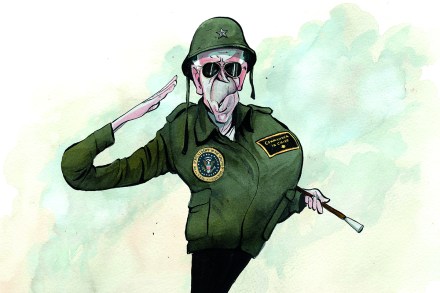
Joe Biden is upping the ante in Ukraine. Even as Vladimir Putin directs a fresh barrage of missiles, Biden is apparently planning a trip to Europe next month to deliver a major address on the anniversary of the Russian invasion and announce a substantial military aid package for Kyiv. Good for him. A speech in Poland or Lithuania — both leaders in the struggle against Russian aggression — will strengthen NATO and demonstrate that a year into the conflict, unity, not dissension, prevails when it comes to confronting Putin’s revanchist ambitions. At every step, Biden has checked Putin, who assumed he could invade and occupy Ukraine in a thrice.

Why Putin needs Prigozhin

From our UK edition

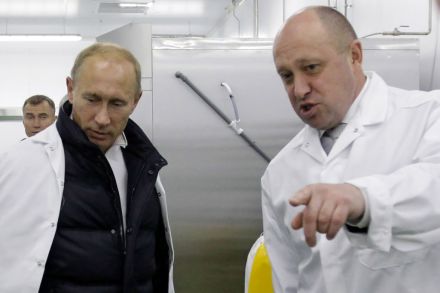
It’s been a tense couple of weeks for Yevgeny Prigozhin, the businessman and founder the of Wagner Group of mercenaries. Russian troops and Prigozhin’s mercenaries have been closing in on the strategic town of Bakhmut in eastern Ukraine, capturing territories around it. On 10 January, Prigozhin boasted that his forces had ‘taken control’ of Soledar, even as fighting continued inside the town and Ukraine disputed the claims. Two days later, Russia’s defence ministry announced that the ‘liberation’ of Soledar was complete. In a separate statement that same day, claiming to respond to various media inquiries, the ministry clarified that the urban territories of Soledar had been captured thanks to the “courageous and selfless actions” of the Wagner Group.

What the US can do about Germany’s hardball on Ukraine

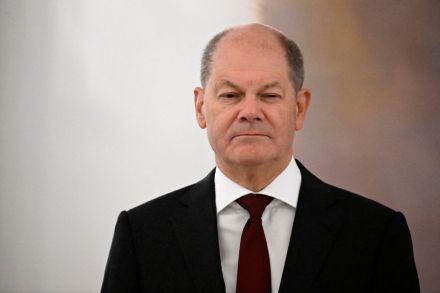
Once again, German Chancellor Olaf Scholz has crushed the hopes of NATO allies and, most of all, the millions of Ukrainians suffering under Russia’s assault. Originally, he refused to send tanks to Ukraine for fear that Russia would escalate the war. More recently, Scholz has said he'd only consider sending tanks if it was part of a coalition, not just Germany acting alone. Last week, the United Kingdom announced it would be sending Challenger 2 main battle tanks (MBT) to Ukraine, making it the first nation to supply modern, Western MBTs to Kyiv. Poland, Finland, and Denmark have also indicated that they would be willing to send their own Leopard 2 tanks. Those are German-origin weapons, so they first require a nod of approval from Berlin in order to export.

Germany’s broken promise to rebuild its military

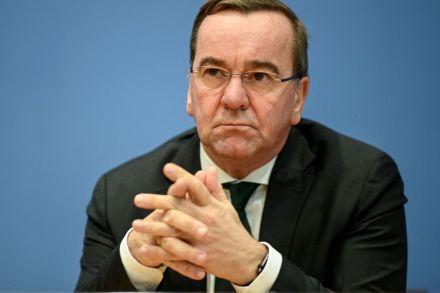
Germany has a new defense minister. The funny thing is that nobody really knows who he is, what he stands for, and whether he’s capable of doing his job. Boris Pistorius will take over the ministry from Christine Lambrecht, whose one-year tenure was about as embarrassing and gaffe-prone as the Bundeswehr itself. There are too many blemishes on her record to examine in a single post — we would be here all day. But one of the more notable misfires was her tone-deaf New Year’s Eve video, where she reminded viewers that a war was going on in Europe as a fireworks display went off behind her. For many in the German defense establishment, Lambrecht’s departure can be summed up in two words: good riddance. Not much is known about her replacement.

Germany’s missteps in Ukraine have left Scholz fighting for his political life

From our UK edition

Difficult though it may be to believe, there is chaos at the top of the German government over its mishandling of the war in Ukraine. Germany’s defence minister, Christine Lambrecht of the Social Democratic party, has quit her post after the most extraordinary series of unforced errors.  The war has brought all of this to a head. It has exposed Europe’s lax security and complacency. But German defence has been in a league of its own for many years. Over the course of the war, there has been no end to the amount of troubling information that has emerged.

Ukraine needs more than tanks

From our UK edition

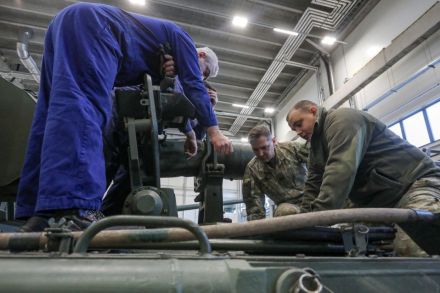
What weapons will Ukraine get next? It’s a crucial question that matters perhaps more than anything else for understanding how the Russo-Ukraine war will end. For the last few months two different systems have received the most attention, systems that Ukraine has asked for almost daily. These are tanks, or MBTs (Main Battle Tanks), the key armoured vehicle of 20th and 21st century land warfare, and ATACMS (Army Tactical Missile Systems), the longest-range ammunition now available for the US-made HIMARS rocket launchers already in Ukraine.  Both are needed for the quickest possible Ukrainian victory in the war, though for now it seems that the first, tanks, are on their way and the other, ATACMS, are still a while away.

How Republican chaos could threaten aid to Ukraine

As the House GOP continues to make a fool out of itself trying to elect a speaker, those watching might be wondering how all of this will impact the war in Ukraine. The group of around twenty Republican lawmakers who have opposed Kevin McCarthy in the (as of this writing) eight votes taken so far for the speakership include some of the most hardline anti-Ukraine-aid Republicans, like Lauren Boebert and Matt Gaetz. A group this small in the House should be nothing more than an annoyance, but the changes they are demanding — and even those McCarthy has conceded to — give them far more power. The most threatening among them is a provision to return to the system whereby one member of the House can launch a motion to vacate the chair, forcing an up or down vote on the speaker.

Putin mentions the war

So much for "don’t mention the war!" Russian president Vladimir Putin has called the conflict in Ukraine a war for the first time on Thursday. Cockburn is quite flummoxed — this is the same Putin who has made an industry out of locking people up who refused to call the war a “special military operation”. On December 22, while addressing the situation in Ukraine, Putin said, “Our goal is not to spin the flywheel of military conflict, but, on the contrary, to end this war.” The irony alone of this statement is too much to handle. The man who invaded his neighbor and disregarded the laws of war is now saying he does not want to “spin the flywheel of military conflict”?

nuclear tactical putin war