Uk politics

Theresa May’s Brexit deal still looks doomed

From our UK edition

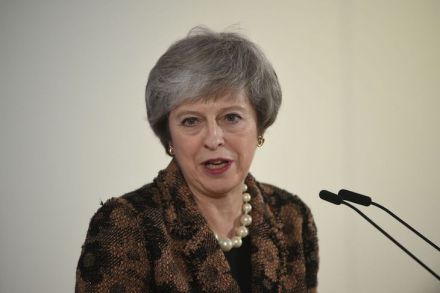
Taking the temperature in Westminster today, it appears that Theresa May doesn’t have much more of a chance of winning the meaningful vote than she did when she pulled it before Christmas. The mood has improved a bit for her deal, but by nowhere near enough for her to pass it. Indeed, interestingly the full bore Brexiteers appear to be embracing ‘no deal’ more firmly than before. Boris Johnson’s Daily Telegraph column today is striking for the willingness with which it embraces no deal, rather than just arguing for a pivot to Canada. I understand that the Government expects the EU’s pre-vote help to come towards the end of this week.

The three scenes from Ch4’s Brexit film that show why Remain lost | 7 January 2019

From our UK edition

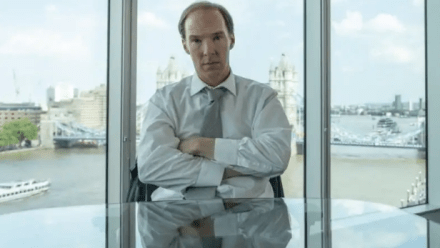
As soon as Channel 4 announced Benedict Cumberbatch had been cast as Dominic Cummings in its Brexit film, a hatchet job was expected. Some might still see it this way. I found it balanced, gripping, and at times funny, even moving. Plenty will be written about which parts were accurate and which not, but this was drama, not documentary. The story it tells is perhaps the most important story of our times: how politicians had become stuck in a late-90s time warp using a Clinton-era playbook, and thought Remain would easily win the referendum. But they lost because politics changes and the new energy was coming from forgotten voters who saw a chance to be counted. And Dominic Cummings, an outsider with contempt for the establishment, spotted this.

The NHS 10-year plan is a metaphor for Theresa May’s government

From our UK edition

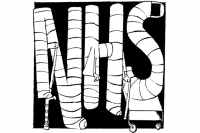
Today's NHS 10-year plan is the health service's response to the £20.5 billion funding boost announced by ministers last year. The Prime Minister is unveiling further details of the plan this morning, with NHS England chief executive Simon Stevens doing his own broadcast tour to sell it. He argues that the plan 'tackles head-on the pressures our staff face' and also 'sets a practical, costed, phased route map for the NHS's priorities for care quality and outcomes improvement for the decade ahead'.

‘Brexit: The Uncivil War’ will please both Leavers and Remainers

From our UK edition

It starts with a balding weirdo locked in a cupboard ranting about mythological abstractions. This is Dominic Cummings, the key figure in Channel 4’s Brexit film, The Uncivil War, and the opening scene is designed to overcome a major hurdle. How to make the audience – half of whom loathe Brexit – feel sympathy for the man credited with making it happen. Trapping him in a neon-lit cell with only his thoughts for company turns him into a tormented martyr. Next we see him being sized up as a potential director of the Leave campaign. Deep in his guts he loathes politicians – and the entire Westminster establishment – especially David Cameron and his communications chief, Craig Oliver.

Benedict Cumberbatch on playing my husband, Dominic Cummings

From our UK edition

Imagine looking at a photo of a stranger and feeling in response, quite naturally, the sort of happy affection you might feel towards a spouse. Well, it’s weird. In July this year, when Benedict Cumberbatch was filming Channel 4’s upcoming Brexit film (Brexit: The Uncivil War) a friend sent me some photos by text message, tabloid snaps from the set. Benedict plays my husband Dominic Cummings, director of the Leave campaign, and the shots were long-lens and hazy: Ben/Dom pushing his son on a swing; Ben/Dom kissing his wife. The real son-of-Dom and I were halfway through our Rice Krispies when the photos came through and I remember how taken aback I was. It’s not that they look alike. ‘We have different shaped heads,’ Cumberbatch tells me later.

New Year, same old May

From our UK edition

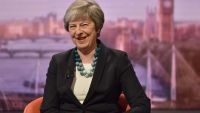
Theresa May doesn’t yet have anything concrete to offer MPs who have concerns about her Brexit deal. On Marr this morning, May repeatedly talked about how she was seeking ‘assurances’ on the backstop. But she clearly hasn’t got them yet. Interestingly, May indicated that the assurances she’s looking for are around a start date for the new relationship; rather than a time limit or clearer exit mechanism. This would mean that the backstop would not be ‘indefinite’ as there’d be a start date for the future trade relationship. However, this approach immediately raises two questions. First, would the future relationship apply to the whole of the UK or just Great Britain?

Theresa May will soon face the decision of her life over Brexit

From our UK edition

The Prime Minister does have a strategy to prevent what she sees as the chaos of a no-deal Brexit. The flaw in it is that the strategy probably has a shelf life of just over one week. Because her strategy is to persuade MPs to back her version of leaving the EU in a vote on 15 or 16 January, and in the words of one of her senior ministers: “I will be shot for telling you this but we are going to lose that vote”. So what then? Well, amazingly, no one around her – not her ministers, not her officials – seem to know. Why not? “She won’t tell us” says a minister. “We go to see her. We give her our ideas about what to do next. She listens politely. She even asks questions. But none of us have a clue whether she agrees, whether she is persuaded.

Will Brexit really hit house prices?

From our UK edition

On any other day of the week the Guardian is – with some justification – complaining about a housing crisis, with millions of young people priced-out of ever owning – or even renting – a decent home. Now, however, it seems to be treating with alarm news that prices are stagnating. 'UK house prices take pre-Brexit hit, says Nationwide' declared a headline this week – followed by news that house prices have, in fact, risen by 0.5 per cent over the past 12 months. That is a lot lower than we have become used to in recent decades, but isn’t it a good thing if rampant house price inflation has come to a halt? And is it really connected with Brexit? The housing market – outside London – never returned to the mania of pre-2008.

Jeremy Corbyn condemns the people of Milton Keynes

From our UK edition

Jeremy Corbyn has a message for the people of Milton Keynes: I condemn you. The Labour leader delivered his criticism at an event in 2011 after voters in the town booted out pro-Palestinian Labour MP Phyllis Starkey. He told the audience: ‘I condemn the people of Milton Keynes for the mistakes that they made in the May election but they will have a chance for (sic) correct their mistakes hopefully in the very near future.’ https://twitter.com/TheGolem_/status/1080886732701253633?ref_src=twsrc%5Etfw Unfortunately at the two general elections since Corbyn made his comments, the people of Milton Keynes failed to learn their lesson by twice electing two Tory MPs.

What Tory members think about Theresa May’s Brexit deal

From our UK edition

On 14 January Theresa May will resume the uphill task of getting her Brexit agreement with the European Union through the House of Commons. So far, things are not looking good for the PM. Before the Christmas break, over one hundred Tory MPs publicly pledged to vote against her deal, and the ferocious backlash it received from all quarters forced the government to delay the vote in order to avoid an inevitable, and humiliating defeat. One of the hopes in Downing Street was that the Christmas break would give everyone a chance to cool down. MPs returning to their constituencies for the festive period would speak to members of the public who would convince them to get on with Brexit and get behind May's plan.

Why Jeremy Corbyn won’t back a second referendum yet

From our UK edition

Jeremy Corbyn has come under pressure this week to back a second referendum after a YouGov poll found that seven in ten Labour members wish for it to be party policy. So far, Corbyn has resisted such calls for a so-called People's Vote. In this week's Spectator, I explain why the Labour leader is reluctant to go near one – at least for the time being. With the Tories in turmoil over Brexit, it’s quite possible — some cabinet members believe probable — that the government may soon collapse with a new general election called. This is Labour's great hope – and Corbyn hopes to trigger a snap poll by defeating the government in a confidence motion after the meaningful vote.

Railway nationalisation could be Jeremy Corbyn’s route to power 

From our UK edition

Few things can kill the Christmas spirit as effectively as news about rail fare rises. This was demonstrated again this week as an annual announcement, which feels more predictable than some of my local trains, revealed that the average cost of tickets is up 3.1 per cent. The news has already generated countless vox pops with angry commuters and public protests across the country. Jeremy Corbyn was quick to brand the hike a ‘disgrace’ and said: ‘Our railway system should work for the interests of everybody, not just the profits of a few’. The Labour Party revealed new research, claiming that our trains have never been so packed. There is no doubt that the issue represents an open goal for Labour.

Five reasons Brexiteers should learn to love the backstop

From our UK edition

Westminster conversation about Brexit often suffers a time lag. MPs frequently speak with surprise about things that actually happened months ago and which are regarded as old, established facts in Brussels and policy wonk-world. The backstop is the best example: outlined in the December 2017 Joint Report of the UK and EU negotiators, its meaning and necessity still came as a novelty to some MPs – resigning cabinet ministers included – in June; and to others in November. (The 2017 election result is another instance: it took many Tory MPs at least a year to realise it meant there could be no Commons majority for the hardest form of Brexit; some still haven’t worked that out.

The good news about Britain’s economy you might not have heard

From our UK edition

Britain is, of course, in a Brexit-driven recession of its own making, while other EU countries are powering on ahead without us. Or so we keep being told. The ideas is that we are distancing ourselves from European markets - and concerned manufacturers will move production to factories elsewhere in the EU. While this gloomy analysis appears to be confirmed every time the CBI, IMF and others publish their forecasts, it is becoming increasingly hard to square with the economic data. This morning, IHS/Markit published its monthly Purchasing Managers’ Index (PMI) for manufacturing – a measure of business activity which leads official government statistics on the economy.

Jeremy Hunt’s Singapore pitch rubs up colleagues the wrong way

From our UK edition

It's a new year, a new dawn, a new day – and for many Brits a fresh start. Unless you're Theresa May. The Prime Minister begins 2019 with things much the same as they were in 2018. Her party is at war over Brexit, she still has a hugely unpopular piece of legislation to pass and her rivals are circling – attempting to boost their appeal to the Tory membership in anticipation of an eventual leadership contest. After a briefing war between No.10 and the Home Office over the Christmas period – which saw details of leadership frontrunner Sajid Javid's luxury holiday wind up in the papers – it's now the turn of Jeremy Hunt to cause a stir. The Foreign Secretary is in Singapore flying the flag for Global Britain.

The euro is the most dysfunctional currency ever created | 2 January 2019

From our UK edition

Even by his usual standards of self-satire, Jean-Claude Juncker was on top form to open the new year. As he uncorked his final bottle of wine for the year, the president of the European Commission found time to blast out a tweet celebrating the twentieth anniversary of the launch of the euro. It has, according to Juncker, become a ‘symbol of unity, sovereignty and stability’, which has delivered ‘prosperity and protection’ to the people of Europe. Juncker was right about one thing of course. The single currency is indeed 20 this week. It was launched on January 1st, 1999, at least for financial transactions, with the actually notes and coins arriving later. And he was right as well that it has some significant achievements to its name.

Women with Balls podcast: Dame Helena Morrissey interview

From our UK edition

Dame Helena Morrissey has been described as the UK's own superwoman thanks to the fact that she balances a high-flying City career as a financier with bringing up nine children. She's also a rarity in the finance sector as a proud Brexiteer. So, I'm delighted to have Helena as my guest on the latest episode of Women with Balls. In the interview, Morrissey talks about what it is like being a lone voice on Brexit in her industry: 'I, maybe naively, had taken the logical extension of the work I'd done on encouraging diversity in the boardroom to mean that diversity of thought on issues like the EU referendum was to be welcomed. It became very shouty very quickly and very confrontational the whole run up to the referendum and then subsequently.

The top 40 horrors lurking in the small print of Theresa May’s Brexit deal | 30 December 2018

From our UK edition

We’re closing 2018 by republishing our ten most-read articles of the year. Here’s No. 2: Steerpike on the many problems with May's Brexit deal: Theresa May's government has teetered on the point of collapse over her proposed Brexit deal. The withdrawal agreement between the UK and Brussels led to Dominic Raab and Esther McVey resigning in protest. However, May's remaining ministers have since attempted to rally around her at least in the short term. Speaking on Friday, Liam Fox – the International Trade Secretary – gave a speech in which he declared 'a deal is better than no deal'. This is rather different to May's old claim that 'no deal is better than a bad deal'. So, is Fox right? Mr S thought it best to let readers decide for themselves.

2018: the year that exposed the Brexit fantasies on all sides

From our UK edition

When the tide goes out, you see who’s swimming naked. So says Warren Buffett, the folksy billionaire investor, explaining that tough times expose which firms have poor management. The same is true of politics, and especially Brexit. 2018 was the year the tide went out on Brexit, and we saw too many of our politicians' failings exposed in all their shrivelled glory. The tide was, like all tides, predictable. As we neared the end of the two year Article 50 period, the outline of a potential exit deal had to emerge, and that deal would show that, contrary to fantasy, the EU holds the better hand of cards in this game. Any agreement to leave the EU was always going to involve compromises, decisions to accept something less than what you hoped for.