Uk politics

Amber Rudd changes the Tory tune on food banks

From our UK edition

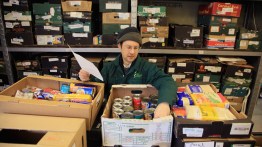
What's behind the rise in demand for food banks? Over the past few years, the default Conservative line has been that the reasons people need emergency help are 'complex'. This is certainly true: the figures released by the Trussell Trust, which runs the largest network of food banks in the country, show that there is no one factor in food bank use. But those figures also show quite clearly that problems with the payments of benefits, or cuts to benefits, are a major driver: the top four reasons cited for referring someone to a food bank in 2017-18 were low income (28.49 per cent), benefit delays (23.74 per cent), benefit change (17.72 per cent) and debt (8.53 per cent).

What is the student ‘strike’ against climate change trying to achieve?

From our UK edition

Forty years ago, I occasionally succeeded in skipping school for climate-related reasons – namely because my village was under deep snow and the school bus couldn’t get through. But too often the snowploughs proved surprisingly effective. It never occurred to me, though, to skip school on a point of principle. That is, however, what pupils are threatening to do – or are being implored to do – on Friday. A “Youth for Climate” movement circulating on Twitter has declared a ‘strike’ for the day – the idea being that children will walk out of lessons in order to protest at the lack of progress on tackling climate change.

Are May and Corbyn’s Brexit visions coming together?

From our UK edition

No matter how many times Theresa May reminds us, it is easy to forget that Labour’s manifesto committed it to delivering Brexit. Equally it is hard to remember that the notorious motion passed by the last Labour conference that opened the door to the party’s possible support for a Brexit referendum – as a last resort – was also a restatement of the party’s pledge to deliver its own vision of how to leave the EU. So it was rational for the Prime Minister to respond in good faith to Jeremy Corbyn’s written offer to negotiate Brexit terms that he and his party could support.

Corbyn has complicated May’s Brexit strategy

From our UK edition

Number 10 had hoped that if it could hold off the Cooper amendment again next week, then it could eke out a concession from the EU on the backstop. But as I say in The Sun this weekend, this approach has been complicated by Jeremy Corbyn’s soft Brexit plan. This scheme, obviously, appeals to the EU: it would keep Britain in the customs union and following many of the rules of the single market. ‘The Labour party and the EU are operating in tandem to some extent, which is worrying for us’ frets one Cabinet Minister. So, May needs to persuade Brussels that such a deal couldn’t get through because her government would collapse as soon as she proposed it.

Could a ‘frontstop’ solve the Brexit backstop problem?

From our UK edition

Like many people growing up in Northern Ireland, I closed my eyes to the dirty, nasty low-grade civil war that we called 'The Troubles'. But when John Major's government averred itself in the 1993 Downing Street Declaration to have “no selfish strategic or economic interest” in Northern Ireland, I pricked up my ears. Events moved quickly from this point. A few years on, in 1998, Tony Blair gave unction to the historic Good Friday Agreement (GFA). Ireland amended its constitution abandoning its claim to sovereignty over the entire island; the United Kingdom recognised the right of a majority of people in Northern Ireland to determine whether it remains part of the UK or merges with Ireland.

The truth about Turning Point

From our UK edition

Earlier this week I made the usual mistake of looking at Twitter and saw that ‘Turning Point’ was trending. This is unusual in Britain. Turning Point is a very successful organisation set up in the US to counter the dominance of left-wing views on campus. It turned out to be trending because of the launch of Turning Point UK this week. In essence the response to the launch of Turning Point demonstrated the need to launch Turning Point in the UK. After all, what we are talking about here is a student-oriented organisation which wants to extol the virtues of free markets over socialism and individual liberty over identity politics. There is nothing in the group’s statements so far that should cause a flutter even among the precious mobs on social media.

Would a no-deal Brexit be a repeat of Black Wednesday for the Tories?

From our UK edition

Could a no-deal Brexit destroy the Tory party's reputation for competence and lead to a crushing electoral defeat in the same way as Britain's withdrawal from the Exchange Rate Mechanism did in 1992? That is certainly the view of some seasoned commentators, such as Jeremy Warner in yesterday's Daily Telegraph, and the parallels to an acrimonious Brexit seem obvious. But in reality, the comparison is actually misleading, as it misrepresents the political history of the ERM exit and fails to understand how Britain has changed as a result of the Brexit referendum. First, it's worth remembering that what really hurt the Conservatives after 'Black Wednesday' was not that government policy had been defeated by economic logic.

Britain is heading for a Brexit tragedy

From our UK edition

With 50 days left before the official date for leaving the EU, we may just have hit peak Brexit mayhem. Can it get any worse than this? Seriously. The cabinet has a three-way split between those who see a no-deal Brexit as economic and political armageddon – the Rudds, Hammonds, Gaukes and so on – those who would prefer a negotiated deal but secretly like the idea of a purer rupture – the Leadsoms, Foxes and Mordaunts – and those sitting in the middle with their fingers in their ears, thinking happy thoughts and hoping none of this is really happening. "It is frustrating how many in the cabinet are just sitting this out" said one minister.

Corbyn’s offer weakens May in Brussels, but helps her at Westminster

From our UK edition

One of the main messages that Theresa May is taking to Brussels today is that significant, legally binding changes to the backstop are needed to get the withdrawal agreement through the House of Commons. Jeremy Corbyn’s letter to her undermines that position. In it, the Labour leader sounds less hostile to the backstop than he did after meeting May last week. Instead, he suggests that the way to deal with the backstop issue is through a political declaration that makes it much less likely that it has to be used. This is the EU’s preferred solution too, and so Corbyn’s offer undercuts the message that May is trying to take to Brussels.

Britain needs to back down on the backstop – but the EU must help

From our UK edition

Theresa May's attempt to alter her Brexit deal is going down badly in Brussels. The anger is partly understandable: after all, this is the agreement May's own government negotiated. Donald Tusk's barbed comment today – that there is a "special place in hell" for those who promoted Brexit without a plan – can be explained by this frustration. But the EU also needs to face up to the political reality: May's deal suffered a crushing Parliamentary defeat by 230 votes. It’s all very well having an agreement that works in Brussels theory, but it still has to get through the Commons. If Brussels really wants a deal, it too needs to move; MPs may need to climb down, but the EU can help to provide them with ladders.

Watch: Leo Varadkar caught out making Brexit gag

From our UK edition

Oh dear. Donald Tusk has been causing trouble this morning with his comments about some Brexiteers deserving a special place in hell. But it seems that the Irish Taoiseach is determined to go one better. At the end of a press conference in Brussels, Leo Varadkar was caught out on microphone making a gag with Tusk about the 'terrible trouble' he'll now get from the British press: https://twitter.com/yourmeps/status/1093119102279974918?ref_src=twsrc%5Etfw It's safe to say Tusk enjoyed the joke, as the pair were filmed laughing along together. But Mr S isn't convinced this is the best way of calming Brexit tensions...

What would George Orwell make of the Brexit right?

From our UK edition

I don’t believe in turning George Orwell’s writing into Holy Scripture – he would have hated the reverence as much as anything else. But if the Brexit right is going to crow and quote his dislike of the communist-influenced left intelligentsia of the 1930s and 1940s it should read the rest of his work first.  Orwell believed in a united socialist Europe. ‘Democratic Socialism must be made to work throughout some large area,' he wrote just after the Second World War. 'But the only area in which it could conceivably be made to work, in any near future, is Western Europe’. If you can forget his belief in a post-war socialism that has gone, Orwell’s arguments for European unity stand up well.

Labour and the banality of anti-Semitism

From our UK edition

Is there a name for the moment something objectionable becomes so mainstream that those responsible can solemnly lament it as a fact of life? I propose that we call it the Formby Point. This week, Labour’s general secretary Jennie Formby reportedly told a parliamentary party meeting that it was ‘impossible to eradicate anti-Semitism and it would be dishonest to claim to be able to do so’. Note the sly wording, the subtle distancing; you can almost hear the affected sigh of resignation. The woman who runs an institutionally racist party that refuses to challenge its institutional racism can, with a straight face, regret the inevitability of racism.  As a matter of fact, it is possible to eradicate anti-Semitism from a membership-based organisation.

The plan that could give rebel Labour MPs the space to break away

From our UK edition

Reports that Theresa May’s team are considering a June election haven’t exactly been met with universal acclaim. Tory MPs in marginal seats are horrified by the prospect, demanding assurances from the party's chairman Brandon Lewis that this isn’t the case. But it's not only Tories concerned about losing their seats who should be worried. A snap election would also be bad news for the band of Labour MPs considering breaking away to form a new party. The arguments against forming a new party due to the crushing forces of our first past the post electoral system are familiar and have acted as a brake on the formation of significant new parties since 1983.

Theresa May’s expectation management falls flat with the ERG

From our UK edition

Theresa May has been in Northern Ireland today attempting to ease concerns over her commitment to avoiding a hard border. The Prime Minister told business leaders in Belfast that while Parliament wanted 'changes to the backstop as it currently exists', her commitment to no hard border in Northern Ireland was 'unshakeable'. However, May's words also went some way to highlight the difference in expectation as to what No. 10 think is an acceptable change to the backstop – and what the Brexiteers in the European Research Group believe is acceptable.

Watch: Jon Snow calls out Chris Williamson on Venezuela

From our UK edition

Venezuela is in ruins and its people are suffering greatly as a result of Nicolas Maduro's failed socialist experiment. So who is to blame? Many would say the buck stops with Maduro himself. As a result, Britain and other countries have joined forces in recognising Juan Guaidó as the country's interim leader in an attempt to bring the crisis to an end. But for Corbynista MP Chris Williamson it is this decision to back Guaidó – rather than the Maduro government's brutal suppression of its own people – that is a 'democratic outrage'. It fell to a somewhat unlikely figure – Channel 4's Jon Snow – to put Williamson right: 'You and Mr Corbyn are in a very nasty corner now.

Will the public mood on no deal sway the Commons?

From our UK edition

As Theresa May attempts to reopen negotiations on the terms of the backstop, there is a view in Downing Street that May won't be able to win any substantial changes until Yvette Cooper's no deal amendment has been defeated for a second time. The Prime Minister will put down a neutral motion next Wednesday and amendments to that motion are expected to be voted on the following day. The expectation is that Cooper will bring back her amendment which would force the government to try and extend Article 50 if a no deal scenario looked likely. There's a concern in government that this time the amendment could pass. A number of Tory MPs may become more anxious about the prospect of no deal when it's two weeks closer ad a deal still doesn't look imminent.

Jeremy Corbyn’s Alexandria Ocasio-Cortez stunt backfires

From our UK edition

Alexandria Ocasio-Cortez is the left's rising political star. The 29-year-old is the youngest women ever to serve in the US Congress and her fan base is growing quickly online, so it's no surprise that Jeremy Corbyn wants to team up. But the Labour leader's cosy phone call with the Democrat has somewhat backfired. Corbyn said yesterday that it was 'great to speak' to Ocasio-Cortez, who returned the favour by tweeting that it 'was an honour to share such a lovely and wide-reaching conversation with you'. This seemed to be the start of great things, until a follower of Ocasio-Cortez pointed out Labour's ongoing troubles with anti-Semitism: Oh dear. It was good while it lasted...

How long will the Tory truce hold?

From our UK edition

Nearly one week on from Tory MPs uniting around a Brexit position and the cracks are starting to show. After Brexiteers and Remainers alike came together to vote for the Brady amendment on Tuesday calling for the backstop to be replaced with alternative arrangements, Theresa May was triumphant that she could now tell Brussels there was a majority in the Commons for a Brexit deal so long as the EU was willing to play ball. However, this weekend things hit a bump in the road after May penned an article for The Telegraph. In it, the Prime Minister said that the vote for the Brady amendment had shown there was majority support for her deal so long as the backstop was renegotiated – hinting that this could be done by a side agreement or codicil.

Watch: Andrew Marr calls out EU leaders over TV no-shows

From our UK edition

When was the last time an EU leader gave an interview to British TV to talk about Brexit? If you're scratching your head to remember, you're not the only one. Andrew Marr raised just this point on his programme this morning, calling out the likes of Donald Tusk, Michel Barnier and Jean-Claude Juncker for their persistent failure to appear on his programme. Here's what Marr had to say: I just want to say one thing about our line-up of interviews. We are at a moment where negotiations with Brussels are absolutely critical and it has been a long moment. And week after week I get the chance to cross question British ministers and opposition politicians. And week after week, we ask the likes of Donald Tusk, Michel Barnier and Jean-Claude Juncker to answer questions as well.