Uk politics

The Tories are stuck in the middle with May. Here’s what they should do next

From our UK edition

The Tories have a debate on their hands about what direction they should go in. Do they return to the politics of the Cameron coalition? This delivered majority government, won over a greater percentage of AB (better off) voters, won more university towns, more professionals but fewer rural areas. Or should the Tories double down and become the Brexit party, moving towards what Nick Timothy says is the “National” party, with a rural, less affluent base led by someone like Boris Johnson? The choice is far from straightforward and there are five big considerations for the party to take into account on this issue before deciding which path to take: Demographic parameters: which demographic groups will get larger or smaller over time?

Derailing Brexit isn’t Leo Varadkar’s only aim

From our UK edition

I agree with much of Liam Halligan’s analysis of the Irish government’s approach to Brexit (‘Good Friday disagreement’, 20 April). However, I think he omits an important point. Leo Varadkar is not merely attempting to derail Brexit; he is also hoping to achieve a united Ireland. For decades politicians, officials and journalists in the south have privately peddled the line to gullible counterparts in Britain that the Dublin establishment has been ambiguous about whether it really wanted the North with all of its myriad problems, but this is and always has been a lie. The Good Friday Agreement was clearly perceived behind closed doors in Dublin as a key transition stage to eventual reunification.

Theresa May will have to give the ’22 an answer

From our UK edition

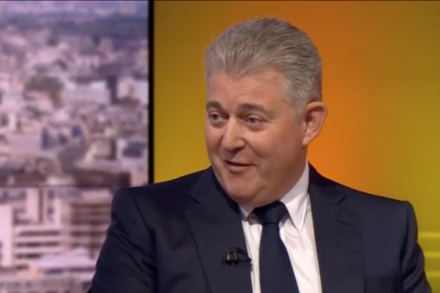
Next week, Theresa May will sit down with Graham Brady, the chairman of the 1922 Committee. He will ask her for more clarity on her departure plans. As I say in The Sun this morning, the answer that Mrs May gives will go a long way to determining her future. On Wednesday, the executive of the 1922 Committee rejected a change to its rules which would allow another vote of confidence in Mrs May’s leadership. But this decision was taken narrowly, 9 to 7 with 2 abstentions, and the executive did decide to ask the Prime Minister for more detail on when she will go. If Mrs May simply carries on saying that she’ll leave if the withdrawal agreement passes, that will not be enough.

What would a Corbyn victory mean for me?

From our UK edition

Until now, I haven’t been too worried about Jeremy Corbyn. True, he exceeded expectations two years ago, but that was because no one thought Labour would win. It was a protest vote, a way for Remainers to signal their disapproval of Theresa May’s approach to Brexit. If the good burghers of Kensington thought there was the slightest chance Labour would be elected they never would have returned a Labour MP. And since then the bloom has gone off the rose. It has finally dawned on Remainers that Corbyn has his own, hard-left reasons for wanting to leave the EU and that behind his ‘anti-Zionism’ lurks something more sinister. Not so much ‘magic grandpa’ as a relic of toxic, 20th-century ideology. But that was before the government committed hari-kari.

Donald Trump couldn’t care less about Jeremy Corbyn’s snub

From our UK edition

One doubts very much that Donald Trump knows who Jeremy Corbyn is. So the Labour Party leader’s decision to ‘snub’ the US President on his state visit to the UK in June won't rupture the special relationship. However, it is quite rude. 'Theresa May should not be rolling out the red carpet for a state visit to honour a President who rips up international treaties, backs climate change denial, and uses racist and misogynistic rhetoric,’ said Corbyn, as he confirmed that he would not attend the state banquet for the Commander-in-Chief of Britain’s greatest ally.   Corbyn’s stand is hardly a shock. He has promised before that, as Prime Minister, he would not invite Trump to Britain’s shores.

How bad will the local elections be for the Tories?

From our UK edition

Next week, the Tories will face their first big electoral test since failing to deliver Brexit on time. On Thursday, the local elections take place – with 9,000 seats up for grabs. While the focus in recent weeks has been on the European elections next month – which will see Nigel Farage's Brexit party and the pro-EU Change UK field candidates – these votes ought to give a hint of how deep the hole the Tories find themselves in really is. With Labour consistently leading in recent polls, the Tories are predicted to lose seats next week. However, owing to the timing of the election, there wasn't time for the Brexit Party to field candidates.

Roger Scruton on the interview that got him fired

From our UK edition

Roger Scruton has appeared on the Today programme to discuss the interview that got him fired. Here is the full transcript and recording of his conversation with Justin Webb: RS: I don't think I spoke intemperately. I speak as I speak and I discuss things as they are presented to me, according to my vision of them. But you know obviously the way in which it was presented in the New Statesman was such as to cause some kind of scandal. JW: At one stage, George Eaton, well he tweeted these words that he ascribed to you, 'each Chinese person is a kind of replica of the next one and that is a very frightening thing'. Let's listen to the context of that: There are difficulties around the corner that we are ignoring like the rise of China.

Britain’s Huawei gamble is sure to anger Donald Trump

From our UK edition

Just hours after Donald Trump's long-delayed state visit to Britain was finally confirmed, reports surfaced that Theresa May and her National Security Council have decided to let Chinese telecommunications company Huawei participate in building Britain’s 5G network. The decision is a direct slap in the face to Washington’s attempts to isolate Huawei, which itself is part of a larger campaign to aggressively counter Beijing’s pervasive and endemic cyberespionage. For a Britain weakened by the ongoing Brexit fiasco, May’s desire to allow Huawei to work on the 5G network risks not merely ruining Trump’s visit, but more importantly further straining ties with Washington. The struggle over Huawei and the West’s 5G future goes beyond Britain.

How long can Corbyn resist Labour’s drift towards a second referendum?

From our UK edition

The International Commission of Labour’s National Policy Forum – which consists of MPs, trade unionists, MEPs, and constituency representatives – has voted unanimously that Labour’s manifesto for European elections should pledge to hold a confirmatory referendum on any Brexit deal. My sources say there were no dissenting voices. On Wednesday, all Labour MEPs voted in precisely the same unanimous way, for a referendum. Friday's Labour’s Trade Union Liaison Organisation is likely to inform the party’s ruling NEC that its big union supporters – including Unison, the GMB and USDAW, but obviously not Unite – also want a referendum.

Nicola Sturgeon is taking Scottish nationalists for a ride

From our UK edition

There’s an episode of Father Ted in which the simple but endearing Father Dougal gets stuck on a milk float booby-trapped with a bomb. The finest clerical minds in Craggy Island convene to devise a solution and as they discount each increasingly far-fetched fix, the well-meaning Father Beeching pipes up: ‘Is there anything to be said for another Mass?’. Nicola Sturgeon evidently studied at the Beeching Seminary for Crisis Management. Every time there’s an SNP conference looming, her advisors agonise over how to string along the Yes faithful a little longer, until the boss sighs: ‘Is there anything to be said for another Indyref 2 statement?

Will May continue to avoid naming a date for her departure?

From our UK edition

The executive of the 1922 Committee have decided not to change its rules which prevent another vote of no confidence in Theresa May until December. But the chairman of the 1922 Committee Sir Graham Brady will ask the Prime Minister to provide more clarity on the timetable for her departure in all circumstances. What this means is that May will be required to say more than just that she will go when the withdrawal agreement passes. She will need to set out when she will leave even if the withdrawal agreement does not pass, which right now seems the most likely scenario. This is a compromise solution.

Lyra McKee’s murder is nothing to do with Brexit

From our UK edition

Emily Thornberry reached a new low today. At Prime Minister’s Questions, she turned the Commons’ heartfelt offering of condolences to the family and friends of Lyra McKee into a tirade against a Hard Brexit. In reply to David Lidington — who was standing in for Theresa May, who is attending McKee’s funeral — Thornberry said the murder of McKee by the New IRA is a ‘sickening’ reminder of the violence of the past and evidence why a solution to the Irish border question is necessary. She appeared to land on the argument that in order to avoid a hard border in Ireland – and to avoid the kind of terrorist violence we witnessed on the night McKee was murdered – we ultimately need to keep the UK in a Customs Union.

Nicola Sturgeon’s play for time

From our UK edition

Nicola Sturgeon is a reader and, to judge by the statement she has just made to the Scottish parliament on the implications of Brexit for Scotland’s future, the book she’s been reading lately is ‘The Gentle Art of Letting People Down Gently’. The people being, in this instance, the SNP members preparing to attend the party’s conference in Edinburgh this weekend. Of course many headlines will focus on her suggestion that Scotland should, given the wreckage of Brexit and the manner in which Scotland still faces being withdrawn from the EU against its will, enjoy a new referendum on independence before the next Holyrood elections in 2021. That is a possibility that must always remain on the table. And it might happen yet.

May’s bid to forge a Brexit deal with Corbyn is about to implode

From our UK edition

There were no political decisions of any substance taken over Easter. The PM, ministers, all politicians were seemingly too exhausted to do anything but roll the Brexit egg down the hill. So all the political news is about process, after the Cabinet and shadow cabinet made no Brexit decisions on Tuesday, and the 1922 Committee (guardian of Tory party rules) could not agree whether to expedite a new procedure to evict Theresa May. The four bits of newsy stuff I have collected for you are: 1) There will be an emergency meeting of Labour’s National Executive Committee on Tuesday to decide whether the party’s manifesto for the European Elections will contain a commitment that any Brexit deal should be put to a “confirmatory” referendum.

Mark Carney’s replacement must be a Brexiteer

From our UK edition

Almost half a million a year basic. A generous housing allowance. Lots of invitations to swanky conferences, and a fantastic office right in the centre of town. And all the last guy had to do during six years in the job was tweak interest rates three times. That works out at a million per move – and that’s before expenses. Running the Bank of England is, on the surface at least, such a cushy job I might even apply myself. We never even have a decent sterling crisis to contend with any more. And yet despite that, there are already reports that the Chancellor might have trouble finding anyone to take over from Mark Carney next year. The Treasury advertised the vacancy this morning and started tweeting it out immediately, perhaps in the hope of drumming up some interest.

Richard Madeley, Brexit and the new conspiracism

From our UK edition

A lot of people are saying that you are having an affair. I don’t know if they’re right. It’s not for me to say. I just told your husband that a lot of people are saying that. A lot of people are saying that you are a child abuser. You want me to check? Look at the court records and the sex offender register? Nah. No need. I just need to say that a lot of people are saying you are a child abuser. Why would they say it if there wasn’t something to say? You say they’re wrong. Really? A lot of people will say, well, you would say that, wouldn’t you? A lot of people are saying that Brexit isn’t Brexit unless it is the most extreme form of Brexit imaginable.

Johnson enters the race

From our UK edition

The European elections are shaping up to be a colourful affair with both the Brexit Party and pro-EU Change UK revealing a spate of new candidates this morning. Along with Jacob Rees-Mogg's sister Annunziata, libertarian Claire Fox will stand for Nigel Farage's party. Meanwhile on the Remain side, a member of a political dynasty has decided to try and win election as an MP for Change UK. Step forward Rachel Johnson. Johnson is to follow in the footsteps of her father Stanley and brothers Boris and Jo by entering the political arena. The writer has revealed she will stand as a European election candidate in the South West region for Change UK, set up by the Independent Group MPs.

The trouble with Greta Thunberg

From our UK edition

In popular mythology Greta Thunberg is a one-girl revolution who has inspired millions of young people into action by being able to see what adults refuse to see. But her promotion as global statesman is really a well-crafted piece of PR. Those on the Left who seek to use climate alarmism to further their war on global capitalism know full well that the likes of Robin Boardman-Pattison – the Bristol University graduate with a private education and fondness for foreign holidays, who stormed out of the Sky News studio when Adam Boulton accused him of being middle class – is a liability to their cause. But allow Thunberg to speak for them by proxy and, well, who will dare criticise a 16-year-old girl with Asperger's?

Jeremy Corbyn is wrong: we don’t need any more bank holidays

From our UK edition

The sunshine was glorious. There was a new episode of Game of Thrones to watch in the middle of the night, and everyone seems to have forgotten about Brexit for a while. As bank holiday weekends go, it was a pretty good one. Under a Labour government, however, it would have been even better. Instead of going back to work, today would have been the St George’s Day holiday and we could all have slept in for another twenty-four hours. The trouble is, lots more state-directed time off is the last thing the British economy needs. Indeed, in a deregulated, flexible gig economy it is debatable whether we need bank holidays at all – and we certainly don’t need yet more of them.