Uk politics

How Britain can make life difficult for the EU during the Brexit extension | 15 April 2019

From our UK edition

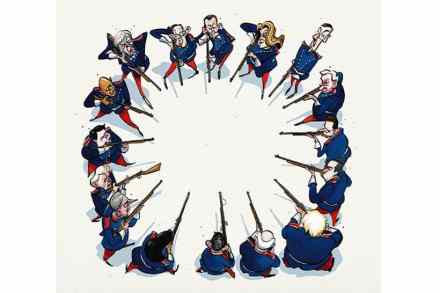
It is not good form for the British to be awkward and obstructive. The art of the compromise was the polite British way of doing things. Or so it used to be thought. But Europe’s axis has tilted since Theresa May’s inability to secure an exit from the EU. Jacob Rees-Mogg’s recent tweet calling for Britain to be 'difficult' and paralyse the workings of the EU from inside sums up this toppling of conventional etiquette. Now that the extension has been granted until 31 October with few constraints on British membership, should Britain form an awkward squad in Brussels to block Europe’s institutions? And if so, where do we look for inspiration and lessons in how to be difficult?

Dominic Raab takes inspiration from Game of Thrones

From our UK edition

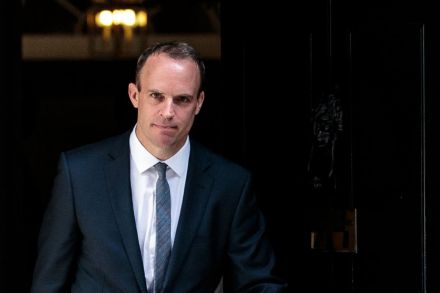
As Tory leadership rivals get their campaigns up and running – and start to work out how to torpedo their rivals – Game of Thrones returns to our screens. Now in its final series, the back-stabbing/front-stabbing fantasy drama sees various characters fight and plot their way to the Iron Throne. So, Mr S was curious to see Dominic Raab entering the debate on which character will emerge triumphant in the new series. The former Brexit secretary says he is backing Arya Stark who a mere 10pc of those surveyed want to see sit on the throne. 'I'm not alone in backing Arya. It's never the favourite.' https://twitter.com/DominicRaab/status/1117671602865496066 With Raab currently 8/1 to be next Tory leader behind Boris Johnson and Michael Gove, what ever could he be getting at?

Which way will Corbyn go on Brexit?

From our UK edition

In September, Labour conference will impose on Jeremy Corbyn a policy of backing a second referendum in all circumstances. So, I say in The Sun this morning, what will he do between now and then? Corbyn has two paths open to him. He can either decide to embrace a second referendum now or do a deal with Theresa May so that the UK is out of the EU before Labour conference meets. If Corbyn went the second referendum route, he would ensure that Labour did well in the European Parliament elections next month as it scoops up the votes of energised Remainers while the Tories have lumps taken out of their support by Nigel Farage’s Brexit party and Ukip. He’d also take the wind out of Change UK’s sails.

Brexit need not tear the Tories apart. Here’s why

From our UK edition

The political dysfunction in Parliament seems to be rubbing off on much of our commentariat. Many have concluded that the whole political system is about to undergo an earthquake as seismic and landscape-changing as anything that mere plate tectonics can conjure up. The main political parties will no longer be Labour and Tory, defined by being working class or middle class, big state or little state, socialist or free enterprise. Instead, goes the new thinking, there will be two main parties defined by being anti-Brexit and pro-Brexit (which may or may not be Labour and Conservative). Now it is easy to see why people might start to claim this. There is plenty of cause for concern right now. But it shows a fundamental misunderstanding of voter motivation.

The Roger Scruton row brings shame on the Tories

From our UK edition

A friend of mine – another twenty-one year old – has resigned his membership of the Conservative party this morning over a single issue. It's not Brexit; it is the comments made by Conservative MPs James Brokenshire, Tom Tugendhat, and Johnny Mercer about the sacking of Roger Scruton from his unpaid government advisory role following an interview he gave to the New Statesman. In a week where Conservatives have spouted platitudes about appealing to young voters, they are putting off young people by pandering to the lynch-mob mentality that has been nurtured on university campuses and Twitter, and promoted by the luminaries of the Labour party.

Some Russians think Britain’s bungled Brexit is just an illusion

From our UK edition

It's hardly a surprise that Russian and American views of the world differ sharply. But there is one area of unexpected congruence in Moscow and Washington: Brexit. Travelling between both capitals, it is hard to tell the difference between the perplexity and even suspicion with which Britain's ongoing and bungled departure from the EU is being viewed. Of course, the two administrations have rather different interests when it comes to Brexit. In the United States, there is some excitement among big business about the prospect of the UK market opening up. In the main though the feeling is one of dismay about the crisis gripping one of the country's closest allies.

Annunziata Rees-Mogg stands for Farage’s Brexit party

From our UK edition

Nigel Farage announced the launch of his new Brexit party today, in a metal finishing factory in Longford, Coventry. As you’d expect, Farage channeled the anger many Leave voters are feeling across the country in his speech. He predicted that the Brexit party would come first in the upcoming European Parliament elections and said he had already put down a £1,000 bet on this outcome. But it was his headline choice of candidate for these elections that caused surprise in the room. Saying that he had received over 1,000 applications from people hoping to become MEPs, he introduced one of the first to be selected: Annunziata Rees-Mogg, the journalist and sister of the Conservative MP for North East Somerset, Jacob.

Why are women turning away from the Tories?

From our UK edition

Blue leaflets emblazoned with middle-class men standing near bins and schools  will soon be strewn across doormats from Chelmsford to Cumbria. Yes, it’s local election time. Much of the talk has been over how the Conservatives – and Labour – will be punished by voters over Brexit. But a recent poll shows that the Tories have another major problem to add to their woes: winning over female voters. Only eight per cent of young women say they will vote Conservative, whereas 68 per cent of young women will opt for Labour, the poll for Onward reveals. This compares to 22.3 per cent of young men who said they’d vote for the Conservatives in the next election.

The latest delay could turn the Tories into the no-deal Brexit party

From our UK edition

Under pressure from France's president Macron, the Brexit delay to 31 October is shorter than Donald Tusk, the EU's president, and many government heads thought desirable – though still considerably longer than Theresa May consistently said was acceptable. Its impact may well be to turn the Tories into the no-deal Brexit party and Labour into the referendum party, via a change of Tory leader and even a general election. Here's how and why. What was agreed late last night poses an immediate and important question for MPs and ministers, because there is an explicit opportunity for the UK to avoid participating in the EU election by leaving without a deal on 1 June.

Tory nightmare? Theresa May is granted Brexit delay to Halloween

From our UK edition

Following five hours of talks in Brussels that went on into the early hours of Thursday, Theresa May has been granted a second Brexit extension by EU leaders. The EU27 agreed to give the UK a 'flexible' extension until 31 October – also known as Halloween – with a chance to 'take stock' and review the decision (and the behaviour of the UK in that period) in June. This appears to be a fudge which helps both May – who asked for an extension just until the end of June – and Emmanuel Macron, who has spoken publicly against a long extension being taken for granted and raised concerns that the British could try and cause the EU problems in any such period.

Theresa May’s destiny is in Donald Tusk’s hands now

From our UK edition

Is this the end? The tragedy is that she no longer knows. The Prime Minister’s destiny is in the hands of Britain’s de facto head of state, Donald Tusk. On March 20th, Mrs May told Parliament that ‘as Prime Minister’ she couldn’t countenance delaying Brexit beyond June 30th. If Tusk refuses her request for a second short extension, it’s hard to see how she can continue.  Theories and predictions abound. The noted political philosopher, Gina Miller, suggested yesterday that Mrs May could be using the Lab/Con talks as a scam that will enable her to complete a no-deal Brexit on April 12th and saddle Labour with the blame. The flaw in this scenario is that it credits the noodle-brained May with a degree of intelligence.

A year-long delay could extinguish Brexit

From our UK edition

Gloss it as they may, if EU leaders force a Brexit delay of a year on the UK, contrary to the request from Theresa May – as the EU president Donald Tusk wants – then they will have made a momentous judgement that will cause an earthquake, for us and them. They would be sending a signal that they have lost all confidence in the UK Prime Minister – and probably any UK prime minister – securing parliamentary approval of the Brexit divorce settlement, the Withdrawal Agreement, that they painfully negotiated over two years. The point is that a delay of a year would remove all pressure on equivocal MPs of all, or any, party to agree a Brexit compromise. And those equivocal MPs are the majority.

Britain’s liberals have fallen out of love with democracy

From our UK edition

Every now and then there is a political moment, some event or comment, that reveals just how much society has changed. This week contained one of those moments. On Tuesday it was reported that nine pro-democracy activists in Hong Kong had been found guilty of causing a public nuisance by taking to the streets five years ago to demand a greater democratic say in how their society is governed. And on the same day, the exact same day, the Guardian published an article with the headline ‘Democracy is overrated’. Most voters have ‘no idea’ about what’s going on in the world, the piece argued, and therefore it would be better if they just didn’t bother voting.

Theresa May and Jeremy Corbyn have been undone by Brexit | 10 April 2019

From our UK edition

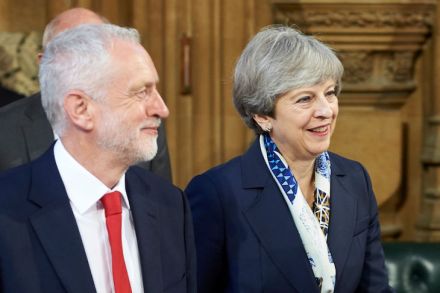
One could almost look on Theresa May and Jeremy Corbyn and see a story of frustrated love. They could be happy, the soppy observer might think. If only they could get some time on their own, and unburden their hearts, they would find they were in perfect agreement. Alas, their inability to be honest with each other keeps them apart, and prevents them knowing their true feelings. Brexit is not a romance but a national tragedy. But in one respect at least it matches stories of unrequited love. Brexit is being defined by the inability of political leaders and much of the media to be honest with  themselves – and indeed anyone else. The result is the greatest outbreak of political lying of my lifetime.

Eight reasons why young voters are turning away from the Tories | 9 April 2019

From our UK edition

It's plain to see that the Conservative party has a youth problem. Millennials are turning away from the party in their droves. But what is actually causing this dire Tory performance among young voters? There are eight reasons, any of which on their own would present a problem. Together, their combination is creating a conveyor belt towards oblivion for the party. Part of the reason why youngsters are not voting Tory can be explained by the higher number of them who come from an ethnic minority. Only two in 100 voters aged 85 or over are black or ethnic minority; this compares to around 20 per cent of those aged 29 or under. Such voters tend not to back the Tories.

Theresa May must stand up to Emmanuel Macron’s Brexit posturing

From our UK edition

In this the 115th anniversary week of the Entente Cordiale, the French president and the British Prime Minister will meet twice, today at the Elysee Palace and tomorrow at the European Council in Brussels. But neither of those meetings will be to celebrate their countries friendship. When May goes to Paris and then to Brussels, she will instead be a woeful supplicant in the Brexit feuilleton. And the one thing the vicar’s daughter can count on is that she will be subjected to a severe bout of Macron lesson-giving and severe sermonising, as is his wont. And yet Macron is hardly in a position of strength. Both leaders are battling domestic crises that come to a head this week. The British PM’s Brexit woes are only too well known.

Theresa May’s Brexit strategy is brewing trouble within her party

From our UK edition

The Commons has voted by 420 to 110 to approve Theresa May’s decision to ask for an extension to the Article 50 process to the 30th of June. It isn’t a surprise that this motion passed, there is an anti no-deal majority in the Commons, but the 97 Tory votes against and the number of abstentions, including several Cabinet Ministers, highlights how controversial May’s approach is within her own party. May’s approach would become even more controversial if she agreed to a customs union as part of a deal with Labour, as Liam Fox’s broadside against it showed. The talks between the government and Labour finished for the day earlier and will now not resume until after the European Council.

EU officials and Brexiteers share a similar concern over Brexit

From our UK edition

Rumours continue to circulate that if a long extension were to be granted by the European Union, it could be flexible. This would mean that Britain could officially depart from the bloc earlier than the agreed-upon exit date if a deal were secured between the UK and the EU27. I’m unsure what about the past two-and-a-half years could make someone think that MPs will pull together and unite around a deal before crunch time. I remain deeply sceptical that a long extension could ever encourage a shorter exit process – evidenced by not one, but two requests for an Article 50 extension in the past six weeks.

How Brexit could lead to Frexit

From our UK edition

Struggling to understand the ways of the French, the francophile Winston Churchill reflected whimsically in 1942: ‘The Almighty in His infinite wisdom did not see fit to create Frenchmen in the image of Englishmen.’ And yet today, the Almighty would struggle to create two more similar states in international terms than Britain and France. Similar geographies on the northwest European continent, similar populations (66 and 67 million), economies (5th and 6th by GDP), colonial histories, 3rd and 4th nuclear powers, two of the five permanent members of the UN Security Council, leading members of Nato and, until 2019 (probably), equally prominent members of the European Union.

Corbyn says May still isn’t compromising on her Brexit red lines

From our UK edition

Jeremy Corbyn has insisted that Theresa May hasn't yet moved on her Brexit red lines in talks with the Labour Party. In a broadcast clip this evening, the Labour leader said: 'Well, the meetings are very long. A great deal of detail is gone into by both parties. We have people who have been on this case for several years so they're all very accustomed to it all. We've gone into it because the government at last acceded to a request I first made last September that we're prepared to talk and put forward our views, but talks have to mean a movement and so far there's been no change in those red lines.' There have been reports that the talks are moving towards an offer of a customs union, which would enrage many Conservative MPs even more.