Uk politics

Gaining work experience

From our UK edition

Twenty years ago, students typically took low skill "summer jobs" simply to earn money.  Now, most offices and organizations feature youngsters putting in unpaid time for work experience.  It might be a week or two, or even half a year. The practice has its critics.  Union leaders are decidedly edgy about free labour competing for jobs with their members.  There are charges of exploitation and bad treatment.  The caricature has unpaid interns working photocopiers or being sent to collect sandwiches or laundry for management, without gaining any useful hands-on experience.

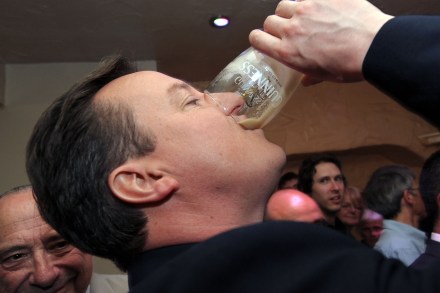
Cameron devolves the tricky issue of alcohol pricing

From our UK edition

Politicians often get nervous around alcohol – and not just because, in these straitened times, a glass of champagne can broadcast the wrong image. No, the real concern is the more basic, fiscal one: how should it be taxed and priced? There's a difficult trade-off involved. Pushing up the cost of alcohol could halt the staggering advance of binge drinking and all its associated social and medical ills. But, depending on what booze is targeted, it could also hit the least well-off harder than anyone else. And who's to say whether the effect on drinking habits would be that substantial anyway? The trickiness of the situation was clearly demonstrated by Labour's internal ding-dong over minimum pricing back in January.

Jack Straw backs David Miliband

From our UK edition

The Labour party’s very own Vicar of Bray has made his choice. Jack Straw is backing David Miliband for leader. Straw is a politician who has always had a canny sense of which way the wind is blowing. Barbara Castle, who Straw worked for as a special adviser, once famously said that she hired him for his ‘guile and low cunning’. Straw’s move from the Blair camp to the Brown one was a sign that Blair was running out of road. Say what you like about Straw—Tony Blair was once caught calling him a ‘tart’—but he has a record of picking winners in Labour contests.  His endorsement of David will be seen as a sign that the elder Miliband is still the brother who the smart money is on to be the next leader of the Labour party.

This is no time for salami slicing

From our UK edition

You can often achieve a lot more by doing things a bit at a time rather than attempting one bold and sweeping reform. In the 1970s, for example, the trade unions had extraordinary legal privileges; strike votes were done on a show of hands at works meetings (usually late at night when everyone except the Trotskyists had gone to bed); there weren’t even secret ballots for union elections. Edward Heath took the unions head on with his all-embracing Industrial Relations Act. It was a disaster: there were widespread demonstrations and strikes, and one of these confrontations forced him from office. Margaret Thatcher learnt from this and took things much more slowly.

Obama defeats our shameful libel laws

From our UK edition

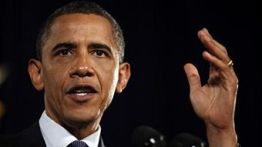
Here's one divergence between the US and the UK where we can all get behind our American brethren. Yesterday, Barack Obama signed into law a provision blocking his country's thinkers and writers from foreign libel laws. The target is "libel tourism," by which complainants skip around the First Amendment by taking their cases to less conscientious countries. And by "less conscientious countries," I mean, erm, here.         As various organisations have documented, not least the Index on Censorship, the libel laws in this country are a joke – and a pernicious one at that.

To Labour’s successors…

From our UK edition

Following this morning’s coalition press conference, the Tories’ have released this video: Labour’s Legacy. It’s effective, especially in view of Labour’s continued refusal to acknowledge that Gordon Brown did to Britain what Peter Ridsdale did to Leeds United, albeit on a grander scale.

Resisting an EU tax on financial services

From our UK edition

The prospect of taxes being levied directly by the European Union is one of those stories that pops up on a fairly regular basis. It is never likely to actually happen as national governments won’t want to cede the power of the purse strings. But the great Hamish McRae makes a very good point about the taxes that the EU wants to levy in his Independent column: ‘The two areas the EU wants to put taxes on, banking and air traffic, would hit the UK particularly hard. Financial services are the UK's largest export industry, with net exports (ie exports minus imports) of £33bn last year, more if you add in associated professional services. We are by far the world's largest net exporter of such services.

The government’s transparent approach to worklessness

From our UK edition

Sometimes hope lies in the details. Take this morning's press release from the DWP, for instance. On the surface, it is a response to today's encouraging employment figures. But what it really is is a new way of approaching the problem of worklessness in this country. And all because of its headline: "Figures reveal five million on out of work benefits as Grayling pledges to make work pay." This is, as far as I can remember, the first time that the total out-of-work claimant count has reached the summit of an official release. The last government always knew what the figure was, of course, but never drew much attention to it. Instead, we heard Brown mumbling on about "3 million new jobs," while wilfully ignoring the millions who had been overtaken by globalisation.

Osborne needs to hold the line

From our UK edition

Even governors can be wrong. The Bank of England’s quarterly inflation report is expected to downgrade its original growth forecasts and predict a sharp increase in inflation, albeit one that peaks this year and returns to the target rate by 2012. A spike in inflation is scarcely surprising given the planned VAT rise, and the Bank’s original growth forecasts were, like Alistair Darling’s forecasts, absurdly over optimistic – predicting 3.4 percent growth next year and 3.6 percent the year after. The Bank’s revisions needn’t trouble George Osborne, whose forecasts of 2.3 percent growth next year and 2.8 percent in 2012 were drawn from the OBR. However, the OBR may have over-estimated recovery too.

IDS’ resignation would be a catastrophe

From our UK edition

If Iain Duncan-Smith resigned from the government, the coalition would be in trouble. If Vince Cable is the coalition’s left tent peg, IDS is the right one: his departure would leave the coalition’s right side dangerously open to the elements. Which prompts me to oppose Ben Brogan’s blog saying that the coalition would not suffer much if IDS walked. If IDS left, the Cabinet would be dangerously unbalanced. There would, in these circumstances, be only two people in it who the Tory parliamentary party considers to be on the right, Liam Fox and Owen Patterson. The right, as the Liberal Democrats seem to appreciate, would in these circumstances demand far more policy concessions from Cameron in return for its support.

Prepare to be nudged

From our UK edition

‘Nudge’ posits that people can be subtly cajoled into changing their behaviour. The Cameroons were convinced nudgers at one stage. Greg Clark and Grant Shapps designed The Green Deal, a free home insulation programme to encourage green living, paid for by savings on energy bills. Then David Cameron and Steve Hilton conceived the Big Society and nudging was discarded as some unwanted puppy.    But, James Crabtree reports that nudging is back. There’s even a ‘nudge unit’ in No.10: ‘The group, whispers one insider, was first set to find alternatives to the constant regulations flowing through Whitehall, but is becoming increasingly influential.

Strange bedfellows

From our UK edition

As the row over Naomi Campbell’s testimony at Charles Taylor’s war crimes trial fills up acres of space in the newspapers and hours of airtime for the news channels, I can’t help but remembering the friendship between the model and Sarah Brown. Brown even selected Campbell as her 21st century heroine in a 2009 Harpers Bazaar poll, praising her as a “loyal friend”. Now, it should be stressed that the work Brown and Campbell did together was for a series of worthwhile causes, improving maternal health and helping Haiti post-earthquake. But it struck me as surprising at the time that a savvy former PR woman married to the Prime Minister chose such a controversial friend.

Downing Street extends a tentacle

From our UK edition

Following the milk fiasco, No. 10 plans to tighten its control over Cabinet Ministers. The Times (£) has the details. To paraphrase, No.10 holds the egregious Andrew Lansley responsible for not recognising that Anne Milton’s proposals were politically untenable. Cameron has ordered a political review of Cabinet Minsters’ proposed cuts to minimise embarrassments ahead of October’s spending review. Understandably, Cameron is keen to insulate himself against inevitable negative publicity. But there is a danger that a hands-on Downing Street will become publicly embroiled in Whitehall spats.

The questions surrounding Cameron’s benefit crackdown

From our UK edition

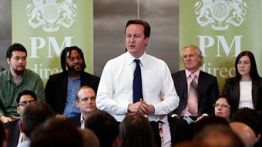
There were hints of toughness in his article at the weekend, but now David Cameron has rolled up his shirt sleeves and pulled out the baseball bat. In a combative piece for the Manchester Evening News the PM outlines out a zero tolerance approach to welfare fraud and administrative error. The two problems "cost the taxpayer £5.2 billion a year," he says, "that's the cost of more than 200 secondary schools or over 150,000 nurses. It's absolutely outrageous and we can not stand for it." And so IDS is going to prepare "an uncompromising strategy for tackling fraud and error," which will be published this autumn.    Two things are worth keeping a close eye on. First, the Lib Dem reaction to all this.

Cameron, Villa and the succession

From our UK edition

The Prime Minister is, as we know an Aston Villa fan. So we can expect him to be disappointed at Martin O’Neill’s departure. On his trip to Birmingham the other week, Cameron’s support for Villa caused the PM to, as the phrase has it, misspeak. He told the Birmingham Post that with “the Governor of the Bank of England as a supporter, the next King of England and the current Prime Minister, [Aston Villa] got a good set” of fans in high places. But his reference to the next King of England being a Villa fan will raise a few eyebrows as it is Prince William — not Prince Charles — who is the Royal Villain. Now it is obvious that Cameron just slipped up and that he didn’t mean to impart any information about the succession.

Huhne backs nuclear energy through gritted teeth

From our UK edition

You could almost hear the thumbscrews being tightened as Chris Huhne appeared on Today this morning to back nuclear power. The Energy Secretary has an, erm, patchy history when it comes to supporting nuclear – and that fact, coupled with his less than evangelical rhetoric on the matter in government, has got plenty of industry professionals worried. So there he was reassuring us that, actually, the first new nuclear power station is still on course for 2018. And he added, gritting his teeth no doubt, that "providing there is no public money involved, there will be a majority in the House of Commons favour of nuclear power stations.

Cable’s 50-50 warning

From our UK edition

As compliments go, there's something slightly backhanded about Vince Cable's claim that, "Having worked with [the Tories] at close quarters, I've been pleasantly surprised that they're not as I'd envisaged them." And that's just one of the little nuggets embedded within his interview with Decca Aitkenhead this morning. The Business Secretary touches on everything from what he thinks of George Osborne ("he's clearly able") to his own ability to craft a joke ("I'm actually quite good at one-liners"). If you want a sense of where Cable is at, then Aitkenhead's piece is worth a quick read.

Will the Tory right oppose a graduate tax?

From our UK edition

One of the vulnerabilities of the Coalition is that when Labour moves position one of its flanks can be exposed. When the Coalition agreement was drawn up, it seemed sufficient that the Lib Dems would maintain the right to carry on opposing tuition fees as both Labour and the Conservatives were in a favour of them. The Lib Dems would still be able to tell students, a key constituency for them, that they were the only party committed to abolishing fees. But as soon as the Labour leadership contenders started moving rapidly towards a graduate tax, the Lib Dems had a problem.