Uk politics

The politics of the Lib Dem conference

From our UK edition

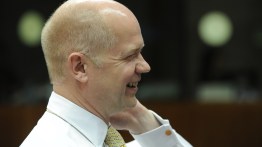
It's only gesture politics, but sometimes gestures matter – which is why the Tories are thinking seriously about dispatching a party envoy to the Lib Dem conference in September. The idea, naturally, is to cement the bonds of friendship between the two sides, as well as to suggest that the Tories are happy to mix it with the wider Lib Dem party. But there's a problem: that wider party doesn't seem eager to play along. As soon as there were rumblings that Cameron might speak at their conference, they slapped the idea down with the unswerving efficiency of an executioner. And they've done similar today in response to reports that William Hague is being lined to up deliver a "witty" address in Cameron's stead.

The FCO’s dubious Prevent grants

From our UK edition

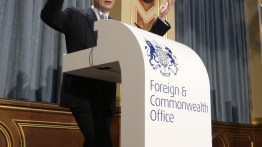
A few weeks ago I wrote for Coffee House welcoming the Government’s decision to scrap Prevent grants administered by local authorities. In that article, I cautioned that scrapping something should actually mean scrapping it, not just moving resources around. Today, the TaxPayers’ Alliance has released research showing that the Foreign and Commonwealth Office (FCO) also distribute funds through Prevent. Again, money has gone to projects of questionable value in the fight against extremism, violent or non-violent.   One of the more dubious projects was a “mobile cinema for justice”. What’s worse is that it was administered by an American charity called the International Research and Exchanges Board. Why is that bad?

Democracy in the BBC

From our UK edition

What is that quote at the end of King Lear?  I think it is something like “the wheel has come full circle”. I felt a sense of that wheel with the announcement by Mr Miliband yesterday that the BBC should be democratised and become some sort of mutual co-operative. I have been campaigning for democratisation of the BBC licence fee for a while now, first writing about it on ConservativeHome in 2008 and most recently tabling an Early Day Motion, only a couple of weeks ago. Inevitably a few brickbats were thrown.

The unions up the ante

From our UK edition

The front cover of the Times (£) provides a dreary snapshot of what the coalition can expect once the cuts start to bite. Unison have responded to job losses in the NHS by arguing that the government is "conning" the public over the impact on frontline services. And they're threatening to all get all litigious about it. As one of the union's spokeswomen tells the paper, "If we are not happy with the [government's reply], we are reserving the right to issue urgent judicial review proceedings." You wonder whether they'd have done the same against Labour's proposed 20 percent cuts. And this will be just the start of it.

Miliband’s Big Society

From our UK edition

Paul Waugh has already noted David Miliband and Tessa Jowell's proposal to turn the BBC into a co-op. But the language they use to outline the idea is striking in itself. Here's an excerpt: "In confronting the big challenges ahead of us, whether it's rebuilding our economy, tackling climate change or protecting frontline public services – the need for collective action is greater than ever. This is a moment for mutualism, which offers us the opportunity to take collective action in step with individual aspiration, drawing on the values and practices of the cooperative movement and today's Coop party.

Why Gove’s school reforms could go further

From our UK edition

The latest issue of the magazine is out today and, with it, all of the articles from last week’s edition have been made available online to non-subscribers. Among them is Toby Young’s column which raises some important points about, and criticisms of, Michael Gove’s school reforms. Toby, if you hadn’t heard, is working to set-up a free school himself – so he’s very much operating at the coalface on this, and his thoughts deserve attention. In which case, here’s the entire article for CoffeeHousers’ benefit: It has been described as the most radical overhaul of the school system since the introduction of comprehensives.

The battle over IPSA enters a new phase

From our UK edition

MPs have never really got along with the new expenses body, the Independent Parliamentary Standards Authority. But now their mood towards it seems to have become even frostier. I imagine that IPSA's three-month anniversary, and the rather complacent-sounding celebrations that accompanied it, are something to do with that. Tom Harris's wonderfully acerbic Birthday message, from a couple of days ago, captures how many MPs feel about the whole affair. In letters to the Telegraph today, Michael Fabricant and Denis MacShane ratchet up the attacks on IPSA. And while many will not see them as the ideal poster boys for a rebellion against an expenses watchdog, it's worth remembering that they are far from alone.

What you need know ahead of the Spending Review – Health

From our UK edition

With this autumn’s Spending Review set to be one of the most important moments in the life of the coalition government, Coffee House has linked up with the think-tank Reform to investigate what could – and should – be in the final document. This first post, by Reform’s director Andrew Haldenby, is the first in a series of “What you need to know” summaries, looking at each of the main policy areas – in this case, health. Other posts will cover specific policies, examples from abroad and Reform events. We’re delighted to get the ball rolling… What is the budget? The NHS is the biggest public service budget in England by far.

Bring on the debate about social housing

From our UK edition

David Cameron did say that his proposal to end council houses for life would trigger "quite a big argument" – and that is exactly what he has got today. The Lib Dems' Simon Hughes has offered the most vociferous dissent so far, stressing that this "in no way represent the policy of the coalition and certainly do not represent the policy of the Liberal Democrats." And, to be fair, he has a point: the idea had not gone through coalition channels before Cameron mooted it yesterday, and neither was it contained in the Tory manifesto – so there still needs to be a lot of conversation and consideration before anything like it can be put into action. It would be a shame if this reduced to a Tory-Lib Dem split story, though.

The equality landmines that Labour have left the coalition

From our UK edition

Oh dear, the Treasury is mired in another controversy about equality after the Guardian published a letter which Theresa May sent to George Osborne before the Budget. In it, she warned that the government could face legal action if it is unable to show that its decisions were made with a consideration to "existing race, disability and gender equality duties." As she puts it: "If there are no processes in place to show that equality issues have been taken into account in relate to particular decisions, there is a real risk of successful legal challenge by, for instance, recipients of public services, Trade Unions or other groups affected by these decisions.

How tightly are the Lib Dems bound to the Tories?

From our UK edition

A thoughtful and thought-provoking column from Danny Finkelstein (£) in the Times this morning, which is well worth a trip beyond the paywall to read. In it, he makes a persuasive point: that, despite their plunging poll ratings, the Lib Dems aren't doing too shabbily at all. After all, who, looking back at the party's recent history, would have thought they would be in power in 2010? That they are suggests, in Danny's words, that "this is not not the bottom for the Lib Dems, it is the top." From there, an important point is made against those who still contend that the Lib Dems would have been better off shacking up up with Labour in May, that it would have been a more natural fit. Here it is: "…the price of joining Labour might well have been greater.

The government could make political and fiscal gains if it reviews the Trident upgrade

From our UK edition

On one level, there is something admirable about the government's uncompromising support for a Trident upgrade: senior Tories really do believe in the deterrent's strategic importance, and are not willing to sacrifice that. But, on many other levels, that same inflexibility is looking more and more unwise. Three former senior military figures write to the Times today with a new riff on a point that they have frequently made before. Why not squeeze another 15 years out of the current system, they say – by which time, "the anachronistic and counterproductive aspect of our holding on to a nuclear deterrent would be even more obvious." This is an argument with which a whole host of military figures and Lib Dems will sympathise.

Zardari drops a rhetorical bombshell

From our UK edition

David Cameron isn't the only world leader who can lob rhetorical hand-grenades about the struggle in Afghanistan, you know. Speaking ahead of his visit to the UK, Pakistan's President Zardari has said that the "international community … is in the process of losing the war against the Taliban." Adding that, "And that is, above all, because we have lost the battle for hearts and minds." Given his pivotal, front-seat role in proceedings, it's got to go down as one of the most significant statements on the war so far. Is this intended as a riposte to Cameron's remark about Pakistan and terrorism? I'm not sure.

The cuts start to bite

From our UK edition

It must have been the toughest press release that anyone in the Central Office of Infomation has ever had to draft. A freeze on new campaigns and the abandonment of any regarded as “non-essential” mean staff numbers will drop by 40 percent – a loss of 287 jobs. Compulsory redundancies loom. The same press notice also revealed that the COI’s advertising spend was down by a 52% last month compared to June last year. We are not talking about small sums here. Last year’s COI marketing  spend of an eye-watering £531 million – half of it going on advertising – was about 20 percent more than the next biggest spender, Procter & Gamble.

Why the government needn’t fear the strikes

From our UK edition

With the threat of major strikes timed to coincide with Osborne's spending review in October, I think it's worth exhuming an important point that Julian Glover made in his Guardian column last month: "UK politics is often characterised as a contest for the centre ground, but that misdescribes the nature of the quest. Centrism implies banality, but I don't think voters want their governments to be mundane. There is a willingness to endorse radical action if it is explained and if it looks practicable. It worked for the left under Attlee and Blair; it worked for the right under Thatcher; and it is working – so far – for this government.

Balls: let’s remain on the centre ground and oppose cuts

From our UK edition

As the New Statesman's George Eaton suggests, there's quite a lot packed into Ed Balls's piece in the Times today (also on his website for those who can't venture beyond the paywall). And, what's more, some of it makes sense. Take his argument that Labour shouldn't cede the "radical centre ground" of British politics to the coalition. That's the right argument to make, even it if is rather undermined by Balls's own efforts to drag the party leftwards. As usual, it all starts to unravel as soon as Balls gets to the public finances. His position is blunt and straightforward: that "Labour needs strong leadership to make a credible argument against slashing public spending and raising VAT, which will increase unemployment and risk a double-dip recession.