Uk politics

A solid enough start

From our UK edition

The Liberal-Conservative administration deserves to pass its 100 day probation. It hasn’t done much yet, but it has said some of the right things and sounds like it might even get round to doing a few of these things at some point in the not-too-distant future. I’d pretty much accept that from a new staff member, so I guess I should be half-pleased that I seem to be getting this level of performance from my government. The coalition partners were right to shelve their timid pre-election rhetoric about the size of the hole in the public finances. The Liberal Democrats’ implausible insistence that cuts shouldn’t start until next year was ditched as soon as they had “looked at the figures”.

Clegg’s dilemma | 18 August 2010

From our UK edition

Nick Clegg’s few days in charge have summed up his current political problem. If he says he agrees with what the government is doing, the media ask what’s the point of the Lib Dems? That’s what happened to him on the Today Programme this morning. But if he talks about where he disagrees with the coalition programme as he did on Monday when discussing Trident, he’s lambasted for exacerbating coalition tensions.   It is all far cry from the early days of the coalition when there was some concern in Conservative circles that Clegg was a thinner, better version of David Cameron.

Exclusive: Gordon Brown launches his public speaking career

From our UK edition

While Tony Blair has been pledging a slice of his massive post-PM earnings to The Royal Legion, a tale reaches me – from an impeccable source – about what Gordon Brown is up to. He once indicated he'd devote his post-PM life to modest good works, but it appears he is also trying to build up a large nest egg of his own: in the world of public speaking, with six-figure fees. He's asked a London speaking agency to tout for speaking engagements for him in the Middle East and Asia. And the price? He's been offered at $100,000 a pop and is promising to speak on areas covered by his new book, The Financial Crisis, which is due out soon. That should have 'em roaring in the aisles.

Cowboy clampers are just the tip of the iceberg

From our UK edition

It looks like the wheel-clampers are in retreat after Haroon Zafaryab's heroics the other day and Lynne Featherstone's subsequent "ban on clamping and towing on private land". And as they leave the field, it's worth returning to a piece that Ross Clark wrote for The Spectator last year in which he tied the cowboy clampers in with a wider malaise: the last government's "blind spot" for business, such that "it simply cannot distinguish between where business ends and racketeering begins". Here's the full article for the benefit of CoffeeHousers: We have become a nation of shysters, Ross Clark, The Spectator, 17 October 2009 Power cuts and uncollected rubbish form most people’s memories of the economic debacle that was the 1970s.

Trouble on the horizon | 18 August 2010

From our UK edition

100 days in, a danger emerging for the coalition: the idea that it is balancing the budget on the backs of the middle class. The Daily Mail front page today warns in apocalyptic font of a ‘Bonfire of the middle class benefits’ while the Times says ‘Families to lose out in bonfire of the benefits.’   The problem for the coalition is that because it is committed to protecting the poorest and the most vulnerable, the cuts will have to be concentrated further up the income scale. This means that a lot of will what go in the cuts are the middle class bits of the welfare state. To compound the problem — and as as Paul Goodman notes - many of the coalition’s tax rises will worry the middle class.

Taking stock of the coalition’s first 100 days

From our UK edition

While the milestone of 100 days is not new – US presidents are still measured against the progress made in 100 days by Franklin Delano Roosevelt in 1933 –  it is important. A poor start can create the impression of a government of novices. A good one can provide a new government with critical momentum. So how has the coalition done so far? And, in particular, how well have they done in beginning to rescue the UK’s public finances? Today Reform has released a report discussing the coalition government’s performance over its first 100 days. This report draws on four cross-party conferences held over June and July on welfare, education, public sector productivity and healthcare.

The 100 Days

From our UK edition

It’s been 100 days since love was in the air in the Rose Garden. So, how’s it been for you? For most, the Honeymoon continues. An ICM poll for the Telegraph reveals that 46 percent think the government is governing well and that 44 percent believe the government is doing a ‘good job’ in securing economic recovery, against 37 percent who think we’re irreversibly on the road to ruin. True, spending cuts have not yet hit the easily swayed and the government’s popularity will recede, but it won’t collapse – the 37 percent who think the economy is doomed do so for ideological reasons, the economy has not tanked yet.

The coalition’s choice over Winter Fuel Allowance

From our UK edition

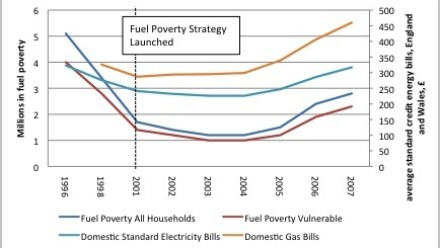
The Winter Fuel Allowance has tapdanced back onto the political landscape today, and it's all thanks to some insightful work by the FT's Alex Barker. He had an article in this morning's pink 'un which suggested that IDS is lobbying to have it, and and some other "middle-class benefits", trimmed to help pay for his benefit reforms. And he's followed that up with a blog-post explaining how even an apparent "cut" in the allowance may not result in savings for the Treasury or the DWP. Strange but true, as they say. This could be a delicate situation for the coalition. In the background to it all is David Cameron's pre-election pledge that the Tories wouldn't cut Winter Fuel Allowance.

Is Cameron slowly winning the argument on public service reform?

From our UK edition

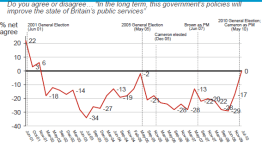
Guido has already highlighted one of the most important graphs from this Ipsos MORI treasure trove, showing that the public have overwhelmingly accepted the need for spending cuts. But this other graph forms a striking companion piece: Sure, the public may be split on whether the coalition will be good for public services. But the main thing to note is that overall optimism is at its highest level since 2001 – and rising. Maybe, contra Brown and Balls, people are realising that you can get more for less.

The task facing UKIP’s next leader

From our UK edition

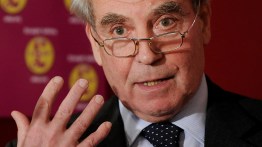
That didn't take long, did it? After only a year in charge of UKIP, Lord Pearson has quit the role even more abruptly than he took it. In his resignation statement, he confesses that he is "not much good" at party politics – and it is hard to disagree. A memorable low was his interview on the Campaign Show in which he was only dimly acquainted with his party's own policy. But more damaging, to my mind, was the general erosion of UKIP's identity: Pearson's policy of campaigning for Eurosceptic candidates from other parties may have been magananimous, but it also made you wonder whether UKIP are more a party or a pressure group. This morning, Nigel Farage hinted that he might put his name forward for the leadership.

Osborne emerges from the shadows

From our UK edition

George Osborne has been quiet these past few weeks, tussling with ministers desperate to preserve some of their budget from his spending review. Today though, Osborne will emerge from the Treasury's recesses to launch a political attack on the ‘deficit denying’ opposition. Come on, Osborne will ask Darling et al, where are these £44bn of cuts you planned?   And answer comes there none, not even an incredible one. Labour’s refusal to countenance a spending review in government means it has very little to offer the spending debate in opposition.

The university funding debate continued

From our UK edition

University funding is beginning to dominate op-ed pages. Yesterday, Matthew d’Ancona put the case for a graduate tax from the conservative perspective; and to which Douglas Carswell has responded. Today, Professor Alison Wolf, a specialist in Public Sector Management at KCL, makes the point that any debate about higher education funding is prejudiced because Britain’s politicians and policy makers are predominantly Oxbridge educated, and the structure of Oxbridge undergraduate degrees is radically different from anywhere else. Writing in the Times (£), she asserts: ‘I’ve sat in many meetings, in Whitehall and Westminster, where people have talked up credit systems (a modular system of assessment) without the faintest idea that we have one.

Blair, magnanimous master of PR

From our UK edition

It’s easy to be loose with a trifling £4.6m when you’re Tony Blair. Many will denounce his decision to give the advance and any royalties on his memoir to the British Legion as opportunistic - a cynical gesture characteristic of the man. As ever with Blair, there is more than a hint of a public relations exercise about this. But it is also extremely gracious, aiding people who prick his conscience. So I prefer to take his generosity at face value. As Con Coughlin puts it:   ‘Whatever you might think of Mr Blair, he always had the courage of his convictions when it came to defending our freedoms, whether it was confronting genocidal maniacs like Saddam Hussein and Slobodan Milosevic, or tackling the modern curse of Islamist terrorism.

Clegg must resist temptation

From our UK edition

As Pete notes, Nick Clegg is moderating the debate over the spending review in David Cameron’s absence. It’s an unenviable task. IDS and Liam Fox have been the most cussed opponents of George Osborne, but all ministers are fighting for their budgets behind the scenes. This morning, reports suggest that Chris Huhne could break from the ranks of the silent. The Times gives details of ‘intense discussions’ over the future of nuclear clean-up and renewable energy funding, worth more than £2bn of the Energy department’s £3.4bn budget. Obviously, any reductions in environmentally friendly initiatives carry a political cost for the Liberal Democrats.

An important fortnight for Nick Clegg

From our UK edition

Another reason to be glad of the Brown government's downfall is that there seems to be less silliness about the summer holidays. Today, Nick Clegg returns to London to steer government in David Cameron's absence – but there's no fanfare, nor energetic pretence that the Lib Dem leader is actually "running the country". Unlike those times when Harriet used to have a go at it, followed by Peter, followed by Alistair, followed by Jack, the overriding impression is just business as usual. But that doesn't mean that the next two weeks are insignificant for Clegg. Rather, he can make sweeping advances on a number of fronts. The most important, and least public, will be how he handles the ongoing spending review.

What you need to know ahead of the Spending Review

From our UK edition

This is the second of our posts with Reform looking ahead to the Spending Review. The first, on health, can be found here. What is the budget? Education is the biggest area of government spending after welfare and health, totalling £89 billion in 2010-11. This budget increased by 64 percent in real terms between 1999-00 and 2010-11. Total, per-pupil school spending doubled in real terms over the same period. Where does the money go? Expenditure on schools was £46 billion last year. The vast bulk of school spending goes on people: the average school spends 78 percent of its budget on staff.

Livingstone the insurgent

From our UK edition

Ken Livingstone’s long reign as a Labour London Mayor was predicated on his supposed insurgency against New Labour’s orthodoxy. Well, he remains intent on dissociating himself from his party. For instance today, he has endorsed Eric Pickles’ abolition of the Audit Commission. ‘This is one Tory cut I support,’ he said. This contradicts John Denham’s position. Perhaps Livingstone recognises that Labour cannot give the public sector unqualified support; there are fat cats protecting vested interests in Whitehall, just as there are in the City.

Whelan suggests Brown will turn up to Labour conference

From our UK edition

A poll in today’s Daily Mail might have the Tories down to 29 percent (in part due to a very large number of undecideds) but it is Charlie Whelan’s interview blaming Peter Mandelson for Labour’s election debacle that is getting all the attention. In a fit of campaign nostalgia, CCHQ has tweeted out a bunch of lines from it. But I suspect it is the last Whelan quote in the piece that has them smacking their lips.  Whelan says, 'Labour has not fallen out of love with Gordon. Quite the reverse. If he tips up at the Conference - which I think he will - he'll go on stage and he'll be cheered to the rafters. This is hardly going to help the new leader of the Labour party, who’ll be announced on the eve of conference.

IDS wins his battle, now the eyes turn to Fox

From our UK edition

Iain Martin reports that IDS has secured a £3bn fund to meet the upfront costs of his benefit reform. ‘To help ensure that IDS can make the cuts which unlock his funds for welfare reform, I am informed that Number 10 and the Treasury now accept that some of the commitments made by David Cameron before polling day to protect specific benefits will have to be revisited and potentially watered down. In return, IDS is being urged by colleagues to accept that he cannot behave like a bull in a china shop. Says one: “He has been immersed in welfare reform for years. But he can’t present his solutions as a fait accompli to colleagues. He has to persuade other ministers and take people with him.