Uk politics

The coalition’s university challenge

From our UK edition

The contours of an agreement on how to pay for university education are clearer today after Rachel Sylvester’s interview with David Willetts. Up-front fees look to be on the way out.  Willetts tells Sylvester, ‘It’s very important that it’s signaled very clearly that the money that is paid back comes out of your earnings once you have graduated and are in work.’ It also seems that different courses at different institutions will have different prices. Willetts proclaims that he wants something that ‘links you to your university and the course you did at that university.’   So far, this looks like simply collecting variable fees through the tax system.

PC Plod picks up a packet

From our UK edition

Back in May, Sir Paul Stephenson, Britain’s most senior police officer, insisted that the police should forgo bonuses to prove that their sole motivation was a sense of public duty. Such grandiosity looks absurd when a freedom of information request reveals that the police were awarded more than £150million pounds in bonuses last year. The Telegraph has the excruciating details. ‘Bonus payments across all ranks have risen six per cent over the past three years. The extra payments were introduced in 2002 by David Blunkett, the home secretary at the time, to offer incentives for performance. Five types of bonus are available, including extra payments for officers who show “professional competence” or carry out “demanding work”.

Pickles axes the Audit Commission

From our UK edition

Eric Pickles’ decision to scrap the Audit Commission is further evidence that Pickles is the minister prepared to move quickest on the cuts agenda. It is a bold decision and one that is going to come under heavy attack. The Audit Commission’s supporters will claim that it is self defeating to scrap the watchdog that checks that public services are delivering value for money. Set against that, though, has to be the culture of excessive pay and waste at its hearts. Until Pickles intervened, it wanted to pay its new chairman £240,000.

What to do with the defeated?

From our UK edition

One of the challenges facing the next Labour leader will be what to do with Ed Balls. Balls, as he demonstrated in the last few months, has the right mentality for opposition. Labour will need his appetite for the fight in the coming year. But if a new leader makes Balls’ shadow Chancellor, he’ll have a shadow Chancellor whose position on the deficit is simply not going to seem credible to the public; Balls has already said that he thinks the plan Labour went into the election with for the deficit was too ambitious. The Tories are convinced that if Balls is shadow Chancellor, they’ll have the dividing lines they want on the economy. A better department for Balls to shadow would be the Home Office.

Was Labour’s spending irresponsible?

From our UK edition

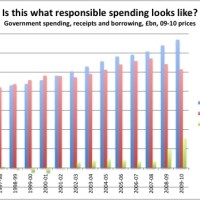
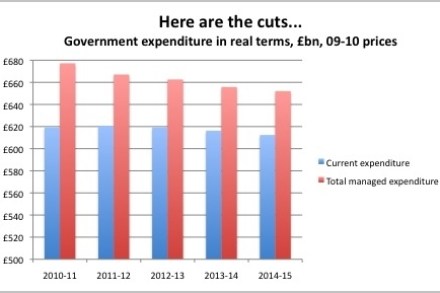
An eyecatching claim from Ed Miliband, interviewed by Channel 4's Krishnan Guru-Murthy: "I don't think our spending was irresponsible." And here's a graph in response: I'll let CoffeeHousers draw their own conclusions.

Waiting for the autumn

From our UK edition

A curious, intermediate kind of speech from Liam Fox this morning. The general emphasis on streamlining the armed forces, and shifting power away from Whitehall and towards the military, was welcome. But we're going to have to wait for a trio of reviews before we know what that will look like in practice: the Spending Review, the Strategic Defence Review and a review by the new Defence Reform Unit, chaired by Lord Levene. As Douglas Carswell points out, Levene has fought for choice and competition in defence procurement before now – so we have an idea of where his review will head – but, for the time being, it's still a bit of a waiting game.

Progress in Afghanistan?

From our UK edition

The Times (£) is reporting that ISAF has made a significant progress in pacifying the death circle around Sangin. The key, it seems, is driving a wedge between the tribal insurgents and religious insurgents foreign to Helmand: ‘British commanders believe that they are close to achieving a significant tribal uprising against the Taleban that could lead to the reintegration of hundreds of insurgents fighting around Sangin, the most dangerous place in Afghanistan. The number of violent incidents in Sangin has fallen by about 80 per cent in the past month. British commanders believe that this is partly the result of tribal leaders delivering on a promise to restrain tribal elements aligned with the Taleban and to expel the insurgents.

What can Green achieve?

From our UK edition

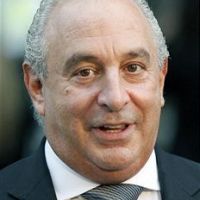
Handbags across Whitehall this morning, as Vince Cable responds to the government's appointment of Sir Philip Green as an efficiency adviser in a disgruntled, if evasive, manner. He tells City AM: “There’s a lot I could say on this, but I’d better miss this one out ... I’m tempted to comment, but I think I’d better not.”   And it's clear why the Business Secretary, and many others, might be a little peeved. A hard-partying, perma-tanned, rotund and ostentatious figure, with question marks hanging over his tax status, Sir Philip is simply not designed for this age of austerity. He is nothing like the cadaverous technocrats who usually sift through Whitehall accounts.   Such concerns miss the point, though.

Where are the cuts?

From our UK edition

John Redwood has entered the debate with a unique argument: spending isn't being cut. He points to figures in the Budget which show "current" spending rising from around £600 billion now to around £700 billion in 2015. As Alex says, that suggests an increase of 15 percent over five years – hardly what anyone would describe as a cut. And there's a similar picture for "total" spending, which will rise from around £670 billion to £737.5 billion.   Yet it's worth pointing out that Redwood isn't using inflation-adjusted figures (aka, "real terms" figures).

Bravo, Mr Pickles

From our UK edition

I think it's fair to say that Eric Pickles doesn't look like a pioneer of the Cameroonian "Post-Bureaucratic Age". But that's exactly what he is, as his department becomes the first to publish data on all its spending over £500. At the moment, the document provides plenty of ammunition for – rather than against – the coalition, covering as it does the financial year between 6 April 2009 and 5 April 2010. And thus we read of how, under the last administration, £17,000 was spent at a luxury hotel, £635,000 on taxis, £13,000 on Manchester United catering costs, and so on. But this isn't just a retrospective exercise: the prospect of these figures being released in future should hopefully restrain some of the more egregious spending now.

David Miliband reinforces his monetary advantage

From our UK edition

I can't work out what's stranger: that anyone, let along the author Ken Follett, should donate £100,000 to Ed Balls' leadership campaign, or that the Liverpool footballer Jamie Carragher ("Mr Liverpool") should give £10,000 to the devoted Evertonian Andy Bunrham. Either way, they're probably the two stand-out entries in the latest list of Labour leadership donations. But the real story is the same as the last time the donations were published: David Miliband's monetary advantage. Even with Ed Balls raising £103,000 in July, the elder Miliband brother still comes out on top with £138,835 – adding to an overall war chest which dwarfs those of all the other contenders.

Gaining work experience

From our UK edition

Twenty years ago, students typically took low skill "summer jobs" simply to earn money.  Now, most offices and organizations feature youngsters putting in unpaid time for work experience.  It might be a week or two, or even half a year. The practice has its critics.  Union leaders are decidedly edgy about free labour competing for jobs with their members.  There are charges of exploitation and bad treatment.  The caricature has unpaid interns working photocopiers or being sent to collect sandwiches or laundry for management, without gaining any useful hands-on experience.

Cameron devolves the tricky issue of alcohol pricing

From our UK edition

Politicians often get nervous around alcohol – and not just because, in these straitened times, a glass of champagne can broadcast the wrong image. No, the real concern is the more basic, fiscal one: how should it be taxed and priced? There's a difficult trade-off involved. Pushing up the cost of alcohol could halt the staggering advance of binge drinking and all its associated social and medical ills. But, depending on what booze is targeted, it could also hit the least well-off harder than anyone else. And who's to say whether the effect on drinking habits would be that substantial anyway? The trickiness of the situation was clearly demonstrated by Labour's internal ding-dong over minimum pricing back in January.

Jack Straw backs David Miliband

From our UK edition

The Labour party’s very own Vicar of Bray has made his choice. Jack Straw is backing David Miliband for leader. Straw is a politician who has always had a canny sense of which way the wind is blowing. Barbara Castle, who Straw worked for as a special adviser, once famously said that she hired him for his ‘guile and low cunning’. Straw’s move from the Blair camp to the Brown one was a sign that Blair was running out of road. Say what you like about Straw—Tony Blair was once caught calling him a ‘tart’—but he has a record of picking winners in Labour contests.  His endorsement of David will be seen as a sign that the elder Miliband is still the brother who the smart money is on to be the next leader of the Labour party.

Obama defeats our shameful libel laws

From our UK edition

Here's one divergence between the US and the UK where we can all get behind our American brethren. Yesterday, Barack Obama signed into law a provision blocking his country's thinkers and writers from foreign libel laws. The target is "libel tourism," by which complainants skip around the First Amendment by taking their cases to less conscientious countries. And by "less conscientious countries," I mean, erm, here.         As various organisations have documented, not least the Index on Censorship, the libel laws in this country are a joke – and a pernicious one at that.

To Labour’s successors…

From our UK edition

Following this morning’s coalition press conference, the Tories’ have released this video: Labour’s Legacy. It’s effective, especially in view of Labour’s continued refusal to acknowledge that Gordon Brown did to Britain what Peter Ridsdale did to Leeds United, albeit on a grander scale.

The coalition gets political

From our UK edition

The joint Tory Lib Dem press conference to attack Labour’s legacy was a sign of how comfortable the two parties are becoming together. Chris Huhne and Sayeeda Warsi’s message was that the ‘unavoidable cuts that are coming are Labour’s cuts’ and that Labour is ‘irrelevant’ until it admits its responsibility for the deficit. The message was essentially the one that Chris Huhne and Michael Gove set out at the political Cabinet at Chequers last month. In a move that is bound to generate some headlines, Warsi has written to those Labour leadership contenders who were ministers asking them to forfeit their severance pay and to ask the ex-ministers supporting them to do the same.