Uk politics

The big Tory leadership question: what happens on All Saints Day?

From our UK edition

If the EU is unable to make a Brexit offer that is acceptable to Parliament by the Brexit deadline on 31 October, what then? This is the big question in the Tory leadership contest and – slowly – we’re getting answers. 1. No deal back on the table, an extension not ruled out Dominic Raab this morning told Andrew Marr that if the EU does not compromise then he’d leave anyway, without a deal. In other words, the Tory 2017 manifesto position would be restored: no deal is back on the table, only this time they'd have to mean it. Boris Johnson, Michael Gove, Jeremy Hunt and Sajid Javid all agree. All would seek a compromise with the EU: modified version of Theresa May's deal. Nigel Farage says this is pointless because the outgoing Commission is intransigent.

The two sides of the Tory leadership contest

From our UK edition

The way to think about the Tory leadership contest is—I say in The Sun, this morning—that it is like a tournament with two sides of the draw, with each side sending one candidate into the final, membership round. One side of the draw is for full-on Brexiteers. Here Boris Johnson, Dominic Raab, Andrea Leadsom, Steve Baker and Esther McVey will duke it out. The other side of the draw features the Cabinet candidates: Jeremy Hunt, Sajid Javid, Michael Gove, Matt Hancock and Rory Stewart. Whoever comes out of the full-on Brexit side of the draw will go into the final round as the strong favourite given Tory members’ views on the subject. I understand that Boris Johnson has edged ahead of Dominic Raab on this side of the draw.

The timetable for the Tory leadership contest

From our UK edition

After Theresa May announced that she will step down on Friday 7 June as the leader of the Conservative party, the race to find her successor is due to officially commence the following Monday. Conservative party chairman Brandon Lewis, along with the vice-chairs of the 1922 Committee of Conservative backbenchers,  have issued a joint statement laying out the process for this contest. Notably 1922 chair Graham Brady's name is missing from the statement – leading to speculation he has recused himself on the grounds that the Tory backbencher may run himself. Under the new timetable, nominations will close in the week commencing 10 June. Then there will be 'successive rounds of voting' which will keep going until a final choice of two candidates remain.

The leadership contest solves nothing

From our UK edition

Theresa May has been forced from office by her own MPs because they concluded there would be no progress on delivering Brexit, or on anything important, while she remained their leader. But if they thought her government was characterised by factionalism and chaos, they ain’t seen nothing yet. Because the big facts of her failed government – no majority in parliament, religious divisions on how to leave the EU – cannot be wished away. The Buddha would struggle to pacify and unite her fractious party. And the Buddha is unusual in not running to be Tory leader. The coming weeks of battle for the Tory crown, which officially starts 10 June but is already happening in guerrilla skirmishes, will make Game of Thrones seem as tame as Teletubbies.

Does Theresa May have a domestic legacy?

From our UK edition

Theresa May isn’t leaving at a time of her choosing, nor has she been able to focus on the domestic policies she listed in her inaugural speech on the steps of Downing Street. But today, as she announced she was resigning, she still tried to set out what she believed was her legacy in tackling the ‘burning injustices’ in Britain.  It wasn’t a long list, and the achievements on that list were in themselves rather small. She said she had committed more funding to mental health in the NHS long-term plan, which is true. This funding increase was greater than those in NHS England had initially hoped for.

May becomes the latest Conservative prime minister to be brought down by Europe

From our UK edition

Theresa May has become the latest Conservative prime minister to be brought down by party divisions on Europe. Speaking outside 10 Downing Street, the Prime Minister gave a statement in which she confirmed that she will step down on June 7 to pave the way for a leadership contest to find her successor the following week. She admitted that her Brexit strategy had failed – having tried to pass her deal three times – and said this was something she deeply regretted. However, she suggested that she did not regret her approach – stating that 'compromise is not a dirty word'. At the end of the speech, May had a rare show of emotion as she declared that it had been an honour to 'serve the country I love': 'I will shortly leave the job that has been the honour of my life to hold.

Brexit and the great liberal crack-up

From our UK edition

Brexit may yet kill the Conservative party but it is exacting a cruel psychological torture on liberalism. Liberals are supposed to be the measured voice of reason – earnest, insufferable but reliably level-headed. Not anymore. Liberals – or at least some of them – have gone quite mad over Brexit. There is almost no intrigue they will not seize on if it might explain away the last three years. TV historian Dan Snow tweeted a photograph of his postal ballot and the Brexit Party leaflet he claimed had been delivered inside the same envelope. When celebrity Twitter flicks on its blue-tick sirens, craven officialdom comes running but they brought bad news.

Boris Johnson is the agent of Theresa May’s downfall

From our UK edition

In the end, Boris Johnson has proved to be Theresa May's unassailable nemesis (if that's not a tautology); he is the agent of her downfall. Which is not to say he will succeed her as Tory leader and prime minister. He may be the favourite to do so, but – as Sunder Katwala has pointed out – only once in the past half century has the initial frontrunner actually seized the Tory crown. Boris could yet blow it. But his manoeuvres with his backbench colleagues have made it impossible for the PM to have her Brexit plan approved – were she to put her Withdrawal Agreement Bill to a vote, as she still promises to do – because he has persuaded them there is an escape from the Brexit deadlock that is destroying their party but not while she is in 10 Downing Street.

What will happen if Theresa May tries to cling on?

From our UK edition

On Friday, Sir Graham Brady, chairman of the 1922 committee, will go and see Theresa May. It is expected that she’ll tell him and then the country the date of her departure as Tory leader. If May tries to hang on, Brady will have to open the sealed envelopes which reveal whether the '22 executive has voted to change the rules and allow an immediate no confidence vote in May—even those on the executive who oppose a rule change accept that there is a majority for one. Number 10 know this too, which is why I don’t think there’ll be any attempt by May to argue that she’s not going anywhere. But May will not resign immediately. Rather she’ll name a date in the next few weeks.

Will Theresa May resign rather than be pushed?

From our UK edition

The upshot of today’s drama is that Graham Brady, chairman of the 1922 committee, will go and see Theresa May on Friday. Now this might not seem like much. But I understand that the ‘22 Executive will meet again if necessary on Friday. In other words, this meeting is Theresa May’s chance to resign rather than be pushed. Cabinet and ministerial support for May is draining away at a rapid rate. It is a sign of the end when No. 10 is having to refuse requests for meetings. If May doesn’t go, then it is almost certain that there’ll be a move against her as soon as parliament returns from recess. As one of those involved in today’s discussions tells me, this is now a question of precise timings.

The EU’s role in the demise of British Steel

From our UK edition

How ironic that British Steel goes into administration on the day before the European elections, putting 4,200 jobs at risk in a leave-voting constituency. And how utterly fatuous to blame Britain’s vote to leave the EU for the failure of the Scunthorpe plant. There is a link with Brexit, but it is not the one mentioned in passing on BBC news bulletins this morning – that our leaving the EU has frightened off European customers. If anything, the fall in the pound since 2016 should have helped British Steel, making its exports to the rest of the EU cheaper. But that has not been enough to counter the mass of cheap steel that is coming out of China. The Scunthorpe plant very nearly closed in 2016, when its then owner Tata Steel, decided to jettison it.

Nigel Farage is not ‘far right’

From our UK edition

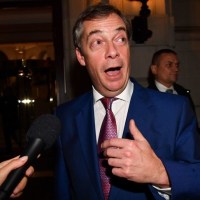
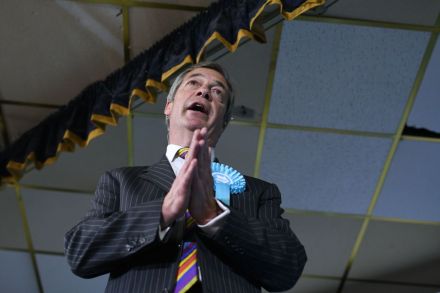
It is now fashionable to describe Nigel Farage as an 'extremist', 'far right' or 'fascist' politician. Last month, Dame Margaret Beckett denounced his 'brand of extreme right-wing politics'; this week, Armando Iannucci tweeted: 'Any vote for Farage on Thursday won’t be seen by him as a protest but as support for his brand of far-right UK politics.' And on Monday, the author and journalist Ben Goldacre described the Brexit Party leader as a 'far right ideologue who wants to abolish the NHS.' So what prompts otherwise intelligent people like Iannucci and Goldacre to describe Farage as 'far right'? And is that description really fair? A quick glance at Farage's politics suggests it isn't. Farage has spoken out against interventionist wars abroad.

Theresa May’s latest Brexit pitch goes down badly with Tory MPs

From our UK edition

Theresa May has made her latest Brexit deal pitch – and it isn't going down well with Tory MPs. The Prime Minister used a speech this afternoon to say Parliament will get a vote on whether to hold a second referendum if it backs the EU Withdrawal Agreement Bill. But Simon Clarke – a Tory MP who supported the PM's deal the last time around – has changed his mind and vowed to vote the deal down. Here is what he said: And Simon Clarke wasn't the only Tory MP to vent his fury at the PM in the aftermath of her speech. Owen Paterson said the offer is a 'direct insult to 17.

Can Brexiteers trust Boris Johnson to deliver a ‘real’ Brexit?

From our UK edition

The current Westminster consensus that Boris Johnson is the next Tory leader and prime minister raises all sorts of thoughts. Among them is to speculate about the sheer terror this consensus should strike in the man himself, given that Westminster consensus has been wrong about basically everything in the last three years.  For what it’s worth, I also think Johnson is the favourite to replace Theresa May, but I also thought Remain would win the referendum, that May could never be PM, and that she would win her general election with an increased majority. I suspect most of the people now sagely tipping Johnson as a dead cert made similar predictions.   But we are where we are, and so all the chat around the Commons is about prime minister Boris Johnson.

Theresa May is on course for an even worse defeat on her Brexit deal

From our UK edition

By what margin will Theresa May's Brexit deal be defeated when it returns to the Commons after recess? The expectation in government is that it will be voted down for a fourth time – and the loss will be greater than on the third vote. The hope in Downing Street is that a bad result for both the Tories and Labour in the European elections will incentivise MPs to take what could be their last shot at passing the Withdrawal Agreement – ahead of a new Tory leader coming in and shaking things up. May is also set to unveil a host of changes – what you could call concessions – to the Withdrawal Agreement on workers' rights and Parliament's role in the negotiations in a bid to win more votes from across the House.

Brexit and the tragedy of Philip Hammond

From our UK edition

It is still a few hours before Philip Hammond makes his speech to the CBI this evening but so much of it has been trailed in advance that delegates might as well just read the newspapers – and then book some entertainment from a juggler or fire-eater instead. We know he is going to attack what he calls the “populist right”. We know, in a thinly-veiled attack on Boris, he will say:  “There is a real risk of a new prime minister abandoning the search for a deal, and shifting towards seeking a damaging no-deal exit as a matter of policy.

The case against Boris Johnson

From our UK edition

In the old days, if the Tory party was in trouble, old hands who had seen it all before would attempt to steady the buffs with a traditional rallying-cry: 'pro bono publico – no bloody panico.' Today, that message is needed as never before, but would the MPs take any notice? In the nineteenth century, an Irish Parliamentarian lamented that: 'Ireland's cup of troubles is overflowing – and it is not yet full.' For Ireland, read the Tory party. It seems quite likely that on Thursday, the Tories will come fifth in the Euro elections, behind the Brexit Party, Labour, the Liberals and the Greens, struggling to get into double figures in percentage terms. That would be the worst result for either of the two leading parties in British political history.