Uk politics

The departmental cuts

The Spending Review document is available here, but we've collected the cuts facing some of the main departments in the table below. This is not the complete picture of Osborne's announcements today: much of the action takes place in the separate social security budget, but we'll have more on that shortly.

PMQs live blog | 20 October 2010

QUICK VERDICT: More heat than light today, but Cameron easily got the better of Ed Miliband. Now to the Spending Review live blog. 1230: Cameron says that as cuts are made, the government will have to reform the way it does criminal justice. This is a prelude for the deep cuts that the Home Office and Justice department are expected to face in the spending review. 1228: The Lib Dem MP asks whether Cameron believes that better-off graduates should bear more for their university costs. Cameron says that he agrees on principle, and claims that "everyone in the House" wants the "same thing": a fair and well-funded university system. 1226: Cameron says that the spending review will contain answers on social housing - but hints that the results may be better than expected.

Osborne vows to play straight

George Osborne’s statement is, I hear, about 40 minutes long. I also hear that there is no obfuscation in it about what is being cut. The coalition is determined that no one can accuse them of trying to disguise what they are up to. Given what we have learned from pre-briefing, the cuts must be just massive in the departments we haven’t heard anything about yet. There is word this morning that the legal aid budget is going to be being reduced by far more than was expected even at the weekend. It appears that legal aid is one of the things that took the hit as the Treasury tried to find some other money to make the numbers for the fairness premium and the defence review add up.

How we got here – and where we’re going

With the Spending Review less than two hours away, I thought CoffeeHousers might like to be armed with a few graphs that set the scene. What follows is by no means the complete picture of the fiscal landscape, but these are certainly some of most prominent landmarks. First up, real terms spending (aka Total Managed Expenditure) from 1966 to 2015: So, yes, all the fuss is about that small dip at the end of the blue line – a dip, as it happens, of about four percent. But don't think that the fuss is entirely unwarranted. What the government is trying to do here is curb a trend of ever-increasing spending that has persisted over decades, and which rocketed during the New Labour years.

Exclusive: 1.5 million jobs to be created during the ‘cuts’

Almost every newspaper today leads on the chilling figure of 500,000 jobs to go. This was taken from a briefing paper held by Danny Alexander – a “gaffe” says The Guardian. Indeed: it was top secret - to anyone without internet access. “The OBR’s Budget forecast was for a reduction in public sector workforce numbers to 490,000 by 2014/15”. Read the offending sentence. This was not private advice, but posted online (here) and this is what it said…   But hang on. The same forecasts predict that the number of jobs in the economy will rise – by 1.08 million over the same timeframe. So by the same forecasts, the economy will create three times as many jobs than the public sector is shedding.

The slog starts today

Welcome to Stage Two of the government's life. The first stage was the Budget, which established the size of the fiscal mountain looming over the coalition. The third stage will be the difficult, four-year slog up to the top. But today – the Spending Review – is all about determining the route for that ascent. In just a few hours we will know when, where and why the pain will come. Don't forget to pack sandwiches. Of course, with this roadmap being drawn out in Westminster, we already know some of the details. This morning's papers major on the fact – snapped from Danny Alexander's hands yesterday – that almost 500,000 public sector jobs will be lost over the next four to five years. And then there are the actual departmental settlements.

On the eve of the cuts

In economic terms, the role of the Comprehensive Spending Review is a fairly straightforward one: to set Departmental Expenditure Limits for every government department, and outline some of the policy measures that will be undertaken to keep spending within those limits.   Fraser Nelson has already ably summarised the real impact that the spending review will have on public expenditure, so I won’t go into that here. Suffice it to say that, yes, the cuts are significant but, no, they aren’t nearly as severe as the BBC would have us believe.    But just as interesting as the cold, hard numbers themselves is what they will tell us about the government’s wider agenda.

Generous settlements mean gigantic cuts elsewhere

I hear that the Department of Transport’s settlement is another one that is not as bad as expected. The capital statement is, apparently, positively reasonable. George Osborne’s commitment to infrastructure spending has meant that a good number of transport projects have been saved. On rail fares, I hear they will indeed go up significantly. But not by as much as the doomsday 30 to 40 percent scenario reported in the Sunday papers. Nearly all the settlements we have heard about so far have been less bad than expected. There must be, given that Osborne is sticking to the cuts schedule set out in the budget, some departments that are going to have to absorb absolutely massive cuts.

What we know already

At the Comprehensive Spending Review tomorrow, we will get a much clearer picture of how the Government plans to manage spending cuts.  There are a few things we already know, though: 1) The overall cuts will be modest.  As Fraser has pointed out, the overall cut in spending is small.  Spending is going down to around the level it was at in 2006-07.  It will remain several percentage points of GDP above the level at the start of the last decade. 2) Cut in some areas will be much sharper.  The higher bill for Government debt interest, the ringfencing of Health and International Development and the relatively soft deal for some other departments means quite drastic cuts in other areas.

The unavoidable cruelty of necessary cuts

Even though the SDSR promises that it "will be used by units returning from Germany or retained for other purposes," the loss of RAF Kinloss will still be a body blow to Moray. For years, it has sustained hundreds of airforce families in Elgin, Forres and Nairn - mine amongst them. And I can picture the bakeries, shops and other small businesses that will be hit by losing so many clientele. About 6,000 jobs depend on the RAF up there: not just Kinloss but Lossiemouth, 15 miles away, whose future also looks bleak. Jet fuel for the Tornados in Lossie is sent via Inverness harbour, so it would mean job losses there. The downgrading of Kinloss, of course, means the end of Nimrods.

What should the Chancellor do in the Spending Review?

With this autumn’s Spending Review set to be one of the most important moments in the life of the Coalition Government, Reform has linked up The Spectator's Coffee House blog to ask what could – and should – be in the final document. This post and all previous posts have been collected in a report that you can download here .   1). Hold the line on eliminating the deficit in one term The coalition Government must hold the line on the commitment to eliminate the structural deficit in one parliament. Delaying the task will simply make it harder. Unless programmes and entitlements are reformed now, then the growing costs in areas like health and pensions will swamp any savings identified.

Time for a new approach to the EU

All eyes are on the spending review, but yesterday another potentially huge challenge landed in the Coalition’s in-tray: the prospect of a new EU treaty.   In the small town of Deauville in Lower Normandy, French President Nicolas Sarkozy and German Chancellor Angela Merkel struck another of those ‘Franco-German compromises’ that tend to set the EU agenda, and have too often left the UK on the back foot. Yesterday’s compromise will see Sarkozy backing German calls for a new EU Treaty to introduce new a mechanism that would enable countries within the euro area, such as Greece, to default.   And Merkel means business.

Not fit for purpose

John Reid famously declared that ‘the Home Office was not fit for purpose’. But judging by the fudge over the carriers this epithet would have been better applied to one of his previous departments, the Ministry of Defence. Something has gone very wrong when it would cost more not to build something than to build it. How the MoD got into this position over the carriers needs to be the subject of an urgent and thorough investigation. Those responsible for this absurd situation need to be held to account. It is also ridiculous that there will be several years when there’ll be no carrier from which helicopters can be launched and that there’ll be a gap in carrier strike capability.

The coalition’s carrier trouble

We will be presented with the full defence review at around 1430 today – but already its contents are spilling out across the papers. Much of it is unsurprising: a delay for the Trident upgrade, two new aircraft carriers, etc. But some of it is slightly more surprising: for instance, the immediate decommissioning of both our 80-strong fleet of Harriers and the Navy's 25 year-old flagship, the HMS Ark Royal. As Liam Fox admitted on the Today Programme earlier, those last two measures will mean that Britain loses the ability to fly jets from its carriers for up to ten years. Ruling the waves, and even the skies, has been put on hiatus. It's clear that much this defence review has been shaped by compromise.

Fox in the dock?

Split-stories have their own momentum. As soon as you know that a certain secretary of state is in the dog house with Downing Street, you start seeing things through that prism. So when I saw that the press release on the government’s new national security strategy contained quotes from the PM, the Foreign Secretary, the Home Secretary and the Development Secretary, but not the Defence Secretary, I immediately regarded it – and perhaps wrongly – as part of the Westminster Fox hunt.   Liam Fox’s appearance on the Politics Show on Sunday was ill-advised.

The coalition outlines its national security concerns

What a curious creature this National Security Strategy is. For some reason, I expected something more than a 39-page document in the same mushy pea colour scheme as the coalition agreement. But that is what we've got – and it doesn't really tell us much. The centrepiece of the document comes on page 27 (reproduced below), with a neat, three-tier guide to the security risks facing this country. At the highest priority level are atrocities such as "chemical, biological, radiological or nuclear attack by terrorists," and "hostile attacks upon UK cyberspace". Further down, there are mentions for "organised crime" and "disruption to oil or gas supplies," among others. But, before we get there, there is – as Nicholas Watt notes – a good deal of waffle.

Laws helps Gove

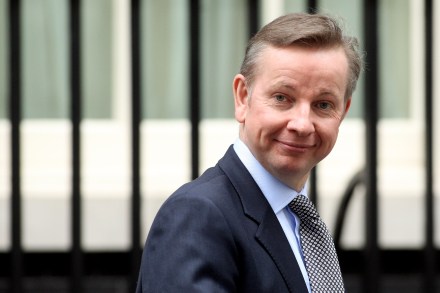
Michael Gove has just been explaining in the Commons where the £7 billion for the fairness premium that Nick Clegg announced on Friday will come from. Revealingly, David Laws was present as Gove answered this urgent question. I understand that Laws was crucial to both the pupil premium being implemented at a decent level and the real-terms increase in the schools Budget.   Laws himself told John Pienaar’s show last night that “obviously I've talked to him [Nick Clegg] about some of the things that I've been associated with in the past, like the schools funding issue... because I was the schools spokesman in the last parliament”.

A test of Cameron’s commitment to the new politics

In opposition, nearly every politician talks about the dangers of an over-mighty executive. But office has a habit of changing peoples’ views on this subject. Charles Walker’s amendment (which he discusses over at ConservativeHome, here) to match any reduction in the number of MPs with an equivalent reduction in the number of ministers, so that the proportional size of the payroll vote remains the same, is an early test of whether office has begun to erode Cameron’s commitment to a proper balance between the executive and the legislature.   If a reduction in the number of MPs is not matched by a reduction in the number of ministers, then the executive will become more powerful and the House more of a creature of it.