Uk politics

Cameron’s morals

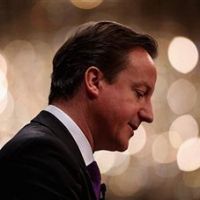
By his own admission, to today’s Mail, David Cameron is not afraid of unpopularity. On hearing this, a few quizzical grins may break across his critics’ faces, but, undeniably, the government’s fate was cast this week: either its fiscal plan will work or it won’t. Cameron is unperturbed because he is sure that he is right - not only in his political and economic judgement, but also in terms of morality.

Sticking up for free schools

I'm on the train back from doing Radio Four's Any Questions – broadcast live from Derby, repeated at 1.10pm tomorrow – where I had a bust-up with Christine Blower of the NUT. CoffeeHousers may recall she was the star of a cover story we ran a few weeks back, about the campaign of bullying and intimidation levelled against headteachers who are trying to seek Academy status. She raised that article during recording, and things kinda kicked off. I told her she should be ashamed of the way her union thugs try to intimidate young teachers who seek to break away from local authority control and reach independence. She denied writing the words ascribed to her, I sought to read them to her – and things descended from there. Anyway, a few thoughts... 1.

Now is the time for reform

Throughout the country debates on the spending review have begun in earnest. Some of the most important questions in these debates will centre around the economics of consolidation, as I discussed on a recent radio show containing Professor Joseph Stiglitz. I also set out to discuss these issues at the launch of the Orwell Prize. In my remarks I focussed on the general case for eliminating the structural deficit within a Parliamentary term and less on the specifics of the approach that the Coalition has taken to achieving this goal (which I have outlined some thoughts on here). I made five key points.   First, consolidation is not based on extreme economic theory that has failed wherever it has been tried. This claim is not supported by the evidence in many countries.

George Osborne is making the going

There are several interesting columns on George Osborne in the papers today. In The Times, Tony Blair’s former speechwriter Phil Collins warns Labour to stop underestimating the Chancellor, who is defining the political battle on his terms at the moment. Peter Oborne, by contrast, is highly critical of Osborne in his Telegraph column, warning that Osborne’s partisan presentation of the cuts risks undermining support for the whole project. For once, I find myself disagreeing with Peter. I think Osborne is doing some of the political heavy-lifting that Cameron could not do without undermining his standing as a national leader; Osborne’s praise for the 2004 Republican campaign is instructive in trying to understand what is going on here.

Labour’s Kill Clegg strategy

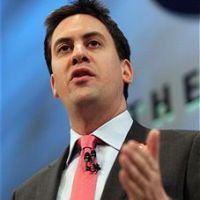
One question swirling through the sea of British politics is this: how will Ed Miliband act towards the Lib Dems? The Labour leader certainly didn't flinch from attacking the yellow brigade during the leadership contest, at one point calling them a "disgrace to the traditions of liberalism." But surely he'll have to soften that rhetoric in case the next election delivers another bout of frenzied coalition negotiations. Which is why Andy Burnham's article in the Guardian today is worth noting down. In making his point – that the Lib Dems haven't won the pupil premium they sought – he does all he can to force a wedge between Nick Clegg and his party. It's "Clegg's failure". It's "Clegg's ideological journey". It's a "problem for Clegg," and so on.

Labour loses the last semblance of its economic credibility

A quiet but important change to Britain’s political landscape took place in Brussels on Wednesday. The European Parliament passed a motion to increase the EU Budget by 5.9 percent, dashing, for the moment, government hopes that the EU might share in its citizens’ austerity. Labour’s MEPs were central to the motion’s success – 10 (one of whom glories in the name Michael Cashman) out of 13 voted against the Conservative-backed amendment to freeze the EU Budget.      As Alan Johnson took his feet and, like a gamey slim-line Falstaff, began to condemn public sector cuts, Labour MEPs saddled the over-stretched taxpayer with £900m in extra contributions – more than the odd nurse could have been saved with that tidy little sum.

Clegg hits back at the IFS

It's fast becoming a tradition: when the IFS calls the government's work "regressive," send for Nick Clegg to take the think tank on. He wrote an article for the FT debunking their analysis back in August. And, today, he does the same via an interview in the Guardian. It's pretty forceful stuff from the Deputy PM, as this quote testifies: "I think you have to call a spade a spade. We just fundamentally disagree with the IFS. It goes back to a culture of how you measure fairness that took root under Gordon Brown's time, where fairness was seen through one prism and one prism only which was the tax and benefits system. It is a complete nonsense to apply that measure, which is a slightly desiccated Treasury measure.

International aid should be abolished

The Comprehensive Spending Review was a step in the right direction, but I agree with Philip Booth and others when they say that there should be far more cuts down the line. But the biggest mistake was the announcement that the Department for International Development’s (DfID) budget will be increased by 37 percent by 2015. It undermines the narrative that the country will be suffering the cuts together and shows a tone-deafness in cutting spending at home while increasing it abroad. But worse, it exacerbates the problem that development aid does an immense amount of harm to the developing world, and this spending increase will only make things worse.

Nick Robinson earns his spurs

Nick Robinson has won blogger of the year at Editorial Intelligence's Comment Awards. However, he deserves an award for this bit of heroism on College Green. Hat-tip: Will Heaven. UPDATE: Robinson has taken the time to pen an explanation for his sign rage, good on him. PS: Oh yes. To those of a sensitive disposition, please ignore the anti-war clips accompanying the footage.

The ‘progressive’ debate re-opens

Busy times indeed for the numbercrunchers and policy wonks. I'm at what is, in effect, the Institute for Fiscal Studies' third post-Budget briefing of the year: one for Darling's final Budget, one for the Emergency Budget and one, now, for the Spending Review. We're half-way through, but we've already been served a hefty chunk of meat: the IFS's analysis of what yesterday's Spending Review meant for public spending and for welfare. So far, there are mixed tidings for the coalition. The IFS's acting director Carl Emmerson - who is filling in now that Robert Chote has departed for the OBR - set the tone with his opening remarks. "By 2015," he pointed out, "departmental spending will be lower under this government than it would have been under Labour".

More to Osborne’s plan than gambling

Paul Mason's review of the cuts for Newsnight last night (from 10:20 into the video here) was one of the most powerful critiques of Osborne from the left. His package majored on Osborne's decision to cut a further £11 billion from welfare and pensions, to soften the departmental cuts. Adopting a rather funereal tone, Mason declared that, "if you are poor, your life is about to change". He produced a decile graph, showing the poorest are hit second hardest. It foreshadowed this morning's Guardian cover: "Axe falls on the poor". Danny Alexander was fed to Paxo: "You said you would not balance your budget on the backs of the poor - when did you change your mind?" (Alexander performed very well - stunningly, even, given what he was doing only six months ago).

The Tory response to Osborne’s Spending Review

George Osborne was well received by the 1922 committee of Tory backbenchers when he addressed them on the spending review earlier. There was much thumping of desks, the traditional sign of approval at meetings of the ‘22.   Talking to Tory MPs this afternoon, they are pretty happy with the package. They are glad that the money being taken out of the welfare budget means that the departmental cuts are less than expected. Overall, they think the package is politically sellable and has denied Labour that many targets.   One concern is about how local councils, including Conservative ones, might react to a 28 percent cut in their funding from central government.

A long way to go

George Osborne has probably done enough to ensure that the public finances are back on track and that the national debt will not run out of control.   He has, however, taken only the first step on the road to reducing the size of the state. The government will spend the same proportion of national income in 2015 as it did in 2007. In other words, the size of the state will be no smaller when David Cameron goes to the country than when Gordon Brown left the Treasury.   Much more could have been done and low-hanging fruit has been left on the tree. Child benefit should have been scrapped for 16-19 year olds. Universal payments to pensioners (winter-fuel allowance, free TV licences and free bus travel) and the aid budget have been left untouched or increased.

Doing things right, but in the wrong way

In today’s spending review, George Osborne was absolutely right to hold the line on eliminating the structural deficit within one parliamentary term. In the Emergency Budget released earlier this year the coalition won fiscal credibility (and breathing space from international financial markets) by setting that goal. Failing to follow through on this goal at the first sign of difficulty would have damaged the government’s credibility and reputation in the eyes of international markets.   The Chancellor was also absolutely right to highlight the need for public service reform and to look to the welfare budget to provide some large and early savings.

Not as deep as expected

The cuts are not as bad as expected because the government has managed to make AME, annually managed expenditure, take much of the strain. The coalition is finding another £7bn from welfare to go with the £10bn of savings announced in the Budget. There is also another £3.5bn coming out of other bits of AME, more than half of which comes from the planned changes to public sector pensions. The child benefit change is also raising significantly more revenue than originally announced. This is because at the time of the announcement at Tory conference the coalition was planning to end child benefit at 16. This is now not happening.

Ten points about the Spending Review

In the end, George Osborne didn't flinch. The Chancellor is a clever political operator – too clever, sometimes – but the result is a cuts package that has surprisingly broad popular support. And this has been achieved, in part, by including measures that strike the likes of me as economically unwise. So much of this budget was known in advance that we didn't find out much new today. The below points are my thoughts not on the overall package – which I strongly support – but the pieces of it that we learned today: 1) Total state spending is falling by 3.3 percent in real terms over the next four years, at a lower level than the 3.7 percent forecast in the Budget.

The chart that could cause trouble for the coalition

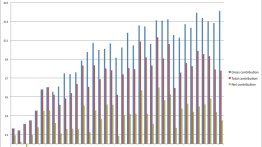
Just as they did in the Budget, the coalition have produced a chart showing the impact of the Spending Review's tax, spend and benefit measures on different income groups (see above). In many respects, this is a noble effort: it's a good deal more transparency than Gordon Brown could ever manage in his Budgets. But it also sets a trap for the coalition. As we've pointed out before, these kinds of analyses don't account for measures that can't be quantified in terms of the money handed out to, or taken away from, the public. So policies that might improve the life chances of the least well-off, such as better schools or benefit reform, don't get a look in.