Uk politics

The coalition pins a number on its welfare reforms

The coalition has few better defenders of its cause than Nick Clegg. And if you need proof, then I'd point you in the direction of his article for the FT when the IFS first called the Budget "regressive"; his article on welfare reform for the Times in September; or his summertime speech on social mobility, which, along with his 2009 conference speech, is perhaps the defining statement of his politics. I mention all this now, because there's another effective Clegg article in the papers this morning – again on welfare reform, and again dripping with punchy arguments in the coalition's defence.

Stop dreaming of Leo McGarry

The West Wing has an amazing hold over Fleet Street. The TV series has not only taught a generation of British reporters about US politics but even influenced the way that they see the workings of Westminster. Every time centre-right writers think David Cameron is seen as having made a mistake - mistreated his back-benchers, hired a personal photographer or made a foreign policy gaffe - they trot out the same refrain: No 10 needs a powerful Leo McGarry-type chief of staff who can bring the various parts of the operation together from Steve Hilton's work to Andy Coulson' operation. An enforcer, a puller-togetherer. I have three arguments against a British Leo McGarry.

What about Whig history?

Simon Schama, who is advising the government on drawing up a new history section of the national curriculum, has an essay in The Guardian today setting out why and what children should learn about our ‘island story’. Schama highlights Thomas Becket’s clash with Henry II, the Black Death and the Peasants' Revolt, Charles the First’s execution, the establishment of the British Raj in India, the opium wars and the Irish question, as things that every school kid should be taught about. But at the risk of being too crudely Whiggish, the most important thing is surely that pupils learn how Britain became a democracy. It will help people understand the importance of their democratic rights, if they know how they were won.

The new welfare consensus

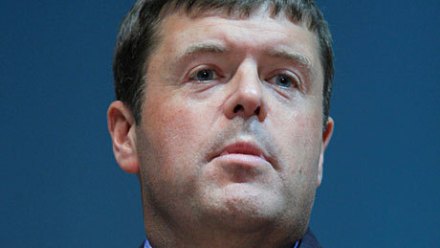
The New Statesman's George Eaton has already homed in on the key passage from James Purnell's article in the Times (£) today, but it's worth repeating here. According to the former welfare minister, he pitched something like Iain Duncan Smith's Universal Credit to Gordon Brown, and the reception it received catalysed his departure from government: "Before I resigned from the Cabinet, I proposed a similar plan to Mr Brown. But he was scared that there would be losers, and his refusal to give me any answer made me think that there was no point in staying inside the Government to try to influence him." This is of more than simple historical interest, not least because it suggests why both Labour and the coalition are where they are on welfare.

Gordon Brown speaks out about not speaking out

Courtesy of Andrew Sparrow's ever-superb live blog of the political day, from Brown's appearance before the Commons development committee: "Let's not get into this in any detail because it's a diversion from what we're doing, and I think it's unfortunate that this is the sort of question that is the first question to this committee from a member. Let's put it this way, most former prime ministers have rarely spoken in the house at all. I have decided obviously to concentrate on my constituency work and on some of the work that I've been doing internationally. But, at the same time, I have taken a very big interest in some of the questions that the government I led was involved in ...

Could Burma’s sham election bring real change?

For the first time since 1990, Burma went to the polls. Though the final results have not been released, most regard the election as a sham meant to cement military rule, with complex election rules put in place to exclude opposition candidates as well as interference from the junta in the campaign and a ban on foreign reporting.   Senior General Than Shwe and his camouflage-clad cohorts are likely to get away with the electoral theft. Nearly all of Burma’s neighbours -– Thailand, India and China included -– are willing to ignore the regime’s failings to obtain commercial benefits.  As The Telegraph has reported, Chinese investment in Burma stands at over £5 billion; China is particularly interested in Burmese oil and gas.

Delay in Oldham is good news for the coalition

The longer we go before a date is set for the Oldham East and Saddleworth general election rerun, the better it is for the coalition. This delay allows the Tories to give the Lib Dems a head start; Nick Clegg’s party can pour resources into the seat while the Tories do very little until a date is set. There will be a Tory candidate in this election, but I doubt that a Tory victory would be a cause for celebration at CCHQ or in Number 10. The Tory leadership knows that a bad result for the Lib Dems would make their coalition partners jumpy and make it harder for the coalition to govern effectively. A confident Liberal Democrat party would make Cameron’s life a lot easier than one more Tory MP.

The world is now in China’s hand

The world is undergoing a permanent shift of power from West to East, with China being the biggest beneficiary and middling states (like Britain) likely to be the biggest losers. The government may, in the words of William Hague, reject any kind of strategic shrinkage. But if China's economy continues to grow at even half the rate it has developed until now, Britain will end up looking small no matter what policy it pursues. What is the best way to deal with a country like China, which on current projections, will have a larger economy than the United States by 2050? How best to position Britain if the US and China abandon peaceful co-existence, and, as the FT's globe-trotter Gideon Rahman predicts in his new book Zero-Sum World, begin to fight?

Apocalypse soon

Writing in the Irish Times, Morgan Kelly has denigrated the Irish government’s handling of the economy. Comparisons are often counter-factual – Irish politics is not divided along lines of left and right, and the Celtic Tiger was made of tissue paper. But, to English readers - servicing a colossal national debt with their punitive tax bills, facing crumbling house prices, waiting for the moment when mortgages become beyond the reach of all but the cash rich, and encumbered with billions in worthless global bank assets - it is a truly terrifying read. I urge CoffeeHousers’ to read the whole piece, but here is its essence: ‘By next year Ireland will have run out of cash, and the terms of a formal bailout will have to be agreed.

Gove the bully?

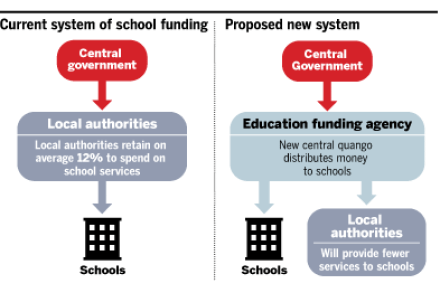
There has been a telling development in the resistance against ‘free schools’ this morning. The Evening Standard reports that Brian Lloyd, the headmaster of a school in Bromley, claims he is being ‘bullied’ by Michael Gove into adopting academy status. In a matter of weeks then, Gove has morphed from ‘miserable pipsqueak’ into Judd Nelson in The Breakfast Club – an odd transformation even in caricature. But depicting Gove’s schools revolution as the agent of draconian central government is a cunning ploy by local education establishments.   However, test Lloyd’s case and the real picture emerges.

Transparency is only half of the accountability story

And the word of the day is … accountability. Or at least it's the guiding ideal behind these departmental business plans that the government is releasing. When David Cameron introduces them later he will call it a "new system of democratic accountability". The idea is that, if we know what each department is tasked with achieving, we can praise them should they succeed – or attack them when they fail. Which is all very heartening. The Tories, in particular, came to power promising to lift the bonnet on the engine of Whitehall – and they are doing just that. But transparency is only one half of the accountability story. The other is the rather more bloody, but no less crucial, business of blame.

Congratulations to Ed Miliband and Justine Thornton

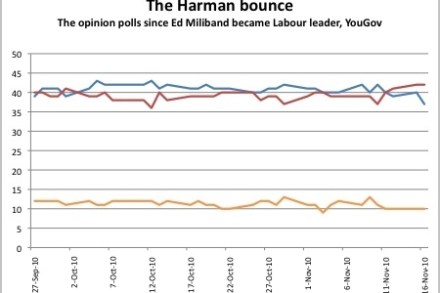
Congratulations to the Labour leader and his partner on the birth of their second son. Miliband will now take two weeks of paternity leave, during which time Harriet Harman will step into his brogues, etc. Here's the official statement: "Ed and Justine are overjoyed at the birth of their second child and can't wait to introduce the new arrival to his big brother, Daniel. Both are keen to pass on their thanks to the NHS staff at the hospital.

The Archbishop’s attack

The Archbishop of Canterbury’s intervention in the welfare debate isn’t going to change anyone views of the politics of the Church of England’s hierarchy. But what struck me was how even Archbishop is now using fair as shorthand for moral and right. IDS’ proposals do strike me as fair. They both offer long-term claimants a way to return to the routines and disciplines of a job while also creating an appropriate level of pressure to find work. One fascinating thing to watch is how often the Archbishop will speak out explicitly against government policies. Are we heading for a re-run of the 80s and all the controversies caused by Faith in the City, the CofE’s attack on the economic and social policies of the Thatcher government?

A day of electoral positioning

Away from turbulent priests and the welfare battle, there have been important changes to electoral politics today. The coalition partners will fight one another in Oldham East and Saddleworth. The seat is a three way marginal, which was number 83 on the Tories’ target list – precisely the sort of seat they’ll need to win in 2015. However, as James noted on Friday, the Liberal Democrats’ need is greater at the moment. Already, tongues are wagging that a pimpled Etonian is destined to journey north of the Watford Gap, safe in the knowledge that gallant defeat will ensure he is the next Prime Minister but three. Enter Nigel Farage, opportunistically.

Cameron the optimist

Is David Cameron just too nice? There are worse accusations to levy at a politician, but it's one I have heard suggested quite a lot recently - and I have written about it in my News of the World column today. He seems to have adopted the politics of wishful thinking. There is a "zip-a-dee-do-dah strategy" and precious little contingency if things go wrong. He makes defence cuts, because he doesn't intend to go on a massive deployment (neither did Woodrow Wilson). He will make prison cuts, because he thinks - bless him - that it won't increase crime. He signs a deal with French for military co-operation, thinking they will dump the habit of 500-years and actually agree with Britain on the next major foreign policy dispute.

Breaking dependency

IDS has played the party politics of welfare reform adeptly. He has built a coalition beyond the government, convinced of the need for urgency and dynamic reform. Even Labour is on side, only criticising when valid and necessary. It has not proposed a comprehensive alternative because it is protecting its record in government - sensing, correctly, that it is vulnerable to its history. Douglas Alexander rallies to New Labour’s defence in the Independent on Sunday. Labour’s record on welfare was not uniformly baleful: Purnell, Hutton and Murphy did important work, on which IDS has drawn. But Alexander overlooks some inconvenient truths.

Diversity is the name of the game: different pupils have different needs

The Times has a spread on free schools (p20-p21) today (£), focusing on the model of Kunskapskolan, one of the largest Swedish chains, who are setting up shop in Britain. "Pupils set their own homework, decide their timetables, set themselves targets and work at their own speed - oh, and they clock off at 2pm," says Greg Hurst, the paper's education editor. He visits one of their schools in Twickenham. "At the heart of the personalised learning", he says, lies a "one-on-one tutorial with a teacher for 15 minutes to review progress, weekly and long-term targets and timetables to meet them." A pupil, Lisa, is quoted saying: "You talk to the teacher and you cannot embarrass yourself. If you want to say something personal, you can say it to her.

Sense in Balls

Ed Balls has a reputation as a master of subterfuge and vicious smear – undeserved I’m sure. But the Shadow Home Secretary is right, incontrovertibly so, when he says that Andy Coulson is innocent until proved guilty. One can understand Chris Bryant’s fury that his phone was tapped by one of Coulson’s more furtive underlings. But the law does not presume guilt without evidence and before due process, and neither should he.