Uk politics

Miliband should re-examine Cameron’s playbook for the real lessons

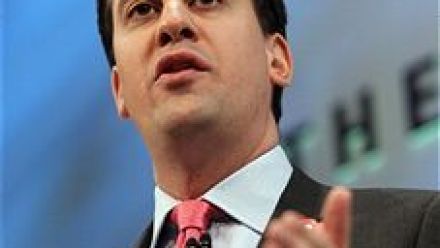
Ed Miliband has come roaring back from his paternity leave, keen to silence the growing chorus of criticism that he is not in control of his party and has let the Coalition determine the agenda.     To do so, he has come out in favour of a permanent top rate of income tax at 50 percent, but is otherwise taking a leaf out of the Cameron playbook - by establishing a number of policy reviews. But he might want to take another look at Cameron's experience. Reviews are a great tactical ploy - they show a willingness to "think big", allow a leader to reach out to a range party factions, aid front bench spokesmen to understand their portfolios and, perhaps most importantly, punts any serious policy discussions into the future.

From The Annals of the Gord

This snippet from Anthony Seldon and Guy Lodge’s latest book merits repeating: ‘As Barack Obama waited in a cavernous building in London, he suddenly noticed Gordon Brown stomping towards him down a corridor, with a flurry of aides in his wake. Unfortunately — probably because he has a glass eye as the result of a rugby injury — the Prime Minister didn’t see the President. To the surprise of Obama and his entourage, the British premier was doing a passable impression of an erupting volcano. He was clearly furious about something his aides had or hadn’t done. It was hardly the behaviour anyone would expect of a G20 summit host, and the American President watched with growing disbelief.

Ireland’s crisis is the fault of Fianna Fáil, not just the euro

In all likelihood, George Osborne will rise this afternoon to groans if not jeers. Britain looks set to lend Ireland £7bn as part of multilateral and bilateral bailouts. Many, particularly the Eurosceptic right, question our involvement, given our straitened financial circumstances and the apparent fact that Britain is sustaining the eurozone’s monetary and debt union, and will have to borrow to do so.     George Osborne has been adamant throughout: Ireland is too important to Britain’s recovery to risk collapse – British and Irish banks are closely linked, debts and borrowing are often co-dependent, trade is very profitable. That the bailout should strengthen the euro is a natural consequence of Ireland being a member of the euro.

Gove dilutes schools funding pledge

Last week, the FT revealed that Michael Gove was planning to introduce direct funding of schools, a move that weaken local authorities’ grip on education funding. Theoretically, it is a central component of Gove’s plan to free schools from local authorities’ bureaucratic control in a bid to improve standards by creating a quasi-market. It was, as Gove’s aides have been at pains to express, ‘exciting’. But Gove denied the story on Andrew Marr this morning: the legislation will contain no such clause. The FT responded this afternoon, proving that Gove has diluted the legislation.

Unite turns back the clock

Len McCluskey has won the race to lead Unite, Britain’s largest union. McCluskey will therefore have a major role in how the left respond to cuts in public spending. It would premature to label McCluskey but he comes with a reputation for militancy. He cut his teeth at the Transport and General Workers Union in the 80s and was a confidant of Derek Hatton’s. And he hasn’t forsaken childish things – being an integral figure in the long running and wholely counter-productive BA dispute. So, impeccable credentials for a man of the old left; akin to the roll call of Wellington, Sandhurst and the City for those on the right. But McCluskey must resist temptation.

The death knell for the Euro?

Are we witnessing the start of a very long death scene for the Euro? Asked if the Euro will survive, William Hague replied simply: “who knows?”. The new president, Herman Von Rompuy, has said that the Euro faces an “existential test”. We are looking at the very real prospect of the Euro’s collapse. And that “if we don't survive with the eurozone, we will not survive with the European Union”. This would, by necessity, require a new treaty - and give Britain an unprecedented opportunity to renegotiate its membership on terms the public regard as acceptable. In my News of the World column today, I say (£) that this presents Cameron with what would be the greatest foreign policy opportunity of his premiership.

Labour’s terror u-turn doesn’t lessen its authoritarianism

It is a day for about turns. First, the Pope has taken a historic decision to approve the use of condoms to fight AIDS; second, Labour has vowed to change its position on terror legislation and law and order. The party feels its record in government has damaged its reputation as a guarantor of liberty. Generation Ed wants to make another break from the past. Ed Balls has masterminded a cunning sleight of hand. The proposal is nowhere near as dramatic as headlines suggest. Labour will support the government’s proposed reduction of detention periods from 28 days to 14, provided the police and security services are not impeded by the change. Balls also indicated that he could support the abolition of control orders if an alternative was found.

Miliband’s New Generation draws the line under donor peers

Patronage remains a strong statement of leadership, and an indication of a leader's competence. As James noted yesterday, Ed Miliband chose the occasion to play one of his few picture cards: Maurice Glassman’s accession into red ermine is a major PR coup for Labour in the battle to be ‘progressive’ and community-focused. But Miliband’s list is also noteworthy for those it excluded. The Times has the details (£): ‘He decided against handing seats in the House of Lords to Nigel Doughty and Sir Ronald Cohen — who have given more than £6 million to the party since 2005 — as well as Jon Mendelsohn, Labour’s fundraising chief.

The kiss of death | 19 November 2010

Oh dear. On Wednesday night, we at The Spectator saw David Cameron handing Lord Young his Spectator/Threadneedle Parliamentarian of the Year in the category of Peer of the Year. “Over the decades,” said yours truly, “Prime Ministers have come to value his advice. As Thatcher put it: ‘other people bring me problems, David brings me solutions.'” Not any more - David has brought him a problem, followed by a resignation. Less than 48 hours after picking-up our award, his political career appears to be at an end.   It is true that there are some people who have had a “good recession”. That is: faced no danger of losing their job and saw the cost of their mortgage collapse as part of the monetary stimulus.

Lord Young resigns

Yet another GOAT fails to stay the course. Sky News reports that the gaffe-prone peer, Lord Young, has resigned, following his ill-considered comments about the 'so-called recession'. As the morning progressed, there was a growing sense of inevitability that he would resign. Once again, the government has been unable to steer a communications strategy through a brief and not very serious crisis: after all, Young was chatting idly to a journalist, not expounding government policy. I don't think his position was totally untenable: if Nick Clegg can hold forth on the legality of the Iraq war, why are the loose private opinions of an underling so unacceptable?

What the new peerages tell us about the party leaders

Today’s peerage list contains more interesting names than usual. Jullian Fellowes — Downton Abbey, Gosford Park, Snobs — is the one who will get the most attention. It is a sign of how confident David Cameron is feeling that he has risked the reopening of the whole class question. But perhaps, the most intriguing Tory appointment is Patience Wheatcroft. One imagines that she wouldn’t have taken the role unless it was a way to allow her to serve on the political front line. Howard Flight’s appointment to the Lords rights a wrong: his sacking as a candidate before the 2005 election was as unfair as it was hasty.

Full list of peerages

Number 10 has published the full list of new peerages. There are 27 new Conservative peers, including Sir Patrick Cormack, Richard Spring, Julian Fellowes, Howard Flight, Michael Grade and Patience Wheatcroft. The Lib Dems and the Labour party have acquired15 and 10 respectively. General Dannatt is also to be ennobled, but will sit on the crossbenches, confirming his break-up from the Tory machine. Expect his strident voice to be a constant feature of the debate growing from the troubled strategic defence review.

The transparency revolution gets under way

The press has gone to town on the government’s spending spree; more than £80bn of central government expenditure, itemised in this imposing document published today by Francis Maude. The government will squirm at some findings, notably on redacted defence procurement contracts, Libyan oil agreements and the 194,000 payments made to individuals and private companies (Capita has been paid £3.3bn for outsourcing government work, and De Beers, the diamond cutters, received nearly £1,200 from the Business Department). Already the blame game has begun, with Labour and the coalition sparring from a distance.

You’ve never had it so good

As Michael Gove said at the launch of the Conservative Party manifesto: “Britain in 2010 is a great place to live in many ways” (4:12 in on this video). Lord Young, The Spectator’s Peer of the Year, agrees: for many of us, we’ve never had it so good. He told the Telegraph: ‘For the vast majority of people in the country today, they have never had it so good ever since this recession - this so-called recession - started…Most people with a mortgage who were paying a lot of money each month, suddenly started paying very little each month. That could make three, four, five, six hundred pounds a month difference, free of tax. That is why the retail sales have kept very good all the way through.

Ed Miliband needs to make some noise

Today’s press will not have made happy reading for Ed Miliband and his supporters. Alan Johnson’s comments to The Times about the need to change the way Labour elects its leader has revived the debate about the legitimacy of Ed Miliband’s victory. Meanwhile in the New Statesman there’s a piece setting out the internal tensions within the party. Intriguingly, Lisa Tremble, who was David Miliband’s press chief during his leadership campaign, has put what could be considered a rather provocative quote on the record. She tells the magazine, ‘David’s rediscovered his excitement in politics…He’s looking forward to the new challenges. He’s not going anywhere.

Britain may not be able to avoid bailing out the Irish

This morning, it sounds as though Ireland has finally buckled to demands that they accept a bailout from the EU. Their central bank governor, Patrick Honohan, has said that he expects a "very substantal loan" from Europe – although the details, and debtees, are yet to be clarified. In the UK, of course, backbench MPs and others have been quick to condemn any move which would force British taxpayers to cough up cash under the EU’s various bail-out arrangements. Only problem is: the UK may not have a choice. The part of the eurozone bail-out package which Britain could be underwriting to the tune of £6-7 billion - the so-called European Financial Stability Mechanism – is not protected by a UK veto.

Labour’s ice cream moment

This from Matthew Taylor – the former No.10 head of policy, speaking to the Times for their series (£) on the fall of New Labour – deserves a post of its own: "For me, New Labour died when Tony bought Gordon an ice cream in 2005. I remember sitting in Downing St two days after the election win and chucking into the bin the proposal to break up the Treasury.

Ed Miliband has a choice to make about the unions

On the surface, there are one or two baubles to delight a Labour supporter: their party leader has just had a second son, of course; they are pushing ahead of the Tories in a number of polls; and the coalition will surely come under sustained and heavy attack as the cuts make themselves felt. But strip back the gloss veneer, and Labour has some agonising problems to worry about. Chief among those problems – as I've written before – is their uncertain message on the economy, stretching into an uncertain policy prospectus overall. Just what do Labour stand for? Then there's the simmering resentments between teams Ed and David, with the Balls axis looking to capitalise in between.