Uk politics

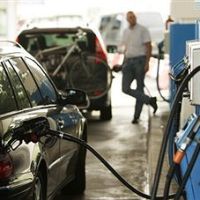
Will Cameron have a Brown moment over petrol?

Remember when Gordon Brown came up against Fern Britton in a TV interview? I've pasted the video above to remind CoffeeHousers of two persistent truths: how tricky a subject petrol costs can be for a serving Prime Minister (watch on from around the 0:50 mark), and how Labour are hardly blameless when it comes to the current cost of fuel. As Britton asks in the interview, "How much tax do you put on the fuel?" And the answer that Brown mumbled to avoid, from a House of Commons briefing note at the time, was this: In other words, for a huge portion of the New Labour years, fuel duty accounted for over half of the petrol price at the pumps. For a typical litre of fuel, duty was 36.86 pence when Labour came to power, and 57.19 pence when they left.

Keep calm and carry on

The Libya crisis looked like it would prove the critics of the government's Strategic Defence and Security Review right. Was it not the case that the HMS Cumberland, now seen as crucial for the evacuation of British nationals, would soon be decommissioned. And would the Harriers not prove useful in a potential intervention? Coupled with criticism that the government struggled to handle the evacuation of British nationals, it looked like the makings of a credibility-destroying theme: strategic misjudgement and tactical incompetence. But a week into the crisis, the government's handling of the evacuation – and response to the Libyan crisis overall – looks increasingly surefooted.

Labour sets about warning of a “cost of living crisis”

Ed Balls has been warming up to this one for a while, and now it has finally come: an all-out attack over rising prices. In an interview with the Sunday Times (£), the shadow chancellor warns of Britain's "cost of living crisis," and demands that George Osborne reverse the VAT increase. Much of his pleading is made on behalf of motorists, who – as I pointed out a couple of days ago – face punishment at the petrol pumps. He doesn't even mention spending cuts once, especially not where his own party's are concerned. Rising costs, clearly, are the new weapon of choice. And it's not just Balls.

Corporatism is not an adequate foreign policy

The events of the last two weeks have demonstrated that David Cameron needs a revamped foreign policy. This is not, in itself, a surprise. Foreign policies sketched out in opposition seldom survive contact with reality. Remember Bush saying he did “not do nation-building”? And who can forget the ignominious fate of Robin Cook’s “ethical foreign policy”? David Cameron sought to distinguish himself from the adventuring, idealistic Blair with what he regarded as a ‘pragmatic’ foreign policy – that is, promoting British exporters.

Why Ed Balls shouldn’t brag if the OBR downgrades its growth forecasts

Some speculation (£) today that the Office for Budget Responsibility will shortly downgrade its 2011 growth forecast – and hence the growth forecast in next month's Budget. If so, then you can expect Ed Balls to crow on and on about it. He did, after all, prime the attack in his recent clash with George Osborne across the dispatch box: "With consumer confidence falling, with inflation rising, with no bank lending agreement, no plan for jobs, no plan for growth, no plan B - does he really expect us to believe he can meet this forecast for economic growth this year or will he have to stand here at the Budget in six weeks' time and downgrade his very first growth forecast?

What difference will sanctions make?

Slowly, haltingly, the West decides what to do about Gaddafi. The latest news is that, having broken his silence over Libya a few days ago, Barack Obama is now imposing sanctions against its despicable regime: freezing assets, blocking transactions, that sort of thing. It follows a package of sanctions, including an arms embargo, that Britain and France have proposed to the UN. Although these sanctions are better than nothing – the West shouldn't house Gaddafi's slush funds, nor transfer weapons in his direction – they are of limited actual worth. Yesterday, the Mad Dog was parading the parapets once again, promising death for the protestors. You suspect he is unlikely to be put off by restrictions to his and his country's finances.

A landmark judgment for the security services on torture

The Court of Appeal made a momentous judgment this afternoon. It was hearing the appeal of Rangzieb Ahmed, the first man to be convicted on terror-related charges in this country, for which he is serving 10 years. Ahmed’s appeal was based on the allegation that British security services had been complicit in his torture and that the evidence for his conviction, gained by Pakistan’s ISI, was obtained by a series of extreme measures culminating in the slow removal of his finger nails. The appeal judges rejected Ahmed’s suit, saying that there was no evidence that his nails had been pulled out or that British officers ordered beatings. Ahmed’s claims had been proved ‘not to have occurred’.

The case for retaining Harrier in Afghanistan

Lord Owen, among others, has responded to Colonel Gaddafi’s bloodcurdling lunacy by insisting that a no-fly zone be imposed over Libya. But, as Con Coughlin has suggested, it is unlikely that Britain could support such an operation without a fixed-wing attached to an aircraft carrier. The debate about the Strategic Defence Review and Britain’s military capability has reopened. The SDSR put Afghanistan first. As armed Forces Minister Nick Harvey explained in a recent speech to RUSI: ‘Throughout the next few years, the mission in Afghanistan remains our main effort. Having made this commitment in the SDSR, this shaped many of our other decisions: the proposed changes to the Army, for example; and the preference for Tornado over Harrier.

Mandelson casts doubt on Miliband’s vision

The Kindly Pussycat has returned to the fray with a revised version of his memoirs. The FT's Jim Pickard has highlighted an arresting passage about Ed Miliband’s decision to execute New Labour. 'When Ed pronounced New Labour ‘dead’, he was not only being more categorical than was wise, but quite possibly more than he really intended. (xxi) …Even allowing for the tactical choices he had made in his bid to become leader, however, I was struck by the fact that he had given no strong clue during the campaign as to what alternative to New Labour he envisaged. He was quick to say what he was against: essentially, Tory policies and Tony’s policies.

It’s the Q1 2011 growth figures that matter now

The Office for National Statistics' preliminary figures for Q4 growth, released a few weeks ago, were a curious beast. They they were, suggesting that because of a snow-laden December our economy had started shrinking again, to the tune of -0.5 per cent. And yet so many other indicators were doing rather nicely: from activity in the services sector to the Exchequer's tax take. Many people, myself included, suspected it was only a matter of time before the ONS revised that -0.5 figure into more positive territory. Now time has passed, and the ONS has just revised the Q4 figure downwards, not upwards. Their preliminary figure wasn't quite right, they say. It should have been -0.6 per cent. Given that the snow was thought to reduce GDP growth by 0.

What price a fuel duty stabiliser?

Last we heard, the government was considering what it should, and could, do to suppress rising fuel prices. I wonder whether they have now pencilled something into March's Red Book. You see, after a swell of speculative fear triggered by events in the Middle East, the cost of oil is going up, up, up. Brent Crude touched $120 a barrel yesterday, the highest price since August 2008, although it eventually settled to around $111. Some observers predict it will soon exceed the previous record price of $150. Naturally, this threatens to unstitch the delicate fabric of the global economy – drastically rising oil prices could bring pervasive stagflation in their wake. But there are also more parochial concerns, not least what all this means for motorists.

Will cuts kill the little platoons?

David Cameron is clear that his Big Society is about more than just volunteering. Yet during the recent spat on the matter, one of the strongest, most frequent criticisms voiced against it was that cutting state spending will lead to fewer volunteers. Dame Elisabeth Hoodless, executive director of Community Service Volunteers, claimed that the coalition’s spending cuts risk “destroying the volunteer army”. Johann Hari was also among those making this attack. In the 10 O’Clock Live debate that Fraser blogged last week, he claimed that international evidence tells us that volunteering is highest where public spending is highest.

Sharing the burden will enable tax cuts in the future

The elderly have been sheltered from cuts, so far at least. New research from the IEA suggests that the government could save an additional £16bn a year simply by cutting the various non-means-tested benefits older people receive and by making some minor changes to the pensions system.   Such a cull would include: the abolition of free bus travel (which would save £1.3bn per year), free TV licences (£0.7bn) and the winter fuel allowance (£2.1bn). In addition to those cuts, the state pension age should be raised to 66, which would save an extra £5bn. Abandoning the “triple lock” policy for pension increases from 2011 would save another £5.

Reforming government: the Cabinet Office

Last week Reform published its 2011 scorecard of the Coalition Government’s public service reform programme. Following the articles on the health, welfare  and education reforms, Andrew Haldenby, Reform’s Director, discusses the Cabinet Office.   The Prime Minister has put the Cabinet Office in the vanguard of his efforts to reform public services.  The Cabinet Office Structural Reform Plan gives the Cabinet Office responsibilities to reform the Civil Service, create more competitive public sector markets and reduce inefficiency” (through the operation of the Efficiency and Reform Group).  These are major objectives on which the success of the wider programme depends.

A dodgy Damascene conversion

I’d like to add my tuppenceworth to the extraordinary story that Ed Howker has revealed in this week’s magazine about the funding of the ‘Yes to AV’ campaign. His investigation has exposed the Electoral Reform Society as little more than a front for a massive £21 million-a-year corporation called ERSL, which flogs voting equipment and services at a remarkable profit. Ed got hold of the accounts for ERSL, its money-spinning division, and a line jumped out at me: accounts. “A very healthy profit margin of 24 percent is nice to have,” it rather smugly said. You can say that again. That means, for every £4 it charges its clients (for the printing of ballot papers, sending of letters, etc) it made £1of profit.

A fraternal fix

"Now he and his leader know what it’s like to be people’s second choice," trilled George Osborne during his recent encounter with Ed Balls over the dispatch box. But might Balls actually have been Miliband's third choice for the shadow chancellorship? That's the implication of a delicious little story in today's Sun, which claims that Miliband first "tapped up" his brother, aka MiliD, when trying to replace Alan Johnson: "A Labour insider revealed: 'Ed's people were desperate not to give the job to Balls.' However, Ed stopped short of offering his brother the job when David made it clear he wanted to stay on the backbenches." If true, then it's revealing on two counts.

EXCLUSIVE: What the Yes to AV campaign doesn’t want you to know

For this week’s magazine (subscribers click here or follow this link to subscribe from £1/week), I have been on the trail of the ‘Yes To Fairer Votes’ (YTFV) campaign, attempting to discover the real source of their funding. What I found reveals a catalogue of undeclared donations, hidden money trails and one massive conflict of interest of such comical proportions that even Berlusconi would blush. It shows, in effect, that the largest single donor to the 'Yes' campaign is Britain's no1 vendor of ballot papers and vote counting services – a massively profitable outfit whose commercial interest in a new, complicated Westminster voting system is clear.

Downing Street’s bureaucratic burden

Do head over to ConservativeHome, where Tim Montgomerie has put together a comprehensive guide to the revamped Downing Street operation. I won't spoil its considerable insights here, except to highlight this: "An analysis of papers sent to Downing Street and the Cabinet Office has revealed that just 40% are directly related to the Coalition's programme. Roughly 30% come from the Whitehall bureaucracy and another 30% from the EU." James makes the point in his latest politics column that Tory ministers are becoming more and more Eurosceptic as they face the EU in government. That pile of European directives in the in-tray must just be getting too much.