Uk politics

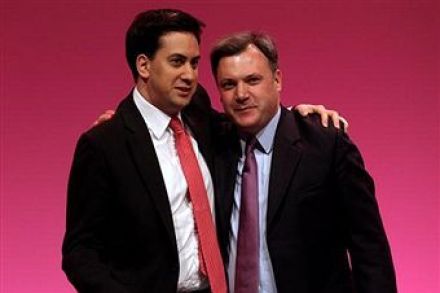
Clegg weaves more divides between himself and Miliband

From our UK edition

“He’s elevated personal abuse into a sort of strategy.” So says Nick Clegg of Ed Miliband in one of the most noteworthy snippets from his laid-back interview with the FT today. Another sign, were it needed, that Labour's animosity towards the Lib Dem leader is mutual — if they won't work with him, then he almost certainly won't work with them. And a sign, perhaps, that the coalition is keen to undermine Miliband's claim to post-partisanship (or whatever). Labour constantly criticise Cameron for being more Flashman than statesman. Now the same charge is being levelled at their leader too.
Why Cameron is so keen on start ups

From our UK edition

Cabinet ministers were relatively relaxed about yesterday’s march against the cuts—and rightly so. It did not make a sea-change in British politics and merely served to underline the lack of a credible alternative to what the coalition is doing. But what does worry ministers is where the growth is going to come from in the economy. The corporation tax cuts and the planning law changes are designed to help big business. But what the Prime Minister is more interested in is small businesses; hence tomorrow’s launch of Start-Up Britain by the Prime Minister. The scheme is designed to offer help—both technical and financial—to those looking to start a business.

Signs of nerves from the Lib Dems

From our UK edition

Judging by today's reports, it's fear and self-loathing in Lib Dem Land. And it's not just that one of their Scottish candidates has quit the party in protest at its, ahem, "draconian policies" and "dictatorial style". No, according to this insightful article by Melissa Kite and Patrick Hennessy in the Sunday Telegraph, there are more manoeuvrings going on than that. Here are some passages from it, by way of a summary: 1) Chris Huhne, waiting in the wings. "Mr Huhne, who ran Mr Clegg close in the last Lib Dem leadership election, has told colleagues privately that he would be interested in leading his party in the future." 2) A rebrand (back to the SDP?).

How much are we still paying for Brown?

From our UK edition

The story today of a pregnant woman being downgraded so Gordon Brown and his six aides could travel business class from Abu Dhabi to London may ring a bell with CoffeeHousers. We revealed last August that Brown has a taste for freebies, and that he was offering himself for $100,000 at speaking and award-giving engagements. For an extra $20,000 he would throw in his wife, Sarah. The Mail on Sunday reports that one of the pregnant woman's co-passengers was "livid, asking why it was necessary for all of [Brown's team] to be travelling business — and if it was being paid for by the taxpayer." He raises an interesting point. Tony Blair notoriously claimed a "pension" of £64k, and an £84k contribution for the costs of running his office.

Miliband is marching to the wrong drum

From our UK edition

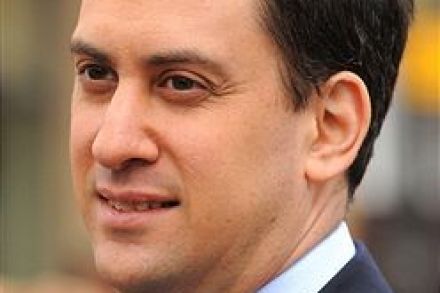
Ed Miliband’s decision to address today’s anti-cuts march is a strategic mistake. It makes him look like the tribune of an interest group not a national leader. He’ll also be tarred by association, fairly or not, if these scuffles we’re seeing turn into anything more serious. In his speech, Miliband tried to place the march in the tradition of those for female emancipation, civil rights and against apartheid. But this rhetoric doesn’t work as, given Miliband’s commitment to the Darling plan, we are talking about relatively modest differences about the pace of cuts. One other thing that was striking about the speech is Miliband’s attempt to accuse Cameron of practicing the politics of division.

Lawson: don’t do it George

From our UK edition

Lord Lawson has given George Osborne’s Budget an A-minus. Writing in today’s Times (£), the former chancellor said that his successor ‘got the big questions right’ by sticking to deficit reduction and assisting hard-pressed taxpayers where he could. The only blemish was the carbon price floor for the energy sector, which Lawson describes as ‘nothing less than an anti-growth strategy’.  Also, Lawson warns Osborne against uniting income tax and national insurance. Unsurprisingly, Mrs Thatcher’s great reforming chancellor looked into this measure and is convinced that it is a non-starter. ‘This superficially attractive reform, which is by no means a new idea, was known in the Treasury in my time as NICIT.

Marching with no alternative

From our UK edition

Thousands have converged on London today, to march against the monolithic evil of 'cuts'. They have not stated an alternative, a fact that led Phil Collins to write an eloquently savage critique in yesterday's Times (£). That the protesters are incoherent beyond blanket opposition to the government is not really an issue: as this morning's lead article in the Guardian argues, the Hyde Park rioters of 1866 weren't brandishing drafts of the Second Reform Bill. But it's intriguing that Ed Miliband has decided to address this rally, thereby endorsing it. The Labour party hierarchy recognises that it is taking an enormous and perhaps totally unnecessary risk. First, Ed Miliband's oratory is not in the same league as that of Michael Foot, Jim Callaghan and Harold Wilson.

Miliband’s two big risks

From our UK edition

Who would have thought it? Miliband's short speech in Nottingham today went largely unheralded, and doesn't seem to be getting a whole lot of attention now — and yet it tells us more about his approach to Opposition than almost anything he has said previously. Fact is, the Labour leader is taking two risks that may be either bold or foolhardy, depending on your point of view. These risks could come to define his Labour party. The first is splashed right across the entire speech. Miliband dwells on three "challenges" that the country will face over the coming decade: the "cost of living crisis"; declining prospects for the next generation; and the erosion of the "Merrie Englande" that David Aaronovitch wrote about this week.

Welcome revisions to IPSA’s rules

From our UK edition

If you want to get an MP going, just ask them what they think of IPSA — the new expenses watchdog. The body is hated: when Cameron joked at PMQs this week that it should be relocated to Croydon there was laughter across the House. IPSA is regarded as rude and inefficient. When Tory MPs were in a particularly grumpy mood before Christmas, David Cameron went to the ’22 and promised that IPSA would either have to mend its ways or be mended. Today’s revisions to the rules by IPSA (£) will go some way to addressing the concerns of MPs. The old rules only allowed children to be treated as dependants until the age of 5. Now, they can be treated as such until 18.

What Portugal means for the UK

From our UK edition

Last night, Portugal's parliament voted to reject its latest measures to deal with its deficit. It was the fourth time that the Portuguese parliament had been asked for more taxes and for more spending cuts. The result has been a further loss of confidence in Portugal’s ability to pay its debts. Market interest rates have risen to over 8 percent. European leaders are meeting this weekend to work out a path forward. The lessons for us here in the UK are starkly clear. First, it is better to set out all the difficult decisions needed to deal with the debt crisis, even if these take place over a number of years, rather than continually going back to ask for more. That the Budget was neutral overall shows that a clear plan is being followed here.

Cameron’s €4 billion Portuguese challenge

From our UK edition

As if the budget and Libya weren’t enough, the UK Government woke up today with another major challenge on its hands – yet another flare-up in the eurozone debt crisis, which has been continuing to bubble away under the radar.   Yesterday, Portugal’s Prime Minister José Sócrates literally walked out of Parliament, during a debate on EU-backed austerity measures. The austerity package was subsequently voted down and shortly afterwards Sócrates announced his resignation. Portugal is now facing the prospect of being without a government for months, as its electoral rules require a 55 day break between the dissolution of Parliament and new elections.

Merging Income Tax and National Insurance Contributions – Simples?

From our UK edition

“I am announcing today that the Government will consult on merging the operation of National Insurance and Income Tax.” The word ‘consultation’ in the Budget drew the longest, loudest sigh from me. Some commentators had hinted that Osborne was considering merging Income Tax and National Insurance Contributions (NICs), which would be a fantastic move towards simplifying our tax system.  Of all the pre-Budget leaks, this was one that sounded truly exciting and innovative.  But, alas, this idea is only in infancy and all that was promised was a consultation.  Of course, the Chancellor can’t rush into this. He has to get this right if it goes ahead, so a consultation is probably prudent.

Laws gives another signal on 50p

From our UK edition

Usually, the task of David Laws Watch is to judge just how close the former minister is to a return to government. But, today, his article for the FT is worth highlighting for a different reason altogether. Referencing George Osborne's signals on the 50p rate in the Budget speech, Laws has this to say (my emphasis): "The chancellor also signalled that excessive marginal rates of income tax – of 50 per cent, even 60 per cent – are on their way out. The Treasury believes that the majority of expected revenue from the current top rate is lost in avoidance. But the government is rightly cautious about the timing of the removal of these high rates: this cannot be our highest priority when those on low incomes are facing a real squeeze.

Scouring the Budget small print

From our UK edition

This morning's newspapers have a feast of analysis on the Budget. I've covered 15 of them, and what journalists normally do is spend the day trawling the small print of the Budget document hunting for stories. But this time, the stories seem to have migrated to the Office for Budget Responsibility's accompanying report, packed with new analyses and metrics — even disaster scenarios — which those with an interest in UK economics will find useful. The OBR document is now released with the Red Book, and speaks with the authority of government economists who (unlike the rest of us) have had weeks to chew over Osborne's claims. The OBR must now be considered part of the Budget's small print.

Osborne gets his man

From our UK edition

So Martin Sorrell is set to move WPP back to Britain. This was always part of Osborne's Budget plan, as I revealed in my News of the World column and also mentioned on Coffee House. As I said in the newspaper: "The Chancellor has been on bended knee, pursuing Sorrell with energy that would make Berlusconi blush. 'What do we need to do?' he asks. Sorrell’s answer is to cut the tax on overseas profits. So Osborne will, hoping to lure back companies who generate most of their cash abroad." Today, Sorrell will announce that he'll come back from Ireland if the Budget is made law. Of course it will be made law, governments collapse if they can't have their budget passed. So he'll redomicile, as will (perhaps) other multinationals.

Osborne’s 50p question

From our UK edition

If I was a betting man, I’d fancy wagering that if the economy is growing at a decent clip again by next year’s Budget, Osborne will abolish the 50p rate then. His announcement of a review of how much revenue it actually brings in, strikes me as a move to pave the way for its abolition. This review is, if it is using dynamic models, likely to conclude that the rate is bringing in no, or minimal, revenue and that a lower rate would produce more. This would give Osborne the political cover to reduce the rate. But, as with so much else, this is dependent on growth returning to the economy.  Osborne won’t want to get rid of the 50p rate until he can do some other things such as unfreezing public sector pay.

On the whole, a qualified positive

From our UK edition

To be sure, there was some good stuff in the budget, and I probably feel more positive about it than I expected to. The additional 1 percent cut in corporation tax, above and beyond what had already been announced, was perhaps the high point, although it will be the 1p cut in fuel duty (replacing a planned 5p rise) that draws the most favourable headlines. The rise in the personal allowance, meanwhile, is something the Adam Smith Institute has advocated for a (very) long time. Still, there were, as always, downsides. The goal to make UK corporation tax the most competitive in the G7 is a laudable one, and the Chancellor should be saluted for it. But as welcome as the corporation tax cuts are, they are only one part of the picture.

Osborne made a start on deregulation, but there’s a long way to go

From our UK edition

This was always going to be a rather modest budget. Having set out the Comprehensive Spending Review last year, the government had already decided its broad plan; we were never going to see much more than some minor tinkering. Nevertheless, as a budget billed as a serious driver for growth, it is a disappointment. George Osborne seems to have a reasonable understanding of the problems that need tackling, but he seems shy of solutions. Concerned about the regulatory burden on business and enterprise, the Chancellor announced that he would reduce the cost of compliance by £350m. But, even on his own figures, this is a tiny slice of the £90bn overall cost to companies. Cutting red tape by 0.

Balls replies with mischief

From our UK edition

Ed Balls has just delivered Labour’s Budget briefing. His main point was that the Office of Budget Responsibility now forecasts higher levels of unemployment than it did last autumn. He claimed that this would lead to a £12.6bn increase in spending on unemployment benefit. He also argued that the decision to increase tax thresholds by CPI rather than RPI was an effective tax increase and that it will hit the middle hardest. In a classic piece of Ballsian mischief, he reveled in pointing out that the Office of Budget Responsibility says that it received news of the extra cut in corporation tax and the 1p cut in fuel duty too late to add to its model.