Uk politics

A shameful episode

From our UK edition

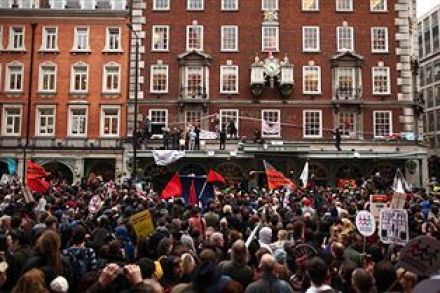
Libby Brooks’ piece in The Guardian today is shameful. Writing about the violence that followed last weekend’s march, she  argues that the ‘relevant question is not whether or how to condemn those acts – but if any coherent agenda lies behind them and how important it is for that to sit neatly with the agenda of the whole’. She even quotes approvingly the idea that the violence can be beneficial as it might push the government to do a deal with the moderate elements of the movement and wants us to remember that 'the vast majority of damage on Saturday was sustained by property, not persons (84 people were treated for mainly minor injuries); nor was this vandalism mindless, but targeted at banks and other emblematic high street institutions.
Shaky dealings are damaging the reputation of Britain’s universities

From our UK edition

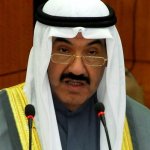
A delegation from Durham University flew to Kuwait in February to build what it termed ‘academic partnerships’. They succeeded. On Monday afternoon, Durham University announced the formation of the ‘Al-Sabah Programme in International Relations, Regional Politics and Security.’ In an internal document sent to academic staff, the Vice-Chancellor, Professor Chris Higgins, revealed that that this seat had been ‘funded personally by Sheikh Nasser Al-Sabah of Kuwait’, the Kuwati Prime Minister, and that the ‘£2.5million endowment will support the Al-Sabah Chair, associated research and two PhD studentships in perpetuity’. Al-Sabah has made what is politely termed a singular contribution to democratic traditions.

How to encourage the others

From our UK edition

Lord Malloch Brown has inverted Voltaire’s maxim on the execution of Admiral Byng: treat Moussa Koussa well to encourage the others. Most of this morning’s papers expect further defections from the Gaddafi regime ‘within days’. These defections are expected to come from Gaddafi’s civil administration; the Colonel’s military and security arms remain fiercely loyal. The Foreign Office refuses to give a ‘running commentary’ on events, but the confidence of its officials is ill-disguised. It is increasingly apparent that Tripoli is spiralling into desperation and that the fetid regime is fracturing. The Guardian reports that an aide of Saif al-Islam Gaddafi, Mohammad Ismail, has been in London.

Welfare to work will be the first big test of the coalition’s new model for public services

From our UK edition

Moving people from welfare to work is going to be the first big test of the idea that public services should be paid for by the state but don’t have to be provided by the state. The coalition intends to task private sector and voluntary groups with moving the unemployed back into the labour force and then pay them by results. For every person they move back into stable employment, they will be paid a fee—based on how long the person has been out of the labour market—out of the saved welfare payments. Tomorrow, the government intends to announce the groups that have successfully bid for these contracts. I understand that the voluntary sector has secured contracts with the potential to be worth north of £100 million.

Ed Balls ties himself in knots

From our UK edition

The Most Annoying Figure in British Politics™ is spread absolutely everywhere today: in the newspapers, on Twitter and, most notably, in interview with the New Statesman's Mehdi Hasan. The interview really is worth reading, not least because it pulls out and probes some of Ball's arguments, both for himself and for Labour's fiscal reasoning. Guido has already dwelt on the former — "I'm a very loyal person," quoth the shadow chancellor — but what about the latter? Three things struck me: 1) Oh, yeah, there was a structural deficit. The Big News here is probably Balls's admission that Labour did run up a structural deficit (i.e. a deficit that remains even when the economy is functioning as well as it should) after all.

When it comes to global warming, rational debate is what we need

From our UK edition

We had a sell-out debate on global warming at The Spectator on Tuesday and, as I found out this morning, the debate is still going on. The teams were led by Nigel Lawson and Sir David King, and I was in the audience. I tweeted my praise of Simon Singh’s argument as he made it: it was a brilliant variation on the theme of "don’t think – trust the experts". He seems to have discovered the tweet this morning, and responded with a volley of five questions for me. Then David Aaronovitch weighed in, followed by Simon Mayo. At 8.35am! I had the choice between replying, or carrying on with my gourmet porridge. I chose the latter, and promised to blog my response later on to Simon Mayo and the Breakfast Crew. So here goes.

Exclusive: the man who saved the Zurbarans

From our UK edition

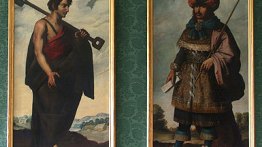
The drama over Durham's Zurbaran paintings has reached an extraordinary conclusion — and one that is revealed exclusively in this week's Spectator. The protest against the Church of England's proposed sale had snowballed into a national campaign, with Jeremy Hunt calling for them to be “enjoyed by the public.” Today we can disclose that they have been bought for £15 million — by an investor (and Spectator reader) called Jonathan Ruffer, who has decided to gift them back to the church. Here, for CoffeeHousers, is Charles Moore's interview with him for the magazine: ‘It’s the pearl of great price,’ says Jonathan Ruffer. Like the merchant in the Gospel, he is selling all that he hath.

Things are getting fraught inside the coalition as AV vote looms

From our UK edition

Relations between the coalition partners are fraught at present, more of which in the column tomorrow. The main cause of this tension is the AV referendum which is pitting the two sides against each other in an increasingly bitter fight. But even by recent standards, Chris Huhne’s response to the Tory chairman Sayeeda Warsi’s claim that AV would help the BNP is dramatic. As Patrick Wintour reports, Huhne has accussed Warsi and the No campaign of indulging in an ‘increasingly Goebbels-like campaign.’ This latest riposte follows Huhne’s letter at the weekend which made clear that the No campaign’s tactics were threatening the existence of the coalition. The next nine months will be the period of maximum danger for the coalition.

Mundane duties interrupt Field Marshal Cameron

From our UK edition

Cameron was at pains to disguise it, but his impatience finally gave way at PMQs today. What a contrast with the last 24 hours. The nemesis of Gaddafi, the terror of Tripoli, the champion of the rebels, the moral conscience of the West, the world’s latest and greatest international tyrant-buster had to return to earth, and to the House of Commons, to deal with enterprise zones, disability benefits, carbon trading price structures and all the belly-aches of the provincial grockles who put him where he is. What a chore. Ed Miliband had a pop at him on police numbers. The Labour leader asked a clear and simple question. ‘Will there be fewer front-line police officers in future or not?

An explosive session

From our UK edition

This PMQs will be remembered for the Cameron Balls spat. As Cameron was answering a question from a Labour MP, he snapped at Balls who was heckling him, shouting ‘you don’t know the answer, you’re not properly briefed, why don’t you just say you’ll write to her’. A visibly irritated Cameron shot back, ‘I wish the shadow Chancellor would shut up and listen for once’. At this the Labour benches erupted, their aim at PMQs is always to get Cameron to lose his temper and they had succeeded. Cameron then produced a brilliant comeback, saying that Balls was ‘the most annoying person in British politics’ and ‘I suspect that the leader of the opposition will come to agree with me.

PMQs live blog | 30 March 2011

From our UK edition

VERDICT: What happened there, then? The Prime Minister often has a confident swagger about him when it comes to PMQs — but today it went into overdrive. He simply couldn't conceal his glee at taking on Eds Miliband and Balls; the first over his appearance at the anti-cuts demonstration, the second for just being Ed Balls. It was a little bit Flashman from the PM, perhaps. Yet, on this occasion, it also helped him sail through the contest more or less untroubled. Aside from the theatrics, the serious talk was reserved for whether the coalition should help arm the rebels in Libya. The PM's official position was that we shouldn't rule it out, although, if anything, he sounded as though he quite favours the idea.

Danny Alexander’s duty

From our UK edition

In the aftermath of the Budget, the Lib Dems were keen to let it be known that the idea of a windfall tax on North Sea oil companies to pay for ending the fuel duty escalator was Danny Alexander’s idea. But, as Andy Sparrow notes, this claim has ended up causing them some problems. In the chief secretary’s native Scotland, where the Lib Dems are already worrying about a humiliating set of election results on May 5th, the idea has not gone down so well as it has south of the border. The Scotsman reports,  that Lib Dems in Scotland have been scornful of the move. The Lib Dem MP Malcolm Bruce has even accused Alexander of being “economically illiterate". I rather suspect that this line might pop up at PMQs today.

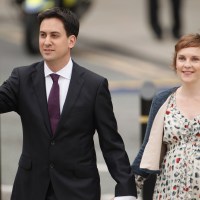
Ed Miliband and Justine Thornton to marry

From our UK edition

A scoop-and-a-half for the Doncaster Free Press, who were first with the news of Ed Miliband and Justine Thornton's wedding date. It is 27 May, lest you hadn't heard already, and will take place at a country hotel near Nottingham. Here's what the Labour leader tells the paper: "'This is going to be a fantastic day for us both and I feel incredibly priviliged to be marrying someone so beautiful and who is such a special person. It’s the right time for us to do this and I’m really looking forward to a lovely day. 'We’re going to have a party in Doncaster when we get back from honeymoon — which will be in an undisclosed location!

It’s happening in Monterrey

From our UK edition

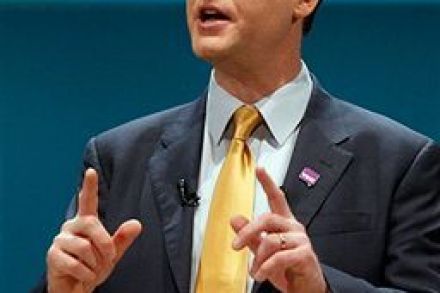
Nick Clegg is in Mexico, striving to build a trade relationship. The Guardian reports that Clegg will address the Mexican Senate, in Spanish. He will concentrate on praising the education sector, which he hopes to export. There are also plans to open British universities to affluent Mexicans, and Clegg is being accompanied by four universities vice chancellors and David Willetts. At the moment, trade between Britain and Mexico, the world’s 14th largest economy, is negligible – Clegg claims that Britain accounts for less than 1 percent of rapidly developing Mexico's imports. There are huge opportunities to expand.

Memo to Johann Hari: this government isn’t planning to “pay off our debt rapidly”

From our UK edition

What is the biggest lie in British politics? According to a new post by Johann Hari, it's that our debt is at dangerously high levels. "As a proportion of GDP," he writes, "Britain's national debt has been higher than it is now for 200 of the past 250 years." He makes some pugnacious points that will have you nodding enthusiastically, or groaning wearily, depending on your political persuasion. But he also undermines his argument right from the off, in his description of the Big Lie itself. Here it is: "Here’s the lie. We are in a debt crisis. Our national debt is dangerously and historically high. We are being threatened by the international bond markets. The way out is to pay off our debt rapidly.

Allowing localism to flourish

From our UK edition

David Orr, Chief Executive of the National Housing Federation, and 551 local councillors have written to the Times (£) warning that short-term cuts to care charities will bequeath deeper medium-term costs. They say: ‘Local councils face a difficult spending situation. However, cutting services for the vulnerable does not make financial sense. Without early identification and support, vulnerable individuals will reach crisis point as their needs become more severe, leading to greater pressure on acute health services, the criminal justice system and carers.’ The spending settlement in local government is stringent and some services are being necessarily affected: even model councils like Reading have cut some of its education services.

Cameron’s Libyan double standard

From our UK edition

After the Libyan blood money scandal at the LSE, inquiries were bound to be made about other universities. Robert Halfon, the Conservative MP for Harlow, has exposed how Liverpool John Moores University (LJMU) agreed to contracts with Gaddafi’s Libya worth at least £1,272,000.00. (He has since been threatened with a defamation suit for pointing this out, but that’s for another time.) He raised the issue in parliament and the Prime Minister replied: ‘I think that there are lessons to be learned. As I have said, I think that it was right (of the previous government) to respond to what Libya did in terms of weapons of mass destruction, but I do not think that the way in which that response was handled was right.

Another phase in Gove’s revolution

From our UK edition

Michael Gove has just finished announcing to the Commons his proposed replacement for Educational Maintenance Allowance. The new scheme is more targeted than the old one that went to 45 percent of those who stayed in education post-16. Interestingly, it will be administered by the schools and colleges themselves. Gove’s argument is that it is these institutions that are best equipped to know which student needs how much money to support them staying in education. This drew predictable opposition from the Labour benches which wanted a top down, national scheme. On top of this discretionary fund, every student who is receiving income support will receive £1,200 a year.

Clegg’s new direction?

From our UK edition

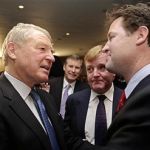
Perhaps the most interesting political story of the weekend was Nick Clegg’s political mentor, Paddy Ashdown rejecting the idea that the Lib Dems should be equidistant between the two main parties in an interview with The Times: 'I don’t want to go back to using the word ‘equidistant’ because the world has changed.” He predicts that Labour will look increasingly like “a bunch of superannuated students shouting from the sidelines.' There are two schools of thought in the Lib Dems about their approach to the next election. One has it that the party must appear equally prepared to do a deal with either of the main parties in the event of a hung parliament.