Uk politics

Cameron promises that Libya is ‘not another Iraq’

From our UK edition

Discussion of military action brings a different atmosphere to the chamber of the House of Commons: quieter, less disputatious, more consensual. In opening the debate, the Prime Minister took a huge number of interventions including a large number from those MPs who are most sceptical of this intervention. All were heard respectfully and answered respectfully. Cameron’s desire to find consensus was part of his broader message that this is ‘not another Iraq.’ He stressed that the action in Libya was necessary, legal and right and that any kind of occupying force is ruled out. He argued that the intervention had been ‘in the nick of time’ to prevent a massacre in Benghazi.
Putin rages against the “crusading” West

From our UK edition

A gold star for Vladimir Putin, for providing us with one of the most extraordinary interventions of the day. While we knew that the Russian Prime Minister is opposed to military action in Libya — and also that he is no natural friend of the West — it is still striking to hear him talk as he does in the video above. "It reminds me," he says of the UN resolution at hand, "of the medieval call for a crusade." Ever the pacifist, he then goes on to rail against the "steady trend in US policy" to get involved in conflicts abroad. Meanwhile, our government is doing its part to assure Parliament, and the public, that their policy on Libya is more multilateral than medieval. Their note on the legal basis for action in Libya has just been published.

Targeting Gaddafi

From our UK edition

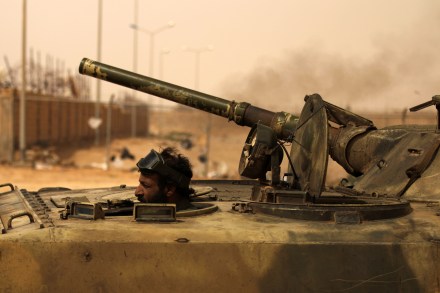
The press is currently making great play of an apparent difference between General Richard and Liam Fox on whether or not Gaddafi can be targeted. The whole debate flags up one of the absurdities of international legal convention. If it is legitimate to hit a Libyan tank crew moving on Benghazi, why it is not legitimate to target the person who is ultimately giving these orders?     Given the whole nature of the Libyan state, the fastest — and, I would say, most humane — way to end this conflict would be to kill Gaddafi.

Obama’s nervousness makes life difficult for him and his allies

From our UK edition

Gingerly, gingerly — that's how the Americans are approaching the presentational battle over Libya, if not the actual campaign itself. There is no bombast in the official broadcasts from Washington, nor categorical intent. Instead we have Robert Gates emphasising, as he did yesterday evening, that the US will soon handover "primary responsibility" for the mission to us or the French. Or there's Mike Mullen, the Chairman of the Joint Chiefs of Staff, saying that "potentially one outcome" is for Gaddafi to stay in power (see video above). The idea of regime change, or of deeper US involvement, is being downplayed all round. What's clear, perhaps even understandable, is that Obama & Co. are eager not to exhume the ghosts of Iraq.

Debunking UK Uncut

From our UK edition

You may have heard of UK Uncut? They’re certainly good at attracting attention: forcing their way into Barclay’s bank the other week and managing to close a branch of TopShop temporarily.   But what they have in noise they lack in substance. New research by the Institute of Economic Affairs exposes how the ‘grassroots movement’ want Vodafone to pay tax in the UK on the profits it makes in Germany. It’s a reasonable principle – taxing companies based on where they are domiciled is fine. But they also want Boots, a Swiss company, to pay tax in the UK on the profits it makes selling items to Britons, from British shops. You can have one principle or the other, but not both – not unless we want businesses to locate elsewhere.

Why Osborne is so interested in merging income tax and National Insurance

From our UK edition

When trying to understand George Osborne Budgets, you need to bear in mind the mantra that he and his team live by: in opposition you move to the centre, in government you move the centre. It is this desire to move the centre ground that lies behind Osborne’s keenness to merge income tax and national insurance. As I say in the Mail on Sunday, the thinking behind it is that if people were more aware of how much tax they really paid, they’d be more inclined to vote for low-tax parties. At the moment, National Insurance is one of the taxes people are least aware of as it is simply deducted from their pay cheque. It is no coincidence that the most unpopular taxes—council tax, inheritance tax—are the ones that voters are most aware of paying.

The allies converge on Gaddafi

From our UK edition

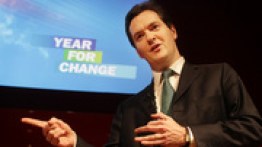
George Osborne appeared on the Andrew Marr show this morning to introduce the Pledge of his Budget magic trick. But Marr and his viewers wanted talk about the show of military strength over Libya. Osborne reiterated that the government is committed to enforcing the UN Resolution and had no plans to deploy ground troops at this stage. He refused to rule out the use of British ground forces in the future. Privately, officials are trying to dispel the perception that the UN Resolution forbids the use of Special Forces commandos to assist the bombing campaign. The Resolution does not permit an occupation, but it would be very surprising if covert operations were not already being planned against Gaddafi's military installations and logistical infrastructure.

George Osborne’s Budget magic trick

From our UK edition

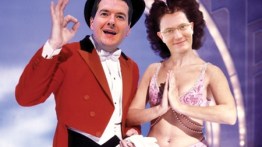
Spare a thought for George Osborne and Danny Alexander. They had their own budgetary magic show planned for Wednesday, and were yet again planning to be the Paul Daniels and Debbie McGhee of British politics. Now, it looks like they’re going to be competing with exploding Libyan MiGs for the national attention. This Budget was, as James says in his cover story this week, the government’s great hope for getting itself back on track. Grabbing the newspaper headlines, resetting the narrative etc. Now, the budget will be overshadowed by war. These Tomahawks don’t come cheap and Osborne has pitifully few cards to play.

The government has been the author of its troubles

From our UK edition

In his Spectator column this week, James Forsyth painted a picture of a government taken by surprise by enemies who have, in effect, ambushed them - the civil service, the civil service's lawyers and the European Union in particular. Clearly the government is frustrated by the “forces of conservatism” and the “enemies of enterprise”, but the difficult truth is that a lot the government's problems are of its own making, and in its own hands to put right. When it comes to the civil service, the government hasn't simply inherited an uncooperative Whitehall. It has strengthened its position, as a conscious policy decision. Francis Maude said it in terms at one of Reform’s post-election conferences.

The threat to a British liberty

From our UK edition

It’s a funny old world. I have now been contacted by two journalists informing me that Bedfordshire Police are investigating The Spectator. Why? Because of the Melanie Philips blog where she referred to the “moral depravity” of “the Arabs” who killed the Fogel family in Israel. CoffeeHousers can judge for themselves if they agree or disagree with her language and views – but should this be illegal?  The Guardian has written this story up, claiming The Spectator is being investigated by the Press Complaints Commission. This is untrue. The PCC tell me that a complaint has been lodged, but that’s as far as it has gone. They investigate only if they believe there is a serious prospect that their code has been breached, and it hasn't.

The NHS needs reform, but are Lansley’s the way to do it?

From our UK edition

I am in two minds about Andrew Lansley’s proposed reforms of the National Health Service, the cornerstone of which is the transfer of commissioning responsibility from Primary Care Trusts to GP-consortia. On the one hand, the NHS desperately needs radical reform. On the other hand, I’m not sure these are the right reforms, and I’m not sure they are sufficiently radical to deliver a real difference to patients. Let’s start with why the NHS needs reform. Firstly, it is eye-wateringly expensive at 8.1 percent of 2010 GDP, or £120bn a year. Costs have skyrocketed since 1999, doubling in real terms in the 10 years to 2009. Over that same period, productivity fell. We are spending more and more, and getting less for our money.

Clegg’s coup

From our UK edition

Libya is not the only scene of conflict today. Nick Clegg has just won a powerful victory over the Conservatives, appointing a Bill of Rights commission which is certain to leave the ECHR intact. When you see the names Philippe Sands, Helena Kennedy and Lord Lester on the list — even alongside Tories — you know that this review is over before it has begun. Clegg is a firm believer in Europe, and has played his hand very well — outmanoeuvering the Conservatives who thought that a British Bill of Rights should supplant edicts from Strasbourg. Upshot: there may still be a Bill of Rights, containing various declarations inserted by the Tories on the panel. But what the BoR says will matter not one jot.

Learning from recent history

From our UK edition

With a UN resolution now passed, Prime Minister David Cameron has displayed diplomatic skills his critics believed he did not possess. As NATO is planning to enforce an expansive no-fly zone over Libya, it is worth pausing for a moment to consider such a mission's aims and to learn the lessons from recent wars. The strategic aim of the mission cannot only be to protect Libyan civilians. Framed in this way, the international community will face the same problems it did Bosnia: for instance, the Srebrenica massacre happened while a no-fly zone was already in place. A no-fly zone will not force Colonel Ghadaffi from power.

The world according to Alistair Darling

From our UK edition

There was a time when  "http://blogs.wsj.com/iainmartin/2010/04/30/alistair-darling-labours-caretaker-leader-in-waiting/">commentators on the right thought that Alistair Darling may become Labour leader, such was the respect he commanded. Alone among Brown’s Cabinet, Darling rose above the ideological opportunism and infighting to emerge with his reputation enhanced. Darling is ready to tell of his part in New Labour’s downfall. This morning’s Independent "http://www.independent.co.uk/news/people/profiles/alistair-darling-we-were-two-hours-from-the-cashpoints-running-dry-2245350.html">previews the book by interviewing the former chancellor.

The UN decides to take “all necessary measures” against Gaddafi

From our UK edition

"There will be no mercy. Our troops will be coming to Benghazi tonight." Perhaps it was the murderous threat contained within Gaddafi's latest radio message that shocked the United Nations into action today — because shocked into action they have been. After sweating and toiling over the precise formulation of a resolution on Libya, the UN Security Council finally reached the voting stage this evening. And it has now voted 10-0 in favour of member states taking "all necessary measures … to protect civilian and populated areas, including Benghazi, while excluding an occupation force." Brazil, India, China, Russia and — staggeringly — Germany all abstained. What this means, in practice, is a no-fly zone — and more.

Cuts are inspiring innovation

From our UK edition

The Big Society’s health is recovering. Despite the fevered clamour about library closures, some councils and communities are being positive about re-organising their services. After wide consultation with schools and local people, Wandsworth council has saved the York Gardens library in Battersea. Volunteers have agreed to form a ‘staffing mutual’ to run the library, this move is being supported by the £10m fund that the DCLG has allocated to cover the start up costs for nascent staff mutuals. In addition to that, two local schools have hired spare rooms on the premises to use as additional classrooms and both intend to maintain the library’s internet facilities with full public access. The private sector is playing its part too.

Another Budget snippet

From our UK edition

Benedict Brogan's latest post is built around an observation from Jo Johnson on the 50p rate, yet it is Brogan's own observation that gets a place in our Budget scrapbook: "Some people I have spoken to think George Osborne might be sufficiently worried about the growing exodus of entrepreneurs to put down a marker on 50p in the Budget next week." Whether this "marker" transpires — and what it might look like, if it does — is something we shall have to wait for. In the meantime, it's worth noting that Labour have already set a marker on 50p: that it will have to remain for the duration of this parliament, at least. There is a clear opportunity for Osborne to define himself, and the coalition, against that.

Actually, there’s some solace for Miliband in today’s poll

From our UK edition

Much excitement, today, about the fact that Ed Miliband is just as unpopular as Nick Clegg. A pre-Budget package by Ispos-MORI contains the finding that both party leaders are actively disliked by 51 per cent of the public. It's a striking result, particularly after the tuition fee furore — yet, sadly, it isn't new. It actually comes from the political monitor that Ipsos MORI released in January. They didn't ask the question for their March political monitor. So far as the Clegg-Miliband divide goes, the latest Ipsos MORI figures actually have this to offer us: net satisfaction with Miliband's performance as party leader is at -5 per cent, whereas it's at -22 per cent for Nick Clegg. So, not great for either leader, but considerably better for MiliE.