Uk politics

Short term solutions to Britain’s long-term education problem

From our UK edition

The most important planks of the coalition’s social mobility strategy are its education and welfare reforms. Raising the standards of state education in this country will give far more children a chance to get on in life. While reducing the number of children brought up in workless households will, hopefully, halt the development of a hereditary non-working, benefit-dependent class.   But these measures will take time to work. Which raises the question of what should be done in the meantime?   One thing would be allowing academics to use discretion in admissions. We don’t expect the England cricket selectors to pick the side based solely on county averages and we shouldn’t expect universities to select pupils purely on exam results.
Lords: government not championing European single market “strongly”

From our UK edition

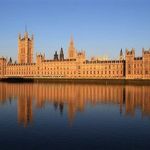
Tucked away in an old building, where few people knows of its existence, lives one of the most important parliamentary creatures - the House of Lords European Union Committee. Often ignored because it applies analysis to a debate where loudness is the main currency, it has produced a new report on the Single Market. The government would do well to read it. For pushing the Single Market should be what animates the Europe Directorate in the Foreign Office. The Single Market is the main reason for British membership of the EU and the committee implies that successive governments, including the Cameron administration, have dropped the ball in this area. As their report puts it, the UK should 'return to its position of strongly championing the Single Market.

The health select committee delivers its verdict

From our UK edition

Grenades are seldom expected – yet Andrew Lansley knew that one was going to fall into his lap this morning. The Health Select Committee has today released its much trumpeted report on the government's plans for NHS commissioning. In normal circumstances its dry take on an even drier subject would evade public notice. As it is, with the coalition rocking and reeling as they are, this is fissile stuff. It is yet another voice in the chorus of opposition to Lansley's reforms.

Lansley faces the music alone

From our UK edition

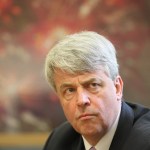
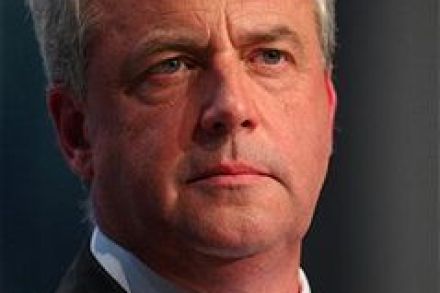
A weary-looking Andrew Lansley has just finished answering MPs’ questions following his statement announcing a delay to the coalition’s NHS reforms. The statement left us none the wiser as to what is up for review in the listening exercise the coalition is about to undertake. What it did demonstrate was both Lansley’s encyclopedic knowledge of the NHS: he seemed to know the GP who was leading the consortium in the area of every MP who questioned him: and his inability to clearly explain the purpose of his reforms. Indeed, if it had not been for a question from John Redwood the point that these reforms are meant to free up more money for patient care would have been lost.

Losing control | 4 April 2011

From our UK edition

The future of the Health and Social Care Bill is a test of Craig Oliver. For months there has been a steady drip of quiet critiques of the bill; but some Liberal Democrat grandees have suddenly broken cover and burst into open dissent. David Owen and Shirley Williams have called for the bill's implementation to be slowed and for consultation to re-open. Both are especially concerned that private sector involvement will expose the NHS to competition law, which they believe would be detrimental to the NHS.

Hardly a model of good government

From our UK edition

What is going on with the government’s health reforms is highly unusual. Normally, once a bill has gone through second reading and committee stage in the Commons there are very few changes made to it. But the coalition is considering some fairly significant changes to the Health and Social Care Bill in a bid to make it more politically palatable. It is hardly a model of good government.   This state of affairs provides ample opportunity for Ed Miliband to land some blows on the coalition, as he did in this morning’s speech delivered — symbolically — at the RSA, the new home of Blair’s former policy chief Matthew Taylor. In a sign of where Labour intends to go on the issue, Miliband said that delay would not be enough.

Rescuing Lansley’s reforms

From our UK edition

The fate of Andrew Lansley's NHS reforms is attracting apocalyptic headlines. A report in the Times (£) declares that a ‘last-ditch’ salvage is underway; the FT carries an editorial in similar tone, and the Guardian devotes its front page to David Cameron’s attempt to save face. Over at Conservative Home, Jonathan Isaby relates how the strategy will unfold. The principles of the bill will remain intact, but it will be delayed using the ‘natural pause’ in parliamentary procedure. During this time, the details of the bill be scrutinised and the government will also use this time to reiterate its view that these reforms are necessary for the NHS to manage an ageing population and rising costs.

A month to go and still none the wiser

From our UK edition

It’s supposed to be the day of rest, but there’s no rest for the wicked. The two sides of the alternative vote referendum have been exchanging blows all day. It seems the pro-AV camp have purged black poet Benjamin Zephaniah from some of their leaflets. Apparently, Zephaniah is all present and correct on leaflets sent to London addresses; but he has been apparently replaced by Tony Robinson in those sent to Sussex and Cornwall. The No campaign has described its opponents as “ashamed” of Mr Zephaniah’s colour, and the Yes campaign said the allegation was a “new low”. It’s six of one and half of dozen of the other, and we’re still no better informed about either system.

The coalition is in a mess of its own making over the NHS

From our UK edition

The NHS is, as Nigel Lawson once remarked, the new national religion of this country. This makes it difficult to discuss the subject in a rational matter and any attempt to reform it is likely to run into its own Pilgrimage of Grace as Andrew Lansley and the coalition are discovering. The government’s problem is that it can’t do a simple u-turn. As I say in the Mail on Sunday, Cameron can’t shelve this scheme without bringing his own judgement into question. Once Cameron and Clegg signed the introduction to the white paper setting out these reforms, they crossed the Rubicon. So instead the coalition is left trying to tinker and slow down the reforms to make them more politically palatable. But this brings with it its own risk.

Northern Ireland unites, sort of

From our UK edition

A man hunt is underway for the perpetrators of yesterday's murder in Omagh, and the administration at Stormont and the PSNI have presented a united front against antediluvian dissidence. Meanwhile, Martin McGuinness, the deputy first minister, is accused by groups associated with the DUP and the Traditional Unionist Voice of having attended an illegal march commemorating the IRA last October. Sectarianism is still rife.

Trouble with the big society

From our UK edition

A gaggle of academics have written to the Observer to condemn the Arts and Humanities Research Council (AHRC) for accepting £100m from the government. The AHRC is conducting research into the big society, and the allegation is that the settlement was conditional, an allegation which is denied.  Doubtless the 69 signatories are dons of the tweedily conservative variety, but their objections perhaps explain why Cameron’s flagship policy is so mistrusted. They write: ‘When academic research is used to promote party political ideologies its quality and value decline. It also threatens democracy and the constitution. While academic work may be partly paid for out of public funds, this ought not to be the same thing as working for the government.

Desperate rearguard

From our UK edition

The murder of a police officer in Northern Ireland once again proves that the threat from dissident republican terrorism remains only too real. This latest attack comes against a background of various attempted bombings and hoax alerts that have disrupted life in the province. Back in January, a sophisticated “double-tap” bomb attack on a police patrol in north Belfast was only narrowly averted. Since then a series of incidents have occurred in Derry, Belfast and Fermanagh. Going back further, the last two years (since the triple murder of March 2009) have seen the bombing of banks, courthouses, police stations and even MI5’s regional headquarters in Northern Ireland. Just over fourteen months ago, another young police constable in Co.

BREAKING: Car bomb explodes in Omagh, County Tyrone

From our UK edition

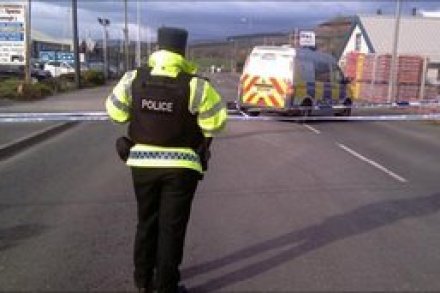
Not clear as yet if there have been any casaulties. More to follow. Reports are sketchy, but it seems that the blast took place in a residential road, away from the crowded central shopping areas that were the scene of the bloody atrocity committed 13 years ago.  The bomb was planted underneath the car of a local Catholic PSNI officer .The officer is critically wounded.  This act is very likely to have been perpetrated by extreme Republican dissidents; and it follows a trend of Republican/gang violence against police in the province, a battle for which London and Stormont allocated more than £240 million last month. UPDATE: DUP MP Jeffrey Donaldson reports that the officer has died.

Trouble over the NHS reforms – inevitable or not?

From our UK edition

Was the stooshie over health reforms inevitable? From much of the coverage, you'd think it was always going to end in tears, as people line up to criticise Lansley and rumours about Number 10's search for a dignified exit strategy (£) swirl around the Westminster village. But it didn't have to be like this. For a start, the basic idea is one that should be easy to sell to the public. Matthew Parris has pointed out (£) that people intuitively look to their GP as the route into healthcare. It shouldn't be hard to convince the public they should lead commissioning. It's been difficult mainly because the health professionals aren't on-side. This could have been largely avoided.

Planning to ruin Lansley’s party

From our UK edition

How can Nick Clegg recover from defeat in the AV referendum? Andrew Grice considers the question in his column and reveals that Clegg is not too bothered about AV: his sight is trained on a bigger prize. ‘A U-turn in the controversial NHS reforms to hand 80 per cent of the budget to GPs and scrap primary care trusts (PCTs). Mr Clegg is convinced that there must be big symbolic changes to the NHS and Social Care Bill.  That would not be good news for Andrew Lansley…He knows that Mr Cameron will demand some changes and is prepared to see a few technical amendments to the Bill during its passage through Parliament…Mr Clegg's worry is that the public would not notice fine-tuning.

Clearing up after the storm

From our UK edition

The recession has made Britain's banks less competitive and they should be broken up, concludes the Treasury Select Committee. As the banking system spiralled towards oblivion in 2008, the market became more concentrated. ‘The financial crisis has resulted in significant consolidation of the UK retail market. Well known firms such as HBOS, Alliance & Leicester and Bradford and Bingley have either exited the market or merged with rival firms. A large number of building societies have merged, undermining the diversity of provision in the sector. Whilst these ‘rescues’ were necessary in order to preserve financial stability, the consequence has been to reduce competition and choice in the market.

At last, Grayling takes on the Ancien Regime

From our UK edition

To disguise the radical nature of reform, one need only make it boring. And here Chris Grayling has succeeded spectacularly. Today he has announced further details on the ‘Work Programme’ and the ‘Benefit Migration’, which sound like the type of well-intentioned but doomed reforms that ministers tried over the Labour years. The welfare state has incubated the very ‘giant evils’ it was designed to eradicate. There are, scandalously, 2.6 million on incapacity benefit right now – a category which ensures they don’t count in unemployment figures. Brown didn’t care much, but Grayling is taking this head-on.

An election jam in Leicester spells trouble for Clegg

From our UK edition

Nick Clegg is campaigning in Leicester today, ahead of the local election. The Labour party has just confirmed that Sir Peter Soulsby has stood down as MP for Leicester South today to seek election as the town’s Mayor. A happy coincidence? Probably not. Labour are already running a coherent campaign in Leicester. Michael Crick points out that the by-election will fall on 5 May, together with the local council elections, the Mayoral election and the referendum on the alternative vote.