Uk politics

Gove calls on universities to improve A-levels

It may be a sleepy day in Westminster, but Michael Gove and his school reforms have lost none of their brilliant urgency. The schools secretary has today written to Ofqual — the body in charge of regulating the exams system — to ask that universities be allowed to involve themselves, much more closely than ever before, in designing and implementing A-levels. In the letter he sums up his plans thus: ‘I want to see new arrangements that allow Awarding Organisations to work with universities to develop qualifications in a way that is unconstrained — as far as possible — by centrally determined criterion.’ And he adds that this process should

Boris to Ken: you’re a f***ing liar

From the Guardian, reporting on this morning’s Mayoral debate on LBC: ‘We’ve learned that things did not go well in the lift after the hustings was over. Boris went nose to nose with Ken in a small lift and told Ken three times: “You’re a f***ing liar, you’re a f***ing liar, you’re a f***ing liar.” Paddick and Jenny were also squeezed in, alongside James Rea, the LBC managing editor. Johnson’s anger was due to claims made during the hustings by Livingstone about Johnson’s tax arrangements, which the mayor flatly denies. He told me later that Ken’s claims were “nonsense”. Of course at that point we hadn’t heard about the ding-dong

Web surveillance plan divides the coalition

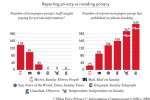
The government’s under fire from members of both coalition parties over its plans to extend the state’s investigatory powers to cover new means of communication. Currently, under section 22 of the Regulation of Investigatory Powers Act 2000 (RIPA), public bodies can obtain communications data without the need of a warrant or any external authorisation. This gives them access to a wide array of information including the location, time, date and duration of a phone call or the IP address from which an email was sent. Over 100 public bodies — from the Home Office and local councils to the Food Standards Agency and the Charity Commission — can make use

A new Argy-bargy | 2 April 2012

Another article to mark the 30th anniversary of the Falklands War — this one from the current issue of the magazine. It’s by John Simpson and analyses the current tensions between Britain and Argentina. Buenos Aires Buenos Aires is as exhilarating, as unpredictable, as stylish as ever. But the economic boom is over. Times are hard once again, more shops in Calle Florida are boarded up, the sales are pretty frantic. And so, as Jorge Luis Borges, the blind sage of Calle Maipu, just off the superb Plaza San Martin, once remarked: ‘When Argentina’s economy goes bad, you can be sure that nationalism will soon be beating its wings.’ Argentina’s

Cameron loyalists say his Tory critics are a small minority

The drumbeat of criticism of David Cameron and George Osborne by various Tory MPs, summed up on the front page of today’s Telegraph, has drawn a reaction from those MPs loyal to the leadership. Kris Hopkins, the founder of the 301 group of Tory MPs, complains that the trouble is being whipped up by a ‘small group of disaffected people’ and that ‘the nature of their criticisms shows that this is about their egos not making the country a better place.’ At issue here is who speaks for Tory MPs. Hopkins claims that the vast majority of his colleagues are ‘committed and supportive of the Prime Minister and his team’

Tory ire focuses on Dave’s uni friend

The grumbling in the Conservative party at the moment is reminiscent of Tudor court politics. No one is prepared to criticise the king directly so instead various personal favourites of the monarch are targeted. At the moment, the chief proxy for discontent is Andrew Feldman. To the Cameroons’ critics, he sums up everything that is wrong with the way the PM and his team do politics. Feldman is co-chairman of the party not because of his standing in the party or the country but because he is a friend of Cameron. To further irritate their critics, their friendship dates back to them serving together on the ball committee of their

Now Cameron and Osborne take flak from their own side

The bad headlines continue for Downing Street this morning, with the Telegraph front page declaring ‘Tory MPs round on Cameron and Osborne’. Of course, Tory backbenchers griping about their leadership is nothing new and, usually, ‘concern that Government policies are being poorly explained to voters’ or a suggestion that ‘a senior MP should be appointed as full-time Conservative Party chairman’ wouldn’t make the front page. But after the two week onslaught Downing Street has just suffered — from granny tax to cash for access to petrol panic to pasties — the disgruntled chattering reverberates that bit louder. And the nature of these complaints is different than, say, the ones we

Cameron must take on Whitehall

I doubt that, come the election in 2015, many voters will remember the row about putting VAT on pasties or Francis Maude’s advice to fill up a jerry can with petrol. But what will be on their minds is whether the government is competent and, to use that dread phrase, ‘in touch’ with their day to day struggles. It is for this reason that the key question about the last ten days is whether they make David Cameron realise that the civil service machine just doesn’t work anymore and that he needs to change the way he governs. The early indications on this front are encouraging. Those who have been

Everyone’s a loser

Have the opinion polls ever looked more discouraging, overall, for the Tories during this government? Not that I can remember, although I’m happy to be corrected. Not only does YouGov’s poll for the Sunday Times (£) have Labour ahead by nine points, but there are also some pretty dismal supplementary findings. For YouGov, both David Cameron and the coalition score their lowest approval ratings since the start of this Parliament. For ComRes in the Independent on Sunday, 72 per cent of respondents reckon the government is ‘out of touch with ordinary voters’; 81 per cent say the government created ‘unnecessary panic’ over fuel; and so on. It’s probably no surprise

Cameron needs a proper solution on party funding — and soon

Today’s ‘cash for access’ revelations (£) are, taken individually, less perturbing than last week’s. What we learn is that David Cameron (and other ministers) met with donors on occasions (and at locations) other than those already disclosed, and that Peter Cruddas was more involved with this process than Downing St would have us believe. There is very little added to the most serious allegation from a week ago: that big money donors could gain special insights in the policy process, or even involve themselves in it. But, taken as a whole, today’s revelations are extremely tricky for Cameron. Not only do they keep the story going, but they also highlight

Galloway and religion

A few years ago, The Spectator, in an inspired notion for the Easter issue, asked a number of prominent individuals whether they believed in the Resurrection. And among the surprises was George Galloway, who replied emphatically in the affirmative: ‘Yes, I believe in the Resurrection. I believe God restored the life of Jesus of Nazareth and took him to his bosom. The example of suffering and sacrifice followed by vindication is central to my religious belief.’ One hopes there wasn’t an element of hubris here, whereby George identified himself with Christ — suffering followed by vindication — but the fact remains that it was a very public profession of faith

Galloway’s ugly politics

Helen Pidd’s report of George Galloway’s victory in Bradford West recounts what happened just after he had arrived back from the count: ‘Galloway climbed on top of a grey car and was handed a megaphone to preach to the assembled faithful. All praise to Allah!” he yelled, to jubilant cries of “Allah Allah!” And on it went. “Long live Iraq! Long live Palestine!” ‘ First of all this suggests that enthusiasm for Galloway wasn’t, as some are suggesting, driven by his opposition to austerity but by his sectional appeal. Second, it is a depressing reminder of what is happening to British politics. There’ll be a lot of ink spilled in

A question of motivation

Flitting through the opinion pages this morning, there’s one headline that stands out far more than any other. It’s on Charles Moore’s column for the Telegraph, and it reads, ‘Even I’m starting to wonder: what do this lot know about anything?’ What follows underneath is effectively a catalogue of the ‘small things’ that may accumulate and cause voters to question both the coalition’s motives and its ability. I’d recommend that you read the article in full, but here is one passage from it that deserves highlighting. It concerns Francis Maude’s jerry can line: ‘But now that I have heard the Conservatives’ private explanation, which is being handed down to constituency

Behind Galloway’s grin

George Galloway has tragically demonstrated that sectarian politics are now alive and well in Britain.  The other week Ken Livingstone appeared at a London mosque and promised to make London a ‘beacon of Islam’ and last week went on to dismiss Jews as unlikely to vote Labour because they are ‘rich’. Now we see Galloway flying in to one of the country’s most divided areas to sweep the Labour party aside in what he has termed ‘a Bradford spring.’ Much can — and should — be said about this depressing, and predictable, turn of events.  But for now I’d just like to make two quick observations. The first regards the

This is what politics has become

George Galloway’s victory last night is a reminder of a wider problem in British politics: the low regard in which all main political parties are held. By-elections can throw up quirky victories, usually ironed out in the general election. There won’t be an army of Galloway’s marching on parliament at the next election. It’s like Glasgow East: a classic Labour safe seat-cum-‘rotten borough’ taken for granted (and ignored) for so long that the ruling party’s apparatus had atrophied. Like John Mason in Glasgow East, Galloway won’t last long.    But the same phenomenon which took Galloway to victory last night, and humbled the main parties, is also at work in

The Tories shouldn’t gloat about Galloway’s victory

An unedifying week in politics keeps on getting worse. The Tories have this morning sent out a press release headlined ‘Warsi: If Labour can’t win in Bradford, how can they win a general election?’ The full quotation follows further on: ‘If Labour can’t win one of their safe seats in these tough economic times and in a tough week for the Government, how can they win anywhere? Not in half a century has an opposition come back from such an appalling result to win a majority at the next general election.   This tells you everything you need to know about Ed Miliband’s weak leadership.’ It’s characteristic of much of

The pressure is now back on Ed

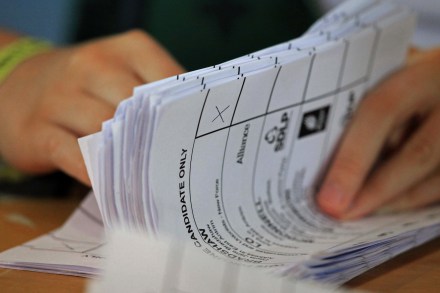
This morning’s front pages are simply awful for the government: every single one is critical of Downing Street. But this morning everyone in Westminster is again talking about Labour and the pressure on Ed Miliband. The Bradford West by-election has, at least for the moment, changed the subject away from pasties and petrol. Bradford West was a sensational result. Galloway, the former Labour MP, increased the Respect vote by more than 17,000 votes. For Labour to lose a by-election now is a major blow. They seemed to have had no answer to Galloway’s demagogic, sectional campaign. It will be little consolation to them that the Tory vote also collapsed, their

George Galloway is an MP again

‘This represents the Bradford Spring!’ said George Galloway after triumphing in the Bradford West by-election last night. So, let’s get this straight: comparing his victory in one of the many fair elections held in this country each year to the dangerous and fragile struggle for democracy across the Arab world? Yep, that’s right — and it leaves a nasty, bitter tang in the air. But we shouldn’t be one bit surprised. Bluster, exaggeration and provocation are, after all, what Galloway does best. And now he will be able to do these things in Parliament for the first time since May 2010, when he was deposed from the Bethnal Green seat.