Uk politics

Five questions for Nick Buckles

From our UK edition

G4S chief Nick Buckles will face MPs on the Home Affairs Select Committee today. Here are some key questions they will want to ask him about the security firm's handling of staffing for the Olympics: 1. When did you start processing applications from potential staff? G4S launched its recruitment drive at the end of January, and just days later told the press it had been swamped by 20,000 applications. Ministers say they were repeatedly assured that the firm would overshoot its targets. So why did it take so long to realise that those 20,000 applications were not going to translate into 10,000 staff? 2. When did you realise that you were not going to meet your targets?

Railing against government policy | 16 July 2012

From our UK edition

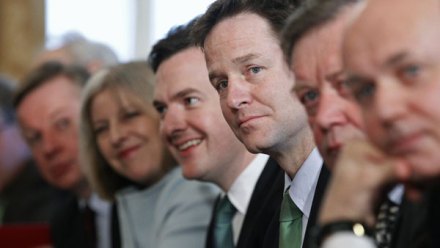
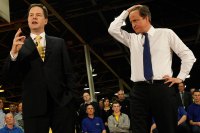
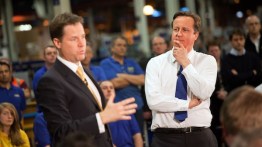
The cabinet is out and about today, trying to smooth feathers ruffled by last week's Lords reform row by splashing out on £9 billion worth of investment for railways. Today's announcement by David Cameron and Nick Clegg is, as much as anything else, an attempt to put into practice the Prime Minister's claim yesterday that the coalition is still capable of making real progress on big issues, despite differences on constitutional reform. Handily for Nick Clegg, today's announcement may also encourage some friendly feelings from his own constituents, as it includes electrifying the line between Bedford to Sheffield. But the work isn't starting tomorrow, which means this announcement could be quickly forgotten once the next row flares up back in Westminster.

The Libor mud-slinging makes things murkier

From our UK edition

As the inquiry into Libor-fixing by the Treasury Select Committee rolls on, two things become apparent - one, as the muck spreads across the financial community it actually becomes harder to tell exactly where the buck stops, and two, the toothlessness of such inquiries themselves. As more bankers and officials are hauled before the TSC, the criss-crossing blame game that’s going on looks like it may serve only to obfuscate, rather than illuminate, matters. Today, Barclays ex-chief operating officer Jerry del Missier said it was his former boss Bob Diamond who told him to submit lower Libor rates, as a counter to Diamond’s testimony last week that del Missier misinterpreted an email.

The benefit cap is a key test of compassionate Conservatism

From our UK edition

David Cameron and Nick Clegg's railways announcement wasn't the only attempt today by the coalition to bounce back from the strife of the past few weeks. Iain Duncan Smith also chose to point to another area where the Government is delivering on voters' demands: welfare. In an op-ed in the Daily Mail, the Work and Pensions Secretary said the £26,000 benefit cap for workless families, which is one of the government's most popular policies, is already effecting the behavioural change ministers hoped it would, with a third of claimants saying they are going to look for a job in order to avoid the cap, which comes into effect in 2013.

The danger for Labour in the G4S shambles

From our UK edition

The row over G4S' failure to provide sufficient security cover for the Olympics is starting to feel a little awkward for Labour. This afternoon in the Commons, Yvette Cooper managed to rouse a sardonic chuckle from not just the benches opposite but also the hacks perched in the press gallery when she said that everyone wanted the Olympics to be a success. Why the laughs? Well, the danger for Labour is that in slamming the government's handling of G4S, the party gets too carried away and appears to be branding the Olympics a shambles too.

A crowded island – but mainly in the South East

From our UK edition

By Matt Cavanagh The 2011 Census, published today, shows that the population of England and Wales reached 56.1 million, up by 3.7 million since 2001, and slightly higher than previous estimates. The three facts which are likely to make the headlines are: that this is the largest ten-year increase since the Census began in 1801; that over half (55 per cent) of the increase was due to net migration; and that the population density of England, at just over 400 people per square kilometre, is higher than G8 countries and all major EU countries except the Netherlands. But there is more to the Census than these headlines suggest.

MPs should move their money from big banks

From our UK edition

by Stephen Williams MP The Libor scandal has shown the UK’s banking sector in its worst light. The public has lost trust in the big banks and are concerned that their politicians are more interested in political point scoring than the urgent task of fixing our broken banking system. That is why, last year, I joined the Move Your Money campaign, which urges the public to use their consumer power to change the behaviour of the big banks by moving their money, or at least some of it, to ethical, local or mutual financial institutions. The stats show that we are more likely to go through a couple of divorces than move away from our bank.  But moving our money would make them sit up.  So why not open an account with an ethical bank?

Downing Street: G4S is a ‘good story’

From our UK edition

I've just returned from the morning lobby briefing, where the Prime Minister's official spokesman was grilled on the unfolding G4S debacle. He rather surprised journalists by claiming 'the story is a good one' on the Olympics because all the venues have been delivered on time and the Government had thought to put contingency plans in place on this matter, which it can now use given G4S' failure to recruit sufficient numbers of security staff. 'There are going to be millions of additional visitors to London over the next few weeks and people will notice the difference, but we have plans to deal with those challenges and we have contingency plans for all of these things.

Cameron and Clegg push the pro-coalition line

From our UK edition

This morning’s press conference by David Cameron and Nick Clegg marked an attempt to scotch all the talk of the coalition moving to confidence and supply sometime before the next election. Cameron declared that he was more committed to the coalition than he was back in 2010. He also stressed that he believed Britain needed stable government ‘throughout this term’, an implicit rebuke to all those Tories talking about a move to minority government in 2014. Nick Clegg, for his part, spoke about how this was going to be a ‘proper coalition government for a full five years’.

Railing against government policy

From our UK edition

The cabinet is out and about today, trying to smooth feathers ruffled by last week's Lords reform row by splashing out on £9 billion worth of investment for railways. Today's announcement by David Cameron and Nick Clegg is, as much as anything else, an attempt to put into practice the Prime Minister's claim yesterday that the coalition is still capable of making real progress on big issues, despite differences on constitutional reform. Handily for Nick Clegg, today's announcement may also encourage some friendly feelings from his own constituents, as it includes electrifying the line between Bedford to Sheffield. But the work isn't starting tomorrow, which means this announcement could be quickly forgotten once the next row flares up back in Westminster.

Memories of a ‘monster’

From our UK edition

You’ve probably heard about Enoch at 100 already. This collection of essays in honour of Enoch Powell’s centenary has captivated that section of the public which argues that Powell should be remembered for more than his aberration, the egregious ‘Rivers of Blood’ speech. He campaigned for gay rights and the abolition of capital punishment, among many other ‘progressive’ totems. Over at the Books Blog, Jerry Hayes, the former Conservative MP, has reviewed the book, drawing heavily on Powell’s visionary writings on monetarism, Lords reform and the European project. Powell’s analyses remain pertinent, and I urge you to read the review if only to digest them.

Cameron’s coalition healthcheck

From our UK edition

The coalition is doing pretty well, thank you very much. In case last week's rebellion of the 91 on Lords reform and continuing tensions over Europe had you fooled, up pops the Prime Minister this morning with a soothing comment piece in the Sunday Times.  David Cameron tries to shrug off Lords reform within three paragraphs of his op-ed. 'What's far more significant is that we are working together on so much else - and after last week, it's vital that everyone reminds themselves of that fact,' he argues. As part of his health-check piece, the Prime Minister details signs that the coalition is functioning well. When he mentions the reforms the two parties are working together, the piece is very carefully worded. He starts with investment in infrastructure.

The post-‘Cuban missile crisis’ coalition compromise

From our UK edition

At the top of the coalition there’s a concerted effort to calm tensions, to de-escalate after its ‘Cuban missile crisis’. As part of that, I understand that David Cameron has indicated privately that if the Lib Dems do not get their elected peers, he won’t push the matter of the boundary reforms. I’m told he has no desire to end up in a situation where he’s sacking Lib Dem ministers en masse for voting against the government. Although, officially Number 10 is still stressing that it expects government ministers to vote for them when they come back to the House of Commons.

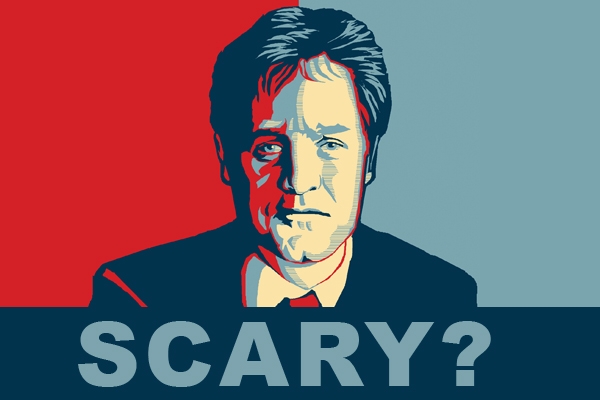
Who’s afraid of the Lib Dems?

From our UK edition

James Forsyth’s Mail on Sunday column is my first read every Sunday, and it’s choc full of details as ever. Here is his account of the Liberal Democrat reaction to last week’s House of Lords defeat:   On Thursday morning, Nick Clegg and David Cameron agreed a new phase of the Coalition after what one No 10 insider called ‘the Coalition’s Cuban missile crisis’.  Tensions were so high amid the vote on Lords reform that some feared the Coalition would implode, but things have now begun to ease.  Both sides stress ‘this  isn’t back to the rose garden’, and what is needed is not  ‘an idealised romance but cold, hard purpose’.

King joins Libor drama

From our UK edition

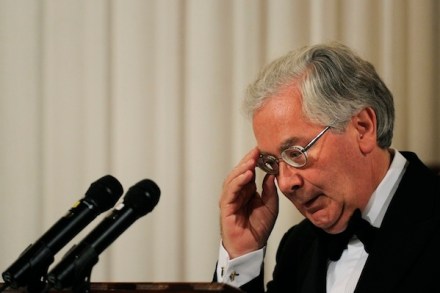
Up to now, Sir Mervyn King has played largely a walk-on part in the Libor scandal, prompting Bob Diamond's resignation after he warned Barclays that the regulators no longer had confidence in Diamond's leadership of the bank. Now the Governor of the Bank of England has also been dragged into the drama after email exchanges released by the Bank revealed that he was aware of deliberate misreporting of the rate in June 2008. Timothy Geithner, who was then the president of the Federal Reserve Bank of New York, emailed Sir Mervyn with a list of recommendations for improving Libor, one of which tackles how to 'eliminate incentive to misreport'. The Governor forwarded this on to his deputy Paul Tucker, and replied to Geithner that his recommendations 'seem sensible to us'.

The skewed priorities of the BBC’s abortion investigation story

From our UK edition

Did anyone else notice anything weird about the BBC’s coverage of the story last week about the 14 NHS trusts that a government health watchdog found to be breaking the law in providing abortions? Those 14 clinics used pre-signed abortion referral forms to authorise abortions, which flouts the bit in the Abortion Act that requires two doctors to allow them. But for the BBC, as, inevitably, for The Guardian, the real scandal about the investigation was that it took place at all, at a cost of £1 million and with the result that the watchdog, the Care Quality Commission, the CQC, had to delay or cancel pre-planned investigations in order to carry out this one. And how do we know that? Why, as a result of a BBC Freedom of Information Request.

Rejecting the idea of coalition

From our UK edition

Perhaps what most depressed the Liberal Democrats this week was the sense that the two main parties were rejecting the idea of coalition. One described to me how depressing he found it during the Lords reform debate to watch the Labour front bench revelling in every Tory intervention on Nick Clegg. At the top of the Lib Dems, there’s now a real worry that both Labour and the Tories would try and govern as a minority government after the next election if there’s another hung parliament rather than form a coalition. This would lock the Liberal Democrats out of power.  All of this makes Andrew Adonis’ comments in The Times today particularly striking.

Clegg’s ‘sensitive little violets’ get tough

From our UK edition

Two rather interesting reconciliations are taking place today. Ed Miliband is making the first speech of a Labour leader at the Durham Miners' Gala since 1989. And Nick Clegg has been trying to charm the left of his party into believing that all is well in the Liberal Democrat world. The latter largely involved Clegg trying to encourage the left-leaning Social Liberal Forum's annual conference to develop a sort of persecution complex. So the audience was told not to 'underestimate how much the right and the left want to destroy us', and to remember that 'if we aren't going to stick up for ourselves, no-one else will'. It was difficult, he acknowledged, to have doors slammed in your face on the campaign trail because 'we're sensitive little violets'.