Uk politics

Letwin fails to consult about the consultation on consultations

From our UK edition

Oliver Letwin’s decision to launch a consultation on reducing the amount of time that government has to spend on consultations has sparked controversy in Whitehall. Sticklers for procedure are complaining, in a way that only Sir Humphrey himself could do justice to, that other ministers hadn’t been consulted about the decision to launch a consultation on shortening consultations. Now, this is all quite trivial. But it does reveal just how bureaucratic modern-day government has become. This problem has been exacerbated by the Equalities Act and the rise of judicial reviews. Indeed, I understand that there is now a board of civil servants whose job is to review the equality impact assessments being done by other civil servants.

Public finance statistics point to a miserable autumn statement

From our UK edition

Today's round of public finance statistics bring mixed news for the government. The headlines have focused on the fact that borrowing last month — at £14.4 billion — was £0.5 billion higher than in June 2011. But considering that the monthly borrowing figures end up being revised by an average of £1.7 billion (usually downwards), we shouldn't get too fixated on a difference of a few hundred million. What is perhaps more worrying is the trend in the financial year so far. Superficially, the numbers look pretty good: a total of £14.9 billion in borrowing since April, compared to £38.4 billion in the same three months of last year.

We need a minister to defend the City of London

From our UK edition

Is the City of London worth defending? Not many in the government seem to think so. Vince Cable, the Business Secretary, calls it a 'cesspit'. George Osborne blames the financial sector for causing the crisis – the Barclays Libor scandal, to him, was not an isolated incident but indicative of the whole rotten system, ‘the epitaph to an era of irresponsibility’. The City’s global enemies look on, amazed. Not even the Brits are prepared to stand up for their extraordinary financial sector. As I say in my Telegraph column today, now is their time to strike. As the Americans are pointing out, much Wall St woe can be traced back to London. AIG, Lehman and Bear Stearns all collapsed after trades made by their London divisions.

When should George Osborne switch to Plan B?

From our UK edition

Announcements from the International Monetary Fund are worded in such a way that everyone reading them comes away with something slightly different. So shortly after today's report on the UK economy was released, Ed Balls put out a statement saying the report was a 'very serious warning to the Chancellor that urgent action to boost jobs and growth is needed'. He concluded his press release by asking 'how much worse do things have to get before the Chancellor finally changes course?'. Now, today's report from the IMF is not cheery reading for George Osborne. It passes this bleak judgement on the economy: 'Recovery has stalled. Post-crisis repair and rebalancing of the UK economy is likely to be more prolonged than initially envisaged. Confidence is weak and uncertainty is high.

Childcare costs could be election battleground

From our UK edition

Parents of children under two now pay on average over £5000 a year on childcare, with costs increasing much faster than either earnings or inflation. In response, both the government and Labour have launched Childcare Commissions as vehicles for developing new ideas. Ministers have today asked for the views of ‘everyday experts’ –- parents, childminders and nursery owners –- in a consultation period lasting until the end of August. So far, so unspectacular. But there are a couple of reasons to think that childcare -– traditionally a second or third tier issue -– could become a key political battleground between now and 2015. First, electoral maths.

How long can the government ignore demands for free grammar schools?

From our UK edition

The argument about grammar schools had been stuck in a rut. Opponents argued that the division between grammar schools and secondary modern was too binary. But with the advent of free schools this argument has lost its force. There is now a diversity of provision meaning that there’ll be no return to the old stark grammar/secondary modern split. Free grammars would also boost the number of state school children going to our best universities and unleash a new wave of educational philanthropy.

Too much government meddling undermines the energy market

From our UK edition

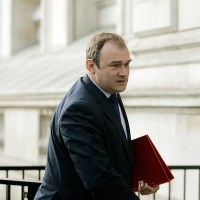
Pity Ed Davey. At some point in the next few months, the Energy and Climate Change Secretary is going to have to sit down and decide how much nuclear power is going to cost for the next few decades. It is not an easy decision. On one side are nuclear firms threatening to pull out of building new power plants if they do not get the price they want. All those jobs not created. All that low carbon energy not generated. All those windfarms that will have to be built instead, with all their protest groups and angry backbench Tories. On the other side are households and business, already worried about rising energy bills. And don't forget those greens, many of whom are hostile to nuclear power and ready to protest to prove it. It is not as though it is the only decision in his in-tray.

Miliband and monopolies

From our UK edition

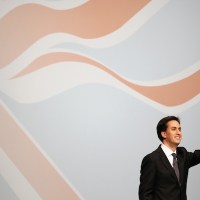
Ed Miliband used his speech this morning on policing to attack the shambles on Olympic security staffing created by G4S. That was a sensible thing for an opposition leader to do, and he managed to give quite a sensible speech, all in all. He did not fall into the trap of saying that all outsourcing is bad - which would have been a strange thing for the Labour leader to say, anyway, given it was under his party in government that firms like G4S flourished. But he did point to what many across the political spectrum agree is a problem: that G4S effectively holds a monopoly on security and policing functions.

Cameron shows his hand on Europe

From our UK edition

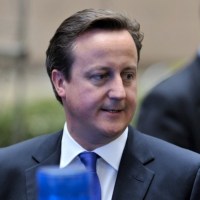
David Cameron's interview with the Telegraph today reveals that the Prime Minister would not campaign for an 'out' vote in a referendum on Britain's membership of the European Union. This will confuse some Conservatives, who had hoped that the 'fresh deal and a fresh settlement' that the Prime Minister described in the chamber earlier this month would either lead to a successful renegotiation followed by a referendum in which the government pushed for a 'yes' vote, or a failed attempt at renegotiation followed by a referendum in which the government pushed for a 'no' vote. But Cameron told Robert Winnett that he would never campaign for an 'out' vote. He adds: 'It comes back to this, who are going to be the winning nations for the 21st century?

Consulting on consultations

From our UK edition

We’re approaching that point in the government’s life cycle when ministers begin to worry about whether they’ll be able to get things done before the next election. One Tory was complaining to me yesterday that the civil service will simply be able to run down the clock with any new ministers after the next reshuffle. This nervousness about their ability to get things done is reflected in the fact that, and don’t laugh, the government is holding a consultation on whether its consultations need to go on so long. Eric Pickles has long been pushing for this, arguing that the 12 week consultations were excessively cumbersome. They certainly mitigate against any rapid government action.

What the Casey report teaches us about problem families

From our UK edition

Louise Casey's report on troubled families has come in for a few knocks today. The 'troubled families tsar' interviewed 16 families to draw up a picture of the challenges that those within the 120,000-strong group that the Prime Minister identified after last summer's rioting as in need of focused work. Peter Mullen in the Telegraph says the research spells out 'the blinking obvious', which in many ways it does: the lives of the families on this list are messy beyond most people's normal experience. Casey has simply conducted a very small-scale exercise in qualitative research and then published it. Like many CoffeeHousers, I'm more of a quantitative data person myself.

All eyes on the Work Programme

From our UK edition

Today's headline figures on unemployment are good news: a 65,000 fall in the number of unemployed people to 2.58 million in the three months to May and a 0.2 per cent fall in the unemployment rate to 8.1 per cent of the economically active population. The focus is now growing on the Work Programme to deliver on its promises. Liam Byrne's response to the figures was that they were 'fresh evidence that the beleaguered Work Programme isn't working'. But as Fraser blogged last week, it's rather too early to tell either way, actually. The CBI says that a 6,100 rise in the number of people claiming Jobseekers Allowance, and 441,000 people who have been unemployed for over two years is evidence that the Work Programme must deliver.

Restoring the coalition’s credibility

From our UK edition

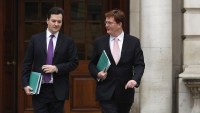
The coalition's infrastructure shopping spree to cheer itself up after a miserable few weeks continues today. George Osborne and Danny Alexander are offering guarantees on up to £40 billion of 'ready or nearly ready' projects such as transport, communications and energy. They are also announcing a £6 billion temporary lending programme and a £5 billion export guarantee facility, which will give long-term support for British exporters. Today's announcements are clever because they don't commit any extra money, using the government's balance sheet purely to guarantee the projects and get them off the ground.

Libor and what the Bank did and didn’t know

From our UK edition

Listening to Mervyn King and his Bank of England deputy Paul Tucker over the past few days, you’d have thought they only found out about Libor manipulation with the rest of us, three weeks ago. Appearing before the Treasury Select Committee this morning, King stated that ‘the first I knew of any alleged wrongdoing was when the report came out two weeks ago'. But documents from the New York Federal Reserve, made public as part of the US Congress’s investigation, suggest that US authorities did know, and tried to warn the Bank of England that manipulation was going on. First, the transcript of a phone call on 11 April 2008 between a Barclays employee and a NY Fed analyst.

G4S’ failure does not destroy the argument for outsourcing

From our UK edition

The left are having a field day in traducing the concept of contracting-out as if, somehow, the failure of G4S to deliver its Olympic contract was some kind of slam dunk. It is curious that one does not hear the same voices raised against the use of public sector in-house teams in relation to the queues at Heathrow airport's immigration desks. In many senses, the obvious failure of contractors in situations such as the G4S Olympic contract, and in the welfare-to-work schemes, is a sign of the success of the whole idea. When government services provided by in-house teams fail, non-delivery is brushed under the carpet. Poorly performing schools linger forever; disorderly prisons fester; job centres do not get people back into work; and so on.

Buckling under the strain

From our UK edition

During the Home Affairs Select Committee's evidence session with Nick Buckles it was difficult not to fall into the trap of feeling rather sorry for the G4S chief. He was softly spoken and anxious-looking. His haircut made him look rather boyish. Next to the garishly pinstriped Ian Horseman-Sewell, he appeared more muted. Buckles even seemed a little confused by the hearing. Was the committee speaking in fluent English, Keith Vaz asked him, slightly jovially, at one point. Buckles confounded him rather by saying he didn't know. When asked by David Winnick whether this was a 'humiliating shambles for your company', Buckles gave a sheepish reply. 'I cannot disagree with you,' he said quietly.

The Olympic censorship row

From our UK edition

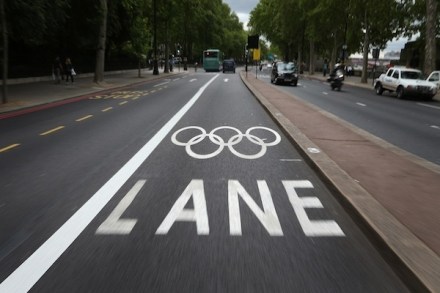
Nick Cohen’s Spectator cover story on Olympic censorship has been a smash hit, and is still being tweeted all over the world. It was followed up this morning by BBC Radio 4’s Today programme on its 8.10am slot, and CoffeeHousers who missed it can listen again here. Freddy Gray, assistant editor of The Spectator, is quoted at the beginning on the appalling heavy-handedness of it all. Even the Cubans didn’t copyright the now-famous Che Guevara image (which was drawn by an Irishman in any case). A liberal society like Britain should let people do what they want with words and images of major people and events. Including words like 'Olympics' and those rings.